ROLLS-ROYCE for sale
Are you interested in purchasing a pre-owned Rolls-Royce? At CarJager, every Rolls-Royce for sale stands out for its condition, clear history, and mechanical authenticity.
Rolls-royce Brand History
Rolls-Royce, the best car in the world
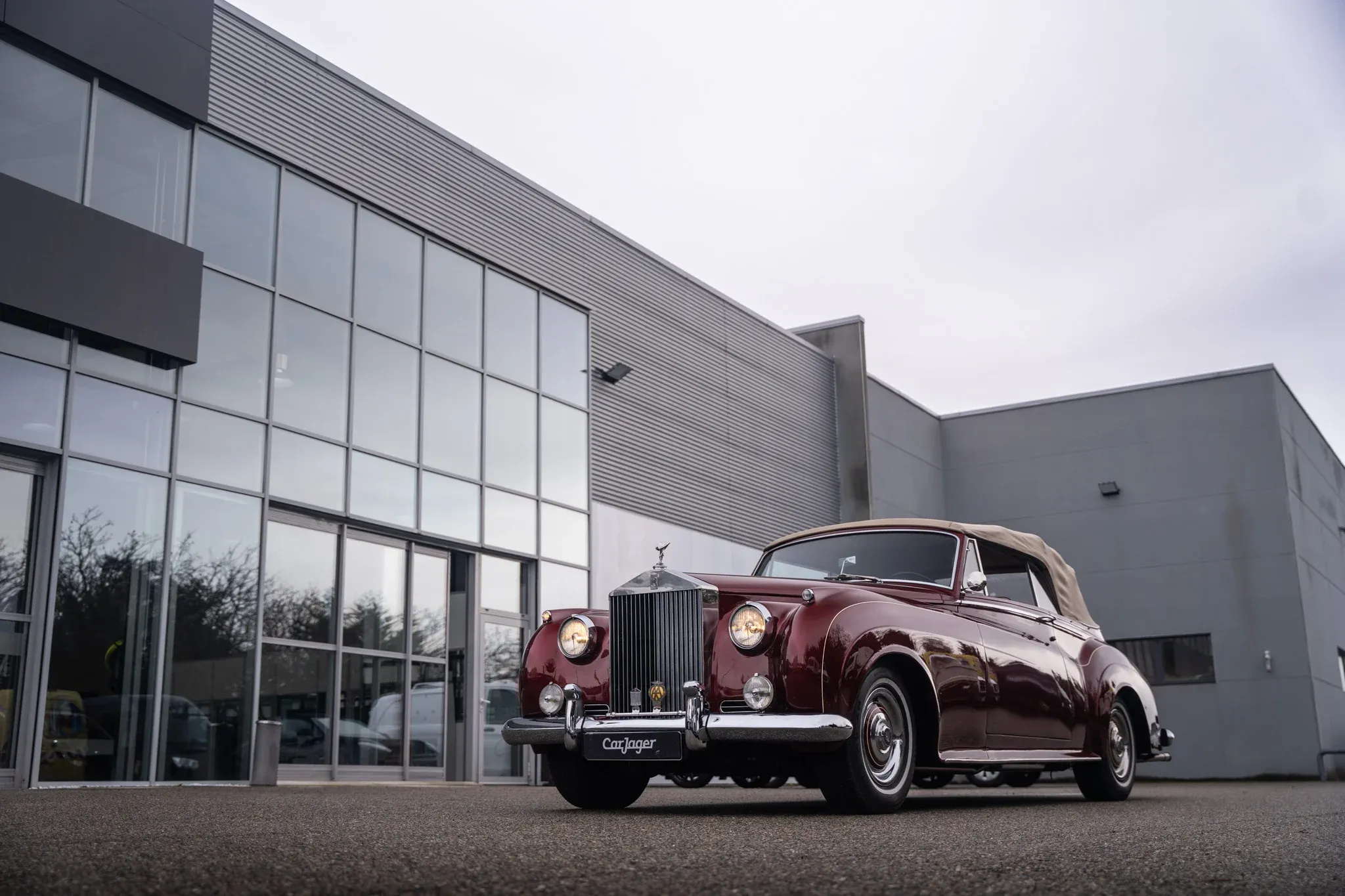
Building the best car in the world: this was the goal set by Charles Stuart Rolls and Frederick Henry Royce when they founded the brand that bears their names in 1904. At that time, the motor car had not yet become widely available, a process that would only begin after the Great War. Most manufacturers were building luxury cars, and Rolls-Royce intended to position itself at the top of the hierarchy from the outset. Today, the company is the only survivor from that period, its competitors having been decimated by crises and wars.
From the outset, Rolls-Royce created models whose fame has stood the test of time, starting with the legendary 40/50 Silver Ghost of 1906. Despite Rolls' accidental death in 1910, Royce continued his work and developed the brand, notably with the highly exclusive Phantom series, which appeared in 1925.
In 1931, the takeover of Bentley – which had won the 24 Hours of Le Mans five times – enabled Rolls-Royce to reach a new customer base that was more sensitive to performance. Two years later, Henry Royce passed away as the company was preparing the Phantom III, its first V12-engined model. When the Second World War broke out, Rolls-Royce – which also produced aircraft engines – already enjoyed great prestige.
Between tradition and innovation
After the war, in 1946, the manufacture of Rolls-Royce and Bentley cars, which very quickly came to be distinguished only by their grilles and logos, was transferred from Derby to Crewe. Thus, the Rolls-Royce Silver Dawn (https://www.carjager.com/blog/article/rolls-royce-silver-dawn-de-la-haute-couture-au-pret-a-porter.html) was a clone of the Bentley Type R, and this principle was repeated for subsequent generations until the end of the 20th century. The post-war period was a prosperous time for Rolls-Royce, which had virtually no competition.
Until the mid-1960s, the brand continued to improve its models technically, but without excessive boldness; the adoption of a V8 engine on the Silver Cloud II (https://www.carjager.com/blog/article/rolls-royce-silver-cloud-entre-tradition-et-rockn-roll.html) in 1959, and the introduction and subsequent widespread use of features such as automatic transmission and air conditioning were the main innovations of the brand, which remained a staunch guardian of tradition.
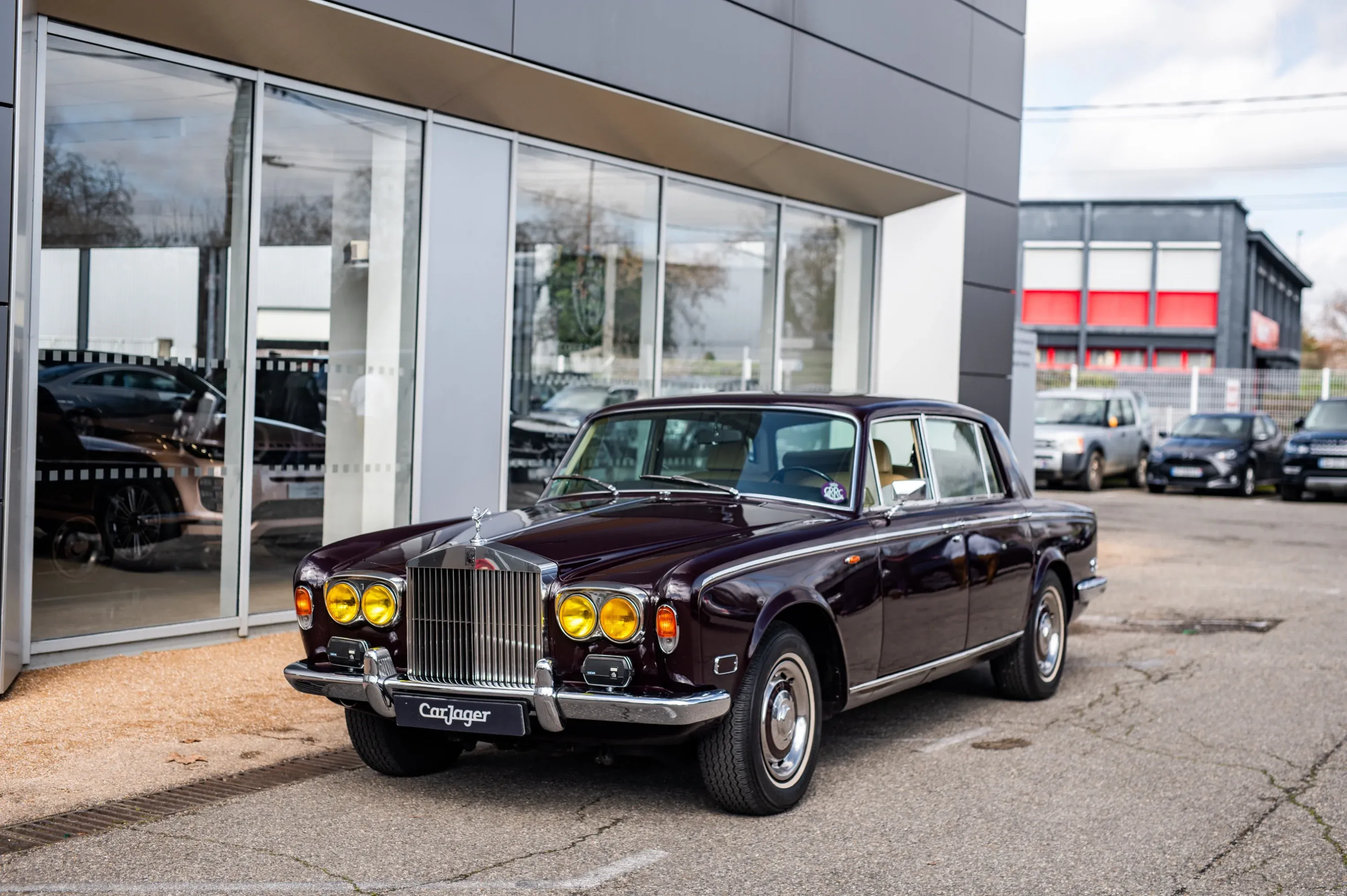
In this context, the appearance of the Silver Shadow in 1965 was a real revolution: the brand's first monocoque, equipped with four disc brakes and a high-pressure hydraulic system patented by Citroën, the new Rolls-Royce claimed its modernity and, with its coupé and convertible derivatives – renamed Corniche (https://www.carjager.com/blog/article/rolls-royce-corniche-une-certaine-idee-du-grand-luxe.html) in 1971 – it was a huge commercial success, with more than 30,000 units built in its fifteen-year career. However, the 1980s and 1990s were less favourable for Rolls-Royce, which faced increasing competition from prestigious German firms such as Mercedes and BMW and now lacked the resources to develop new models.
With BMW, a new beginning for Rolls-Royce
Acquired by the aerospace group Vickers in 1980, Rolls-Royce nevertheless renewed its range with the Silver Spirit (https://www.carjager.com/blog/article/rolls-royce-silver-spirit-une-si-longue-agonie.html) and Silver Spur, which were, however, only evolutions of the Silver Shadow. It was not until 1998, after a long financial and legal battle, that Vickers sold Rolls-Royce and Bentley to BMW and Volkswagen respectively, the two firms being separated once again after 67 years of living together.
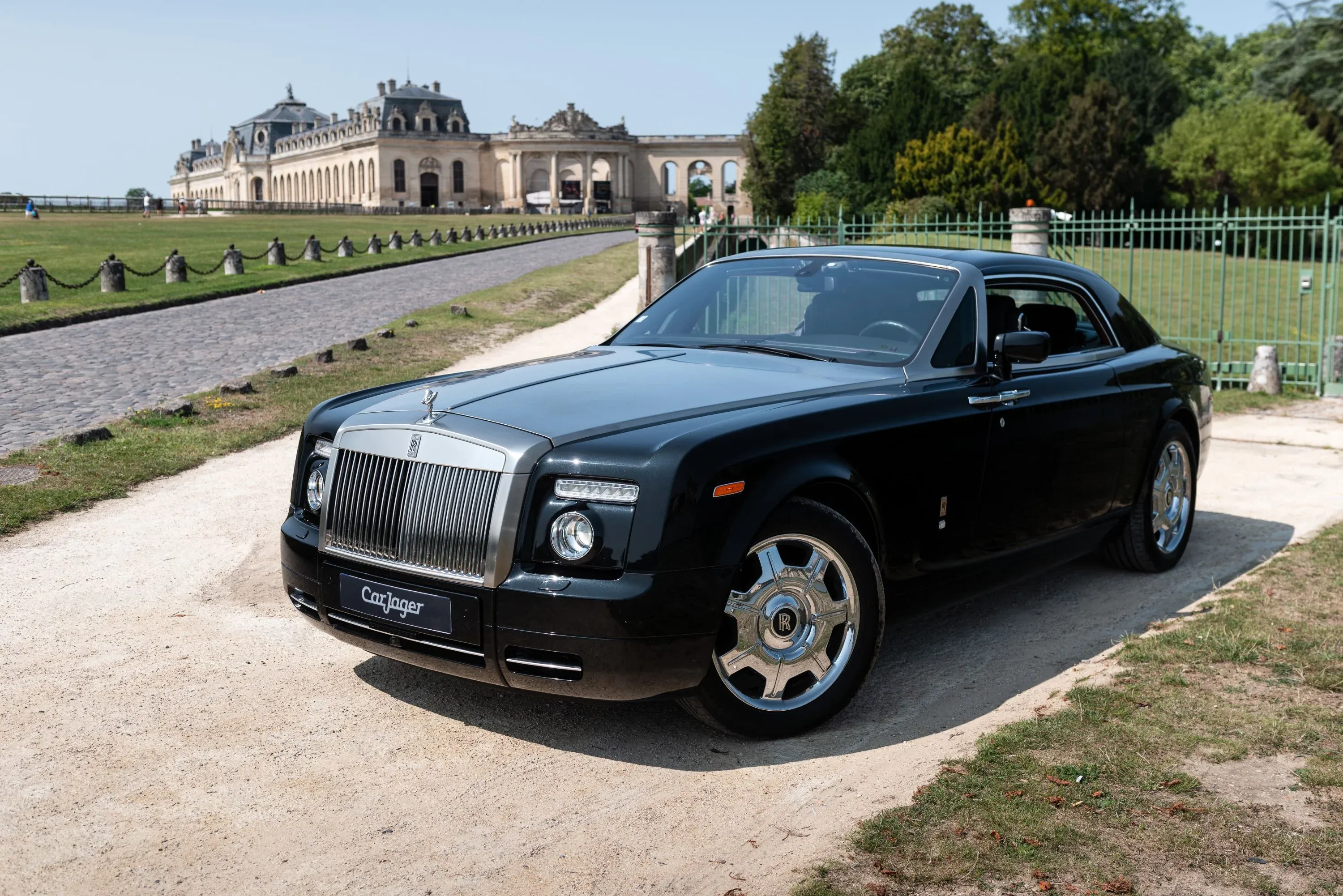
While VW took over the Crewe factory and the rights to the Bentley brand, BMW acquired the Rolls-Royce name and built a brand new production facility in Goodwood, where all Rolls-Royces would be manufactured from 2003 onwards. This marked the beginning of a new era for the brand, with the launch of an entirely new Phantom, an imposing and luxurious limousine that picked up where the Phantom VI (https://www.carjager.com/blog/article/rolls-royce-phantom-vi-noblesse-oblige.html) in 1991.
Powered by a BMW V12 engine – but retaining the iconic 6.75-litre displacement that had long characterised the old Rolls-Royce V8 – the car was available as a coupé and then a convertible, before being joined by a smaller model, the Ghost. Both models are now in their second generation and have been joined by Rolls-Royce's first SUV, the Cullinan (https://www.carjager.com/blog/article/le-rolls-royce-cullinan-est-il-cool.html), and then by the first electric Rolls-Royce, the Spectre coupé, launched in 2023. The world's most famous car brand is well equipped to face the future!