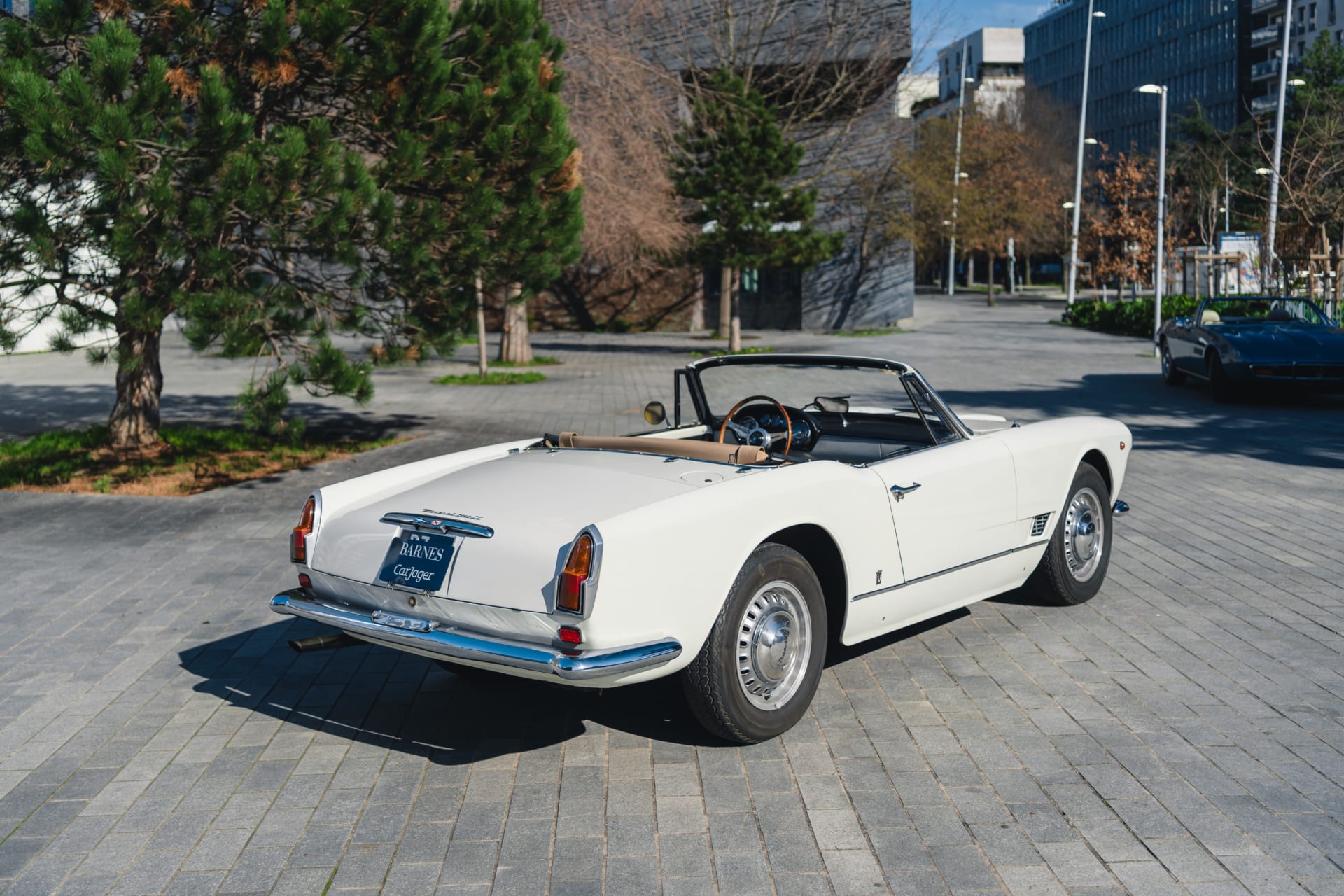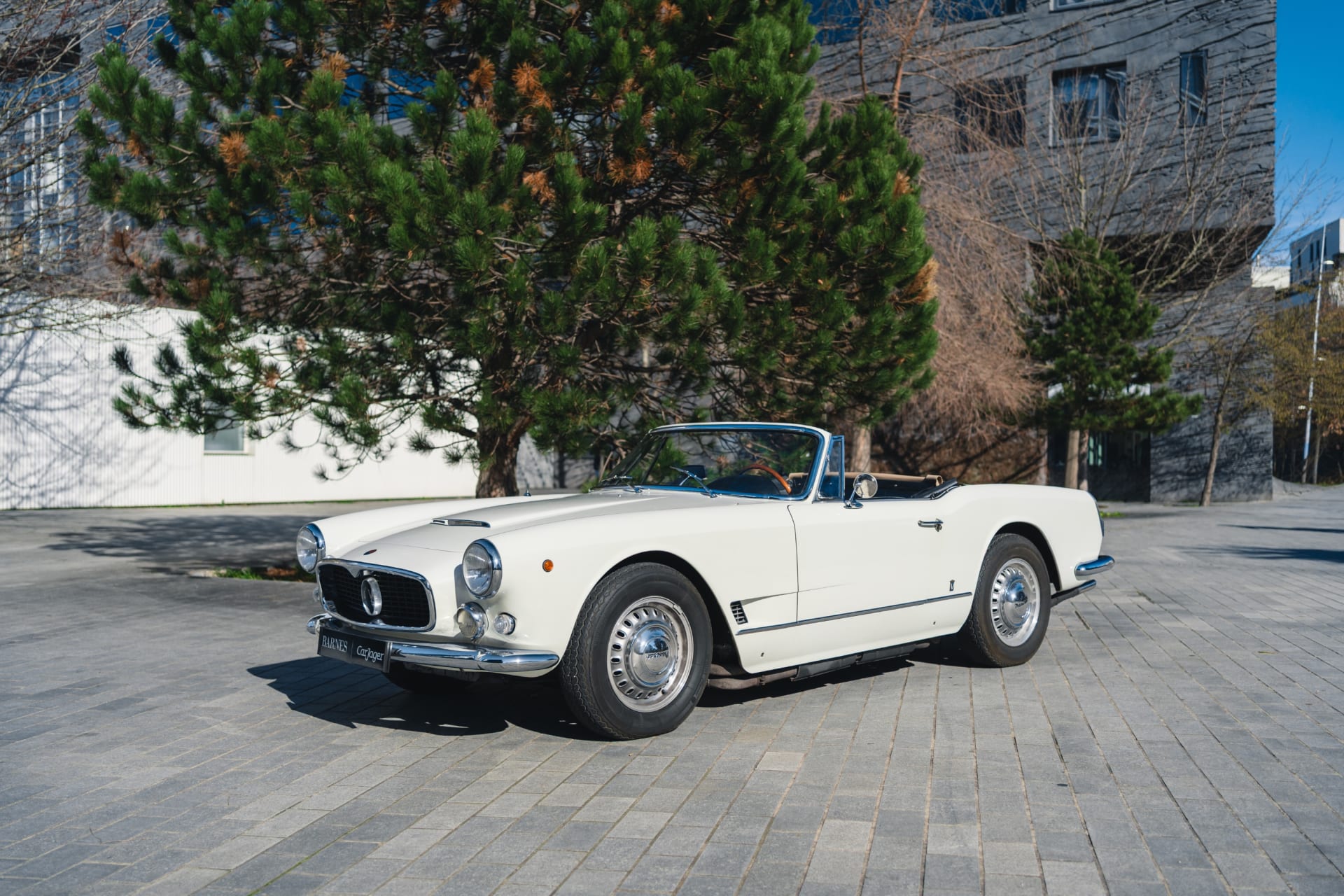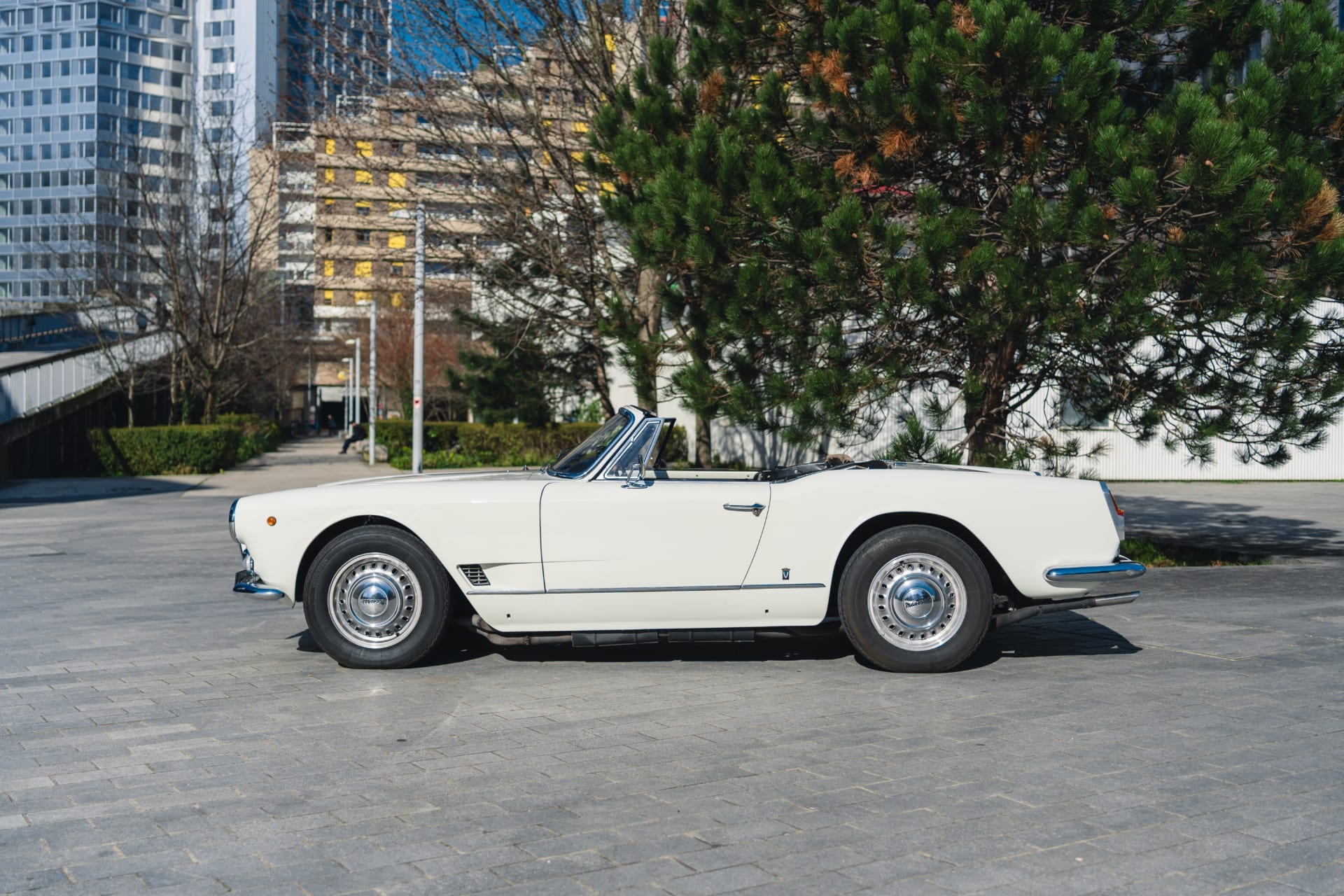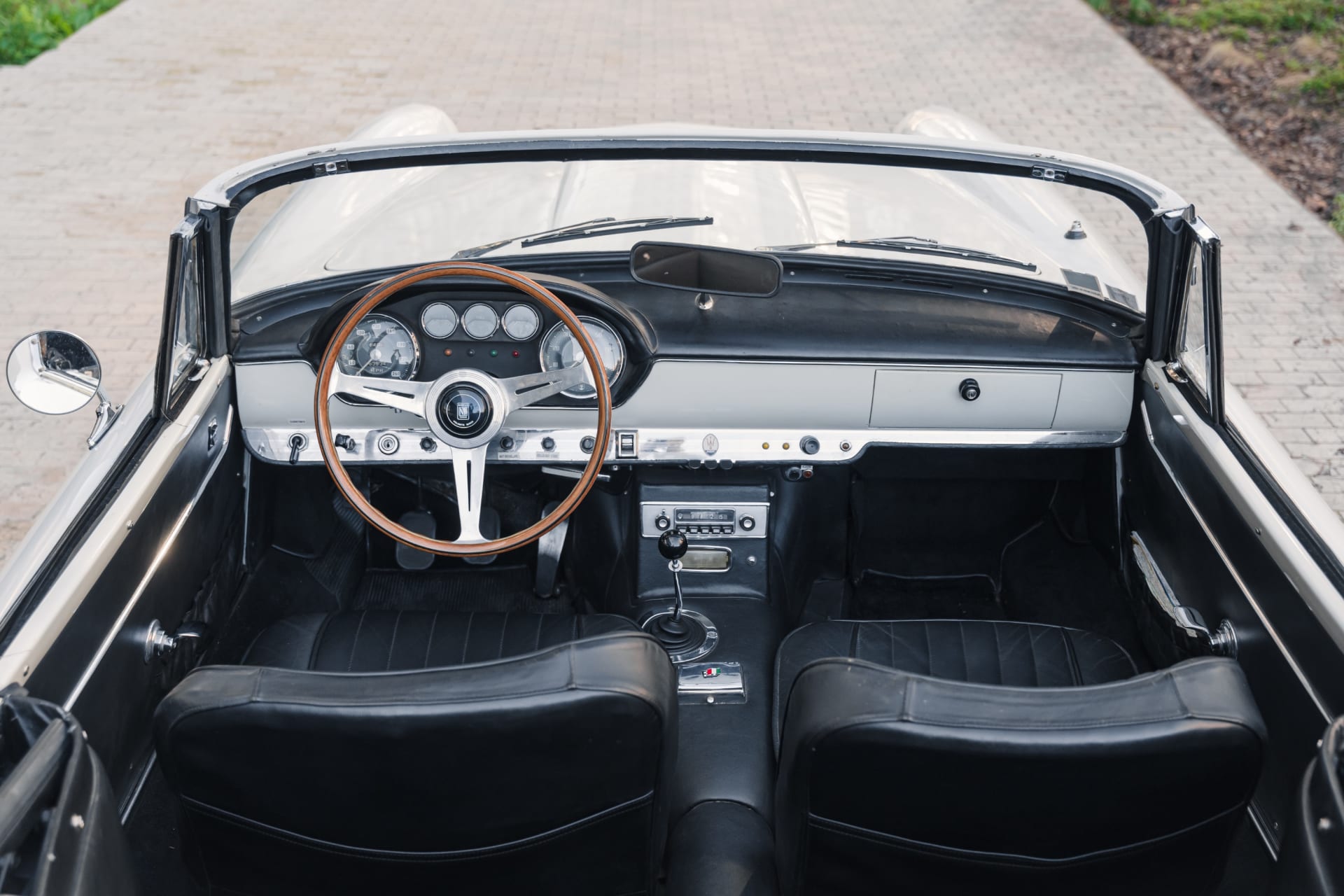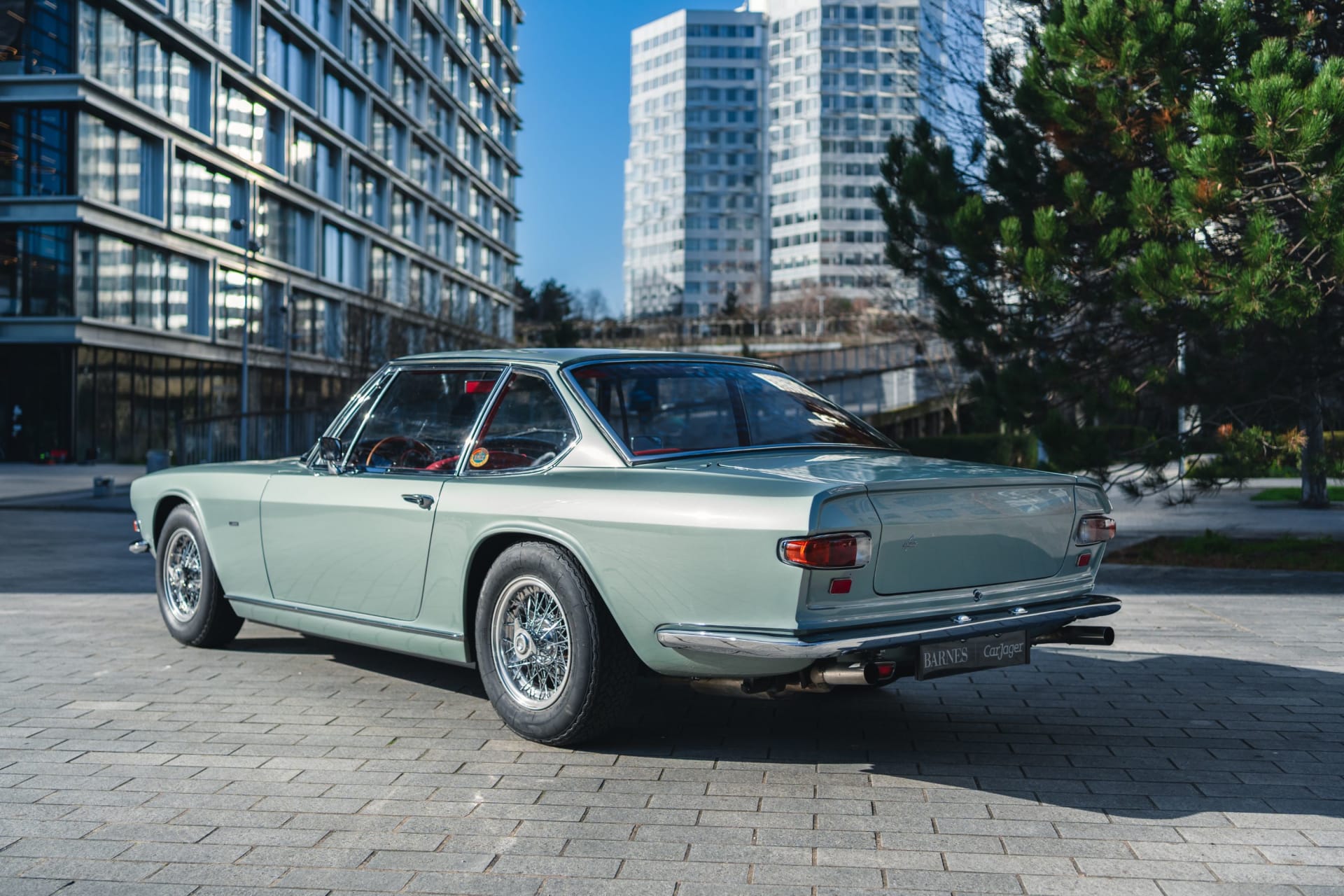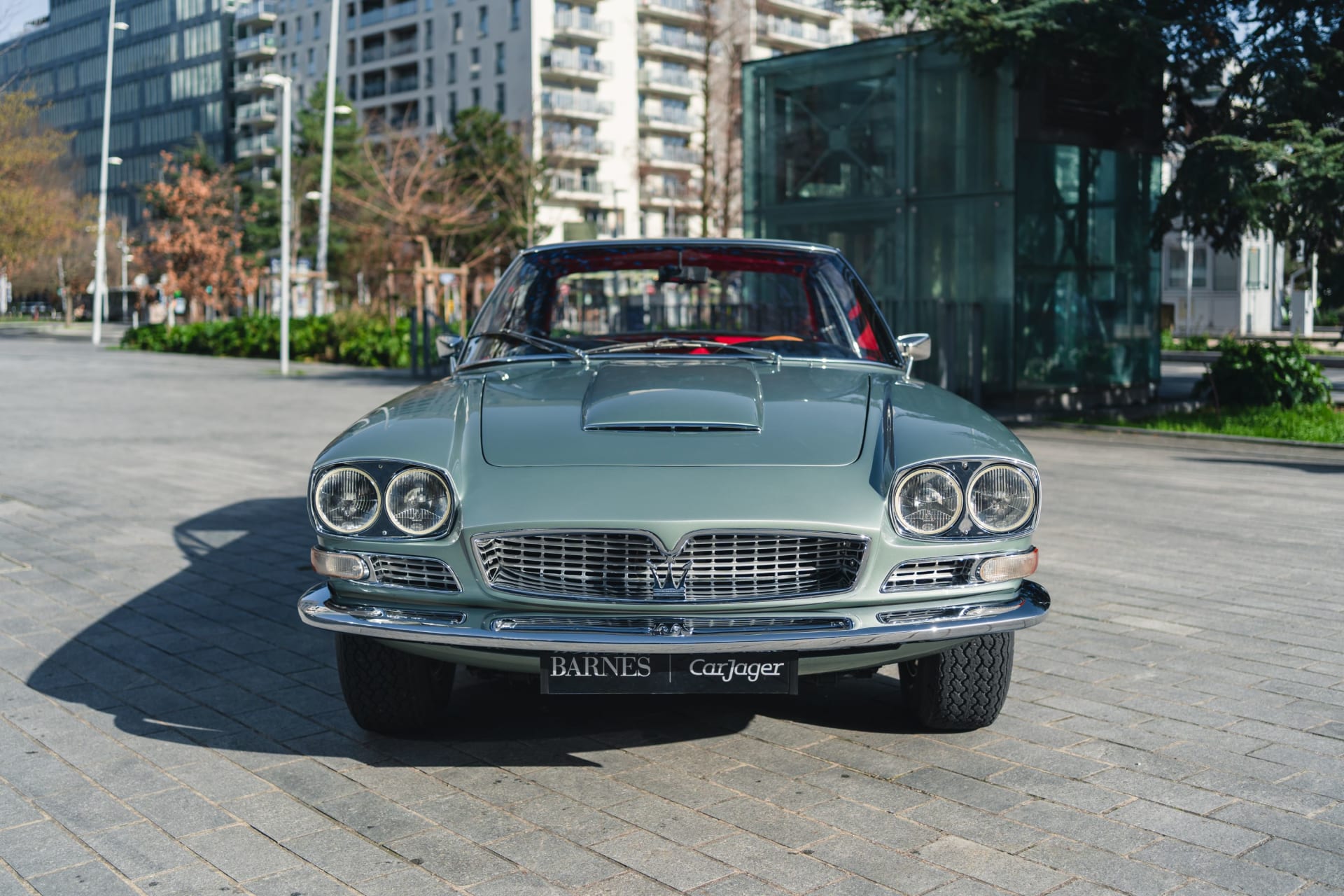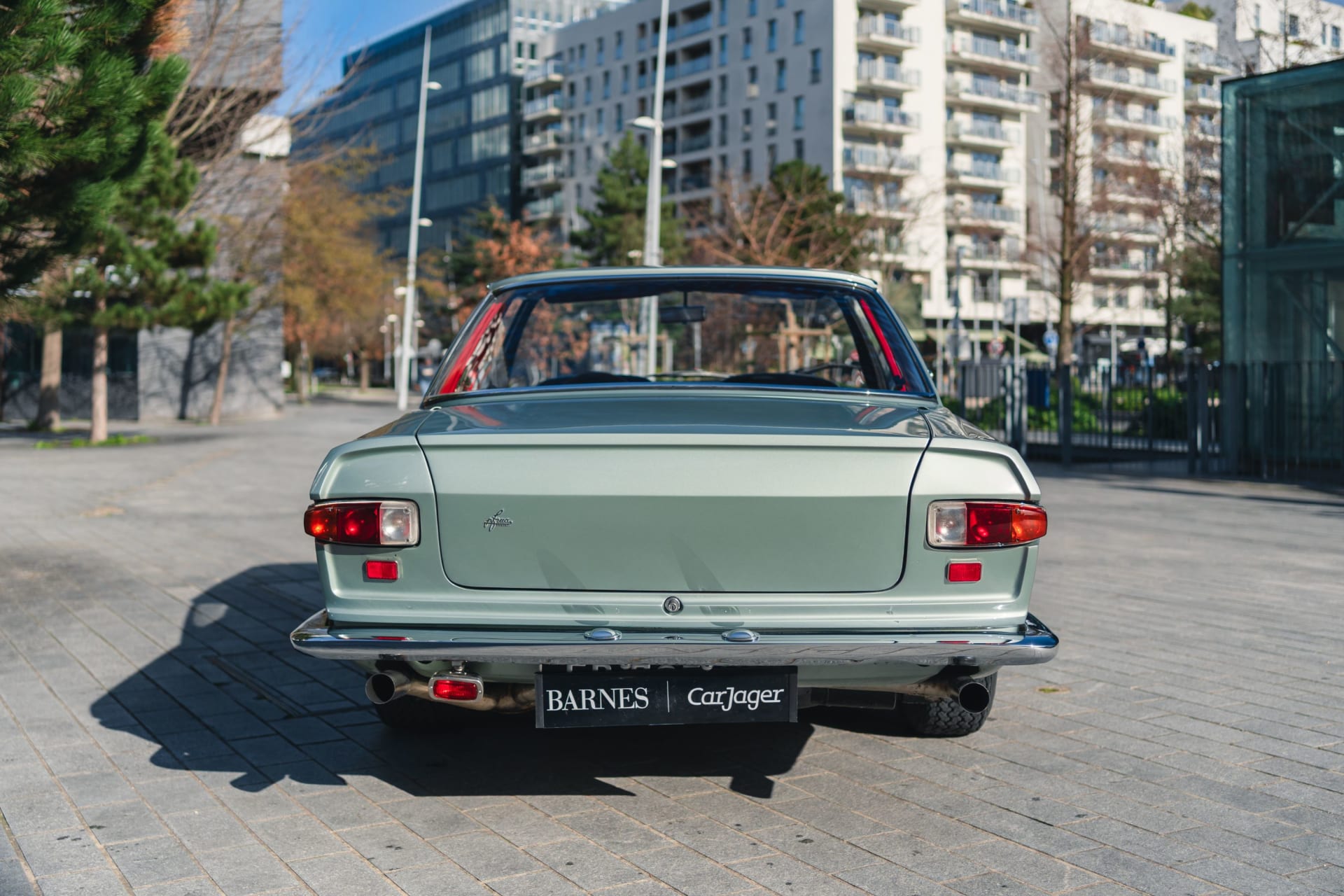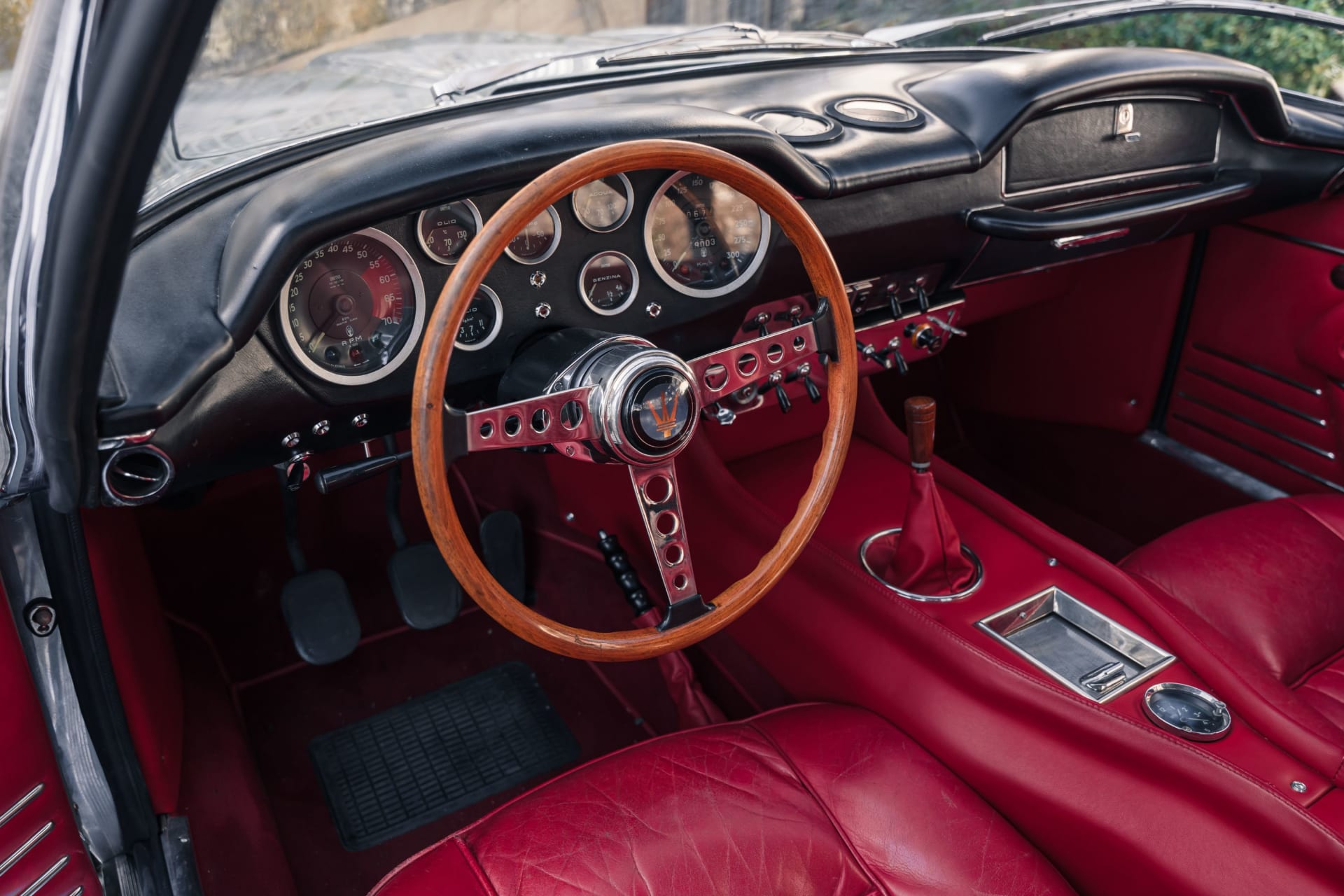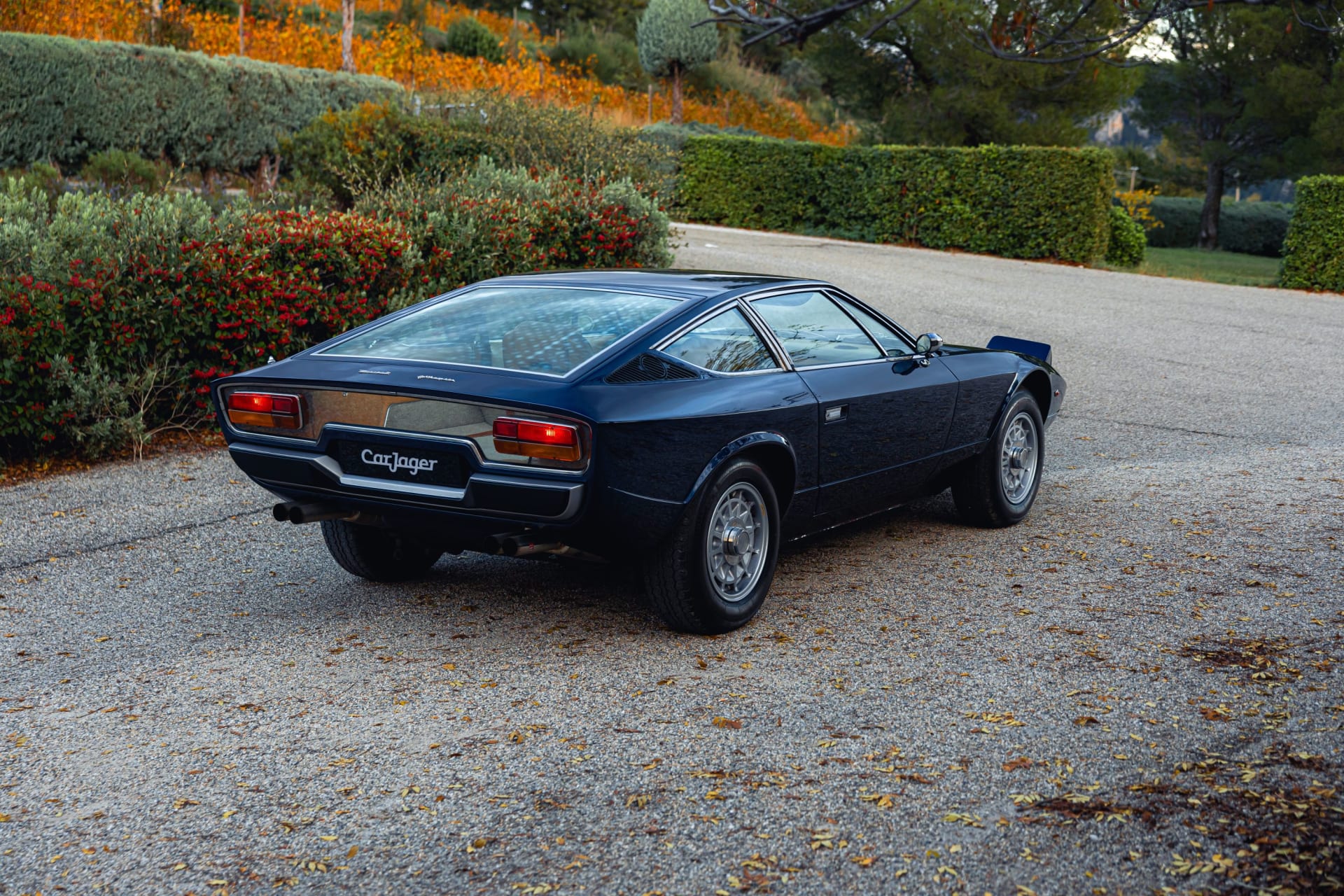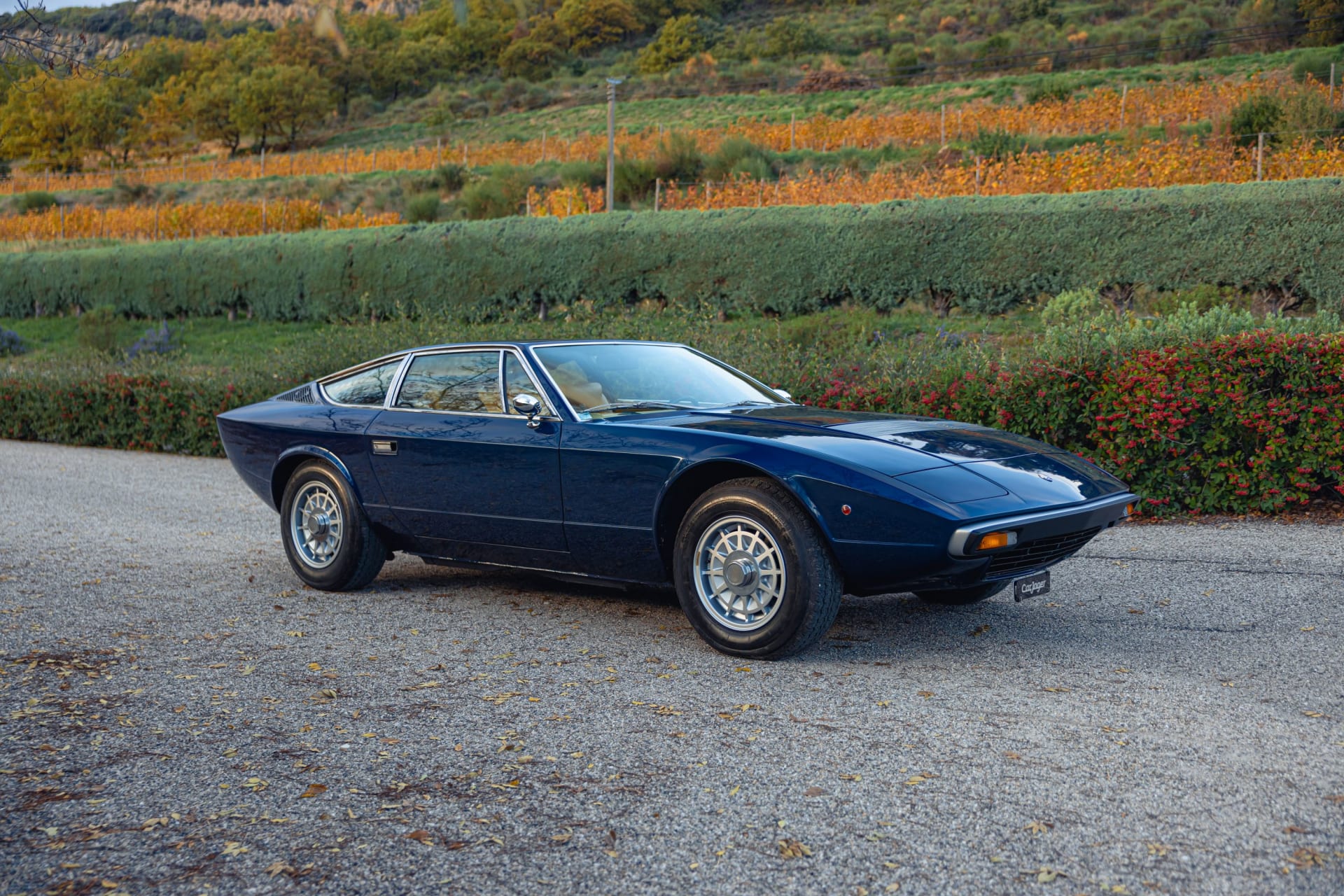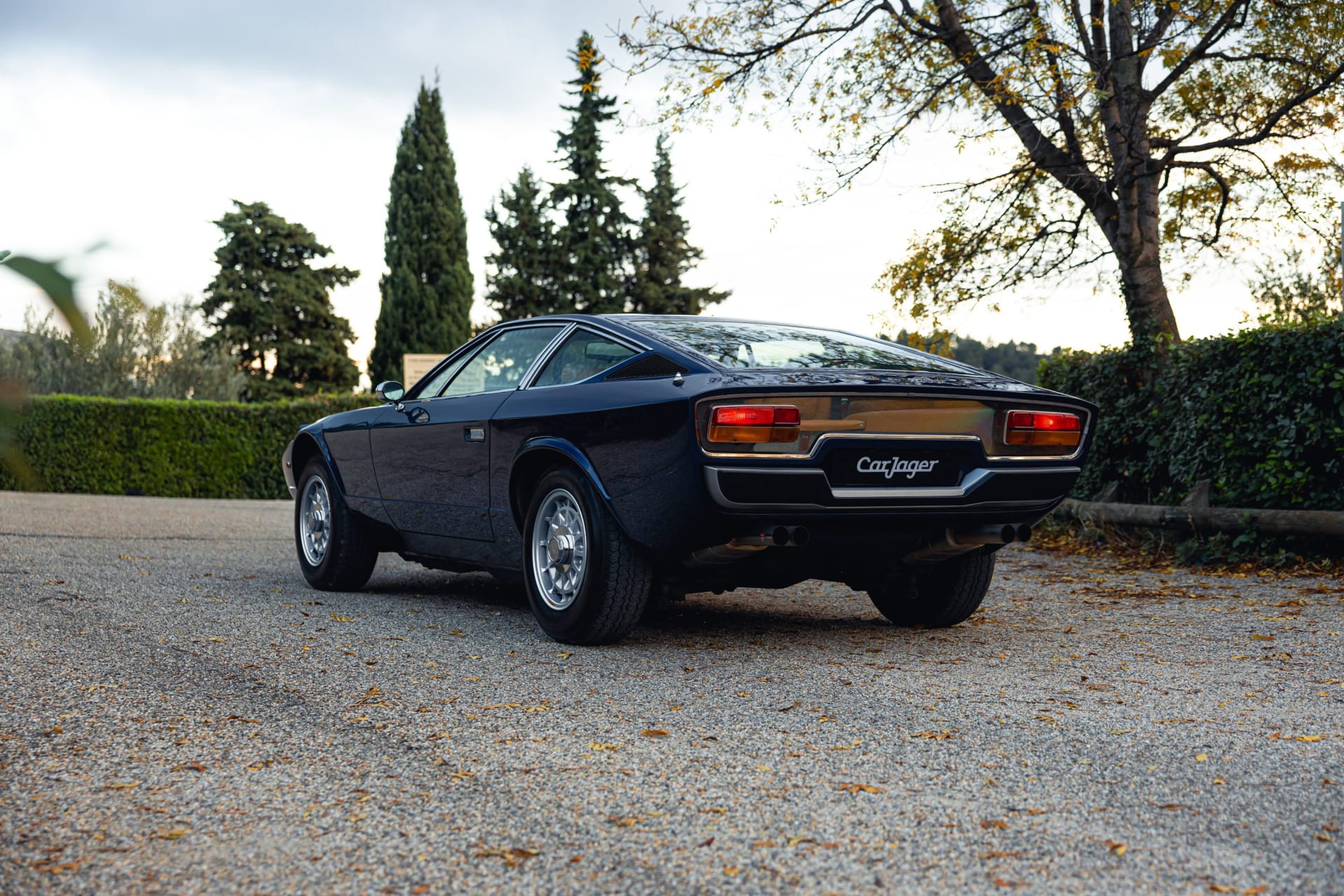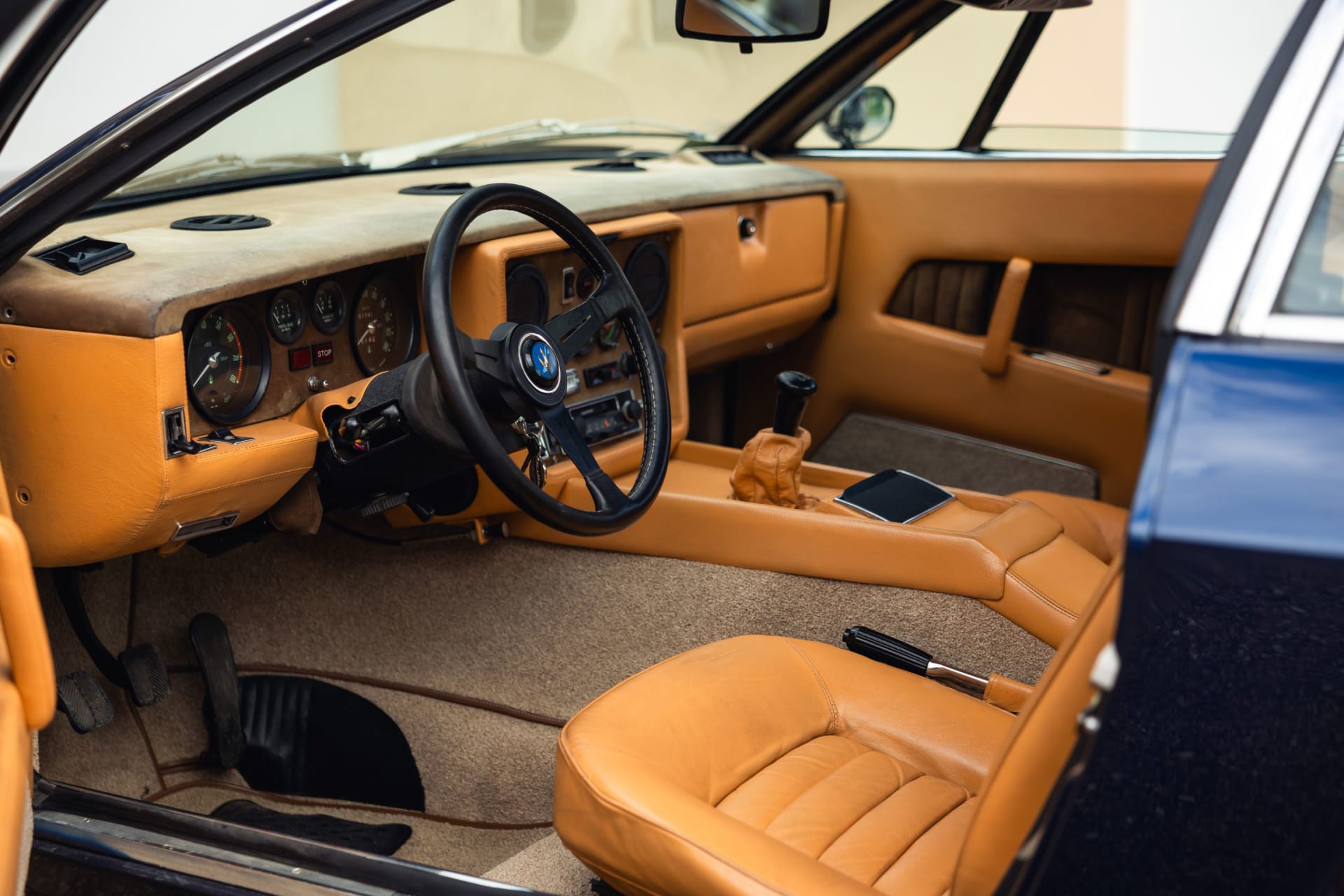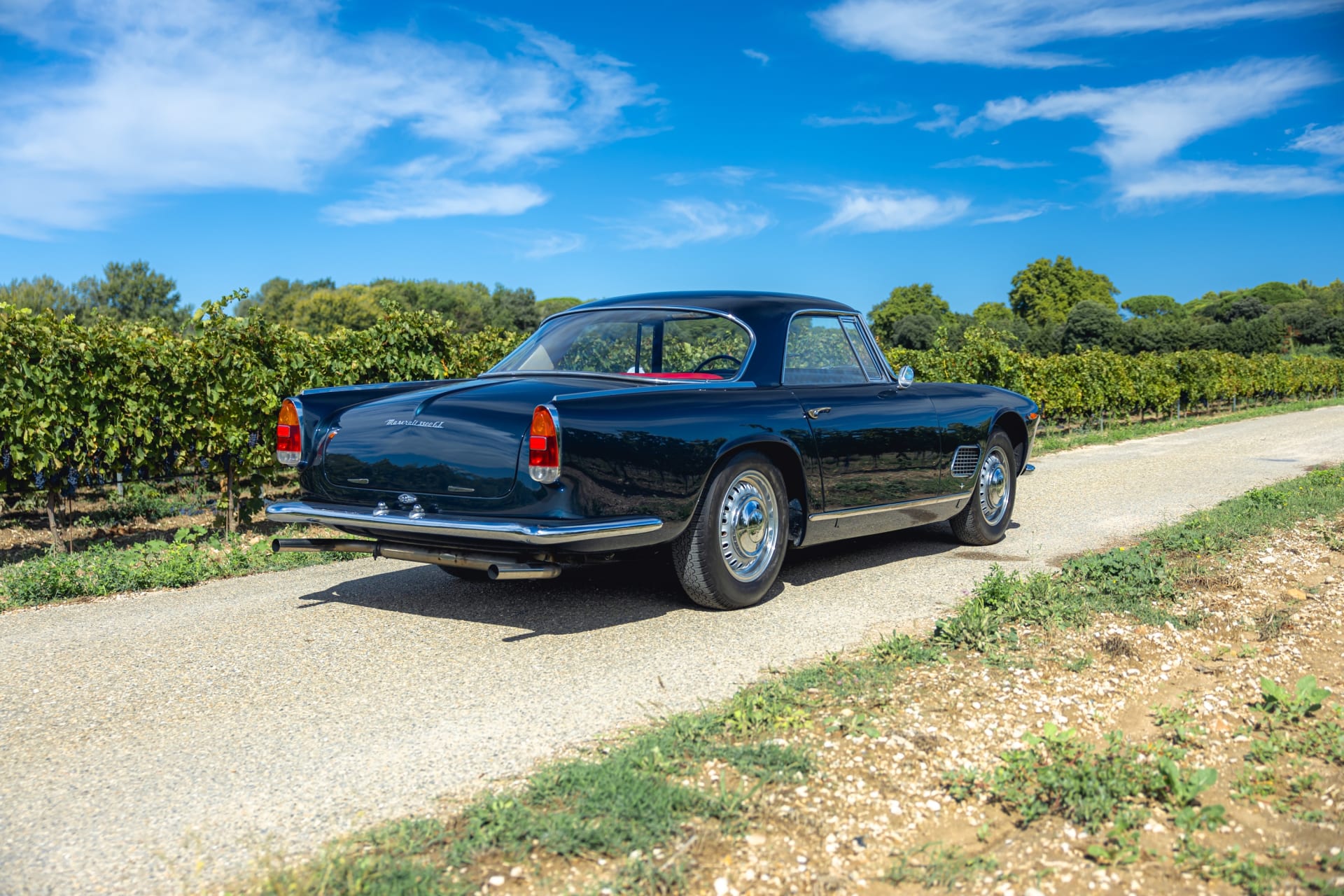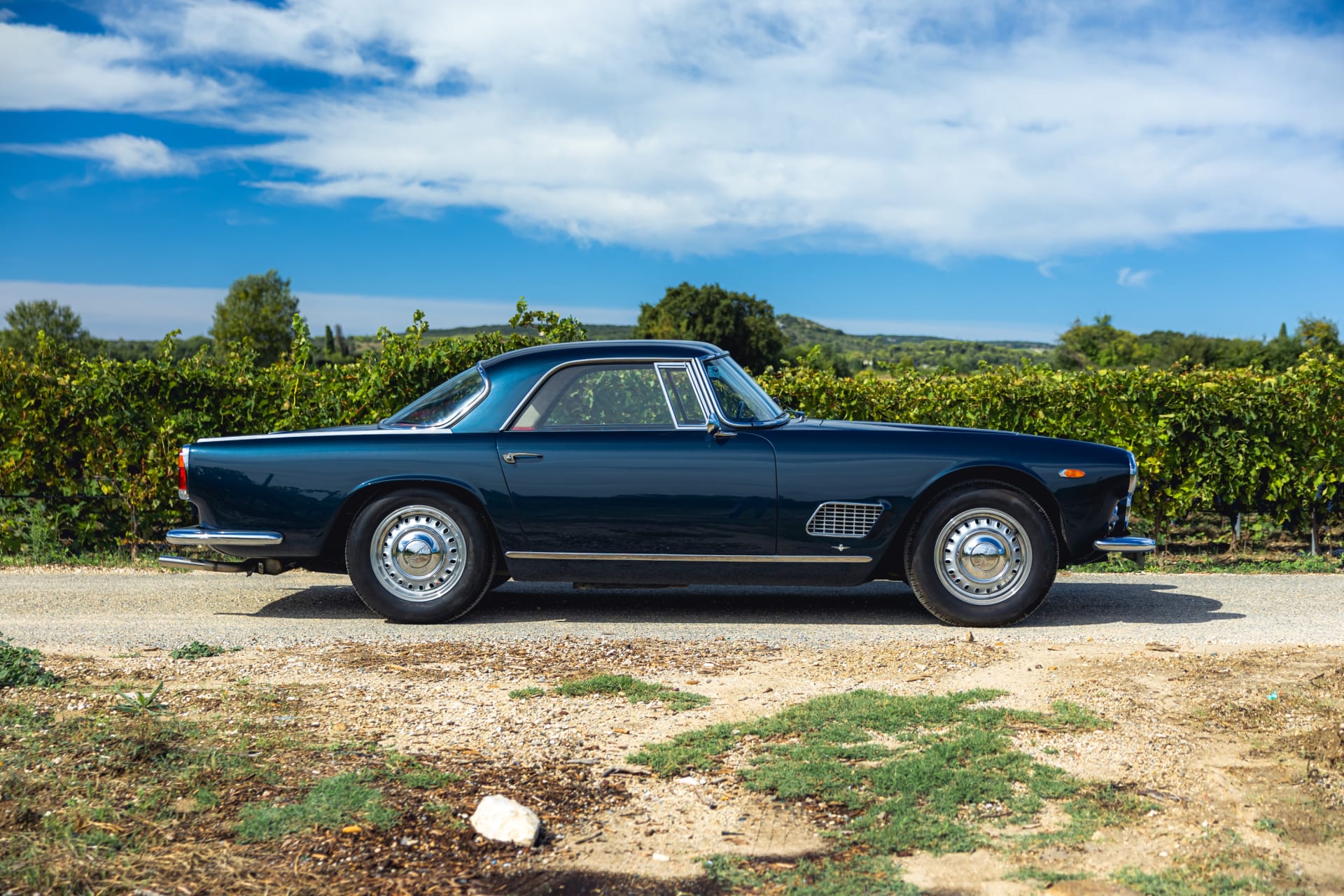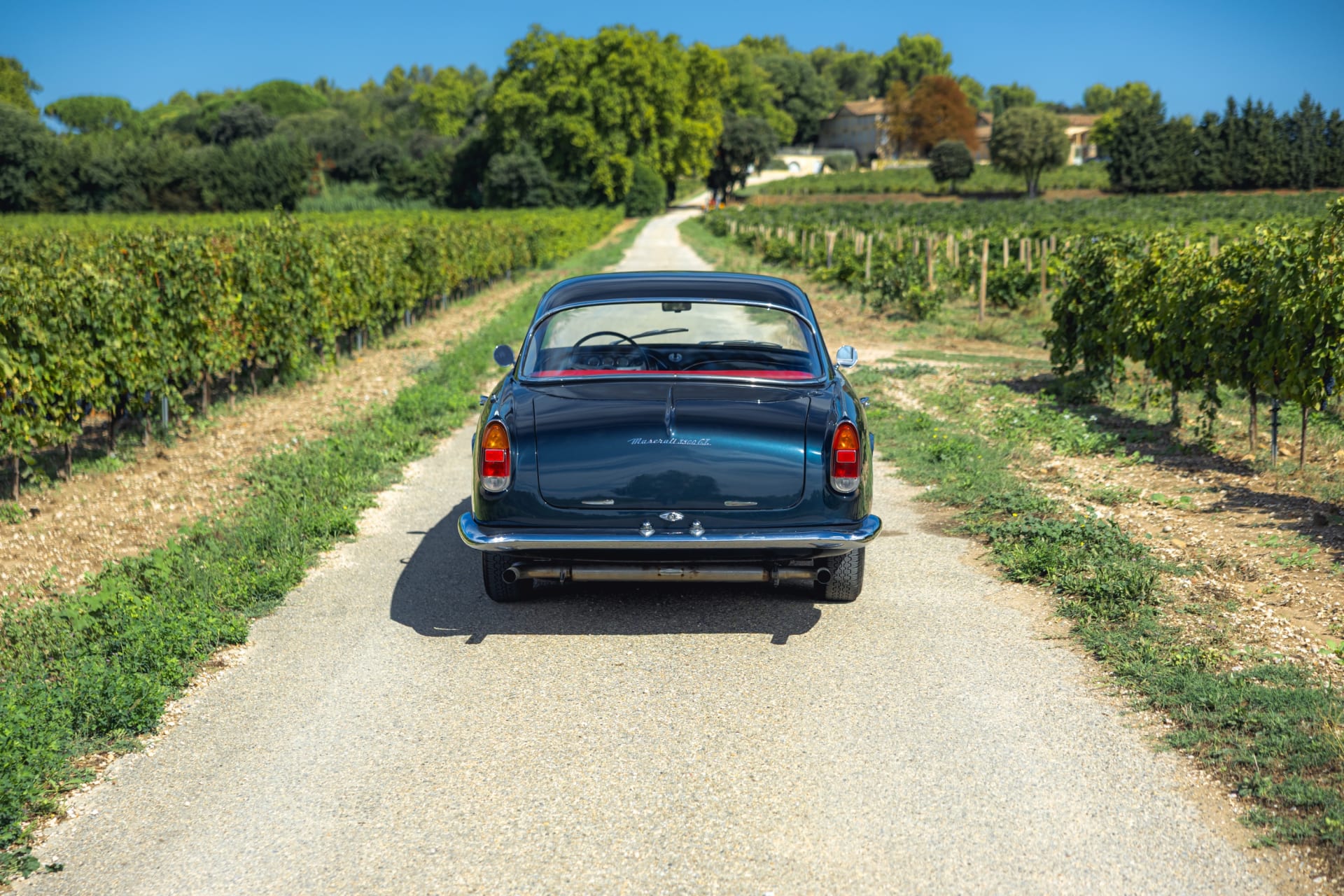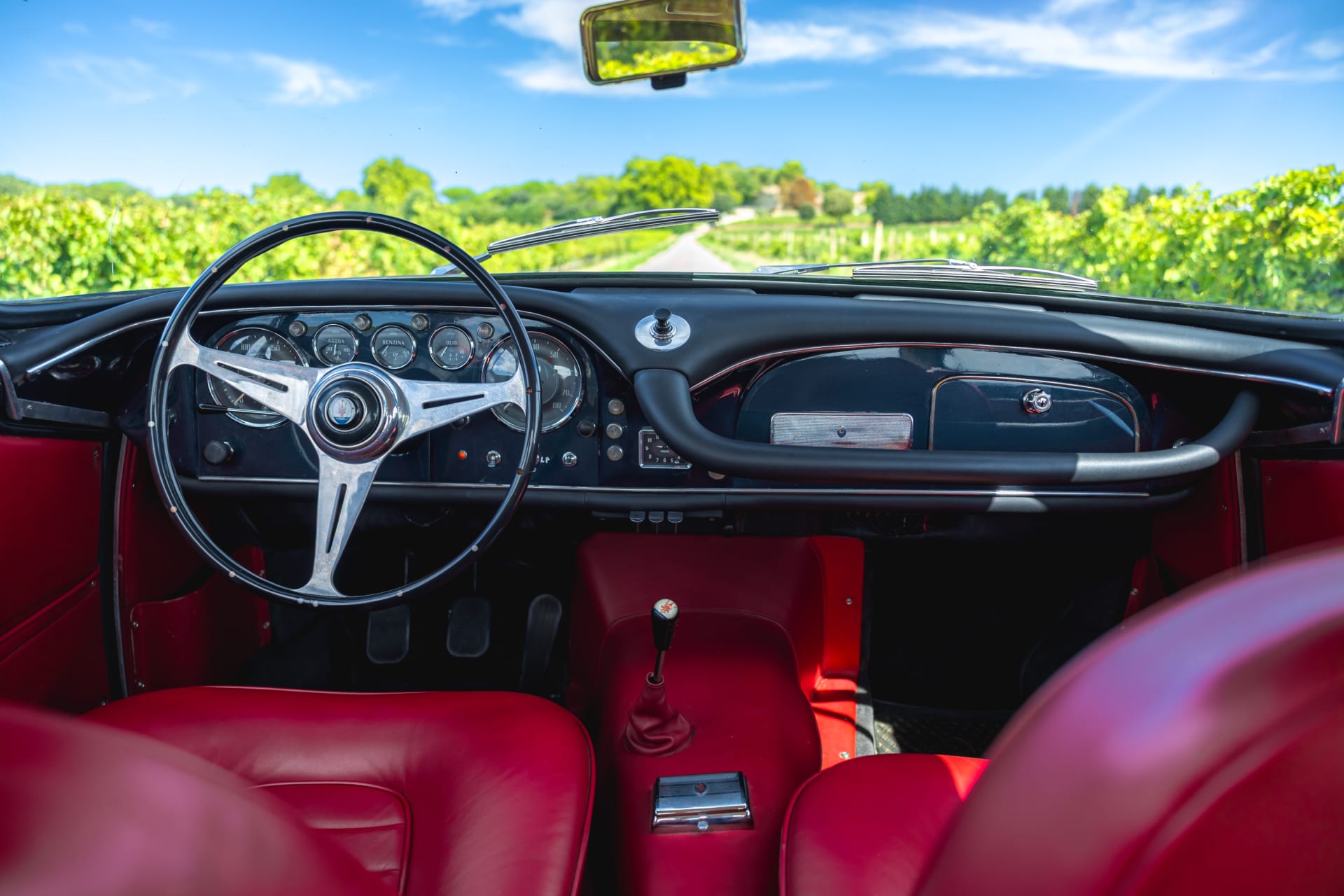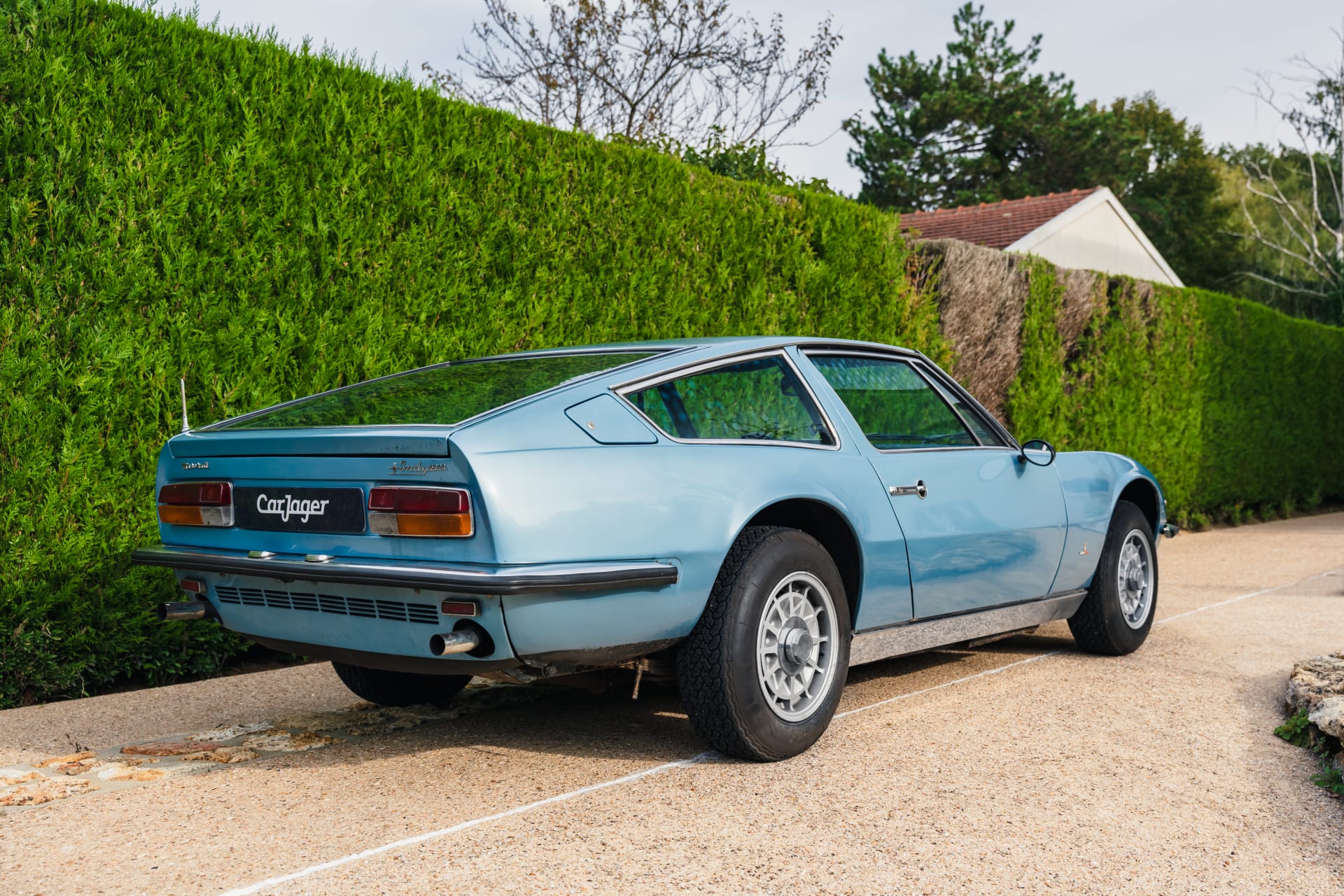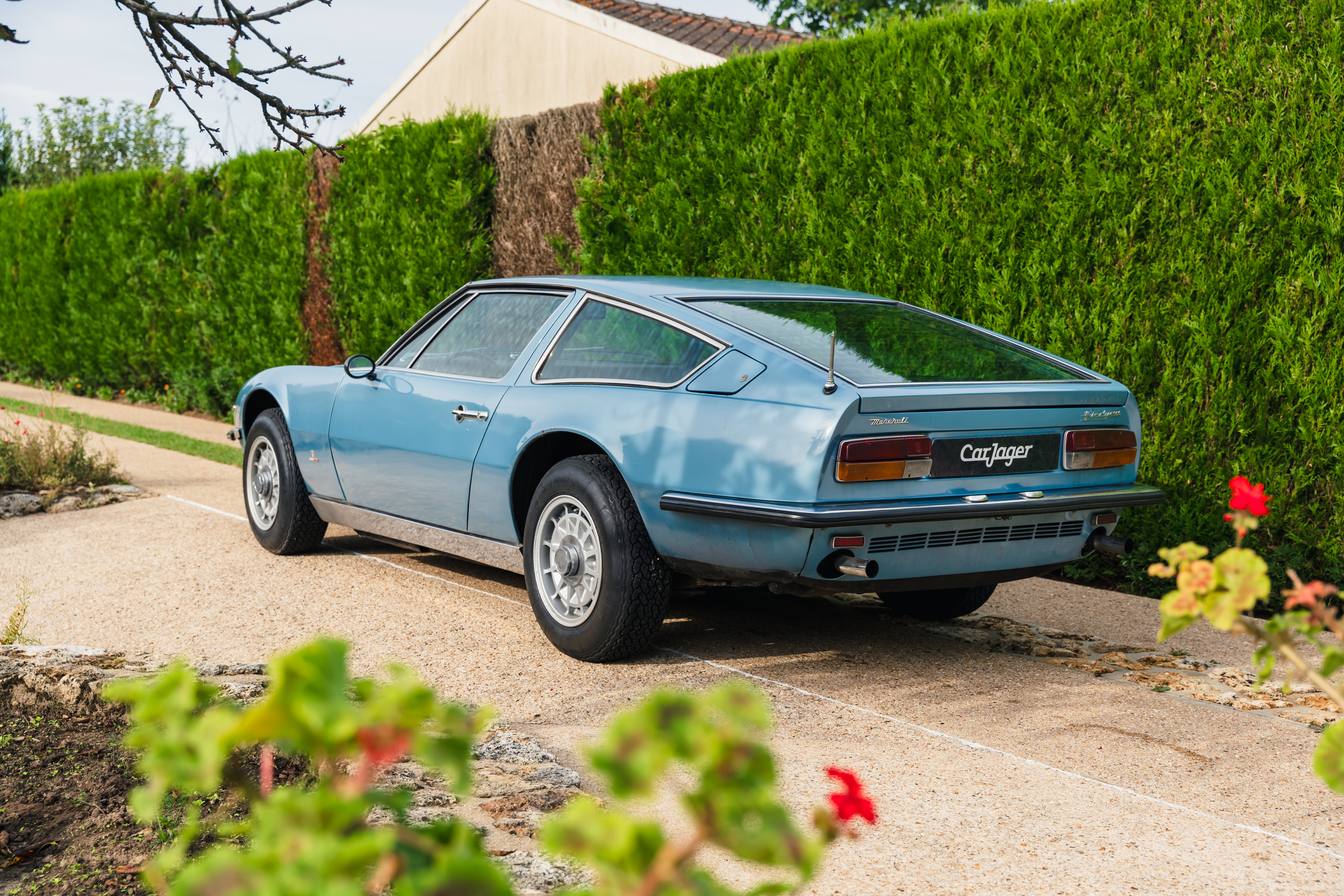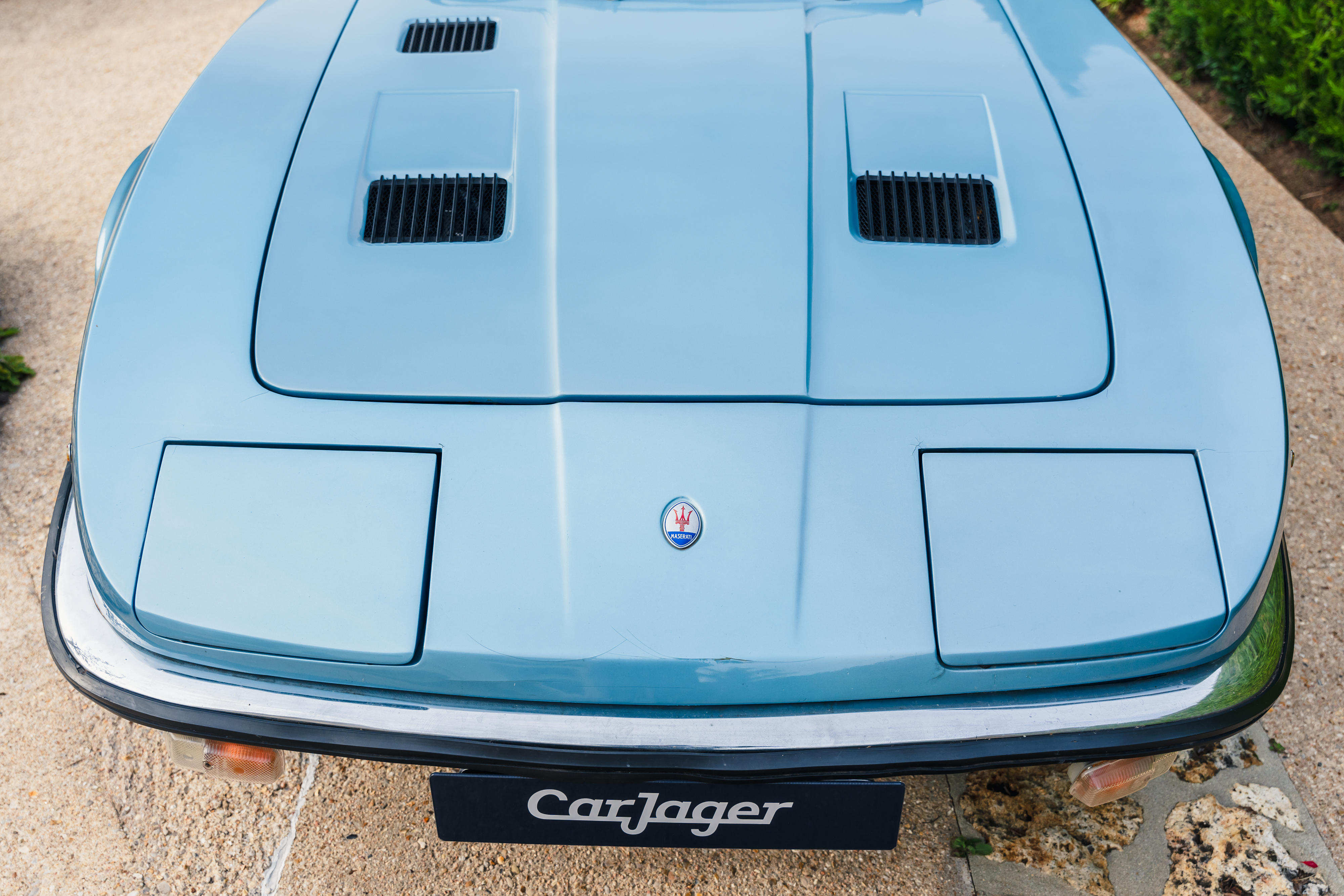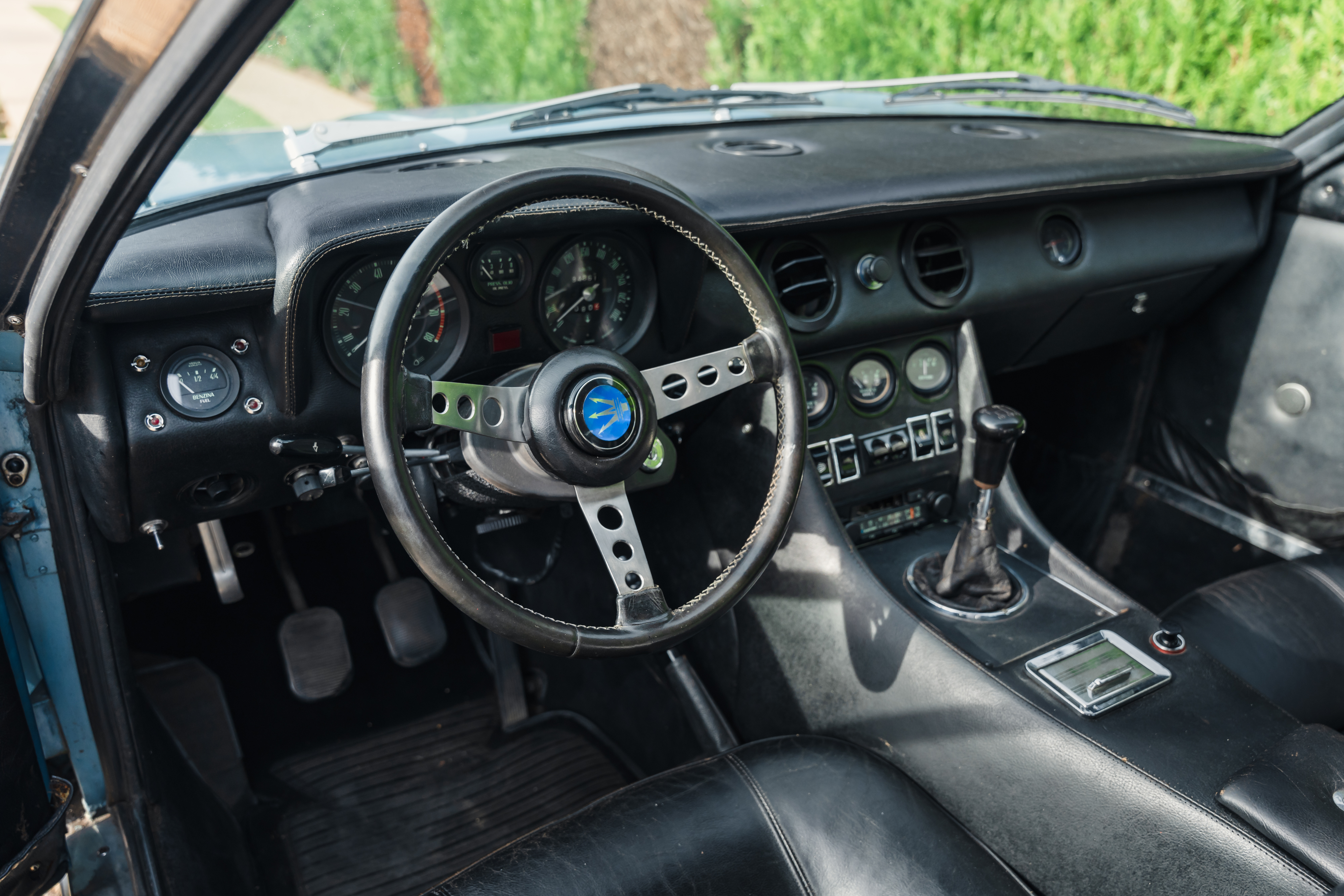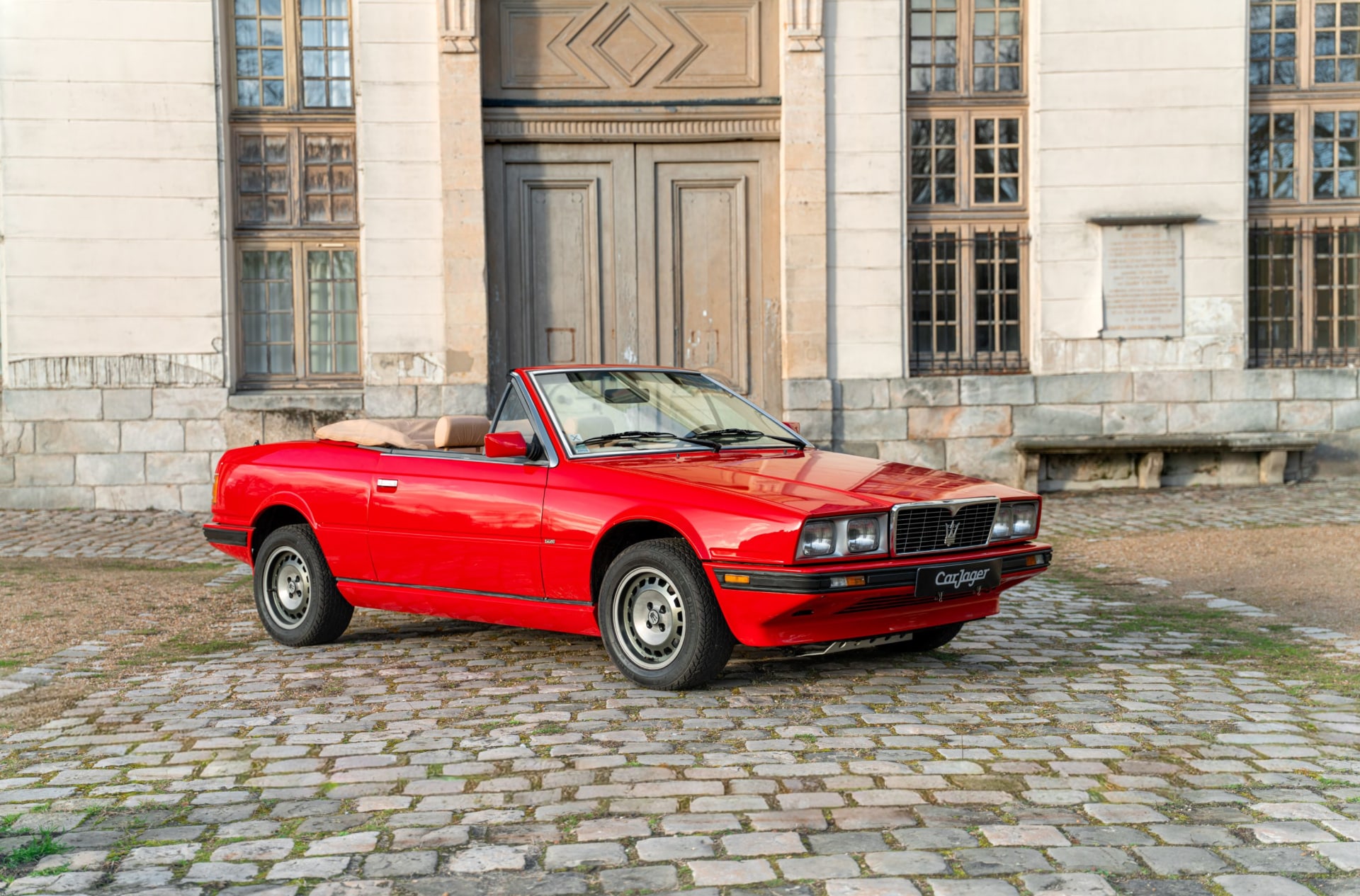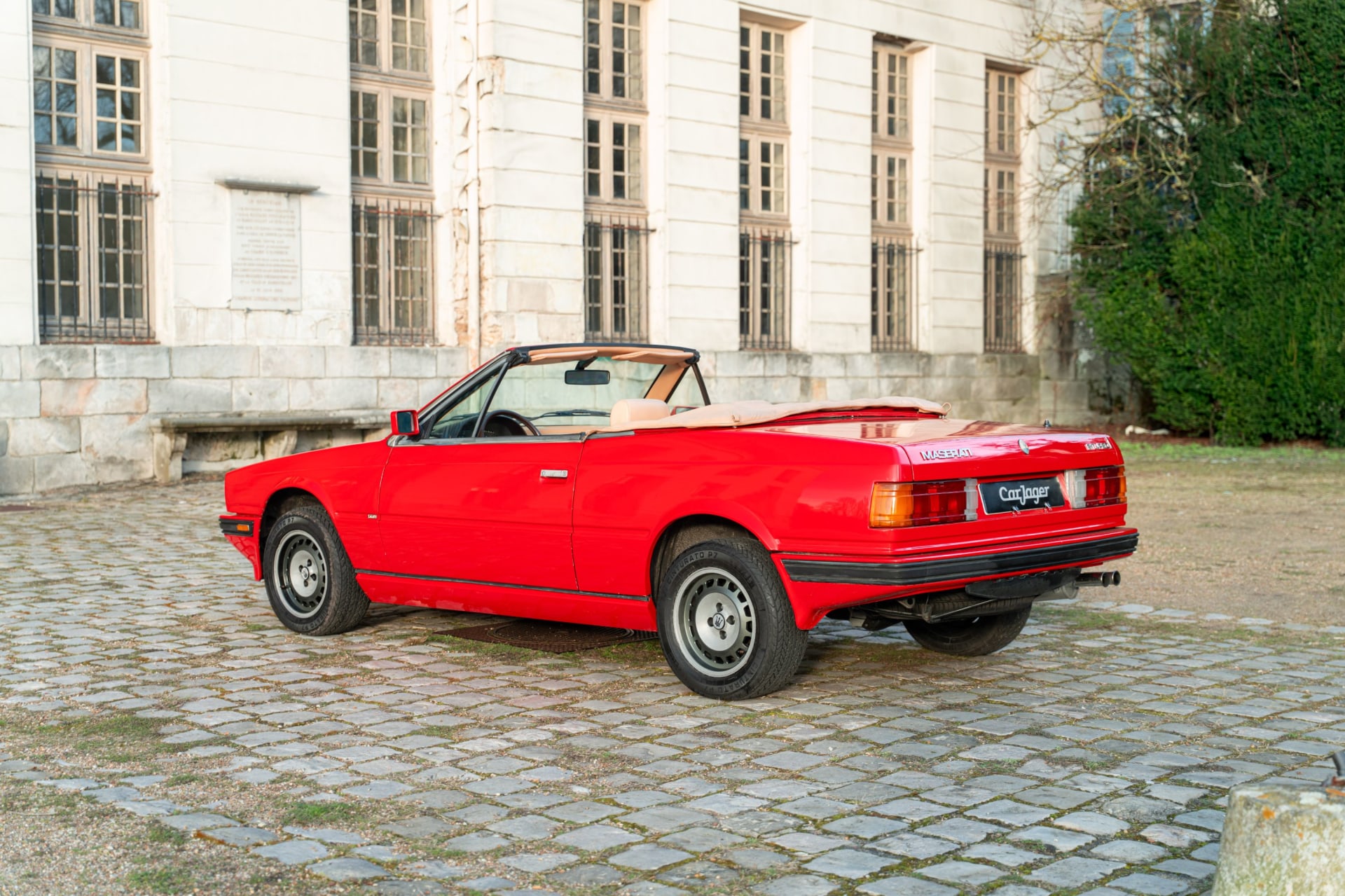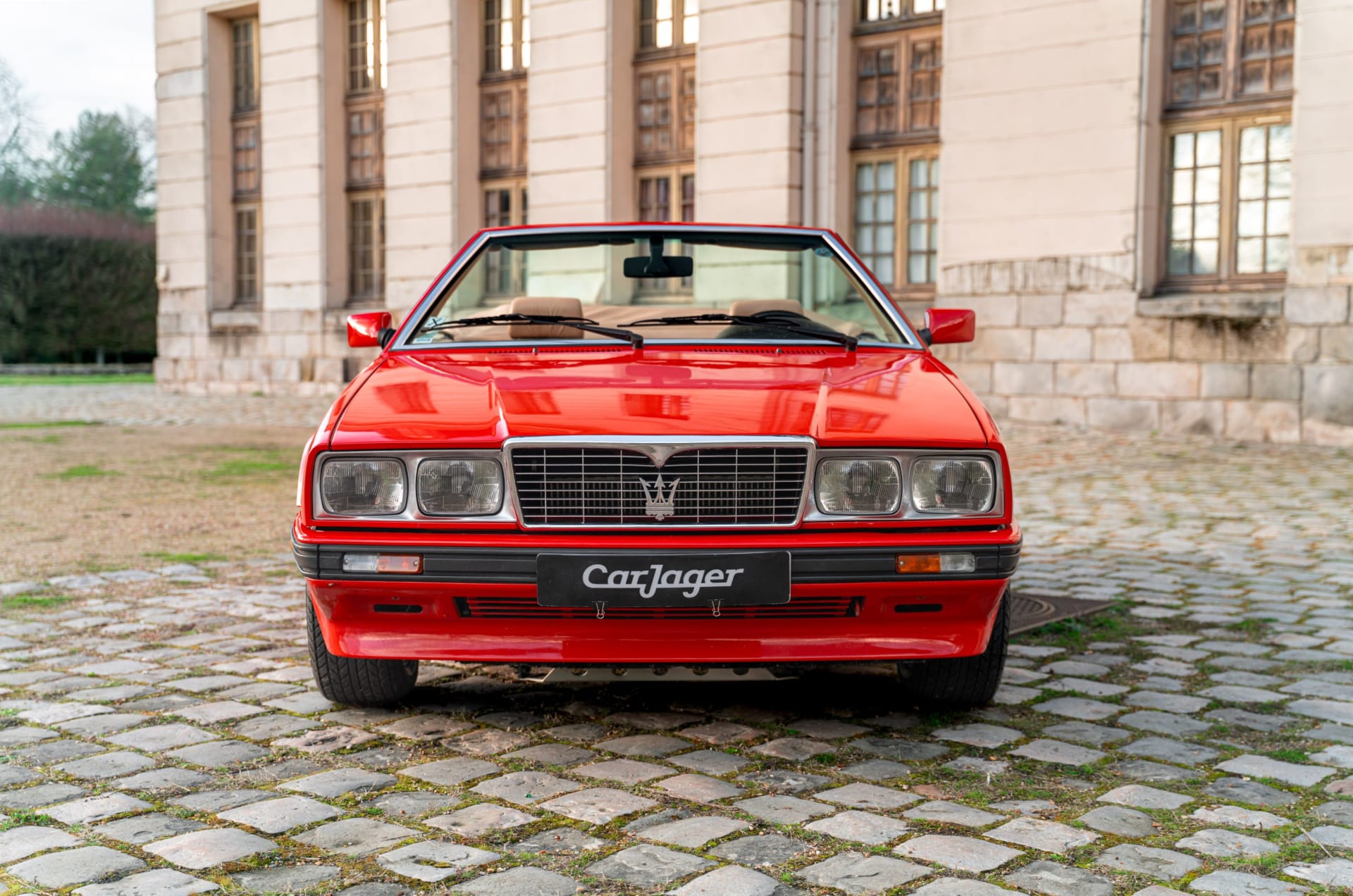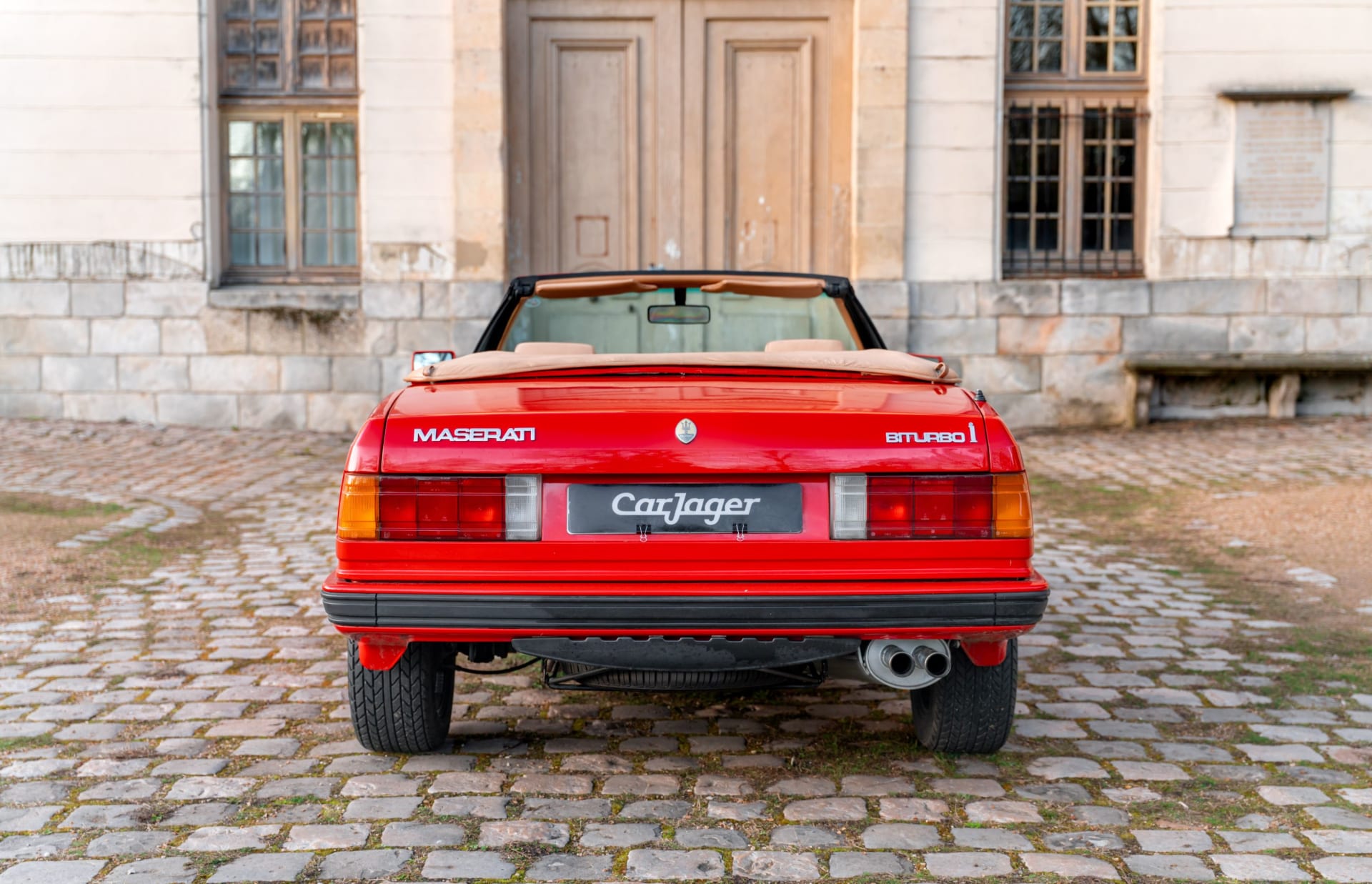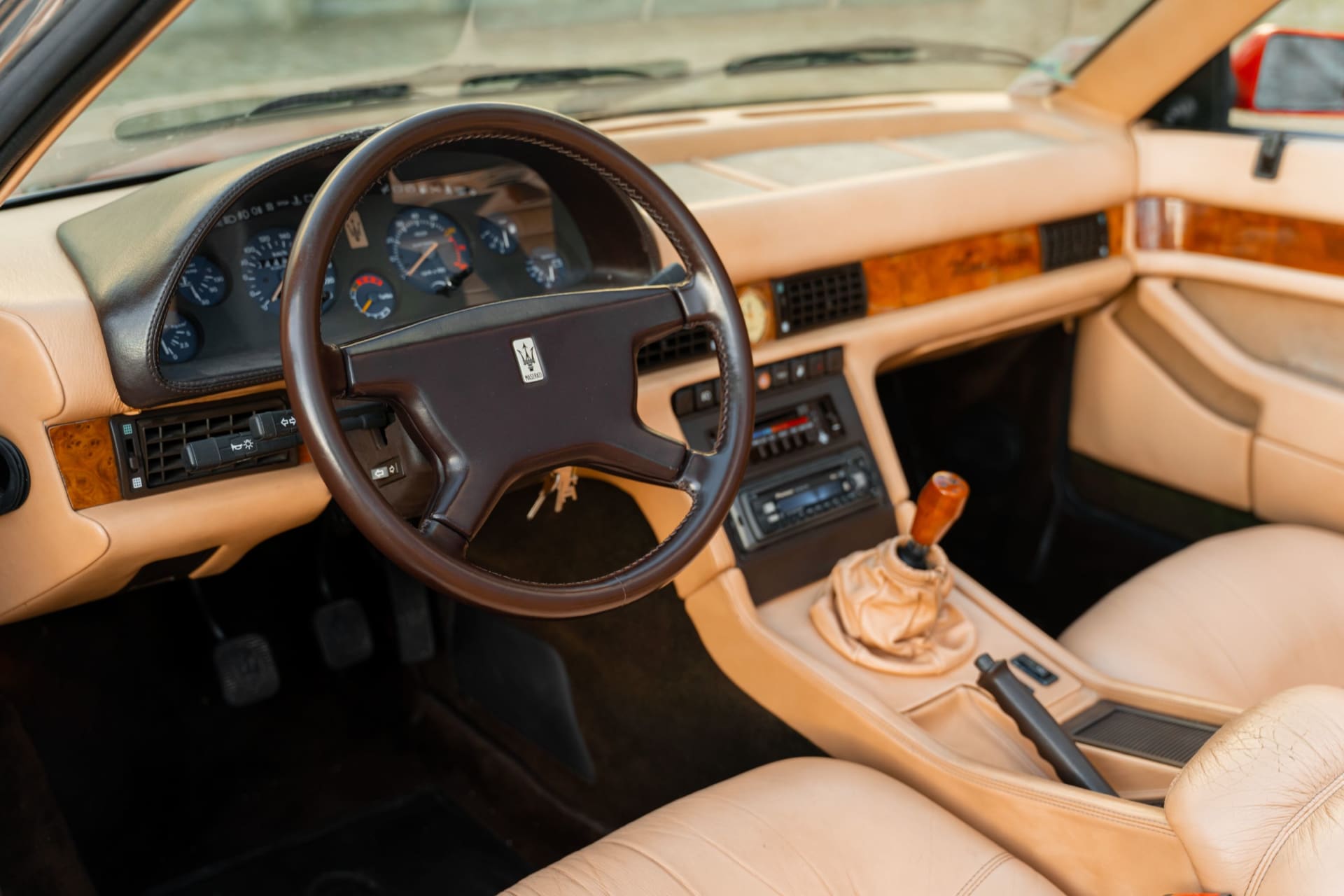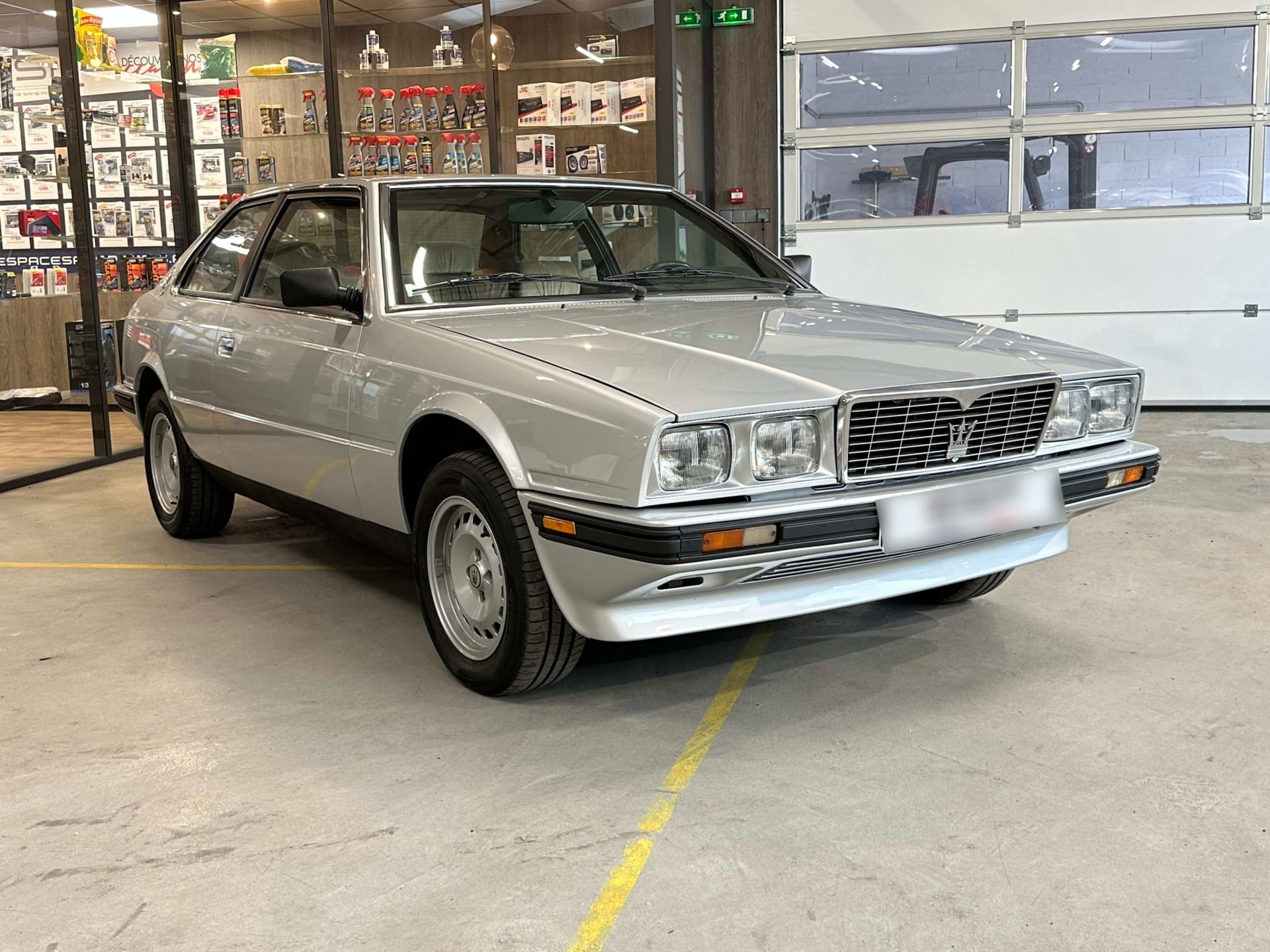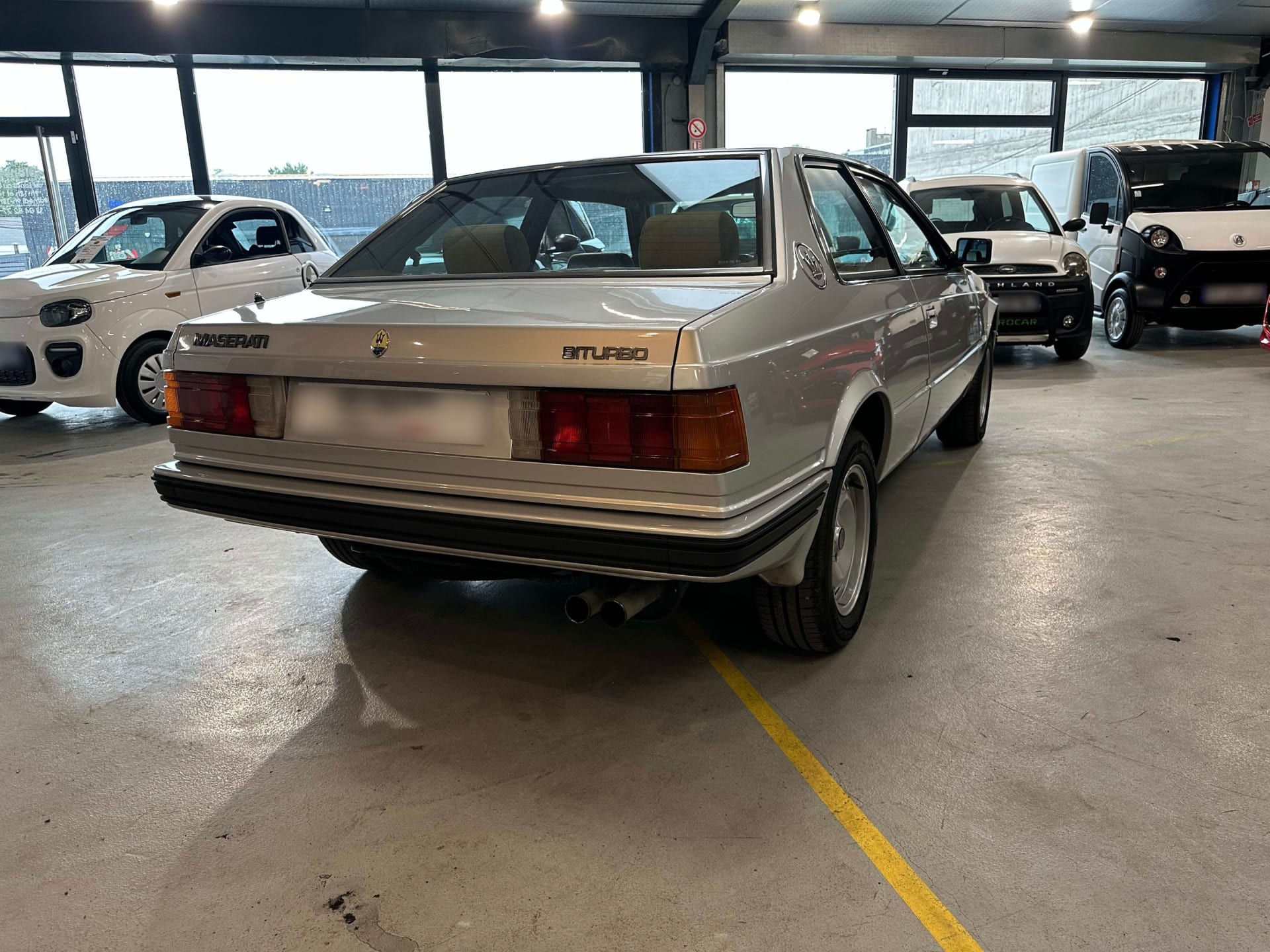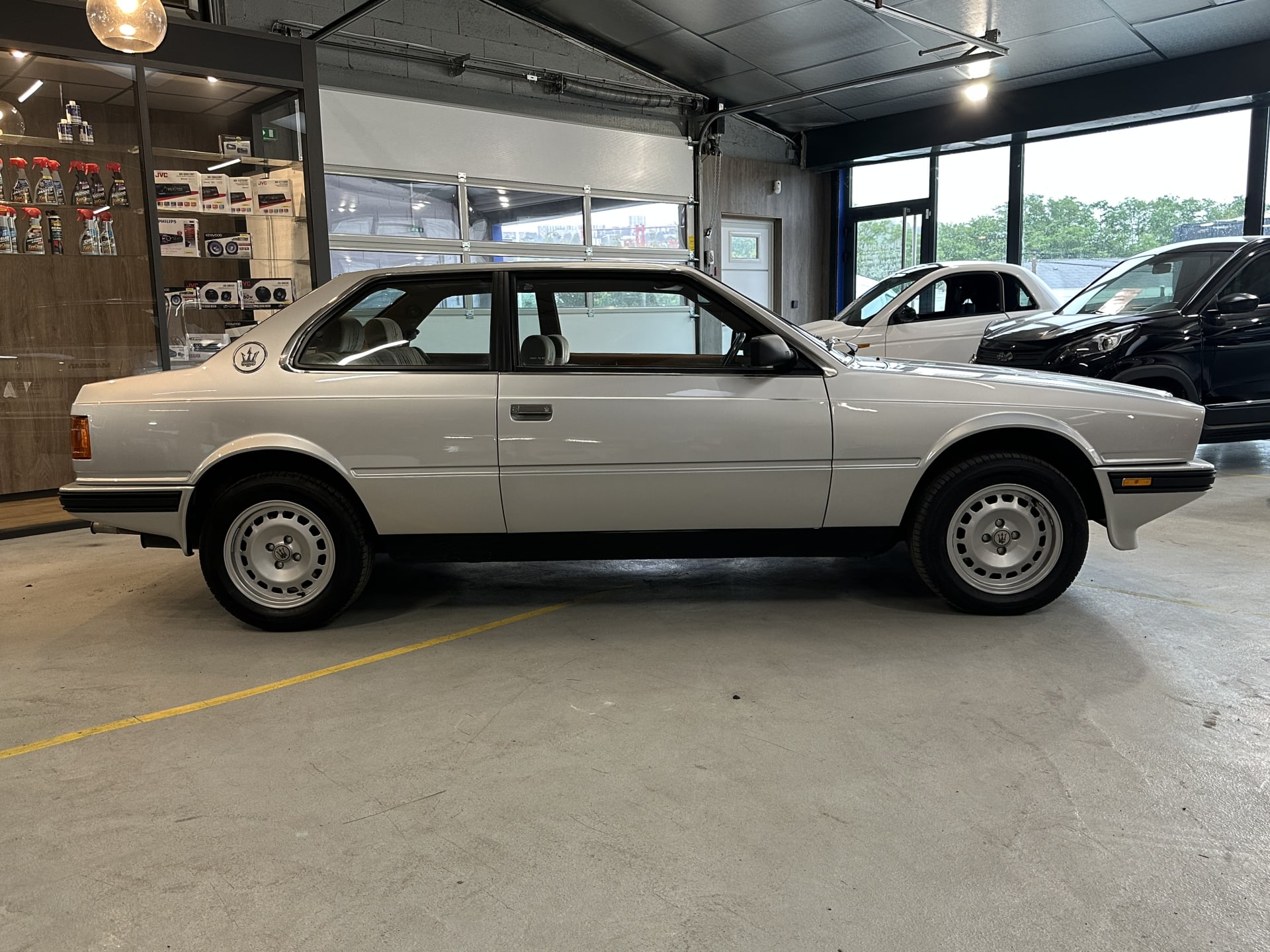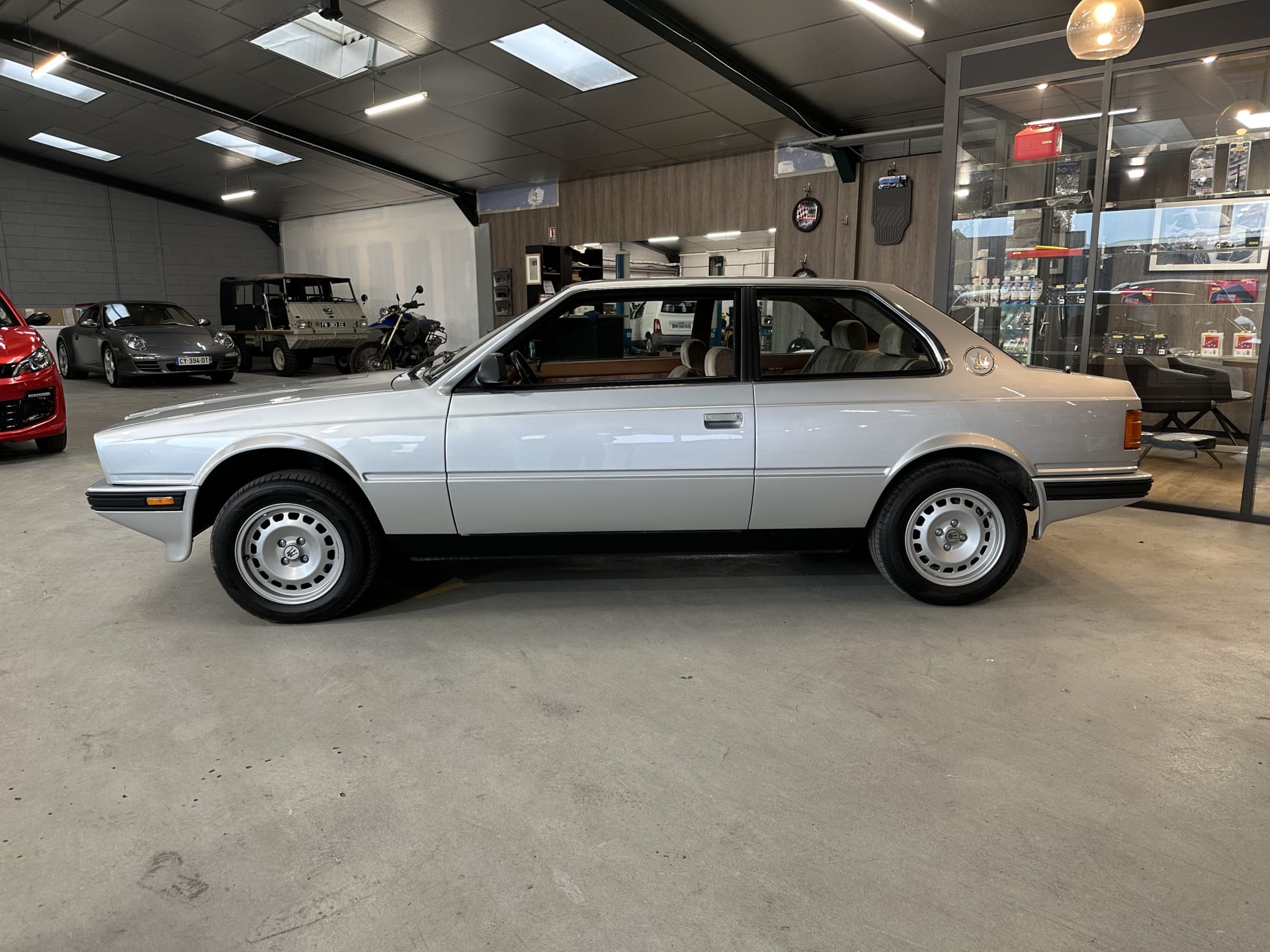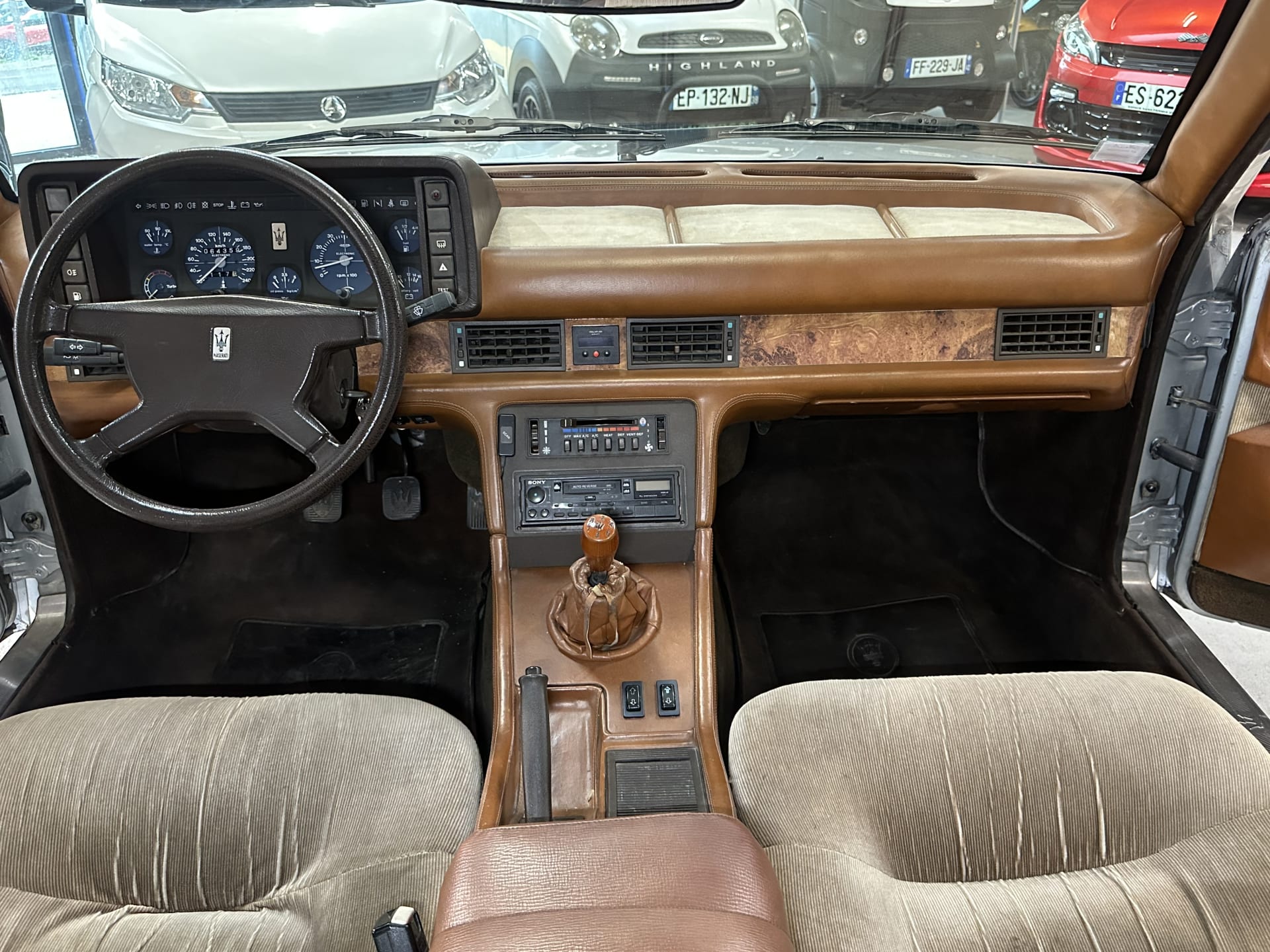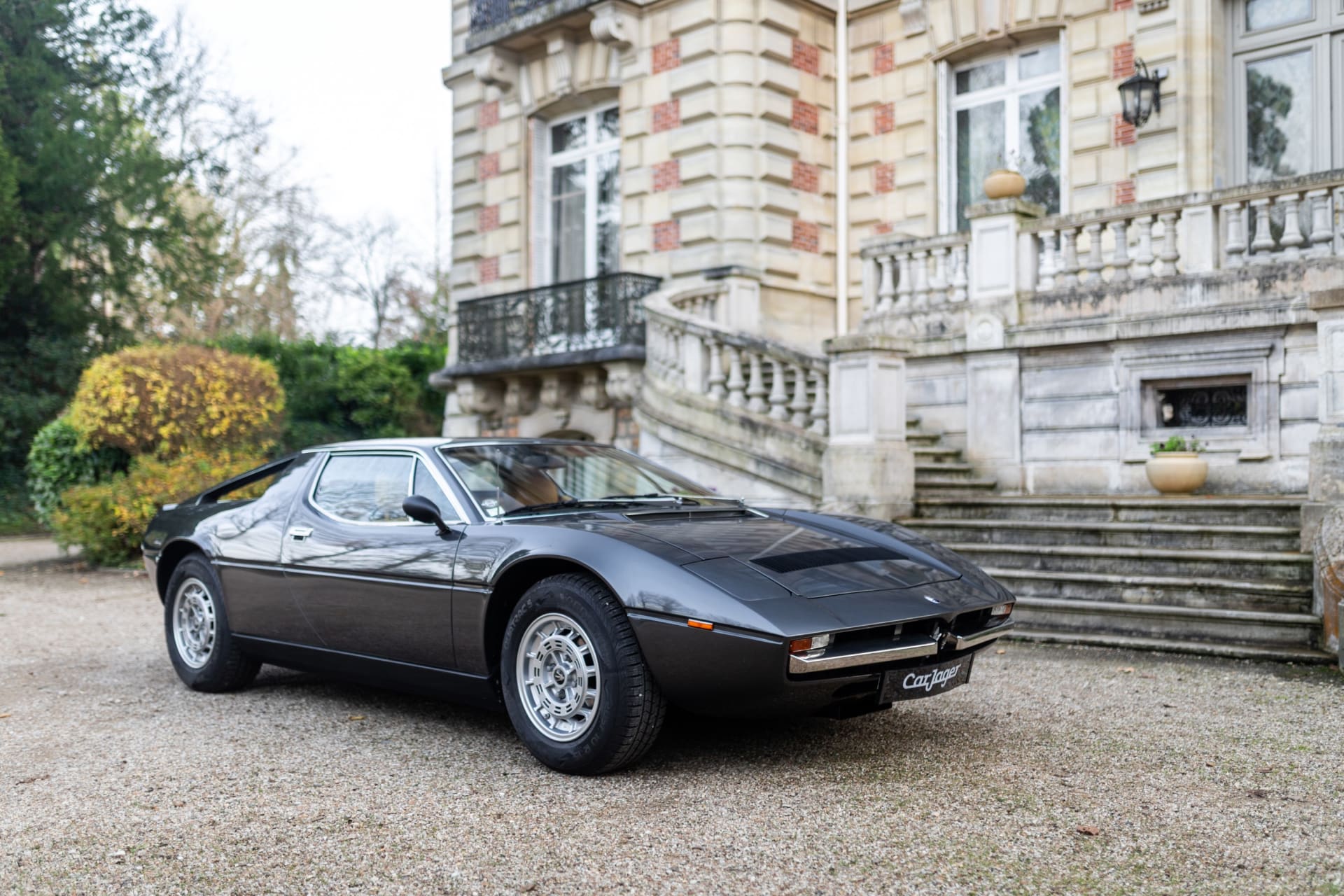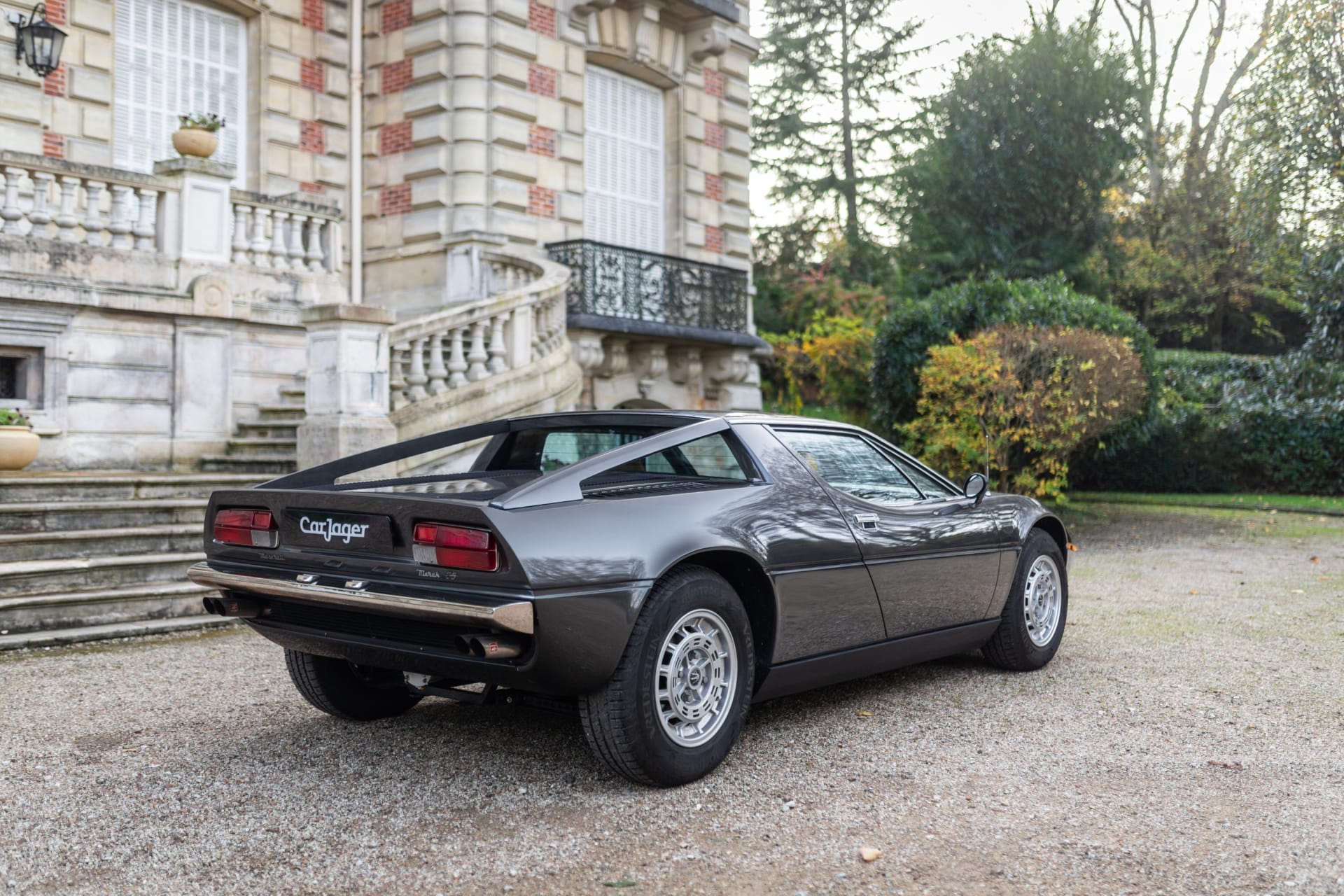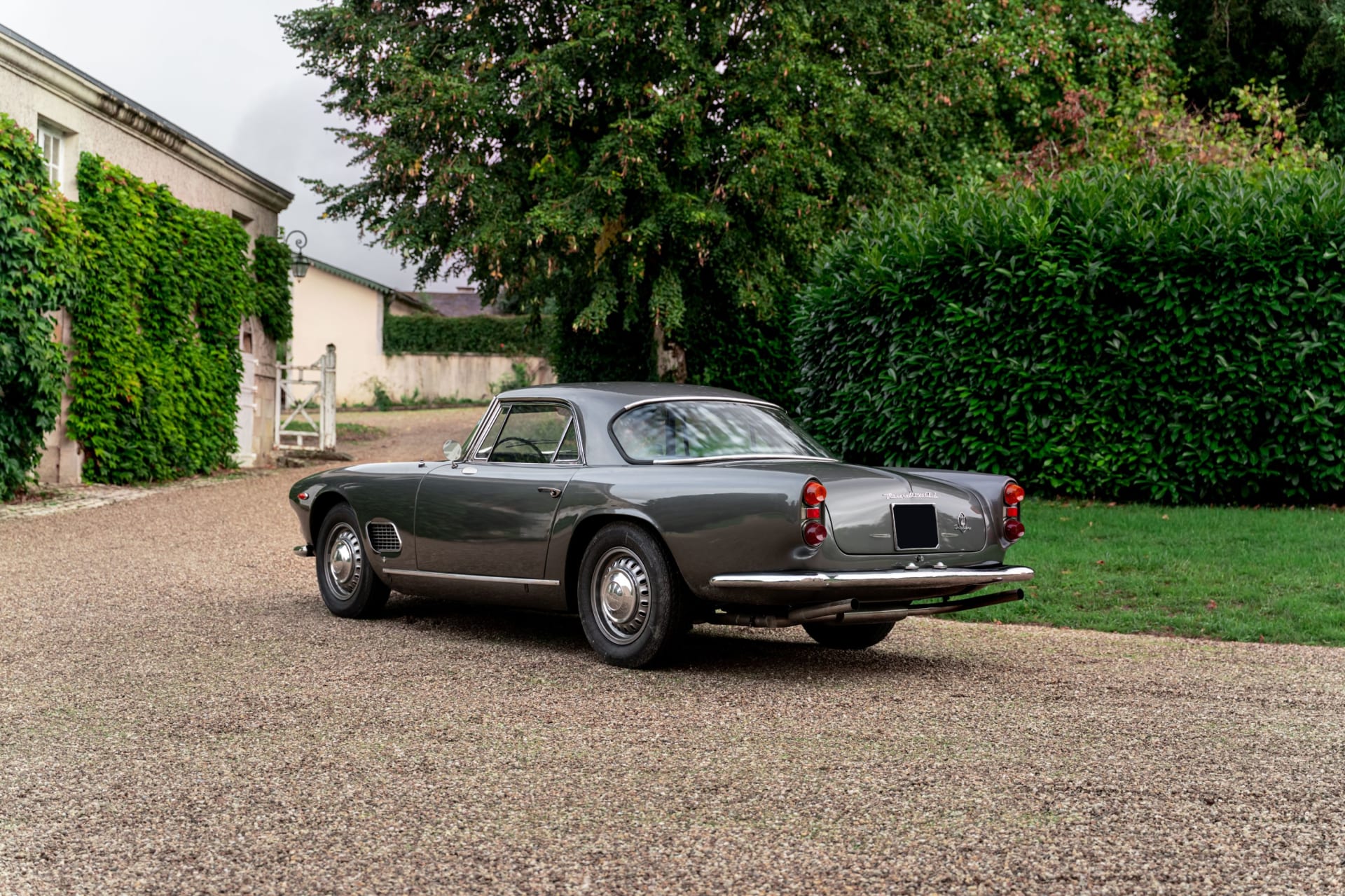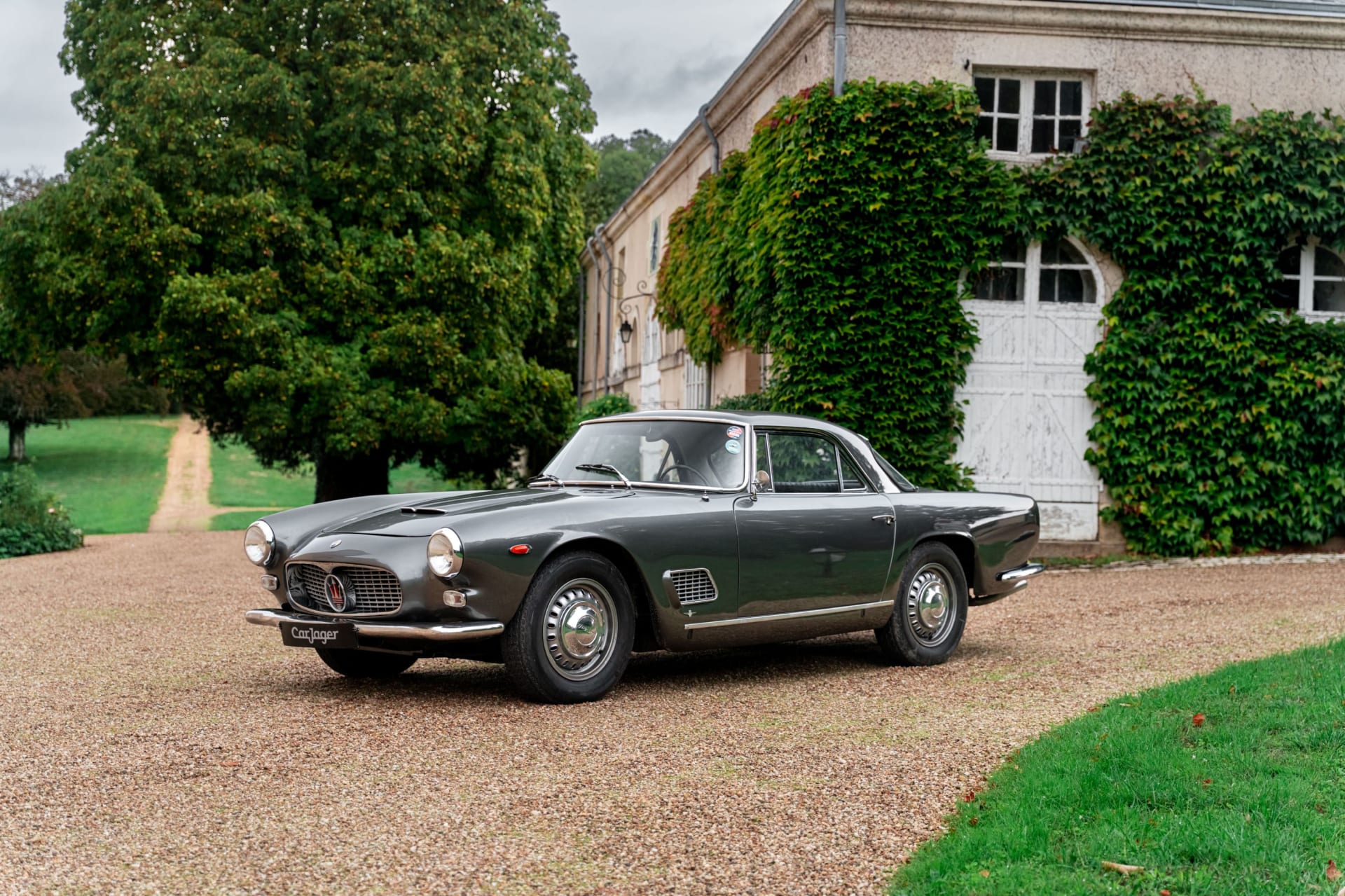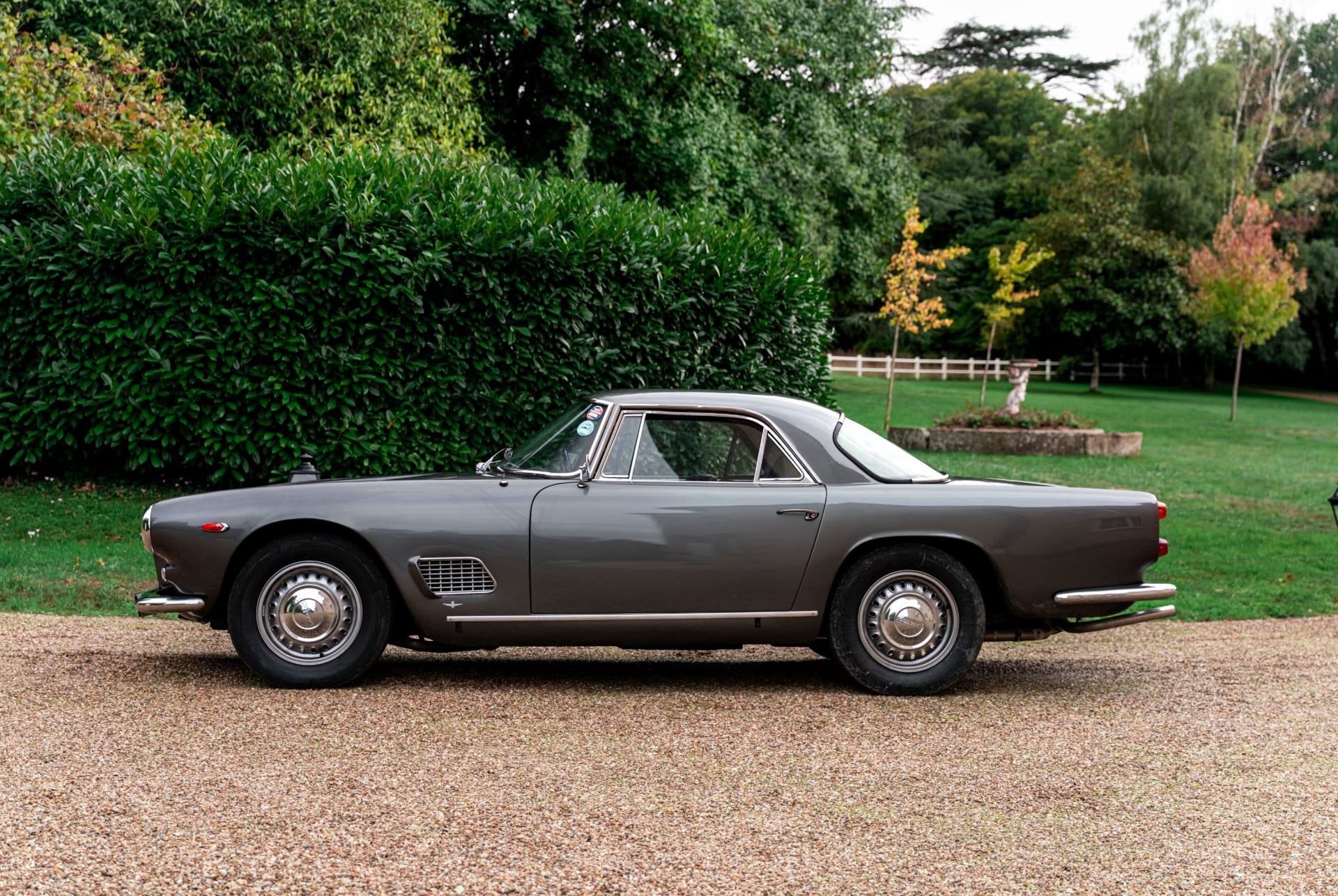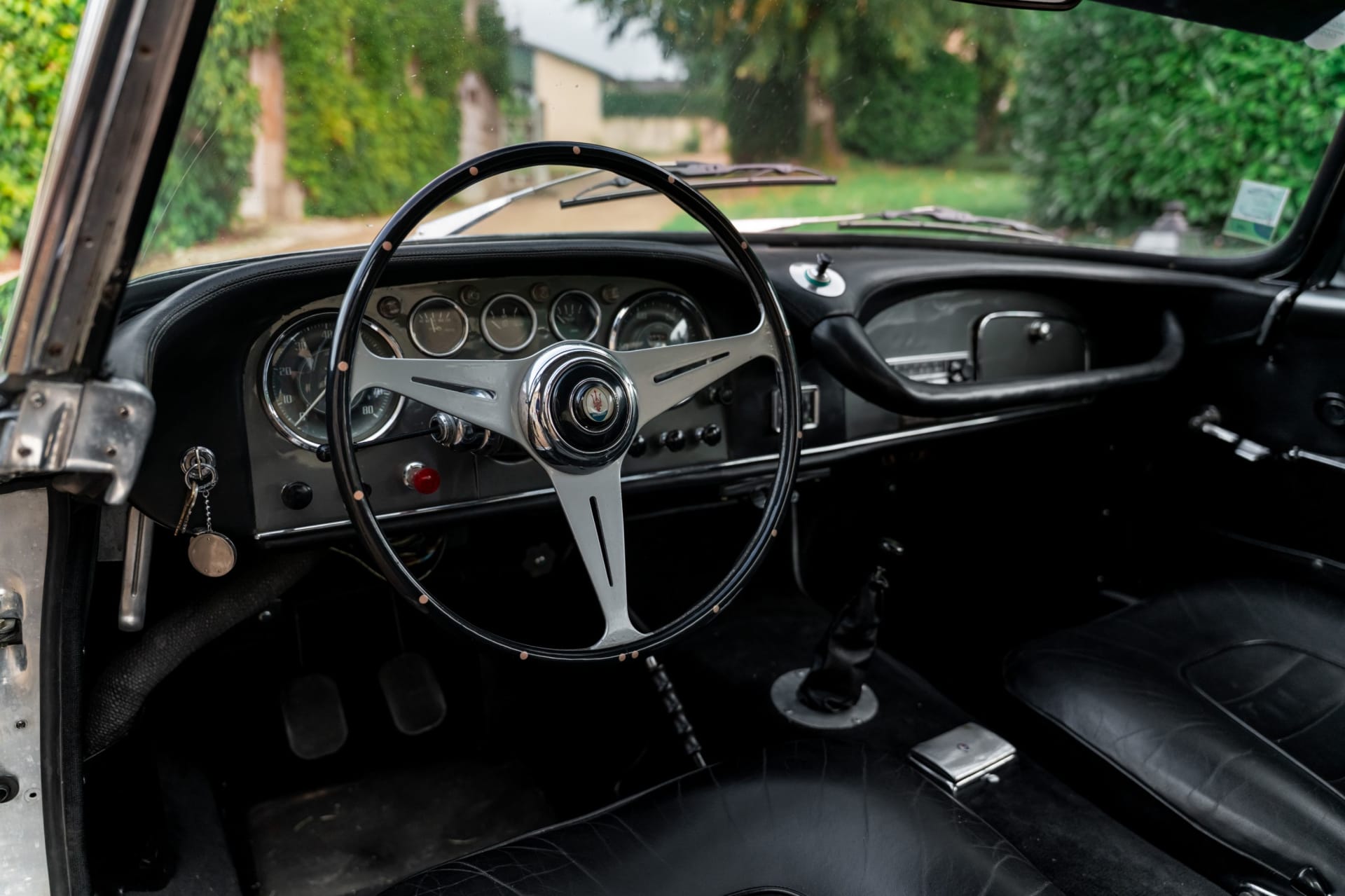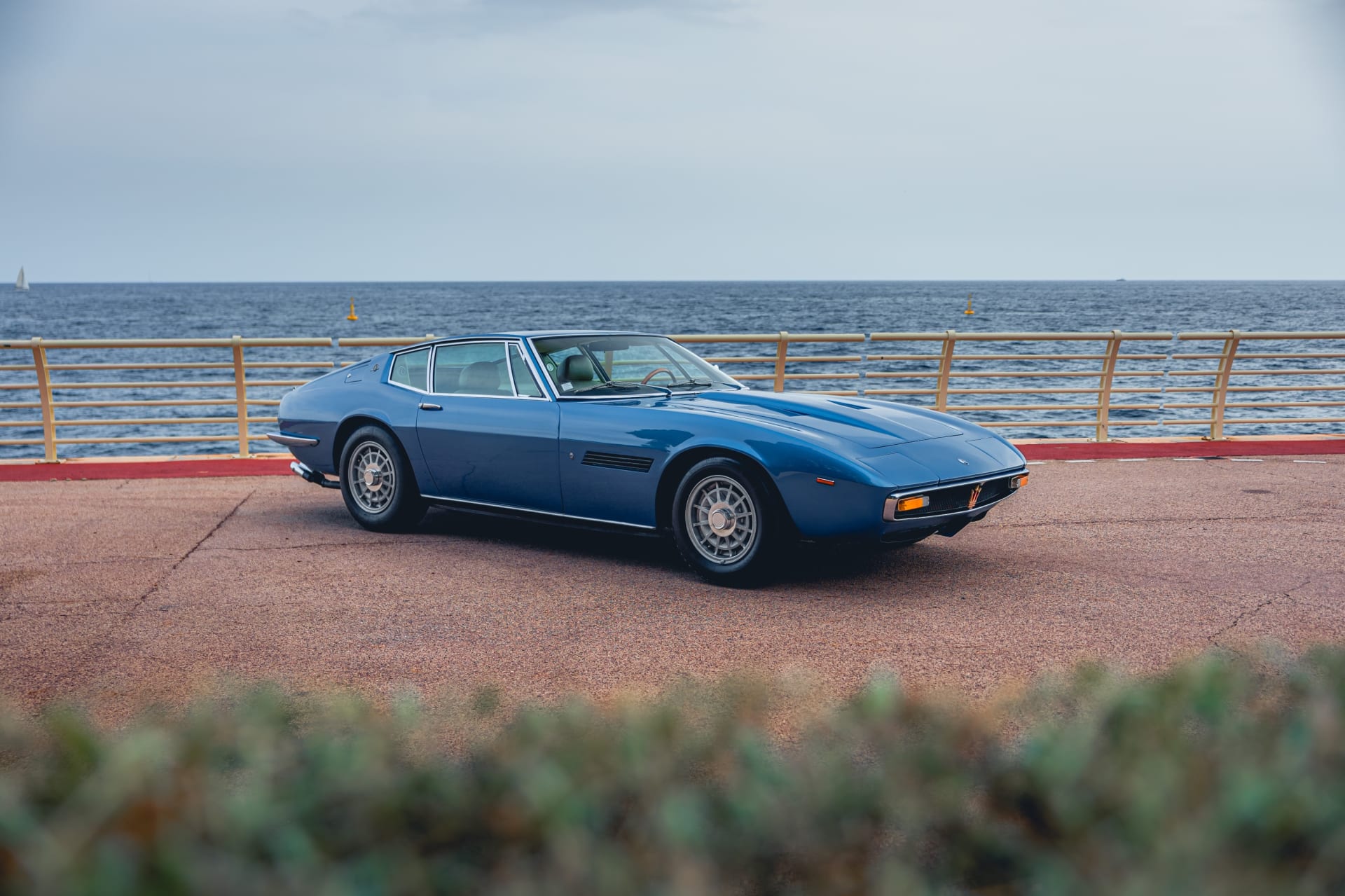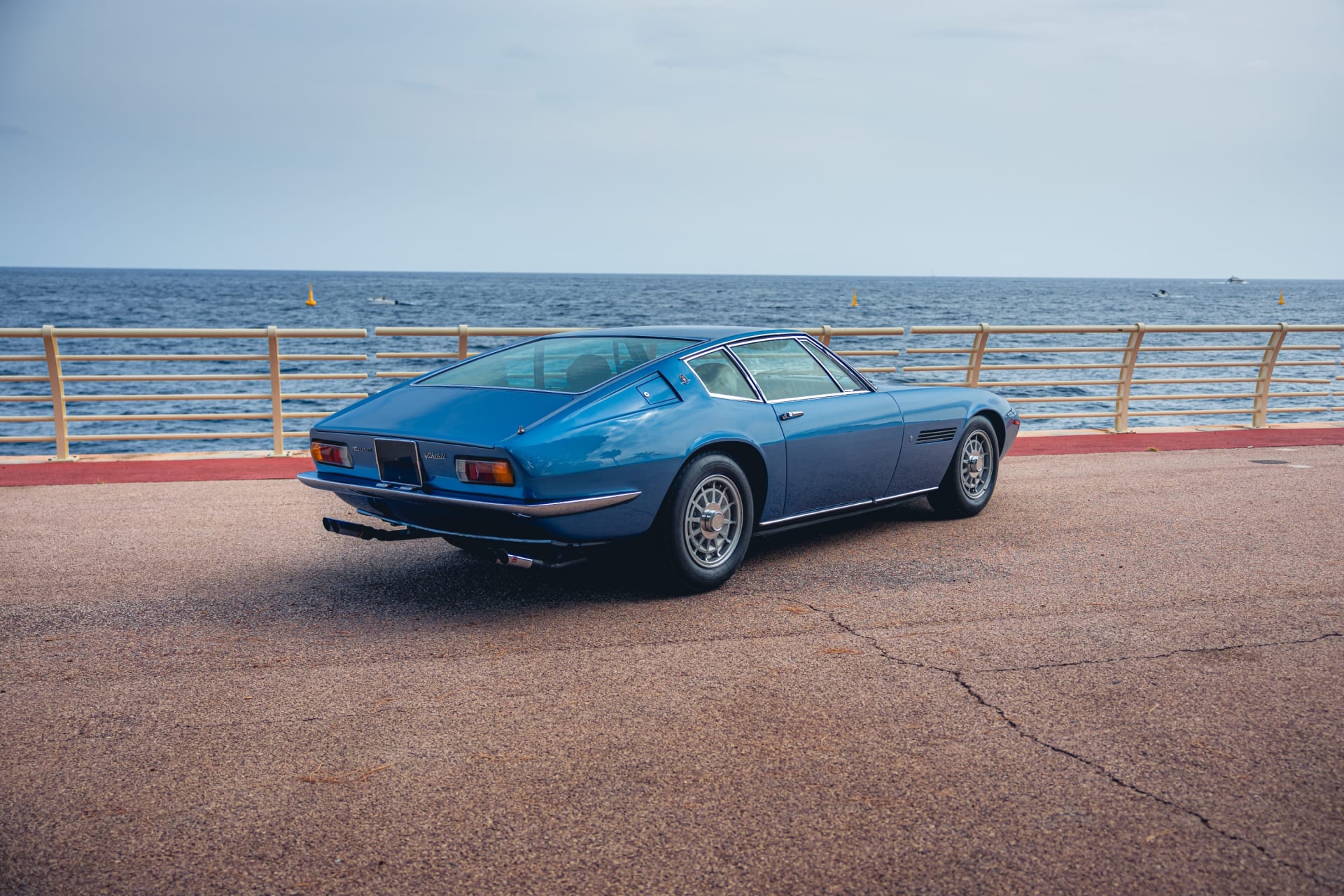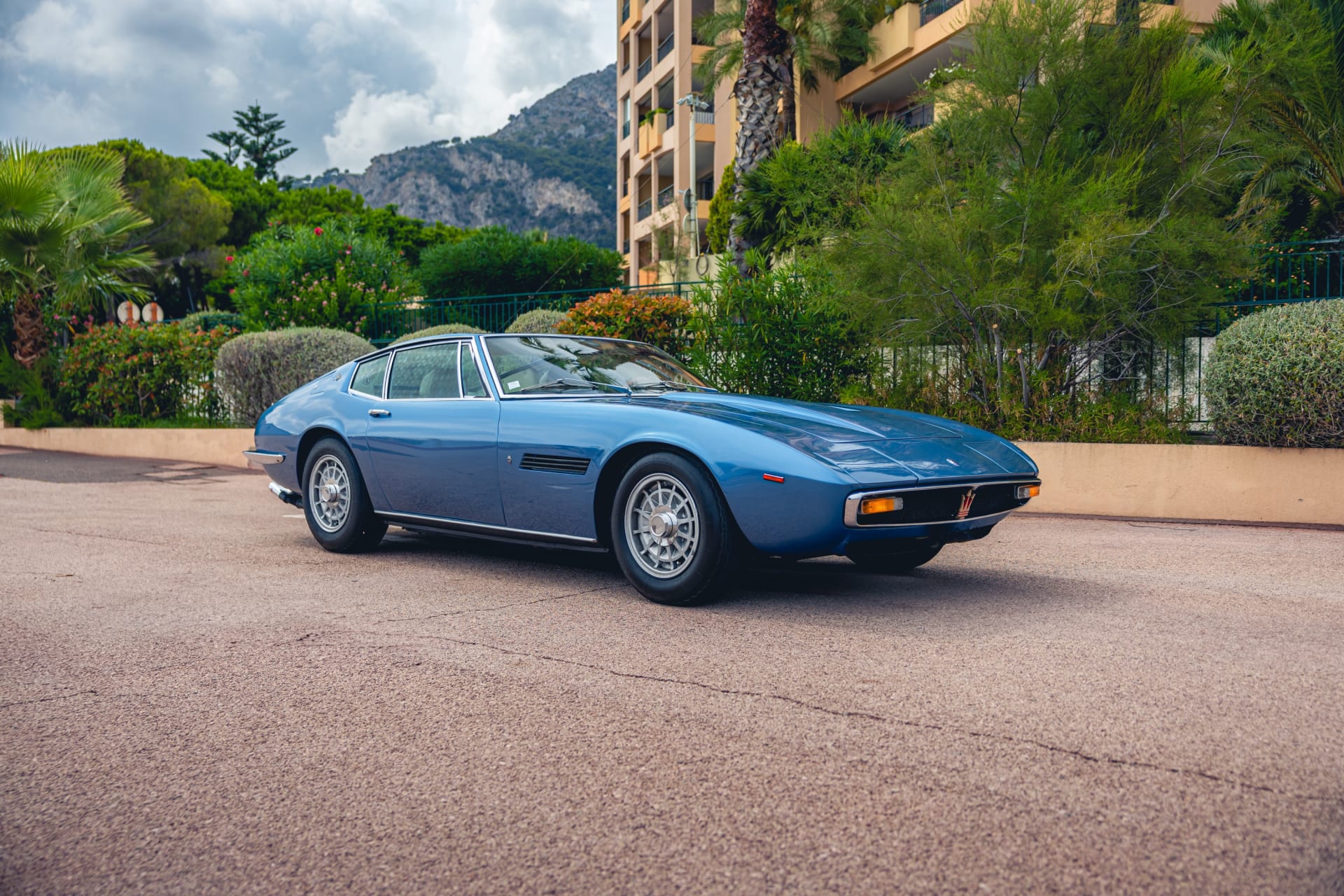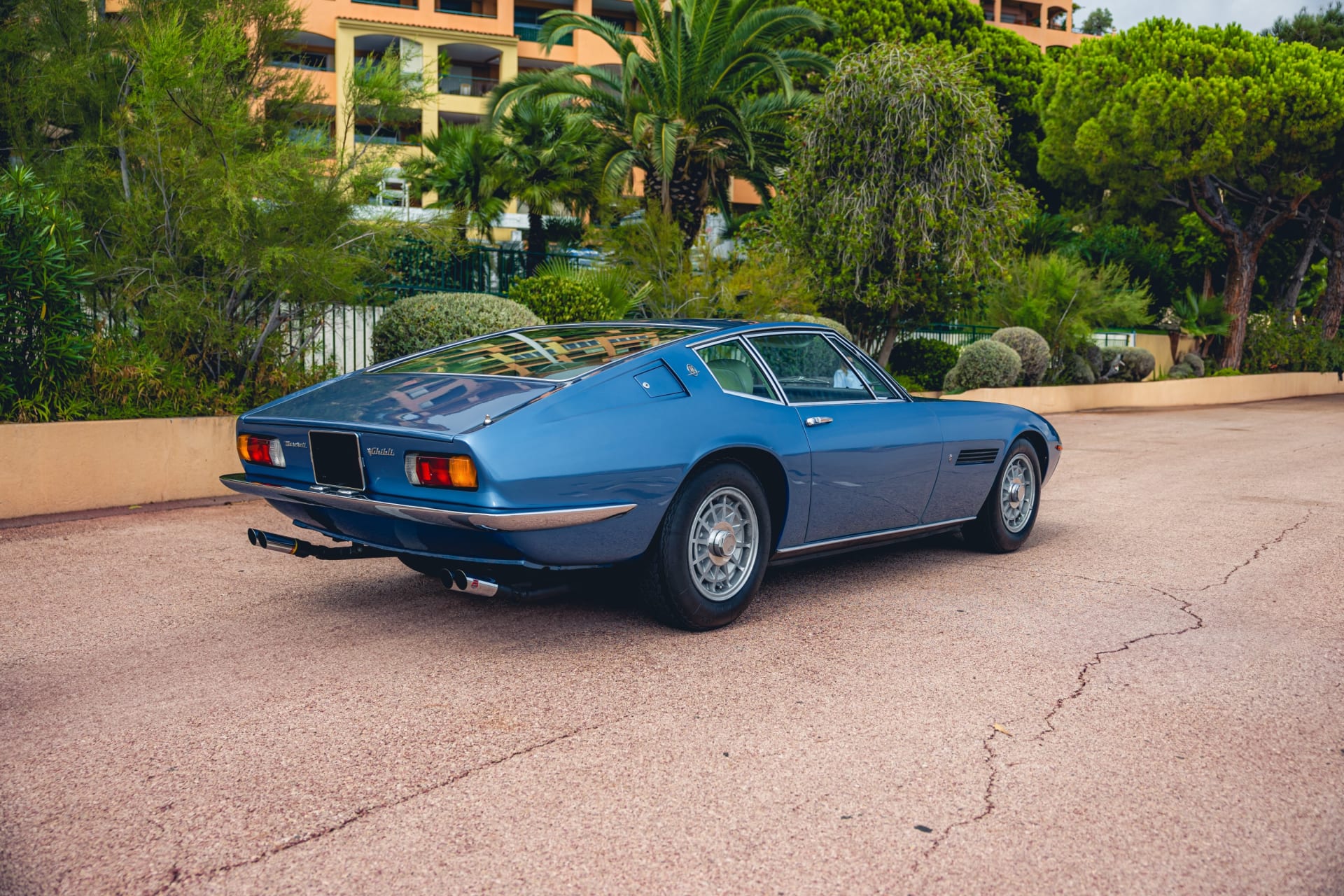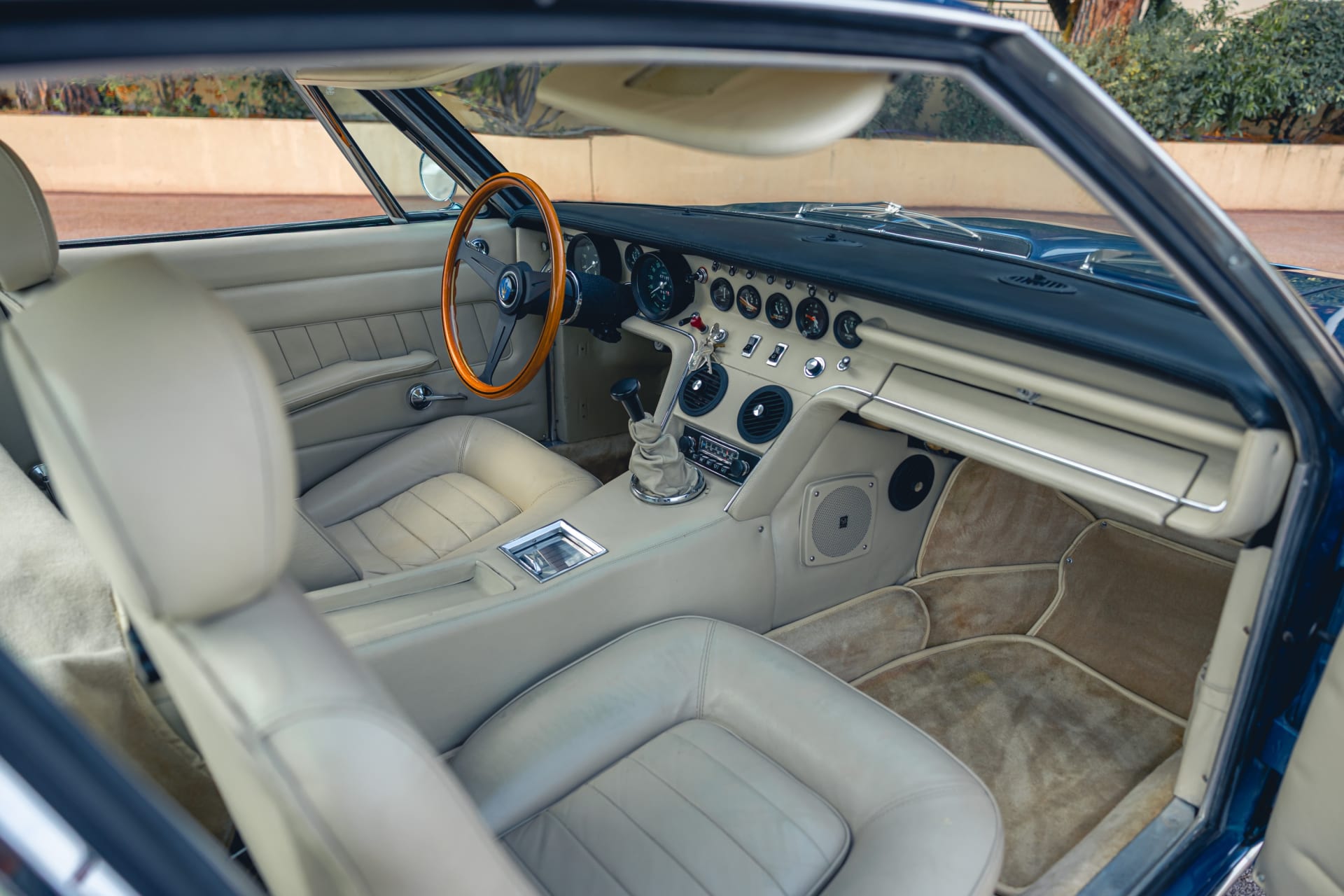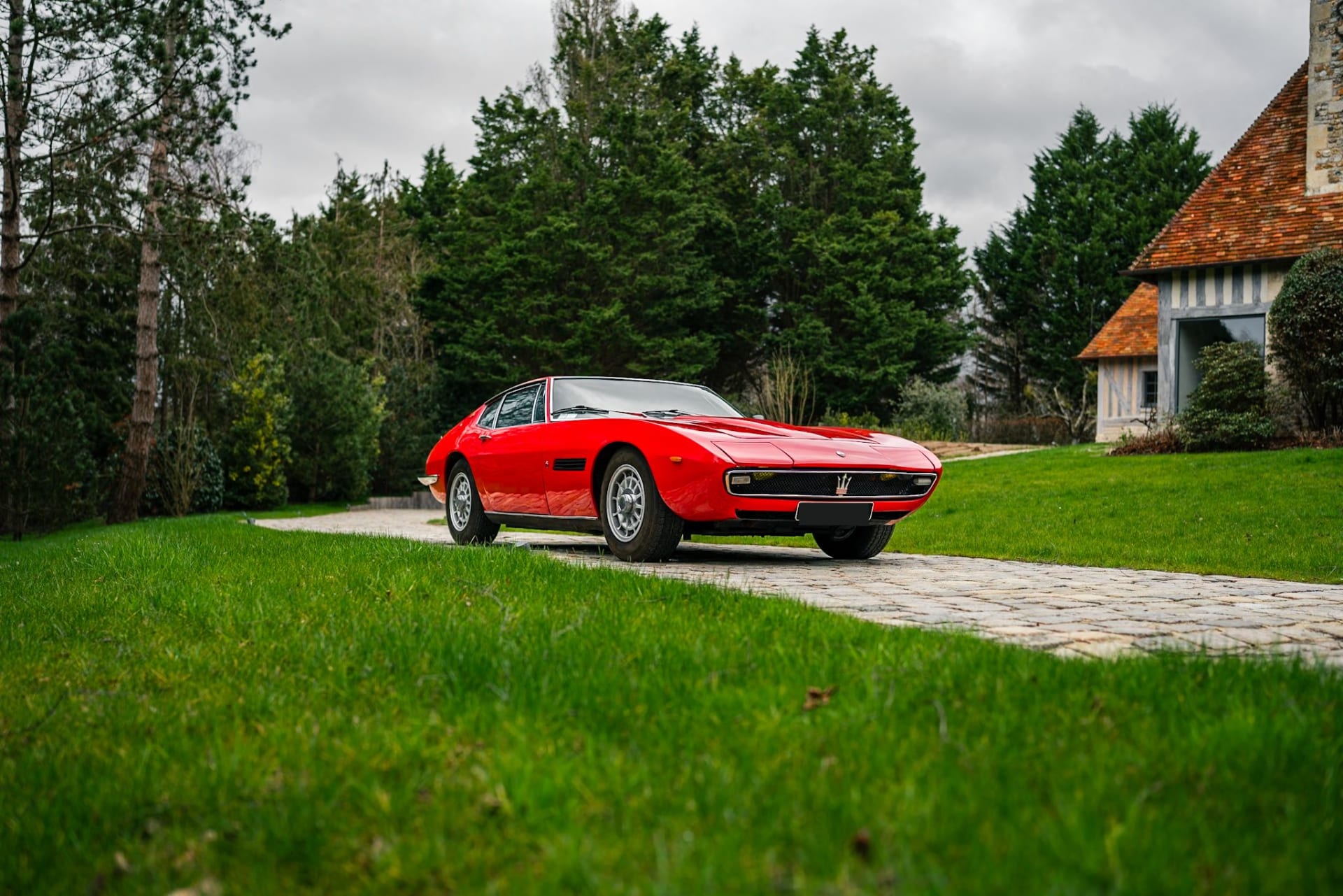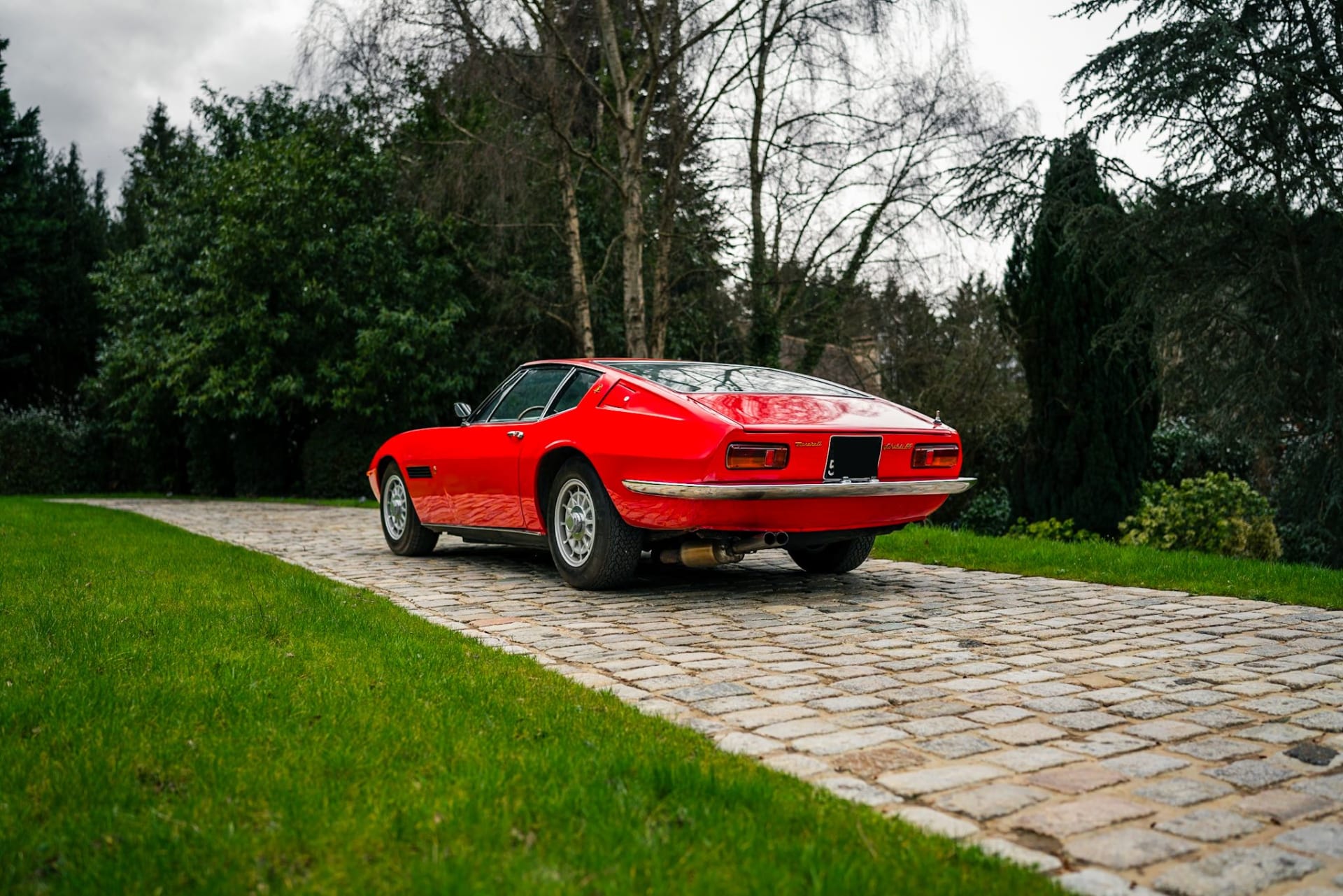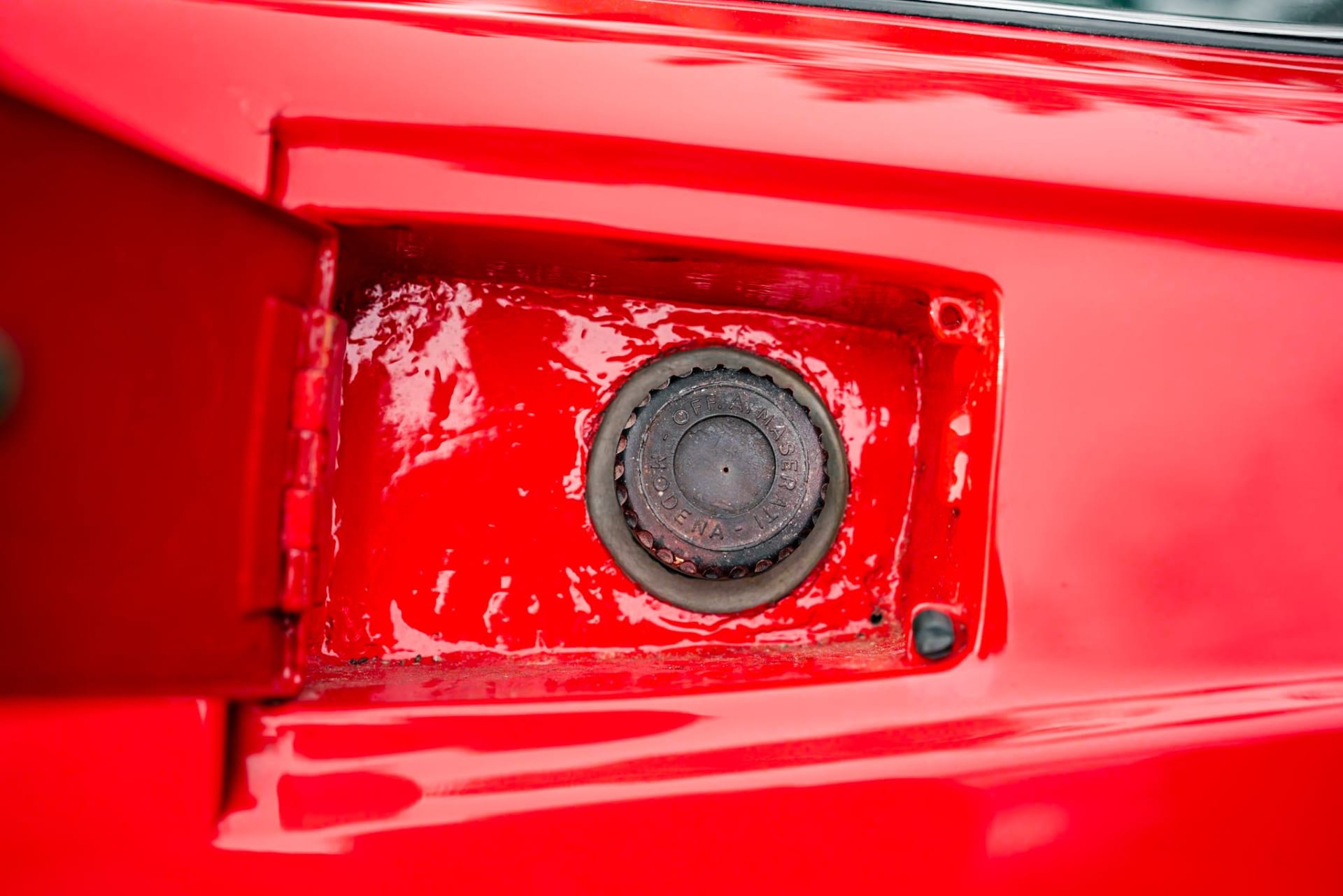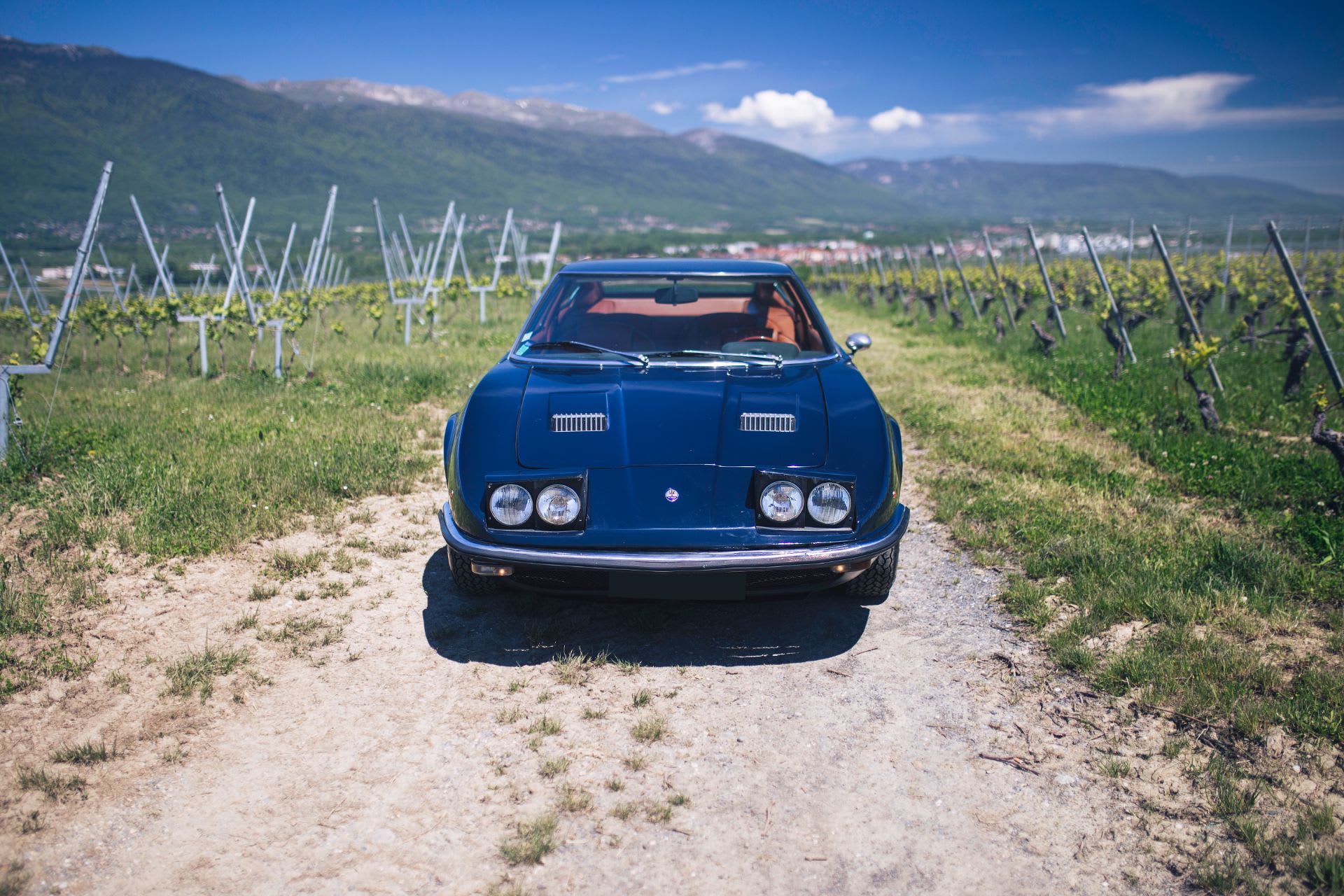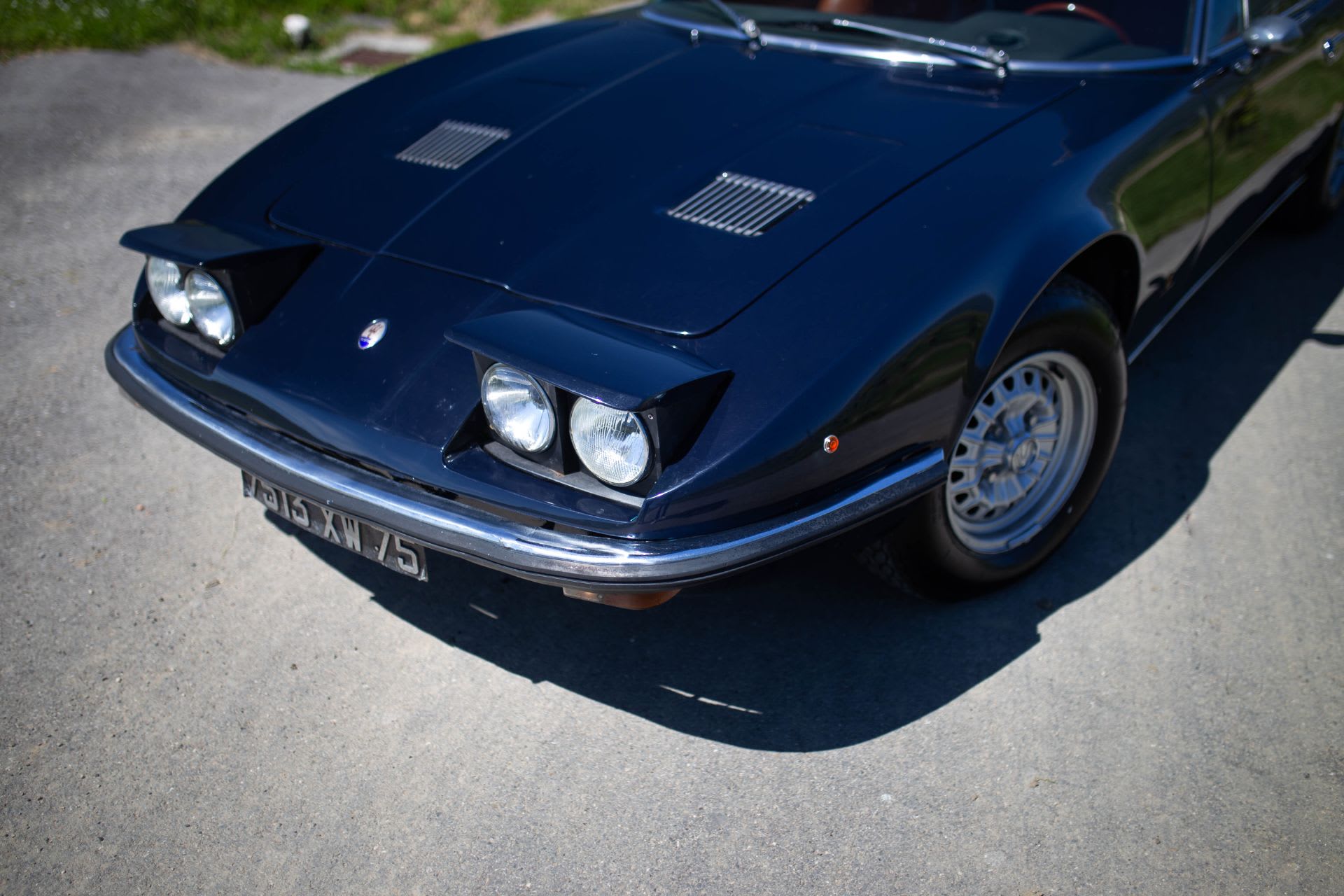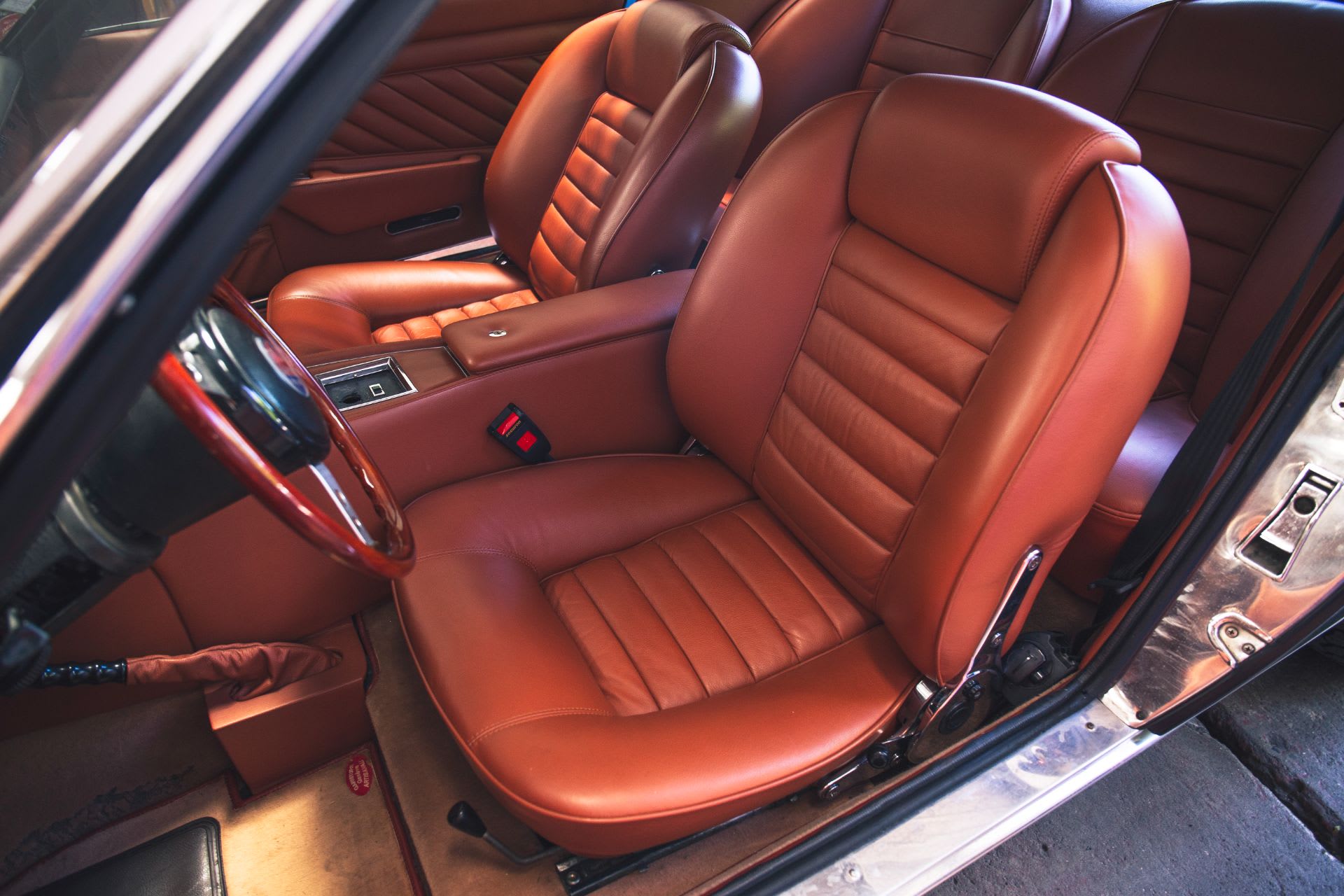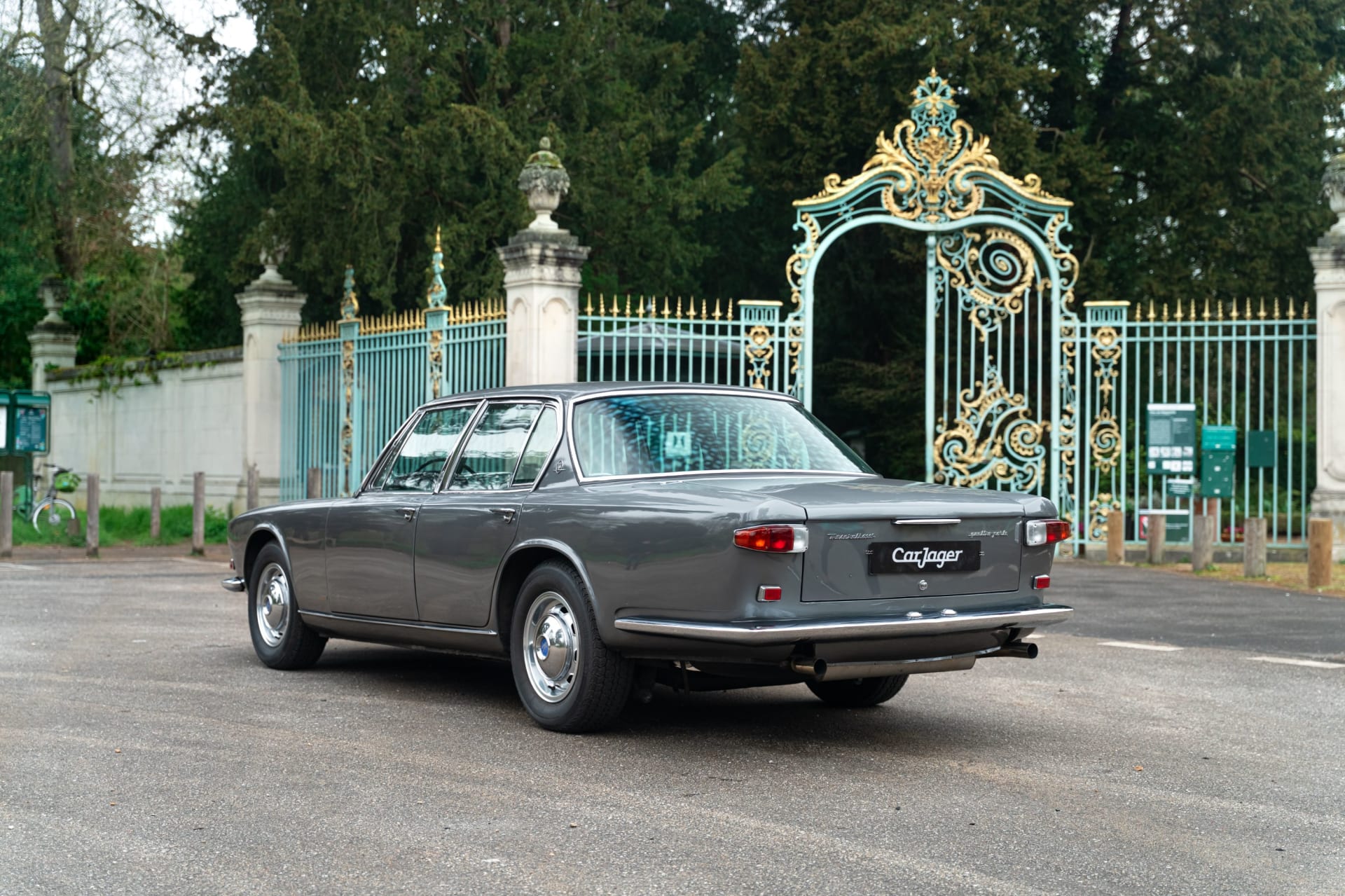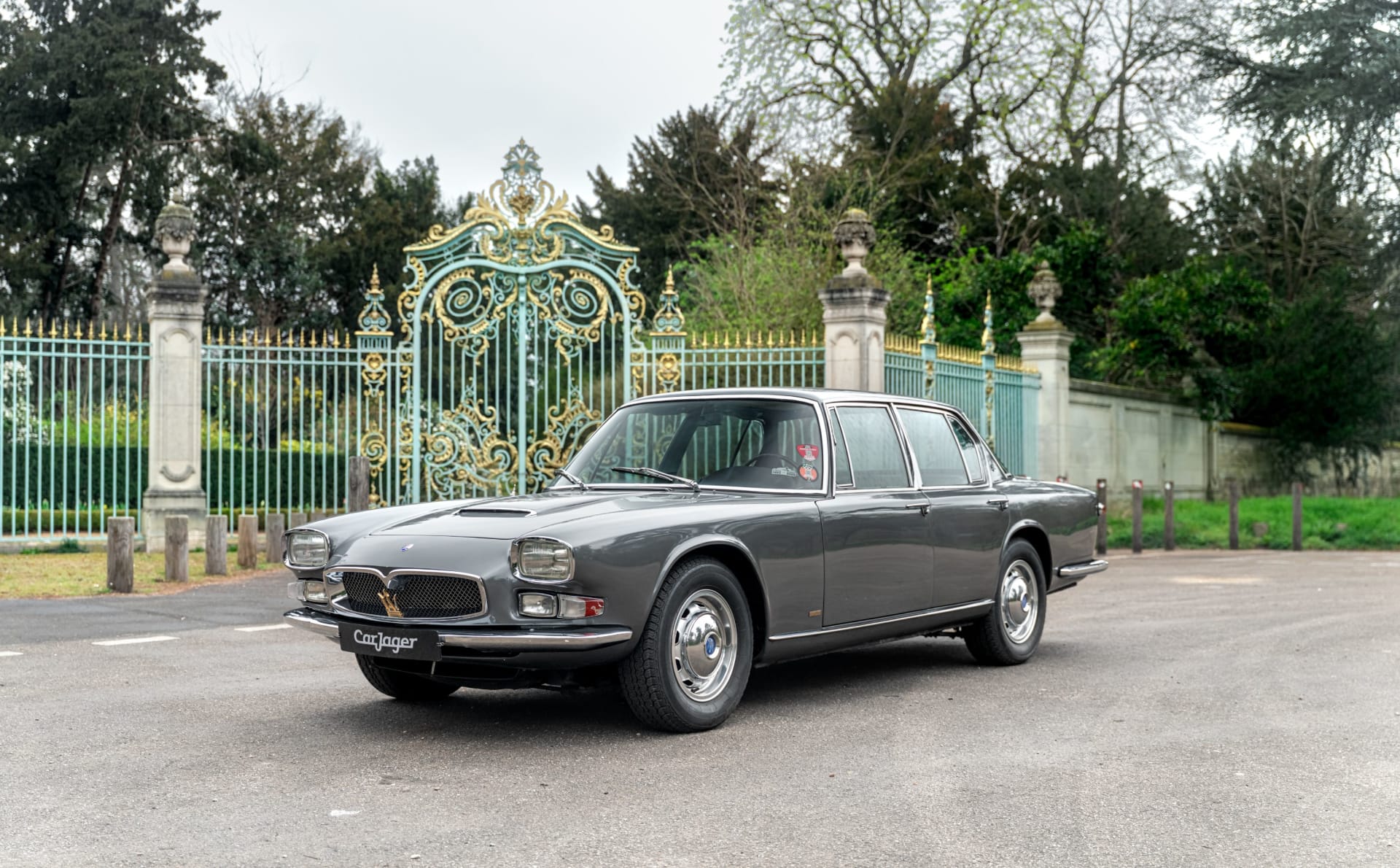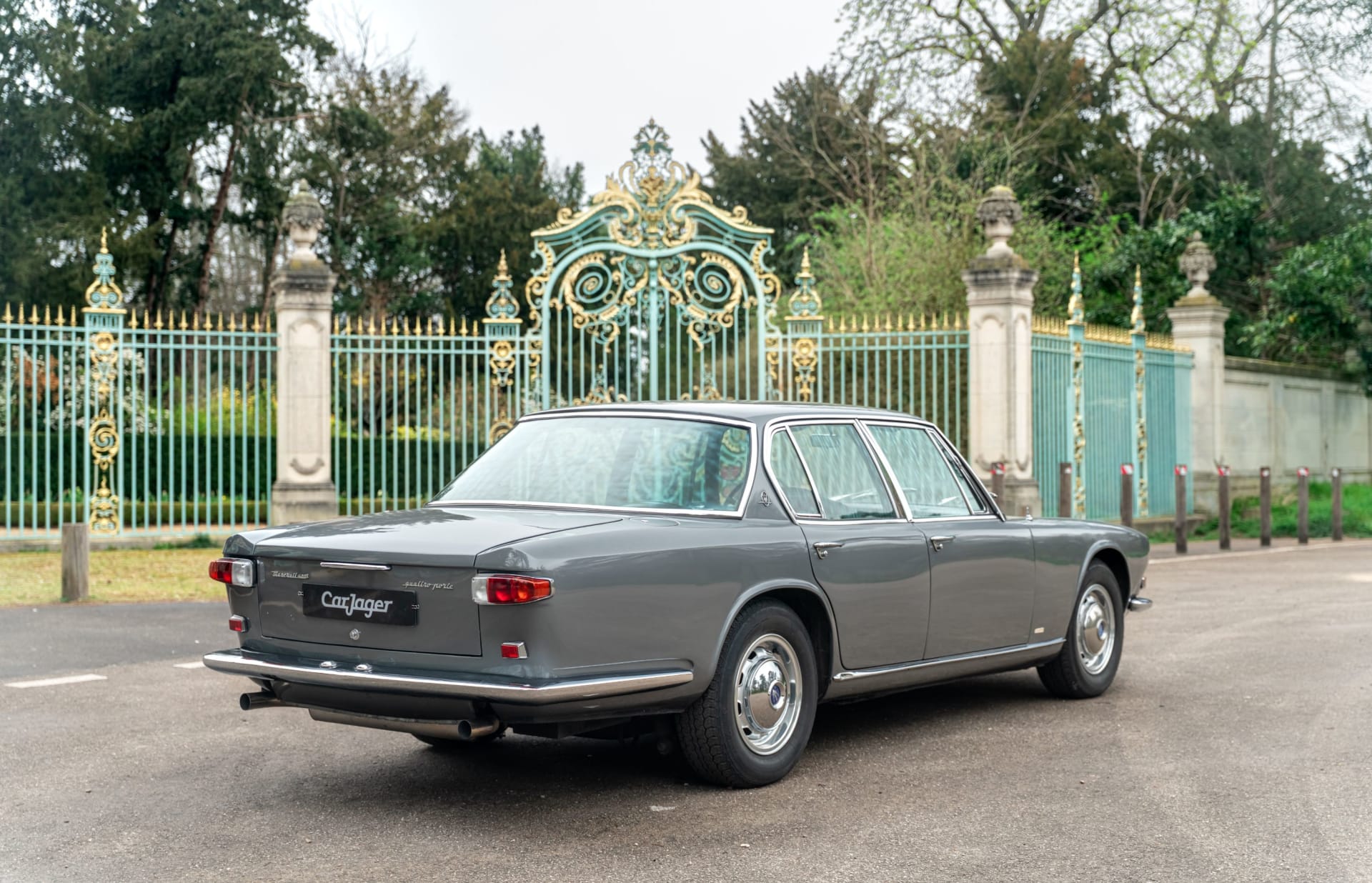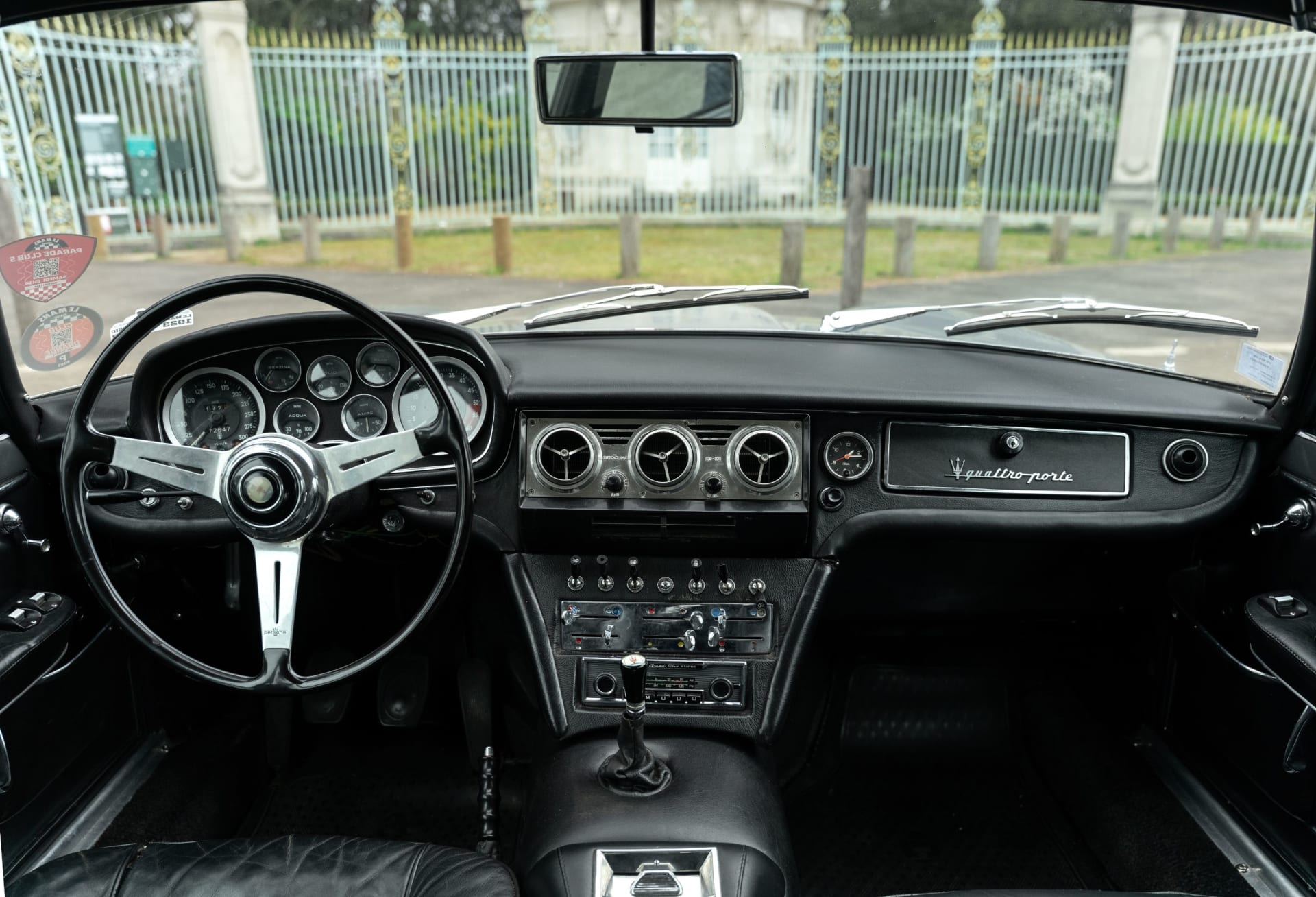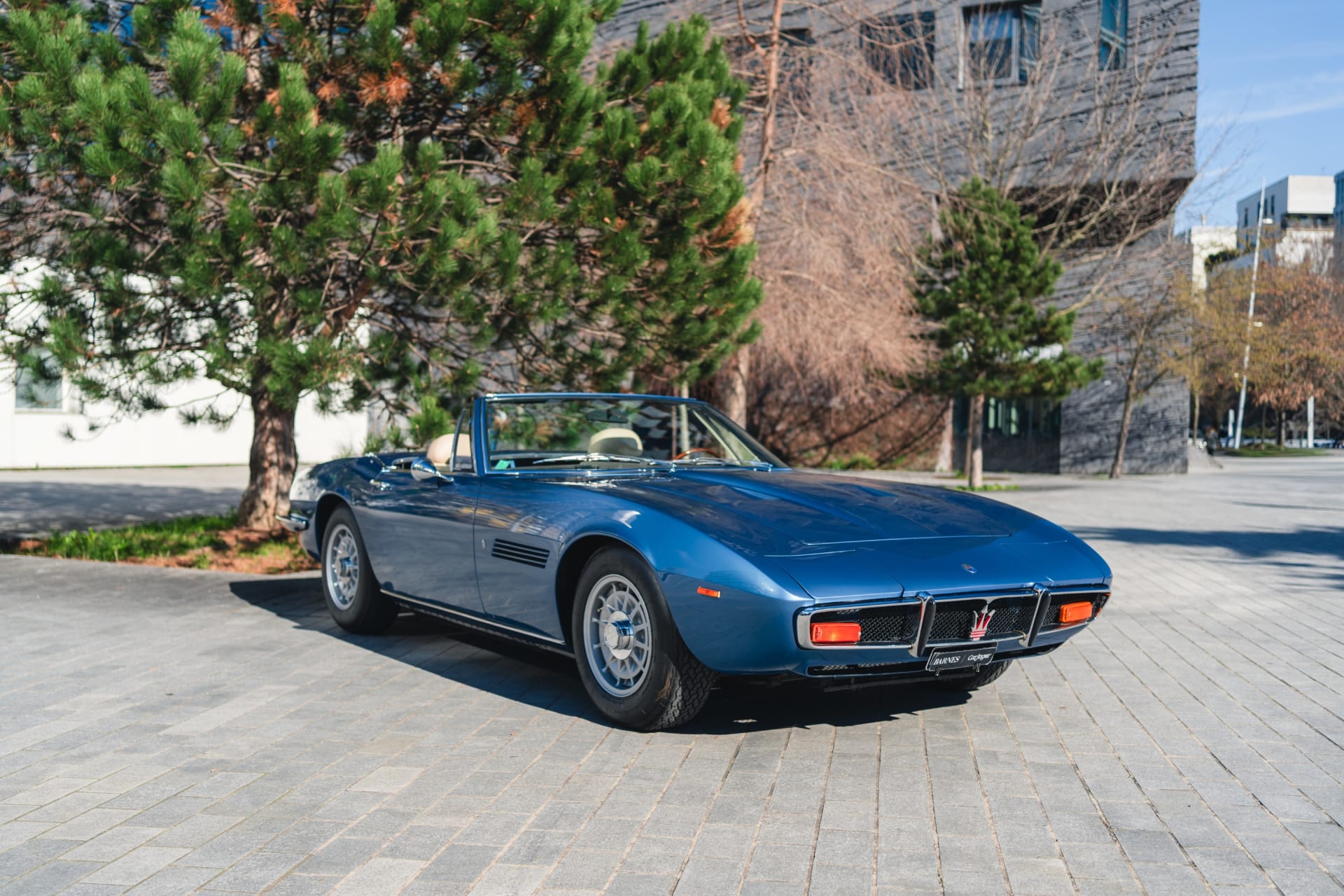
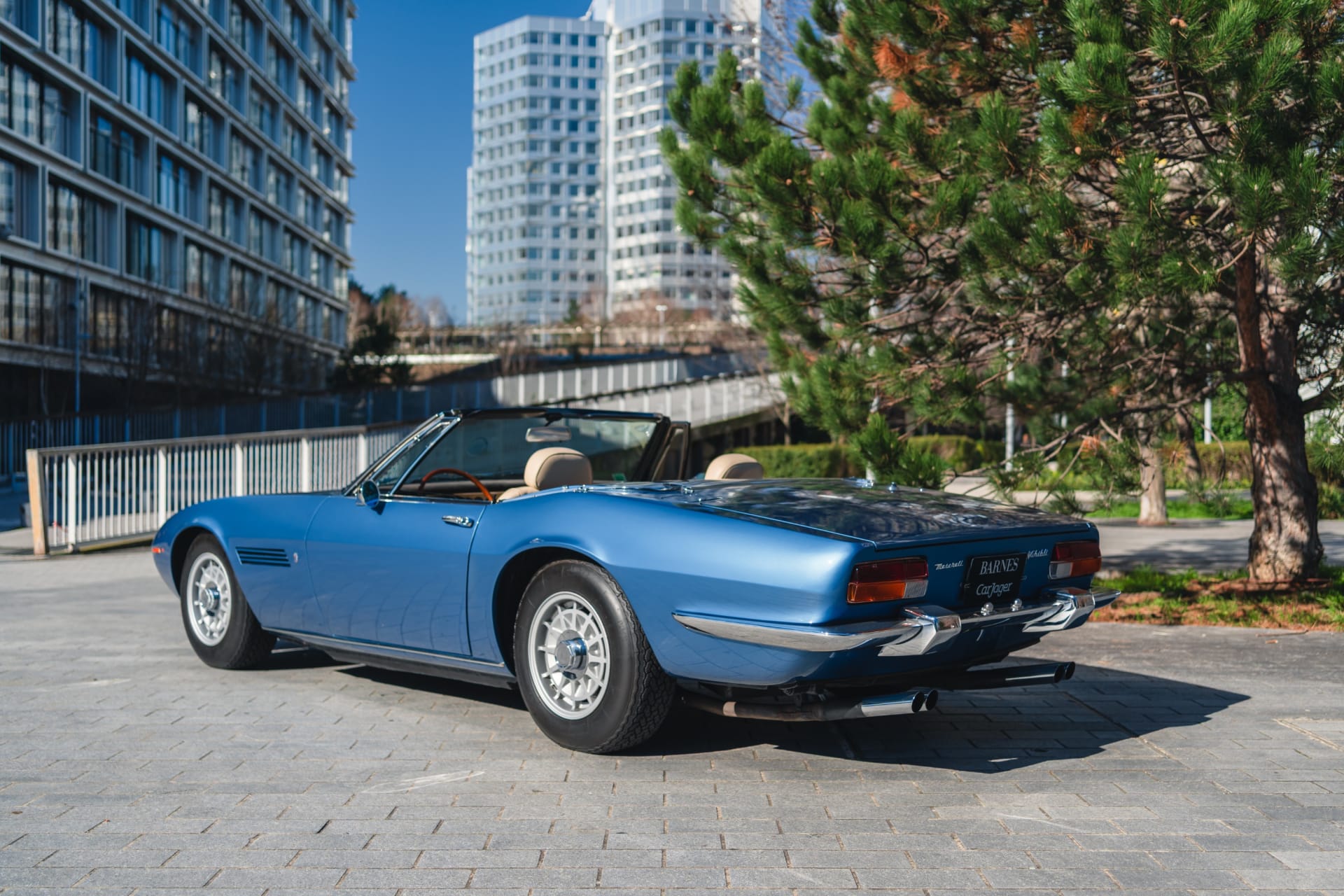
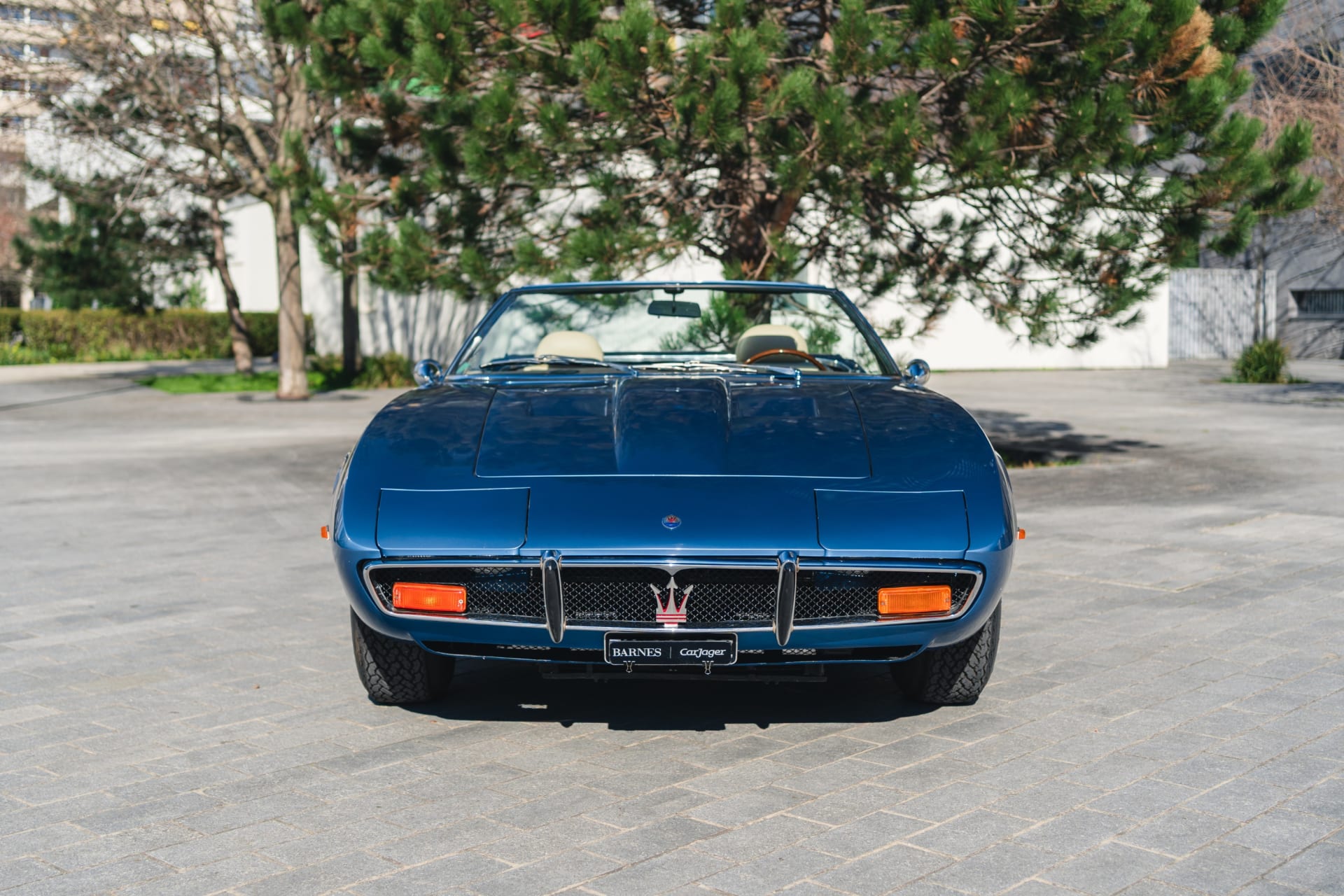
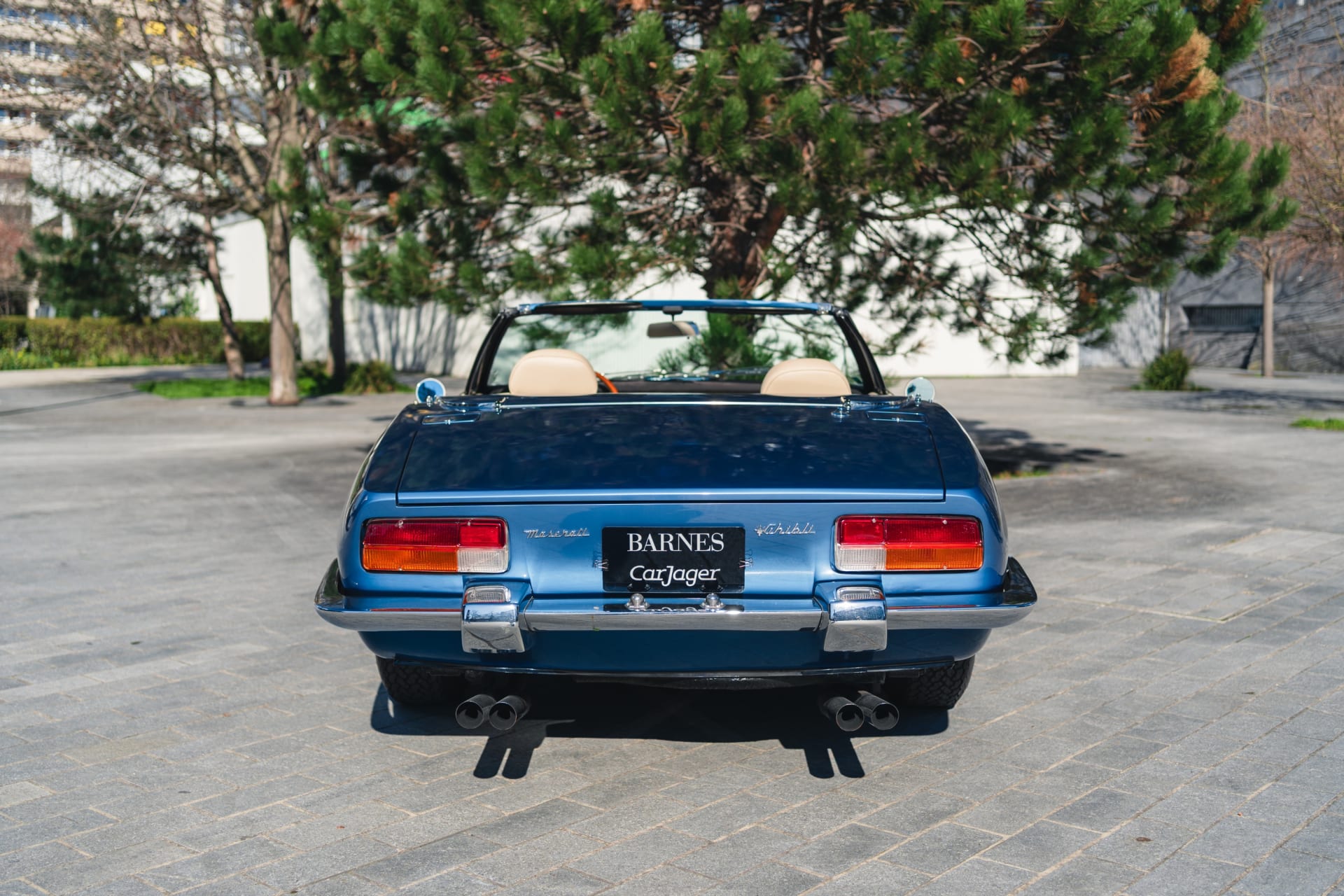
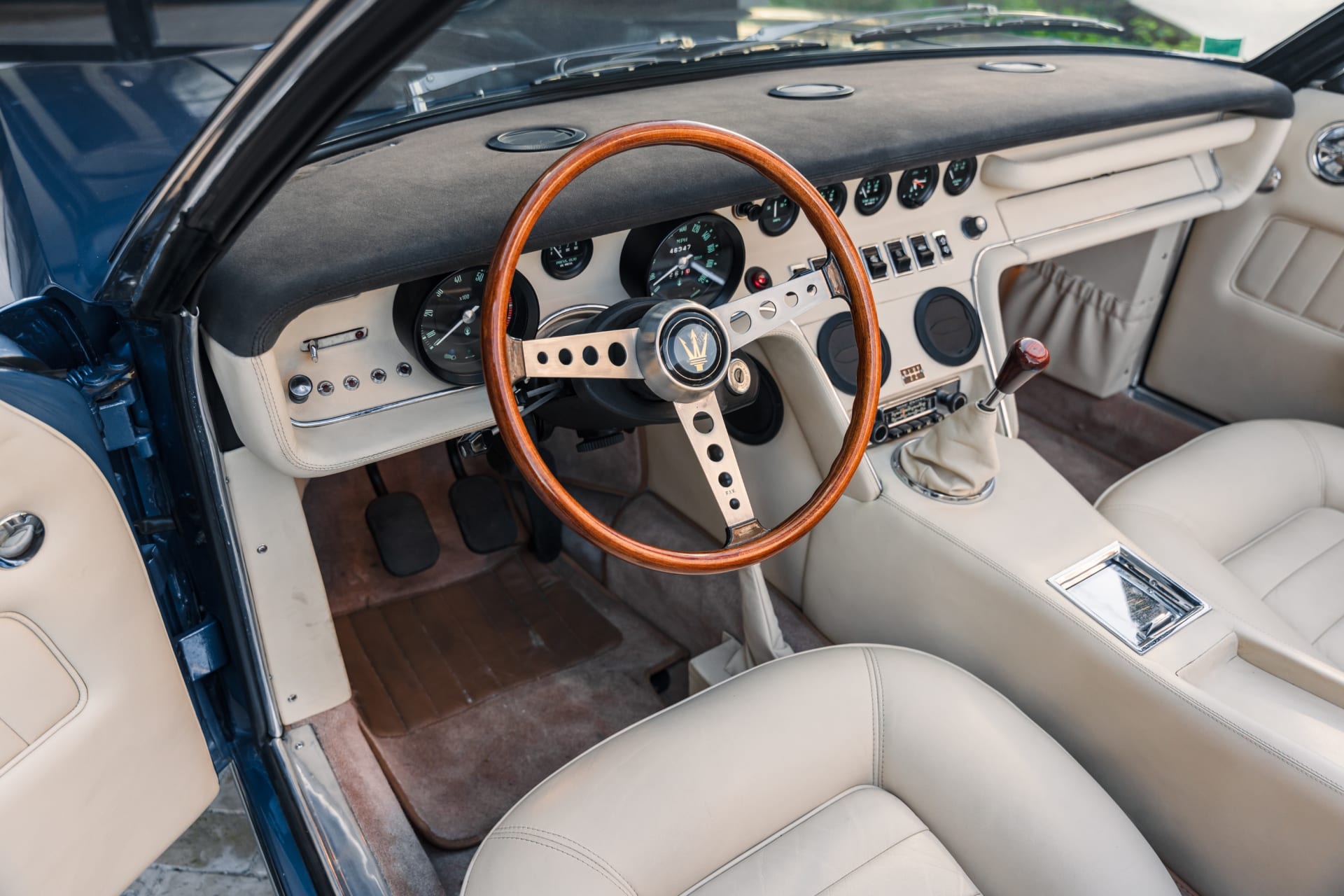
Maserati Ghibli Spyder 4.7 1971 / Manual
Prix sur demande

Passionate about the great GTs of the 1950s, 60s, and 70s? CarJager’s Car Specialists will leverage their network to find you the Maserati of your dreams!
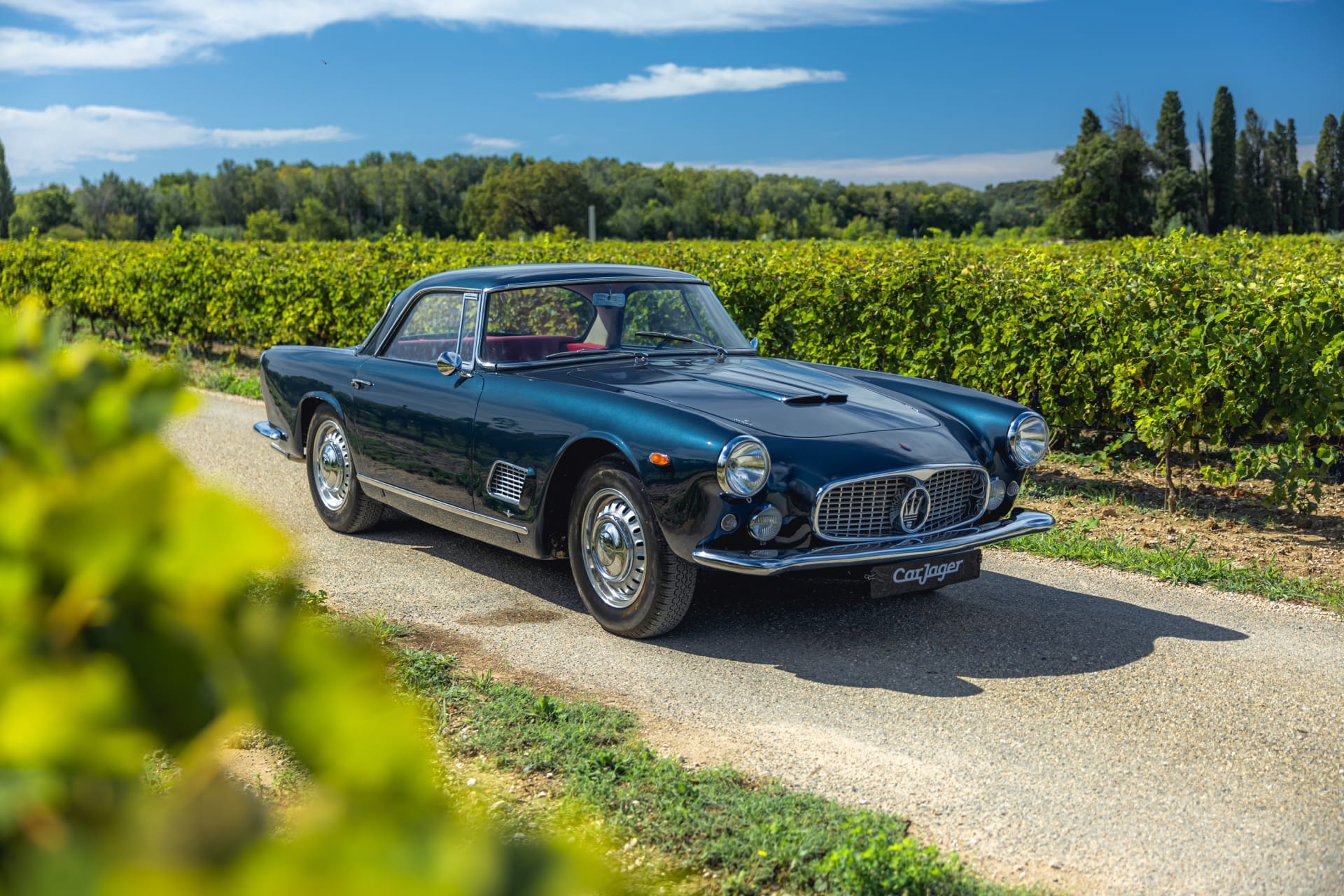
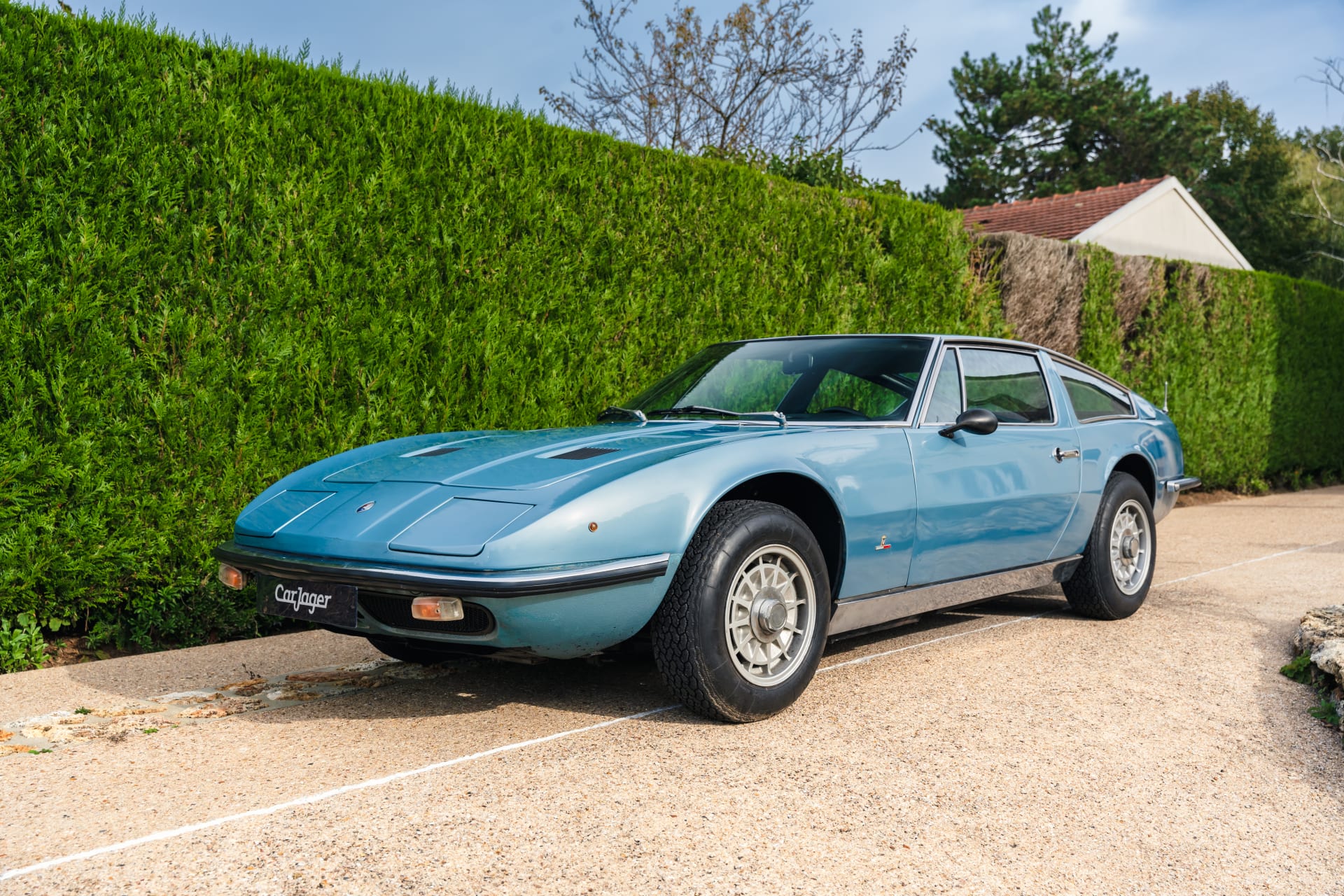
Discover our personalized search service and access our network of 32,000 enthusiasts. Start your search now, your next adventure begins here.
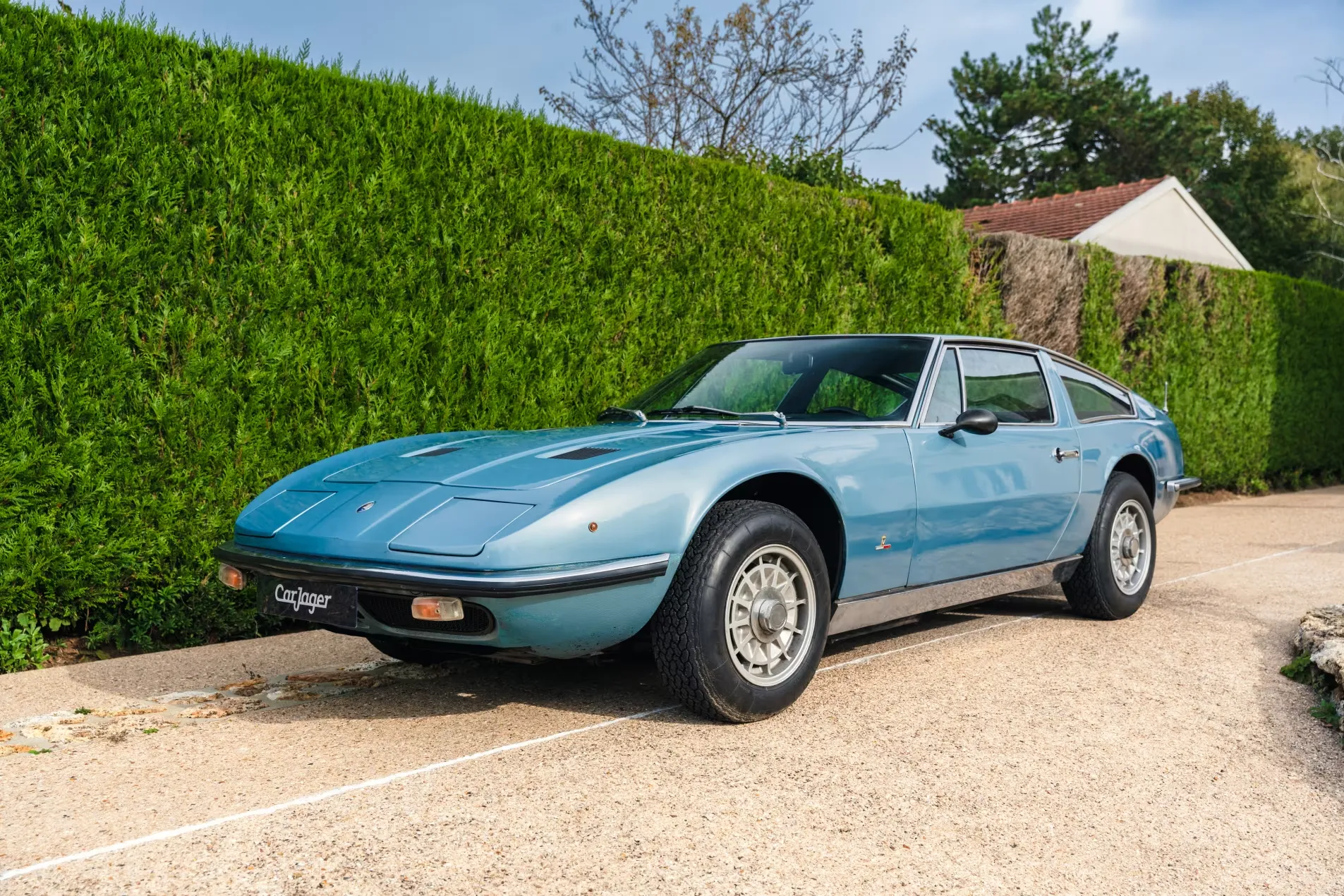
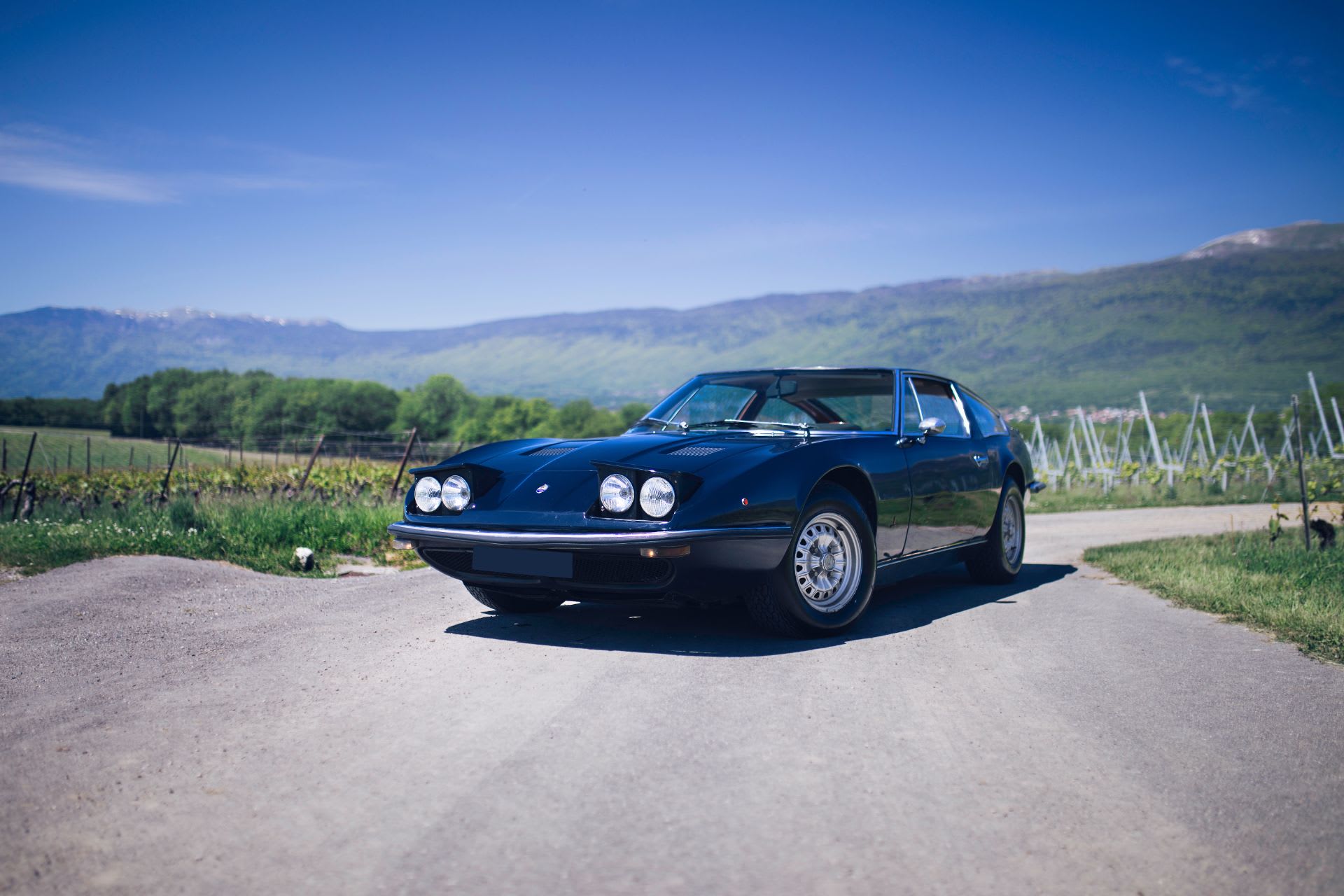
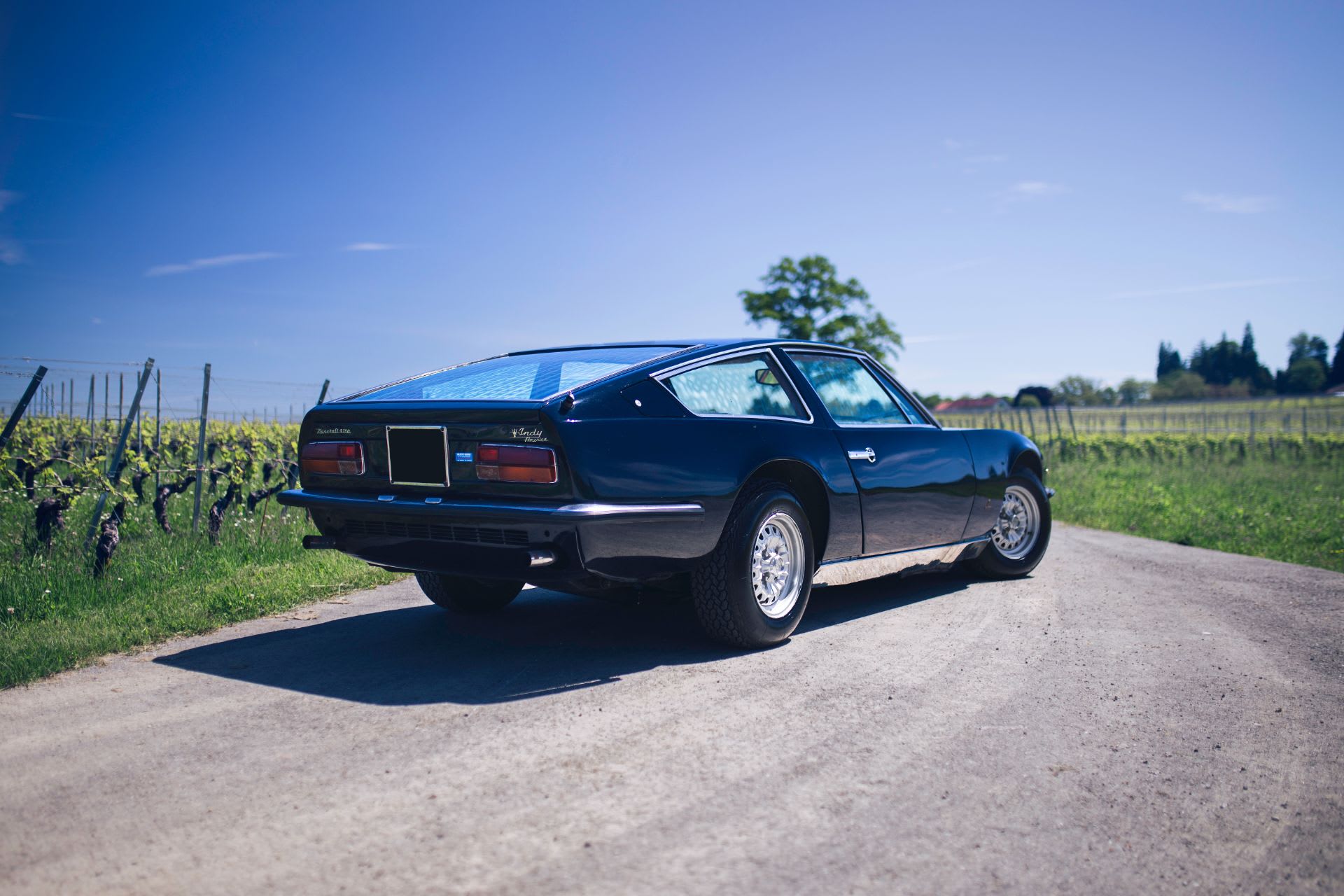
An indirect successor to the Quattroporte sedan, the Indy coupé was produced from 1969 to 1975. This 2+2 V8-powered car features a design directly inspired by the Ghibli.
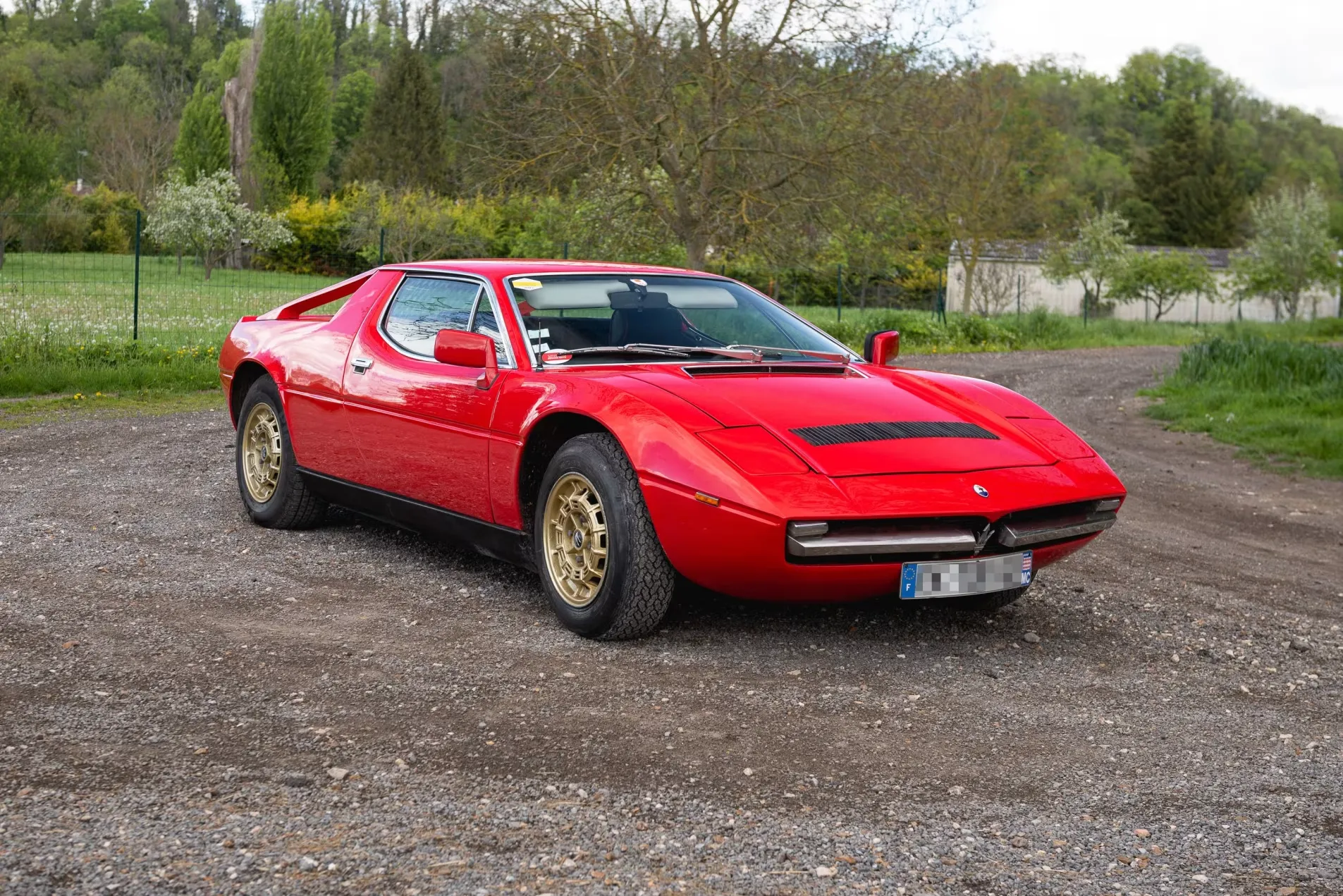
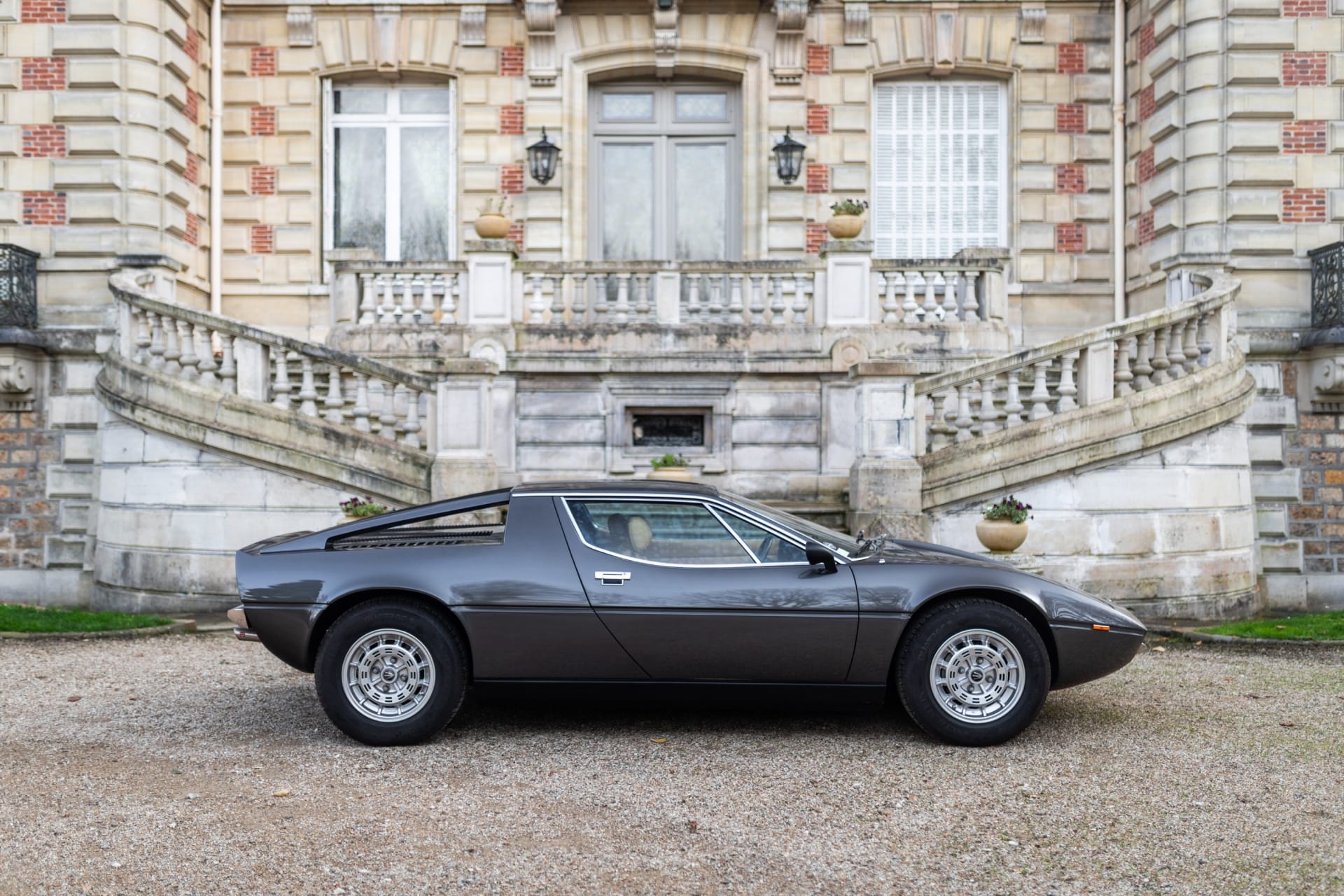
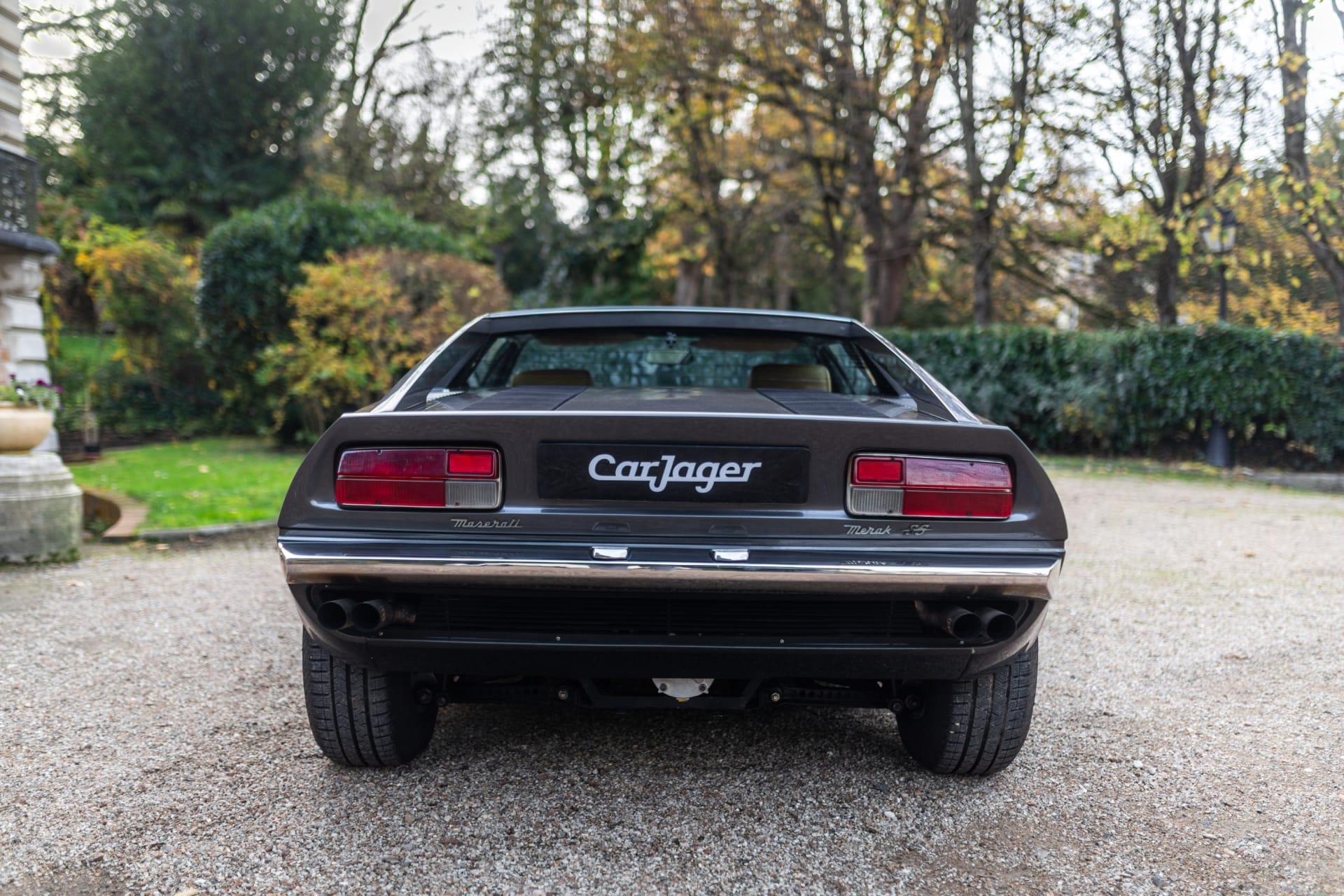
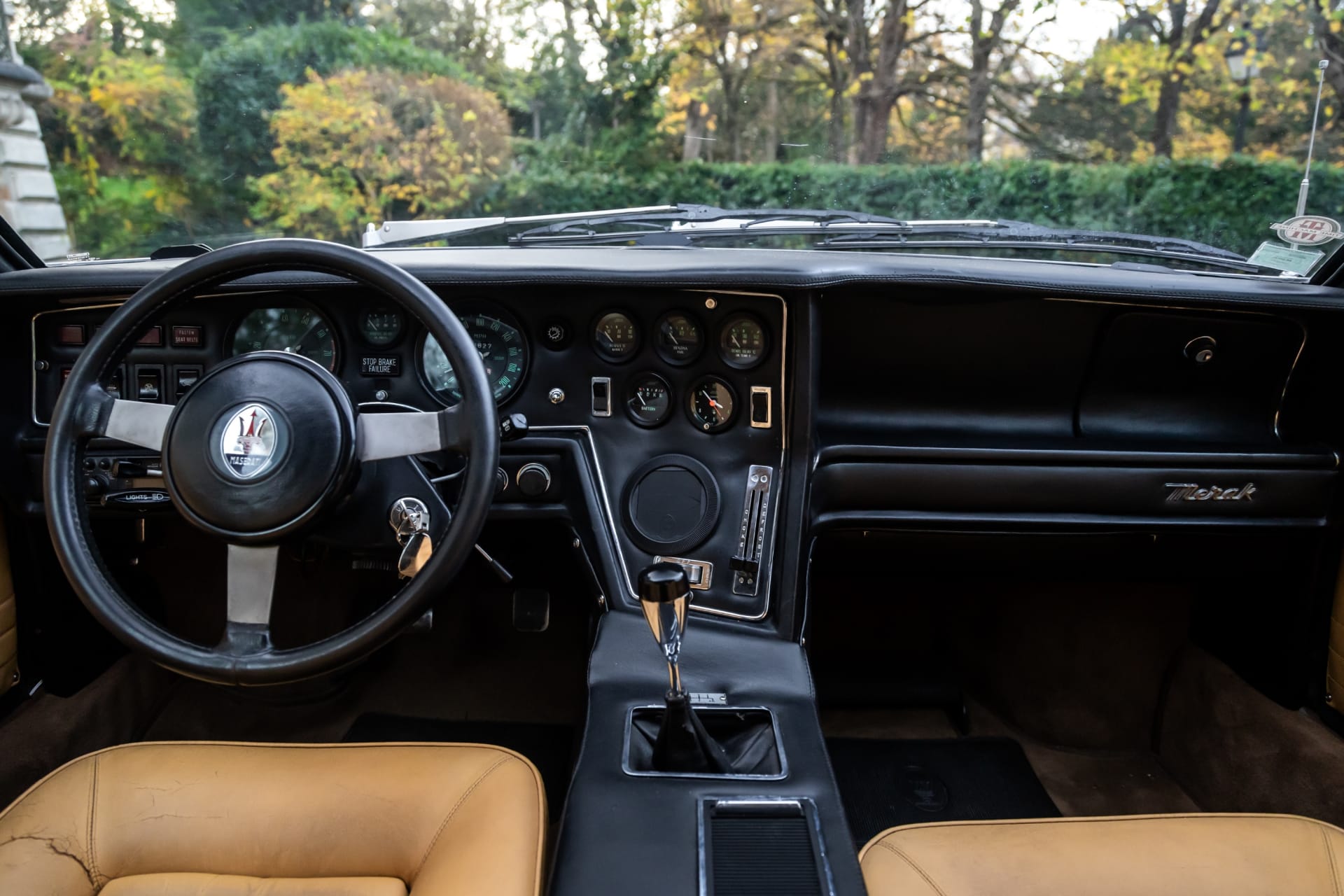
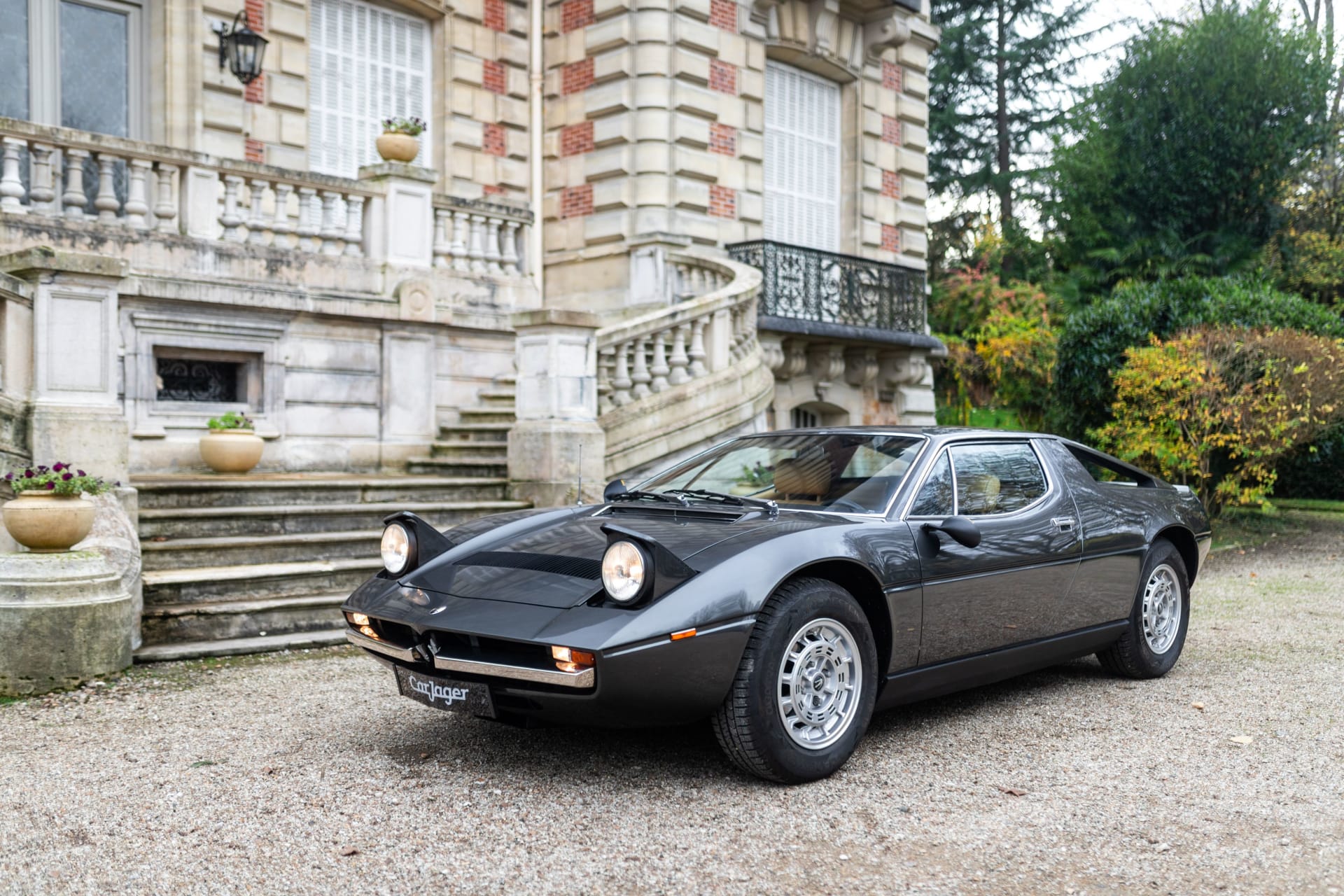
Based on the V8-powered Bora introduced in 1971, the Merak adopted its design and layout the following year, but featured the V6 engine shared with the Citroën SM. It remained in production until 1983
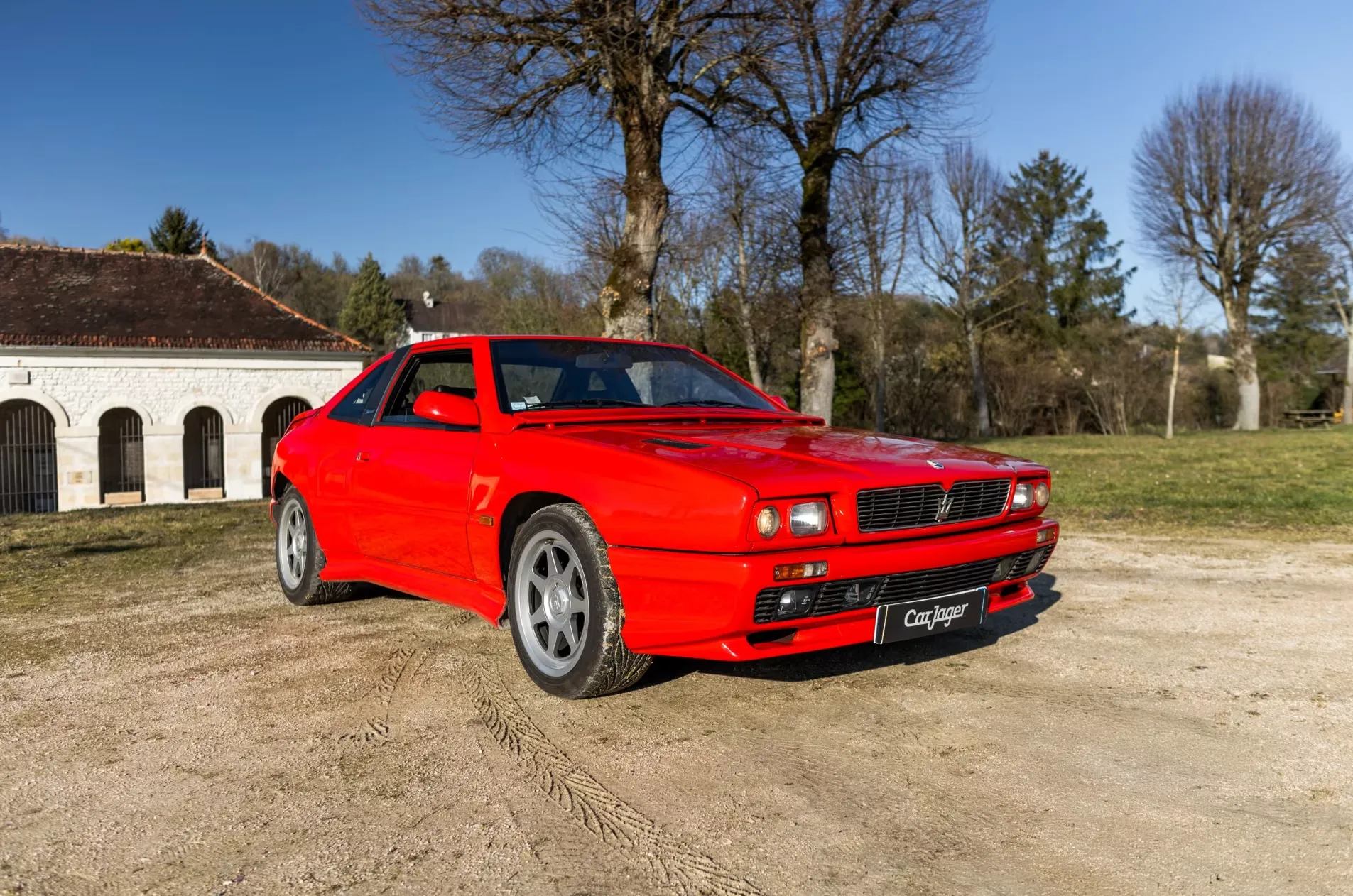
The final evolution of the extensive Biturbo family, the Shamal featured a V8 closely derived from Maserati’s in-house V6. With 326 hp, it was one of the fastest GTs of its time.

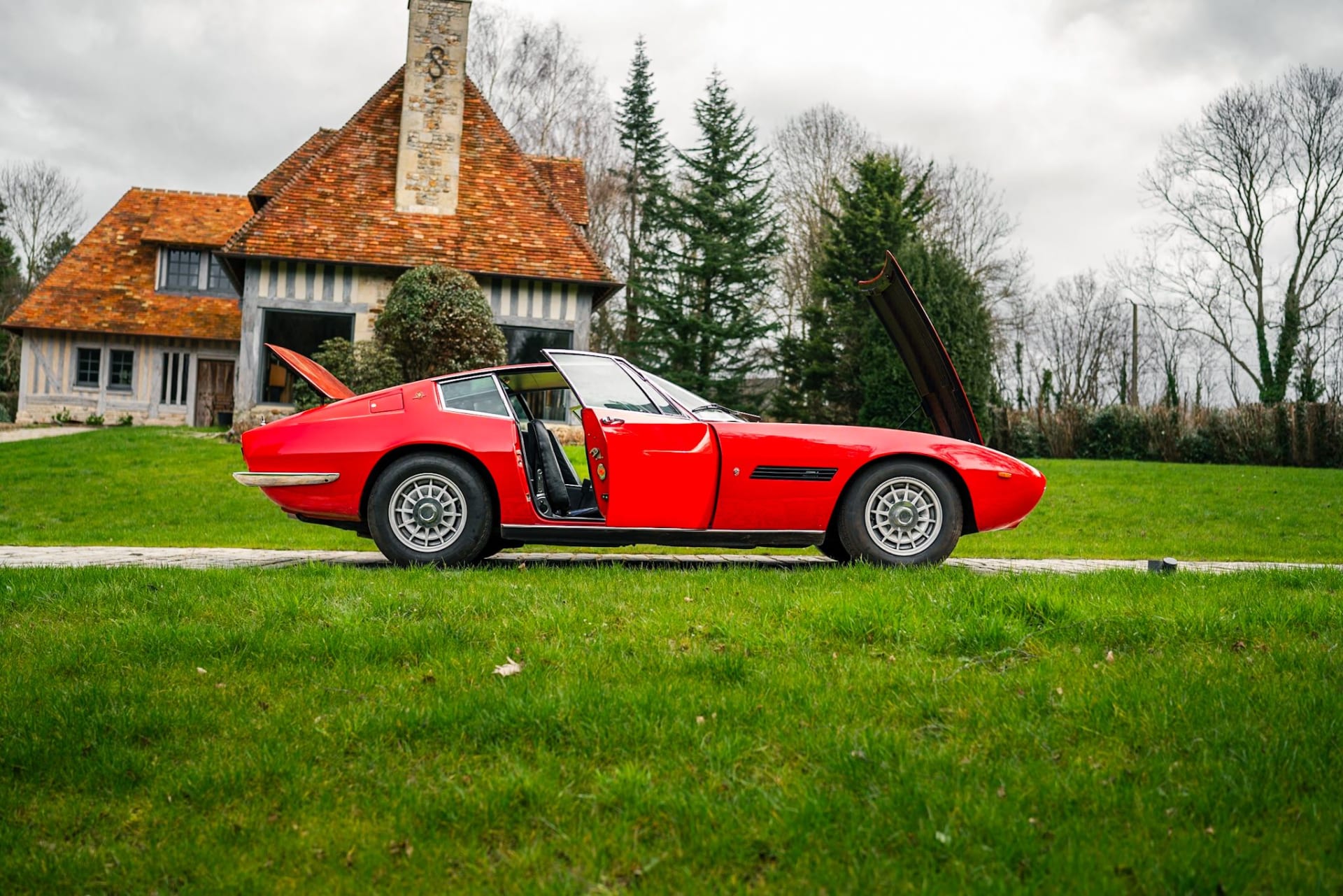
Masterpiece of the young Giorgetto Giugiaro, the Ghibli (Tipo AM115) appeared in 1966. Equipped with the noble in-house V8, it would rival the Ferrari 275 GTB/4 and later the 365 GTB/4 Daytona until 1973.
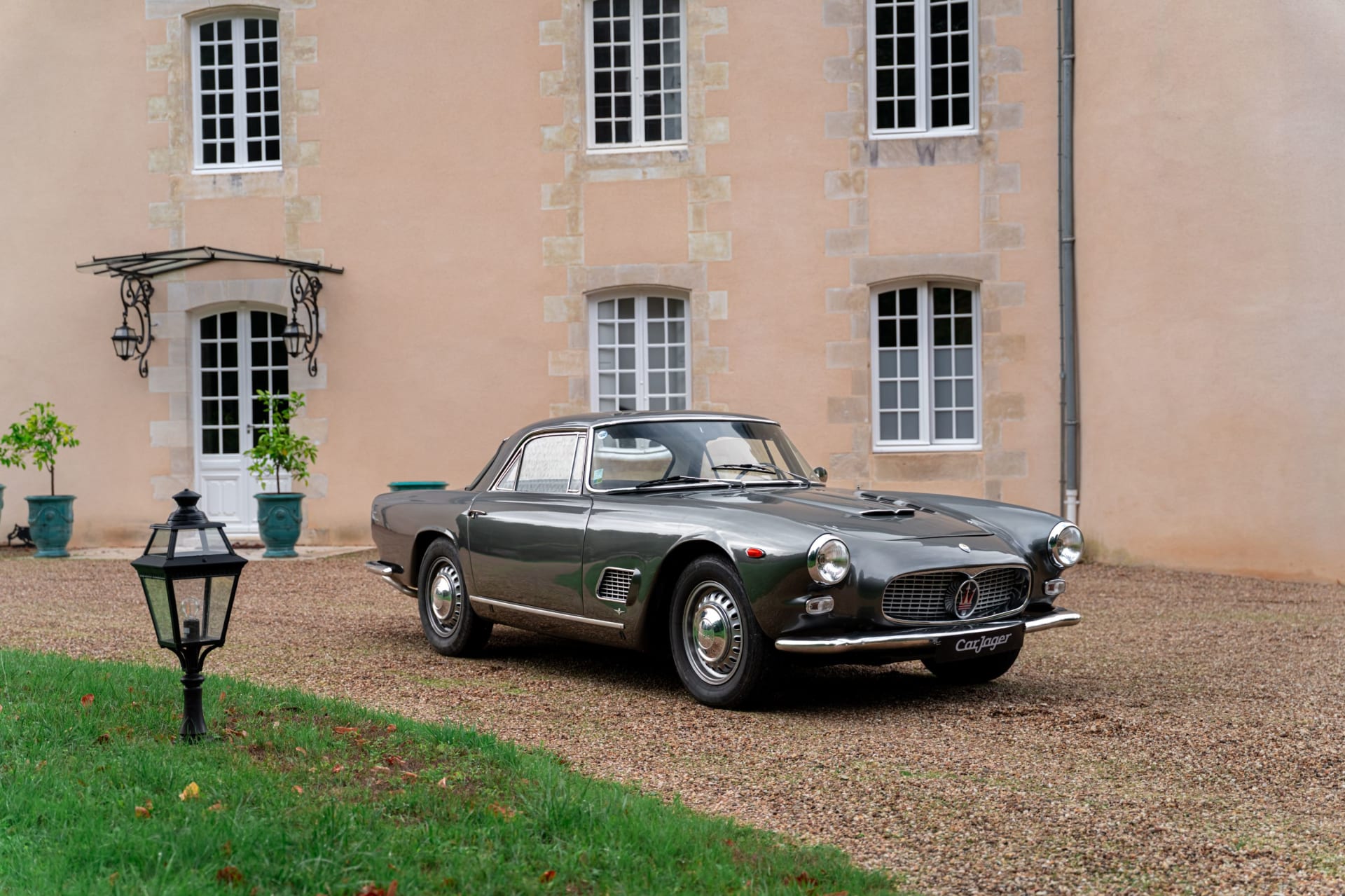
Maserati 3500 — modèle de la marque Maserati.
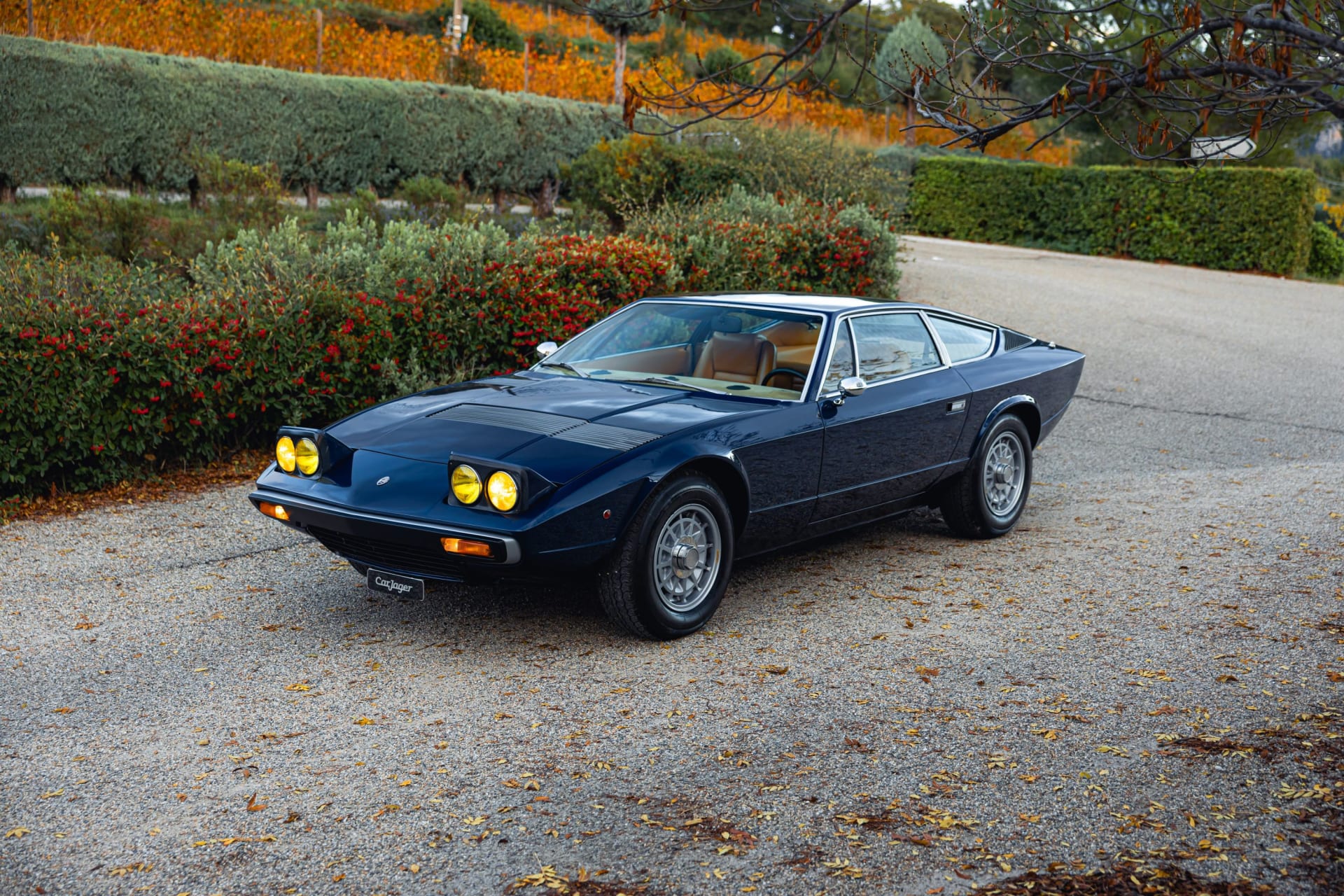
Maserati Khamsin — modèle de la marque Maserati.
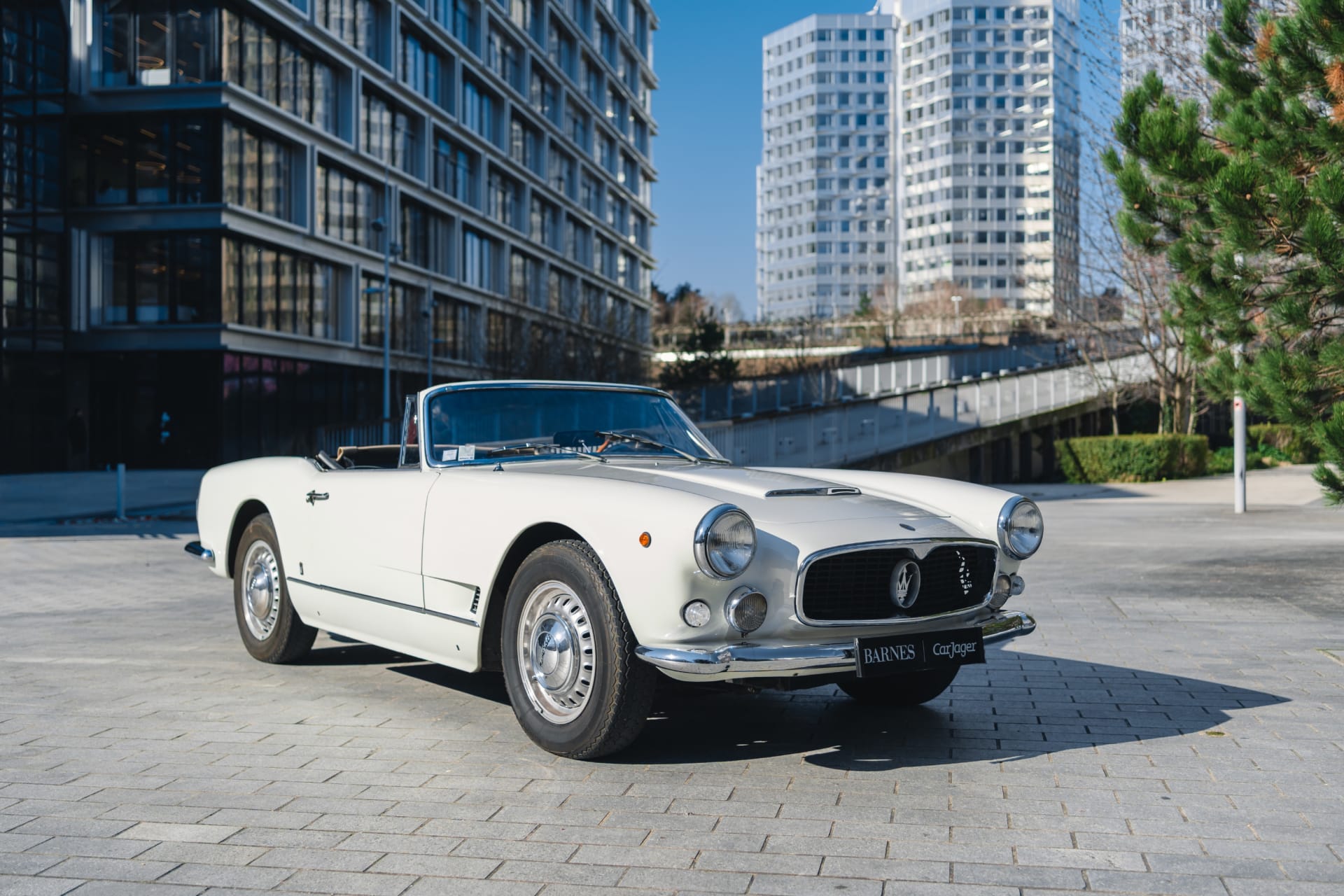
Maserati Mistral — modèle de la marque Maserati.
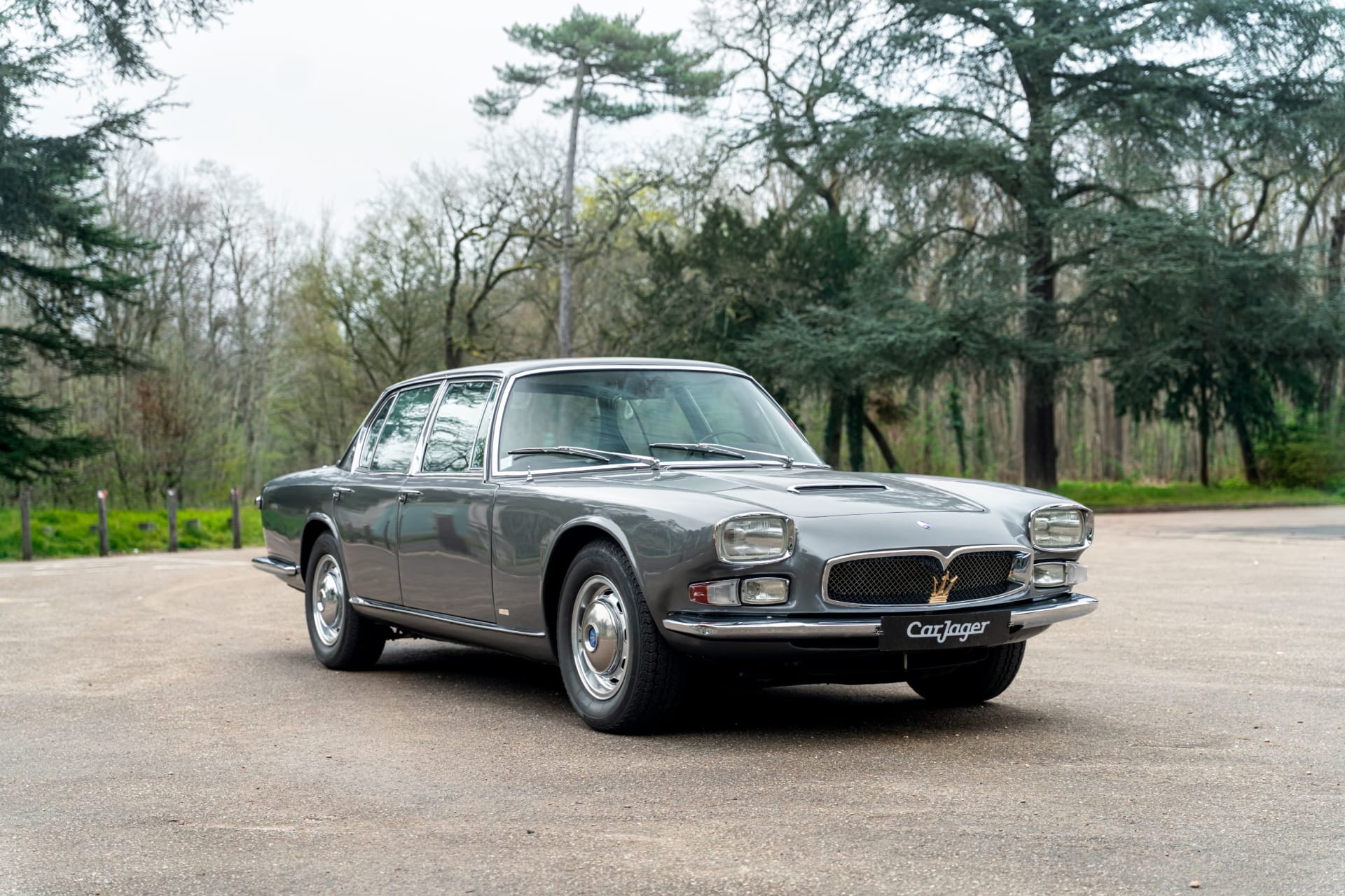
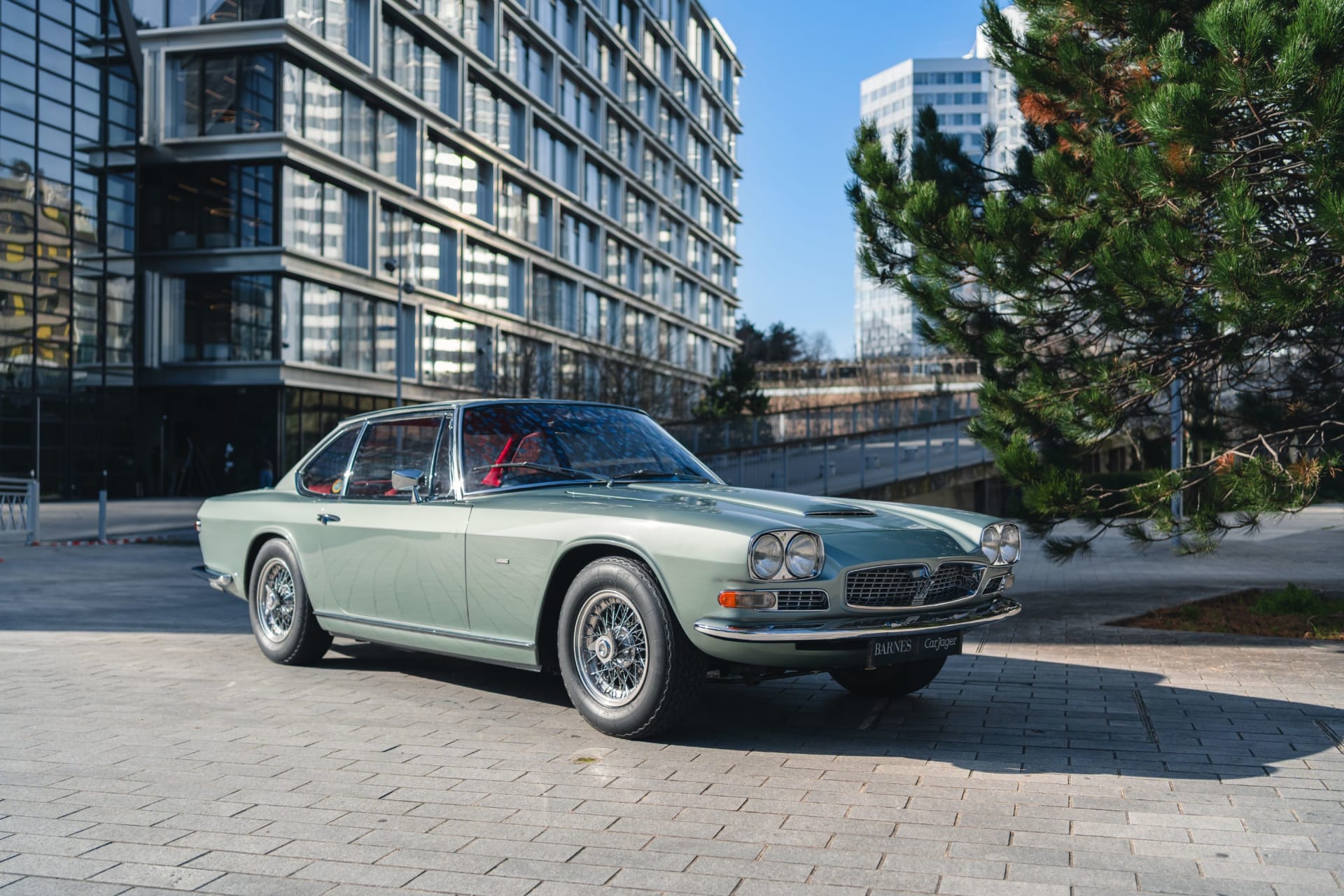
Maserati Quattroporte — modèle de la marque Maserati.


Professional work: pragmatic and responsive. Efficient management with military supervision. I highly recommend them. Thank you.
Since the company ceased its racing activities as early as 1957, the pedigree of most classic Maseratis is not based on their racing achievements, but rather on the excellence of their engineering—often derived from racing—their historical significance, and their design. For example, the timeless beauty and modernity of the first-generation Ghibli make it one of the most celebrated (and highly valued) GTs of its time, so much so that neglected or fixer-upper examples have become extremely rare… but still highly sought after! For other classic Maseratis, less sought-after but equally worthy of interest, and given the cost of a full restoration, standard criteria once again become paramount, such as authenticity, overall condition, and the extent of knowledge regarding the vehicle’s history.
First and foremost—and this applies to a classic Maserati just as much as to any other car—you should verify the vehicle’s registration status: its registration certificate must be up to date, and there must be no outstanding administrative objections against the car. Furthermore, the car’s overall condition must match the description provided by the seller. If, for example, the car is not a “matching numbers” vehicle (meaning it no longer has its original engine and/or transmission), or if it has been substantially modified, these points must be explicitly mentioned—hence the importance of the vehicle history mentioned above. If possible, have the car lifted onto a lift so you can inspect it thoroughly, ideally with the help of an expert or someone knowledgeable about the model you’re considering purchasing. Finally, a test drive (about twenty kilometers should suffice) is essential. It will allow you to assess the vehicle’s handling, the response of the engine, transmission, and brakes, as well as the proper functioning of all equipment and accessories. Of course, these tips become irrelevant if you choose to use CarJager’s services, whose mission is precisely to provide you with complete peace of mind when choosing your future classic Maserati!
Although the company was founded in 1914, it wasn’t until the aftermath of World War II that the first Maseratis were produced in small batches, gradually elevating the Modena-based manufacturer beyond its status as a small artisanal workshop. Often designed in collaboration with Italy’s leading coachbuilders, classic Maseratis include legendary models such as the sumptuous 5000 GT (of which only 34 were built between 1959 and 1965), the Ghibli from 1966, the mid-engine Bora from 1971, or, more recently, the 3200 GT from 1998, powered by the brand’s final V8.
If we limit ourselves to the period from the postwar era to the late 1990s, we find ourselves faced with a long line of coupes, convertibles, and grand touring sedans featuring sophisticated mechanical systems that brook no half-measures when it comes to maintenance, and whose overall engineering and construction exude craftsmanship—which, as everyone knows, has its good and bad sides… As a result, these cars require a certain number of standard precautions, particularly regarding warm-up times, and, for the most part, are ill-suited to the demands of modern traffic, especially in urban environments. It is therefore advisable to limit your classic Maserati to “collector’s” use.
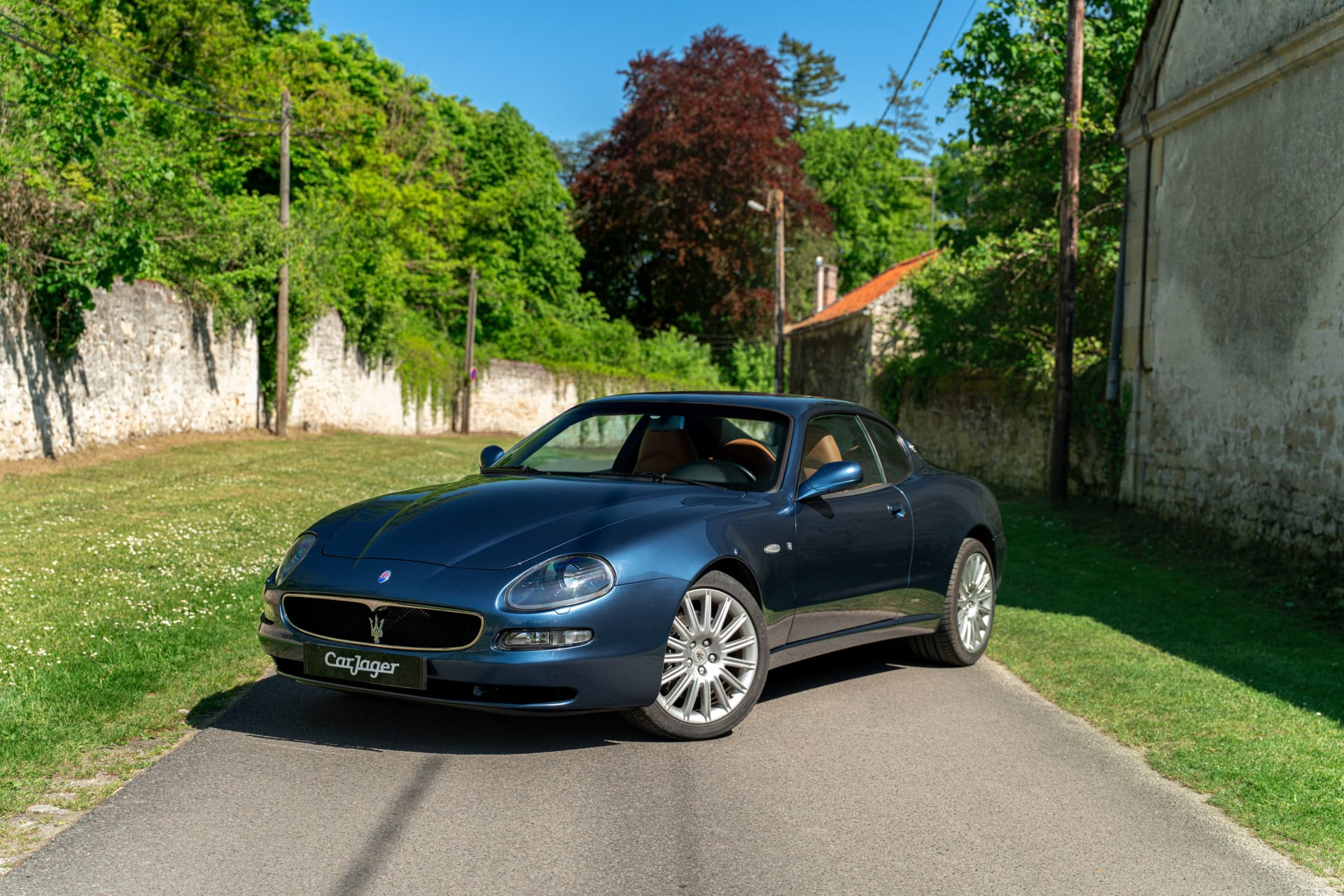
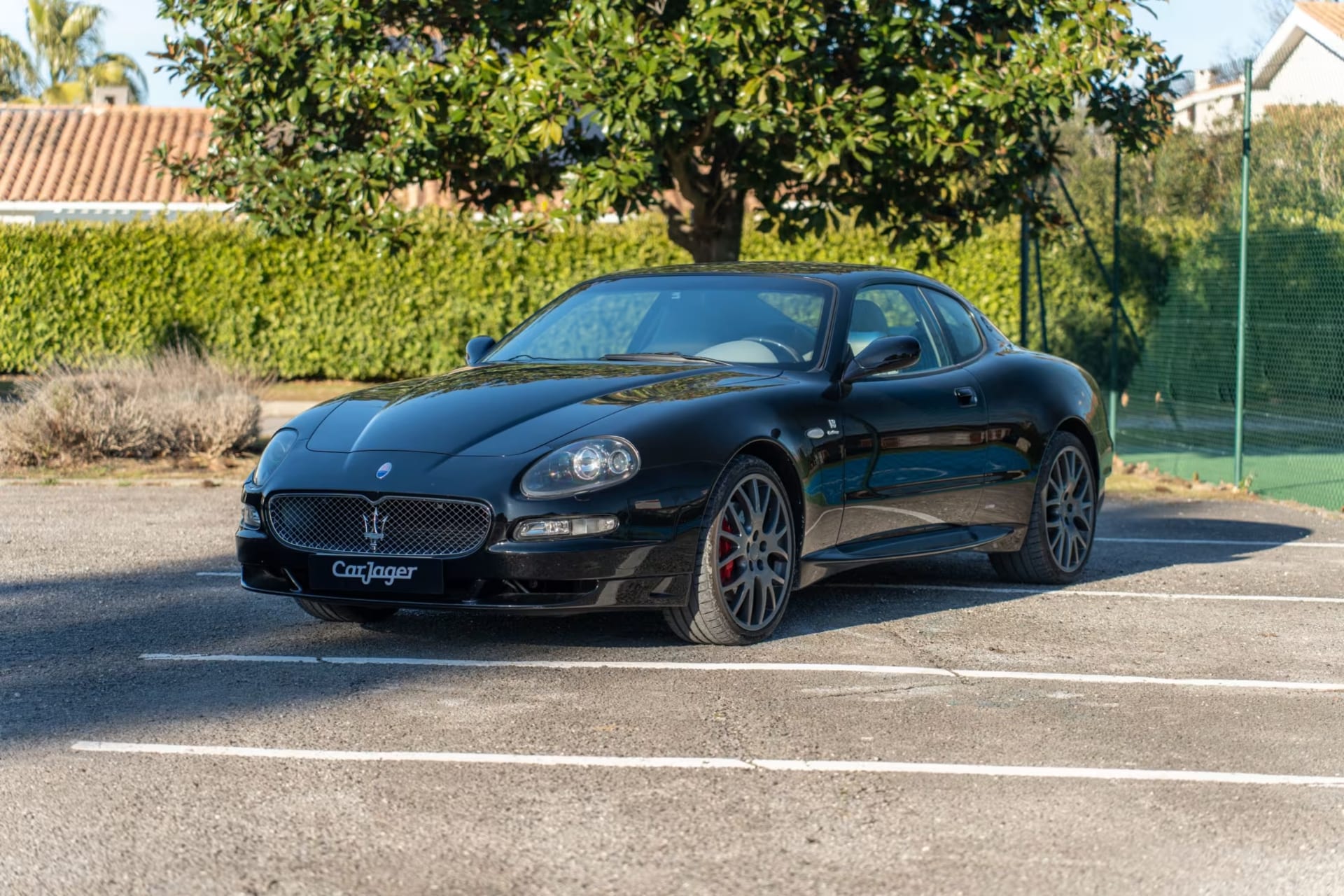
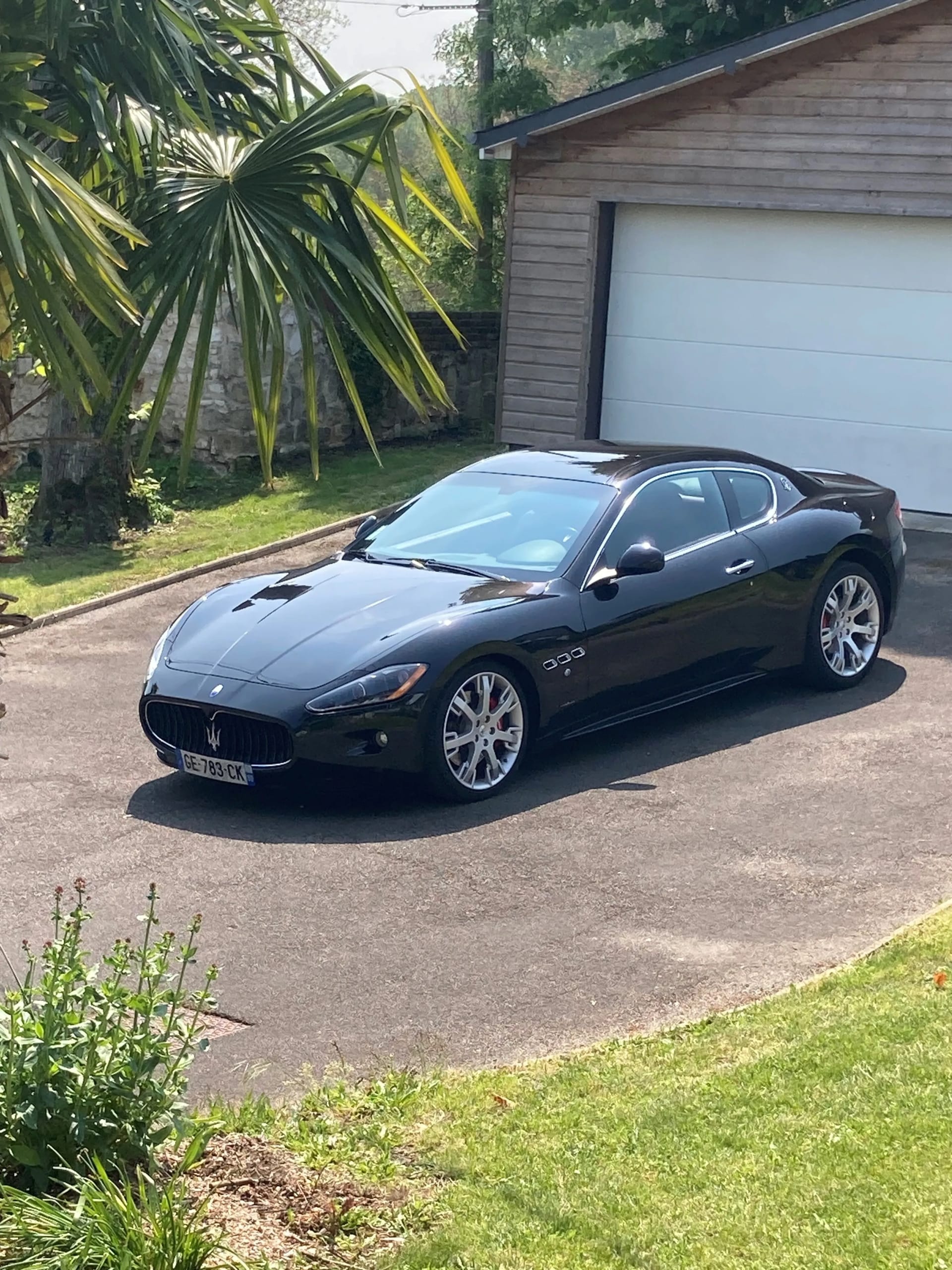
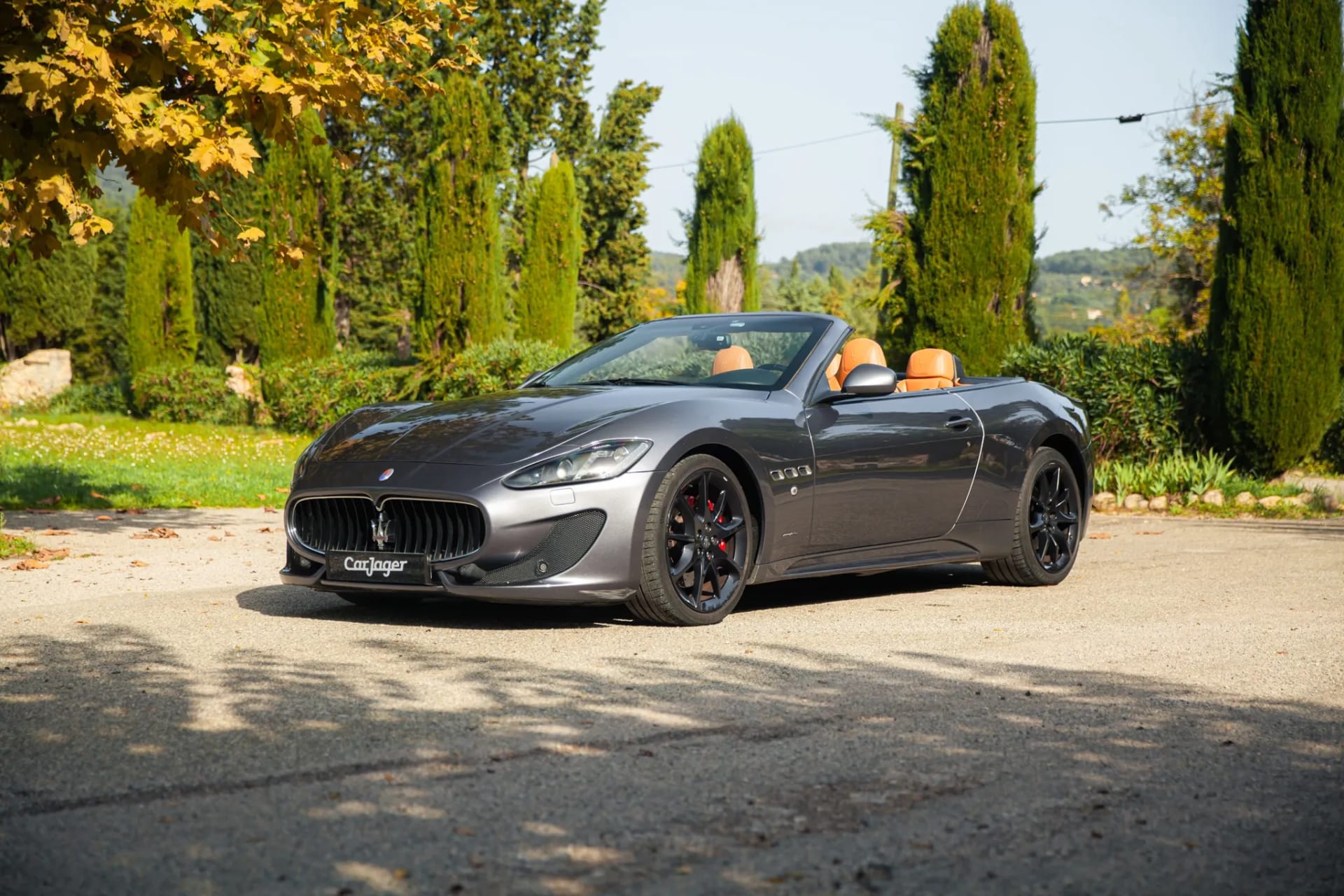
Following the (relative) shift toward more affordable models during the Biturbo era, Maseratis have regained their status as exceptional GTs since the turn of the century. The GranTurismo and GranCabrio coupes and convertibles, most of which are powered by Ferrari-sourced V8 engines, are therefore potential collector’s items, as are the fifth- and sixth-generation Quattroporte sedans (excluding the diesel variants for the latter). Let’s not forget the MC20 berlinetta—recently renamed MCPura—unveiled in 2020 and powered by a V6 developed from an Alfa Romeo platform, which marks a return to mid-engine Maseratis.