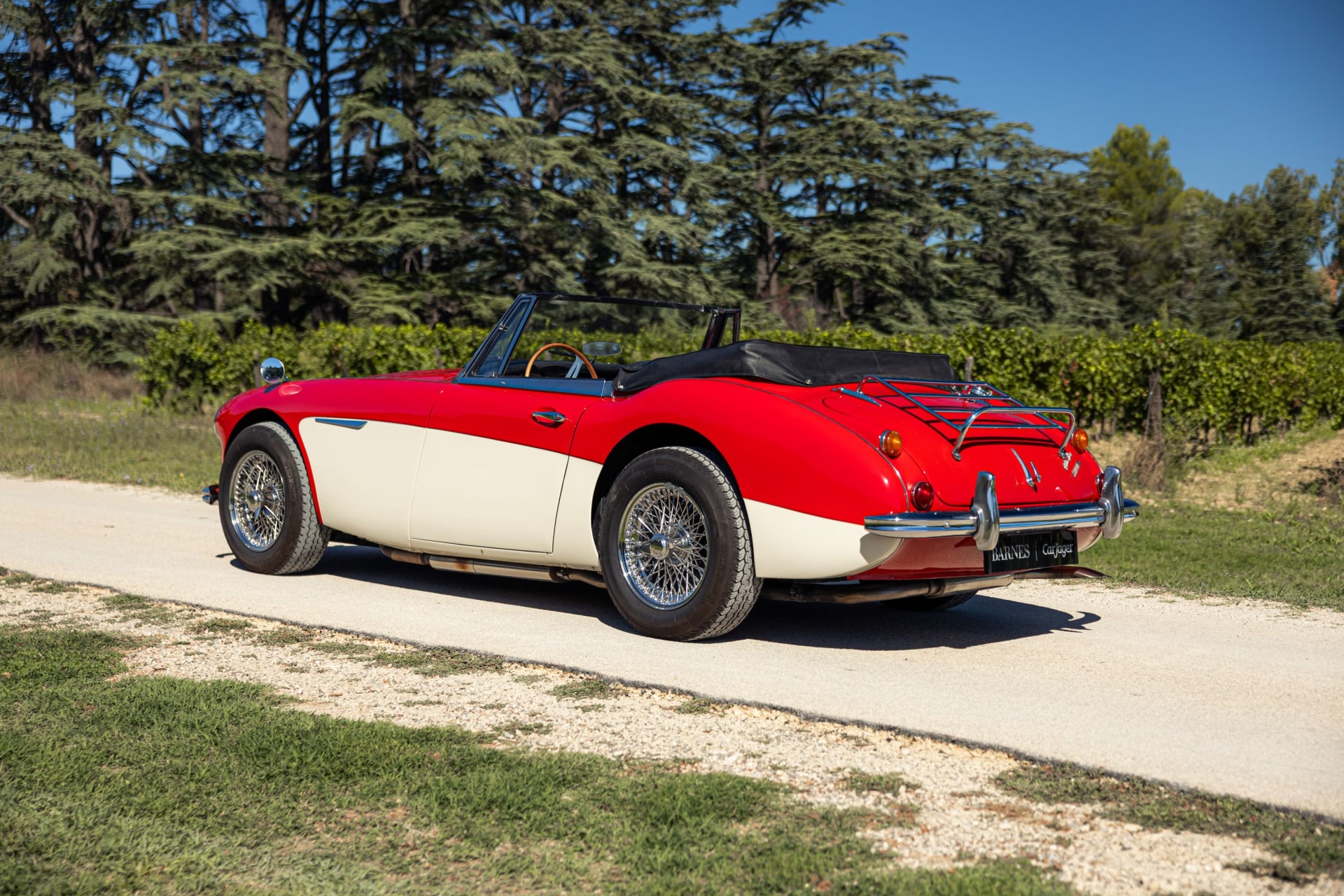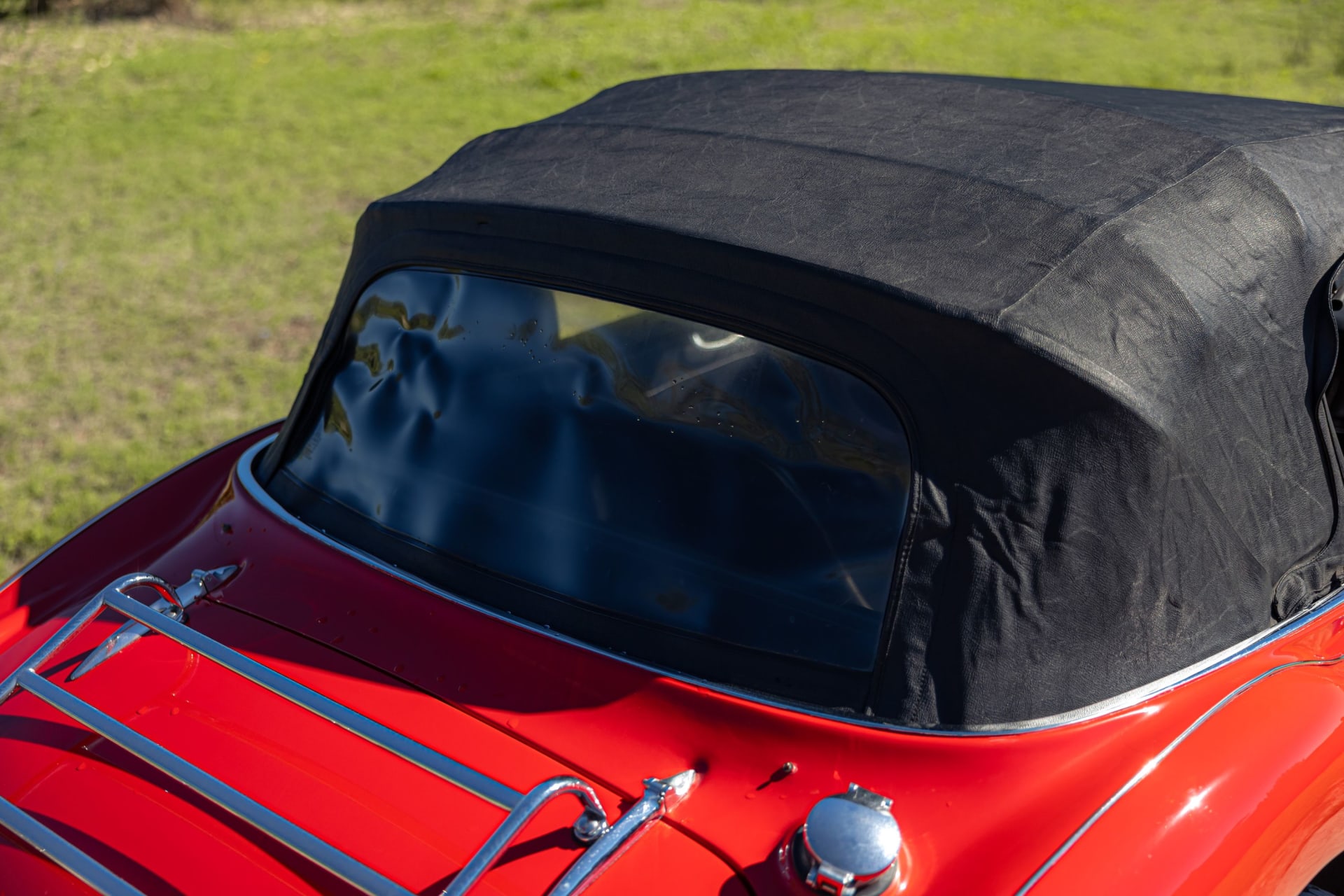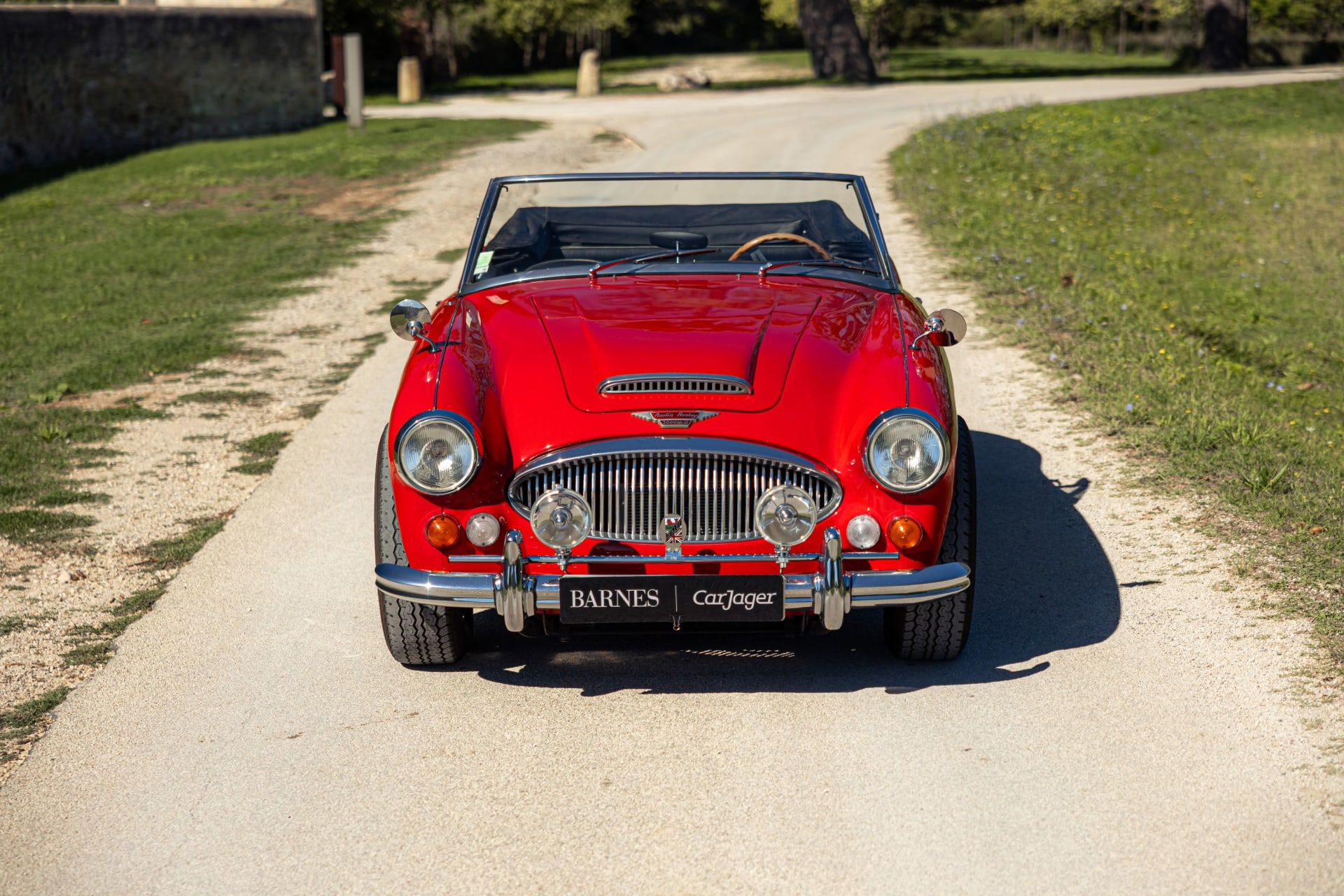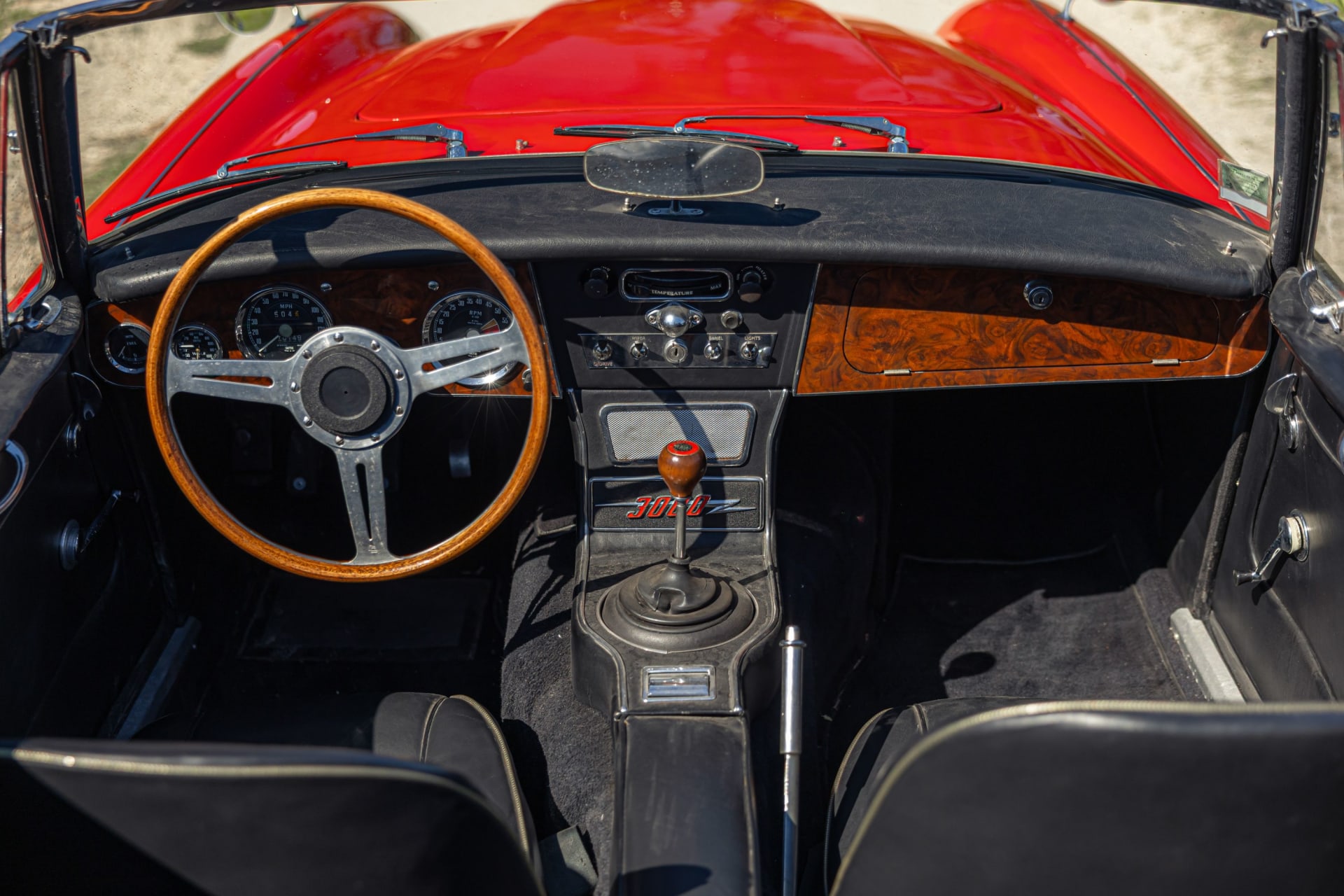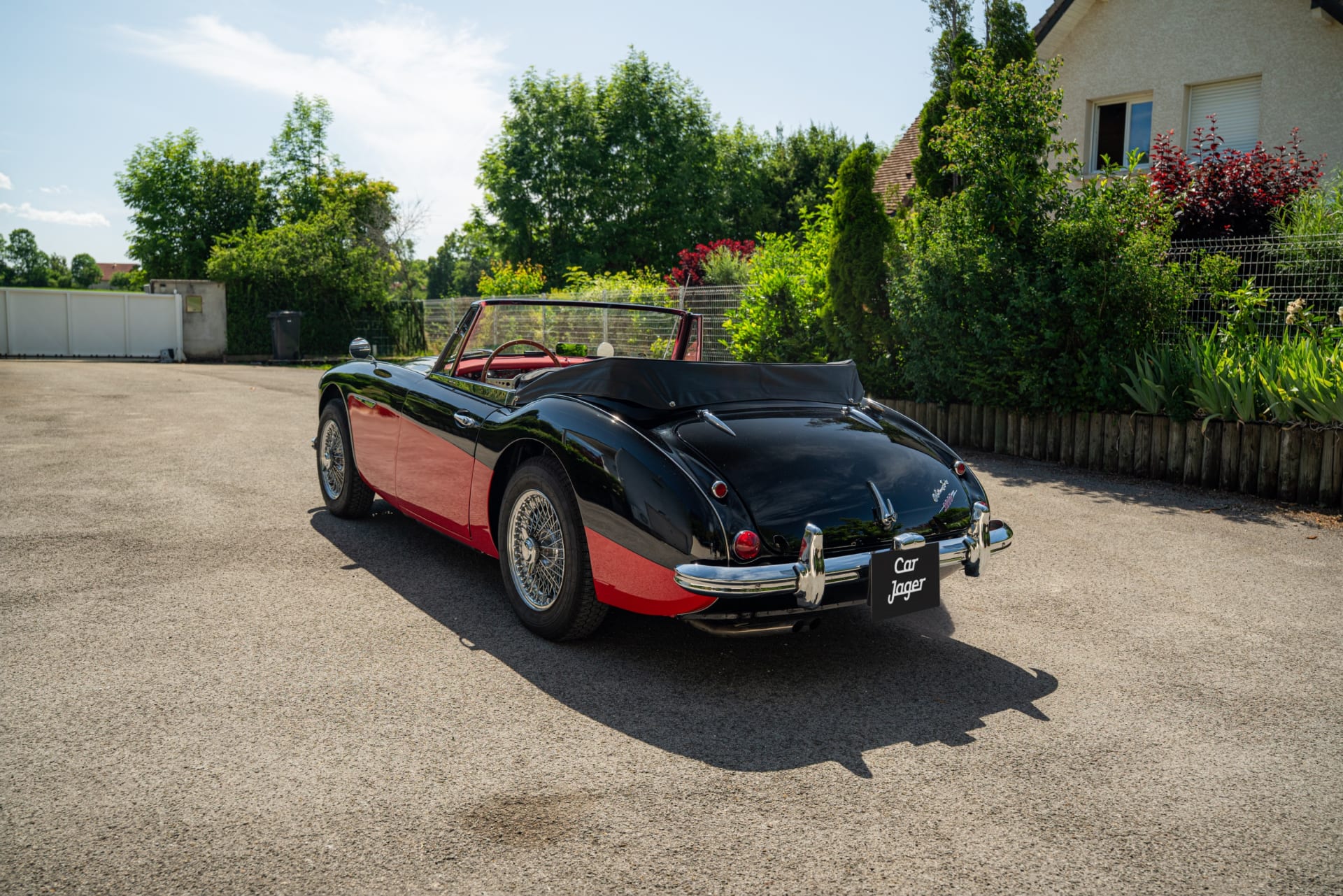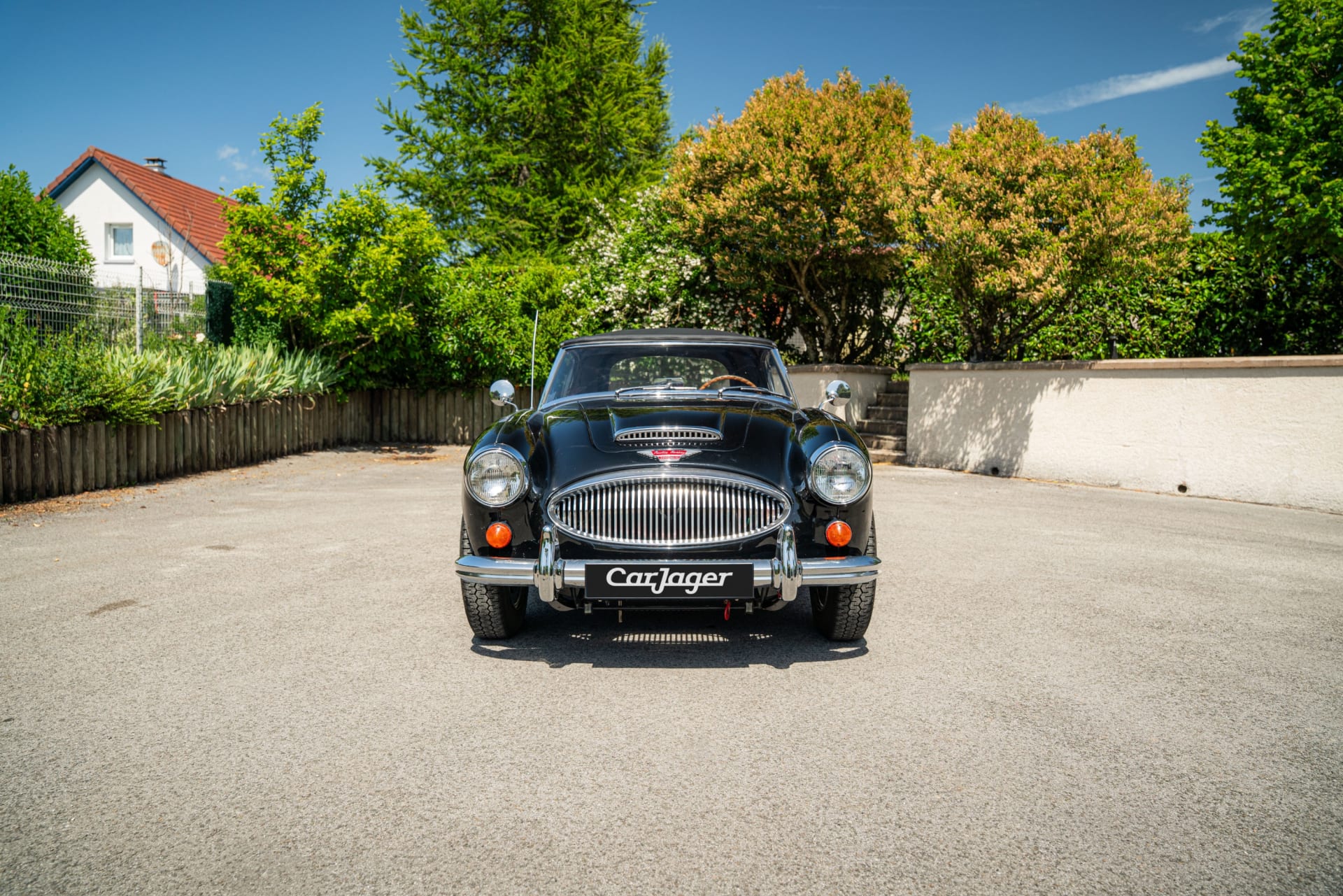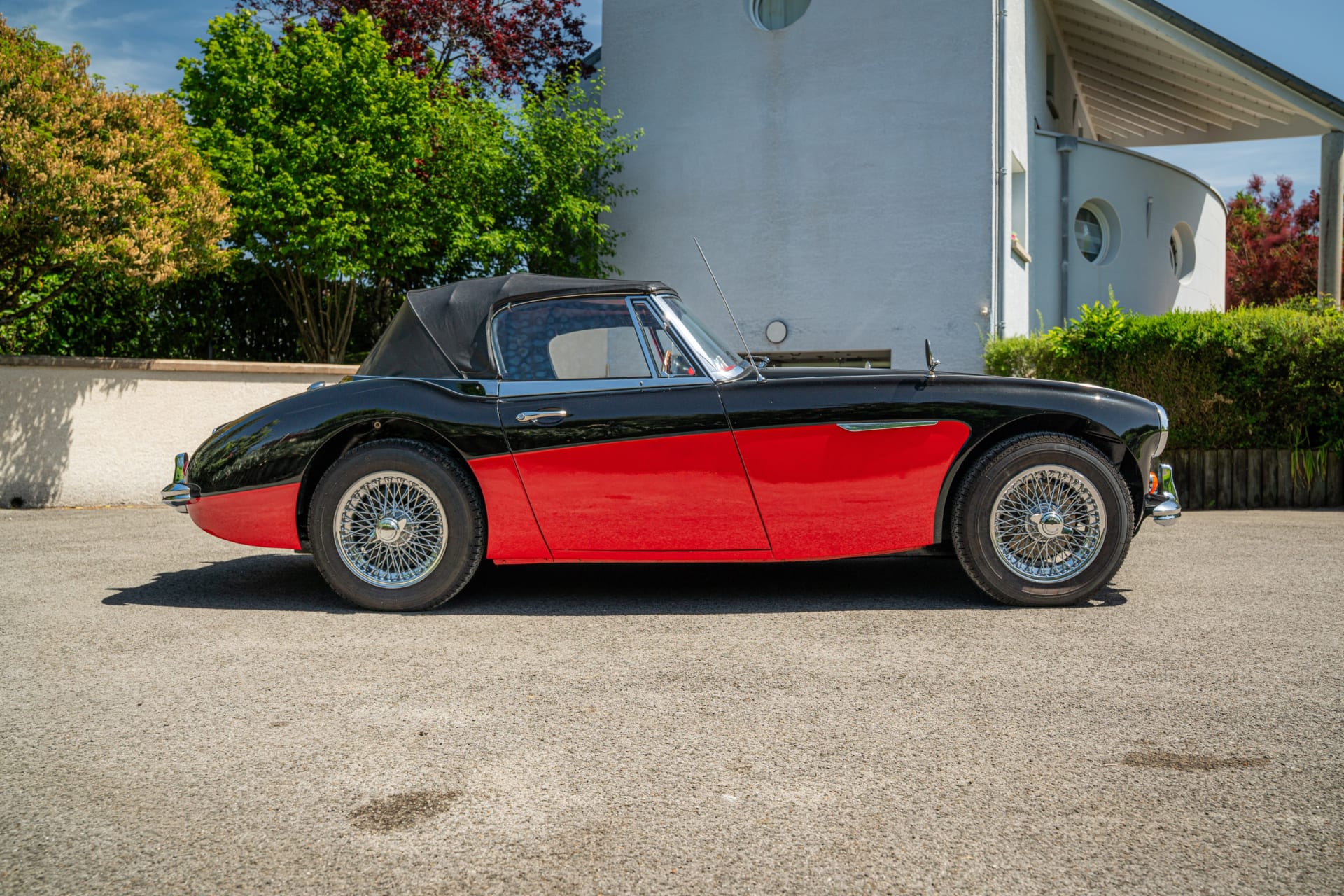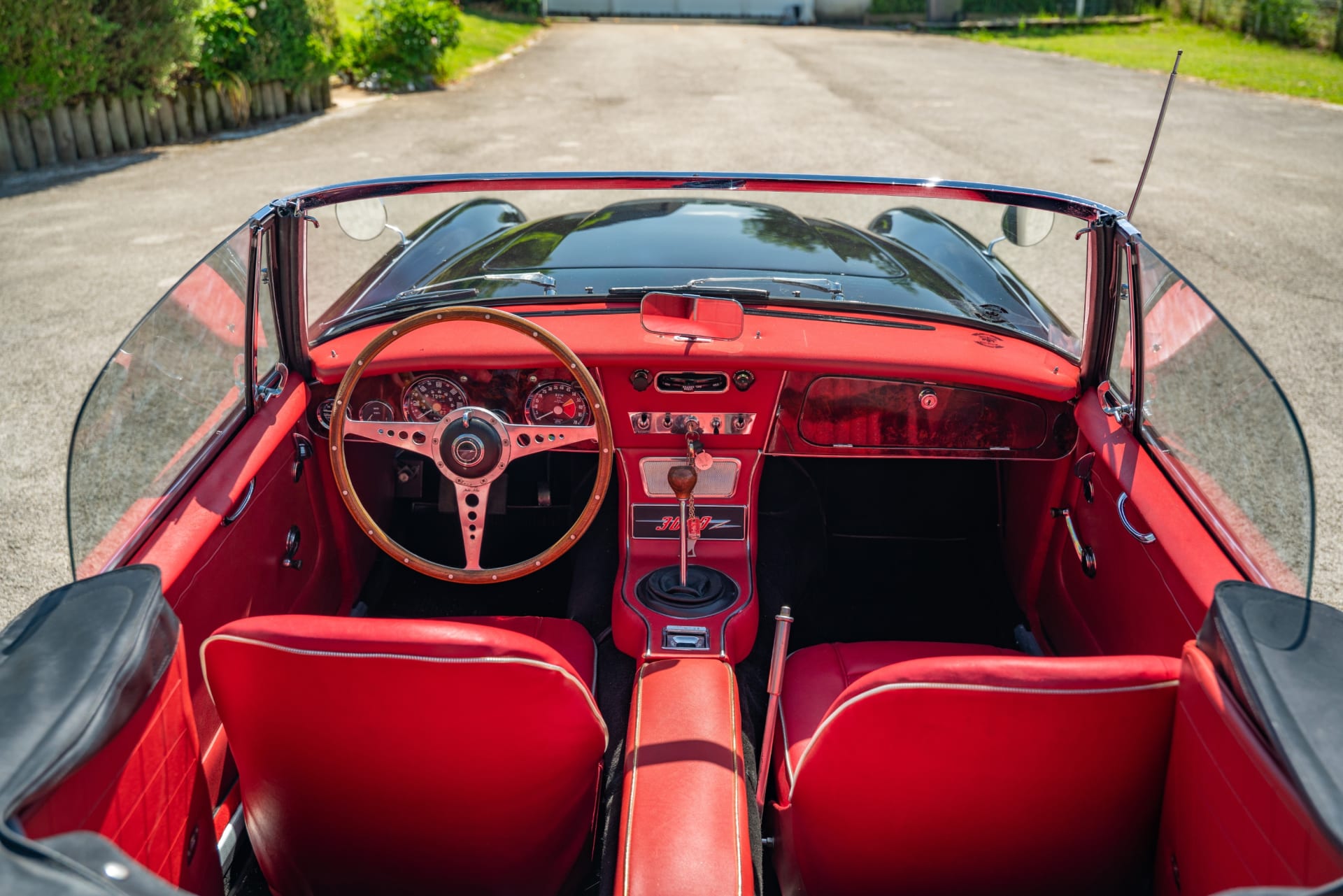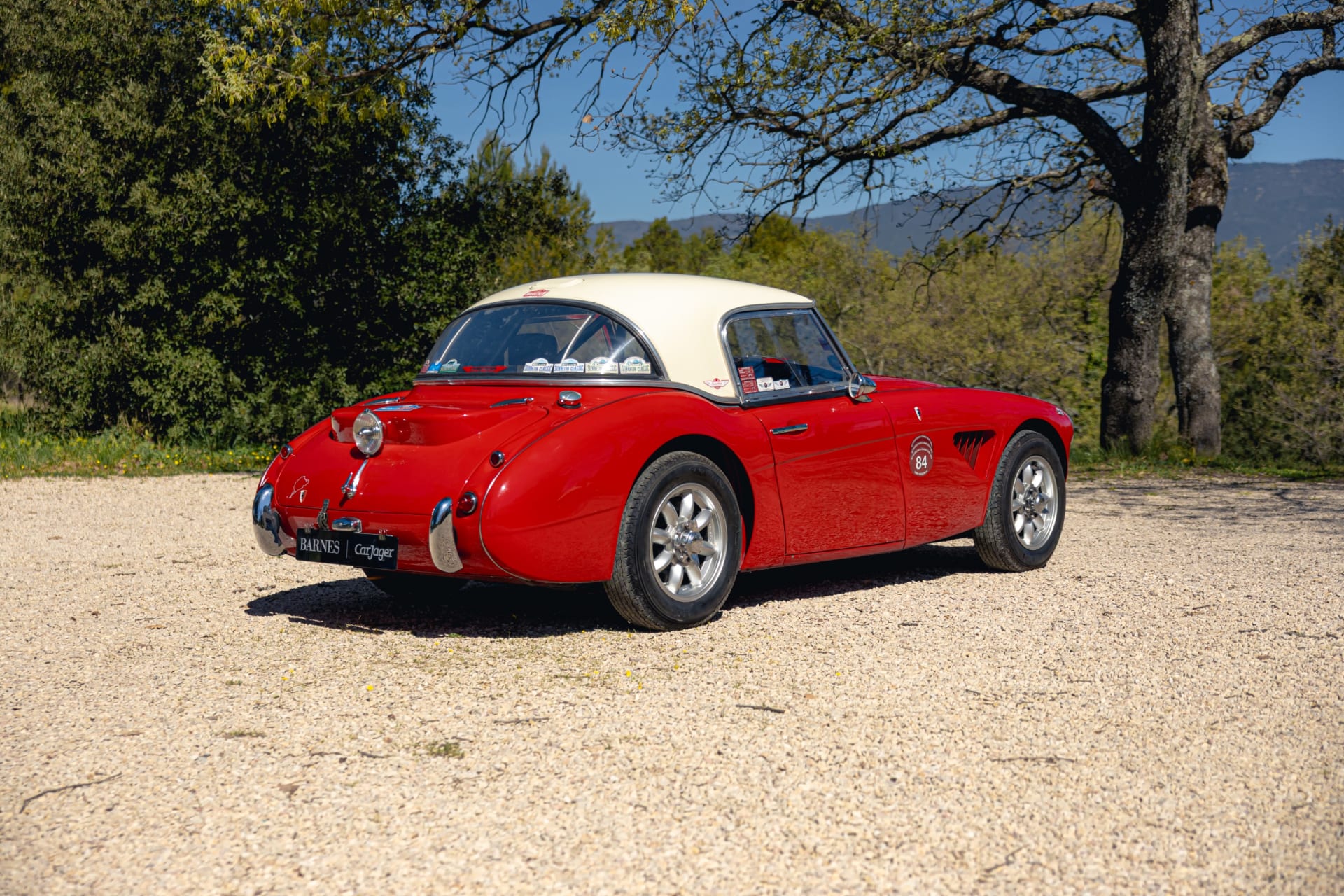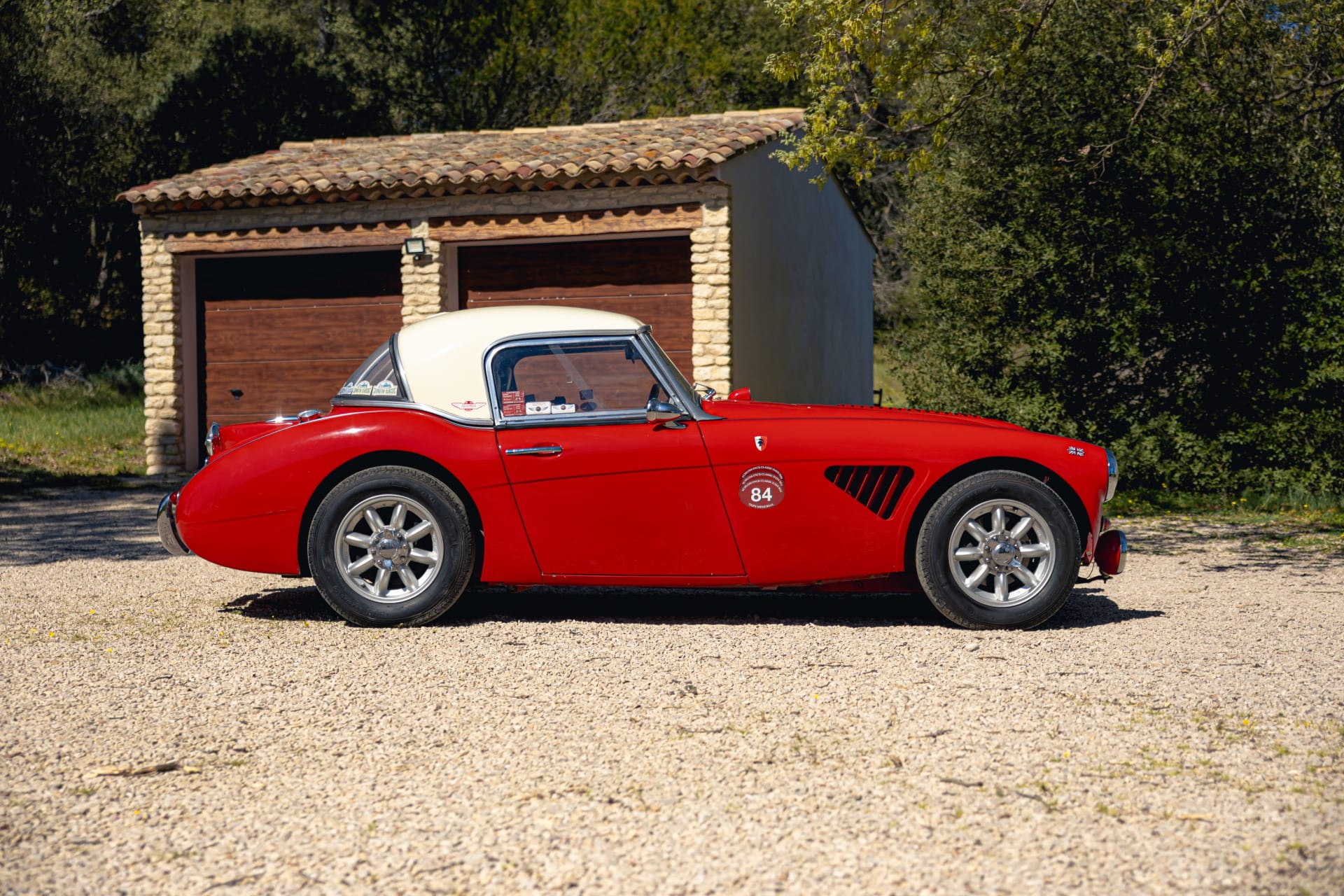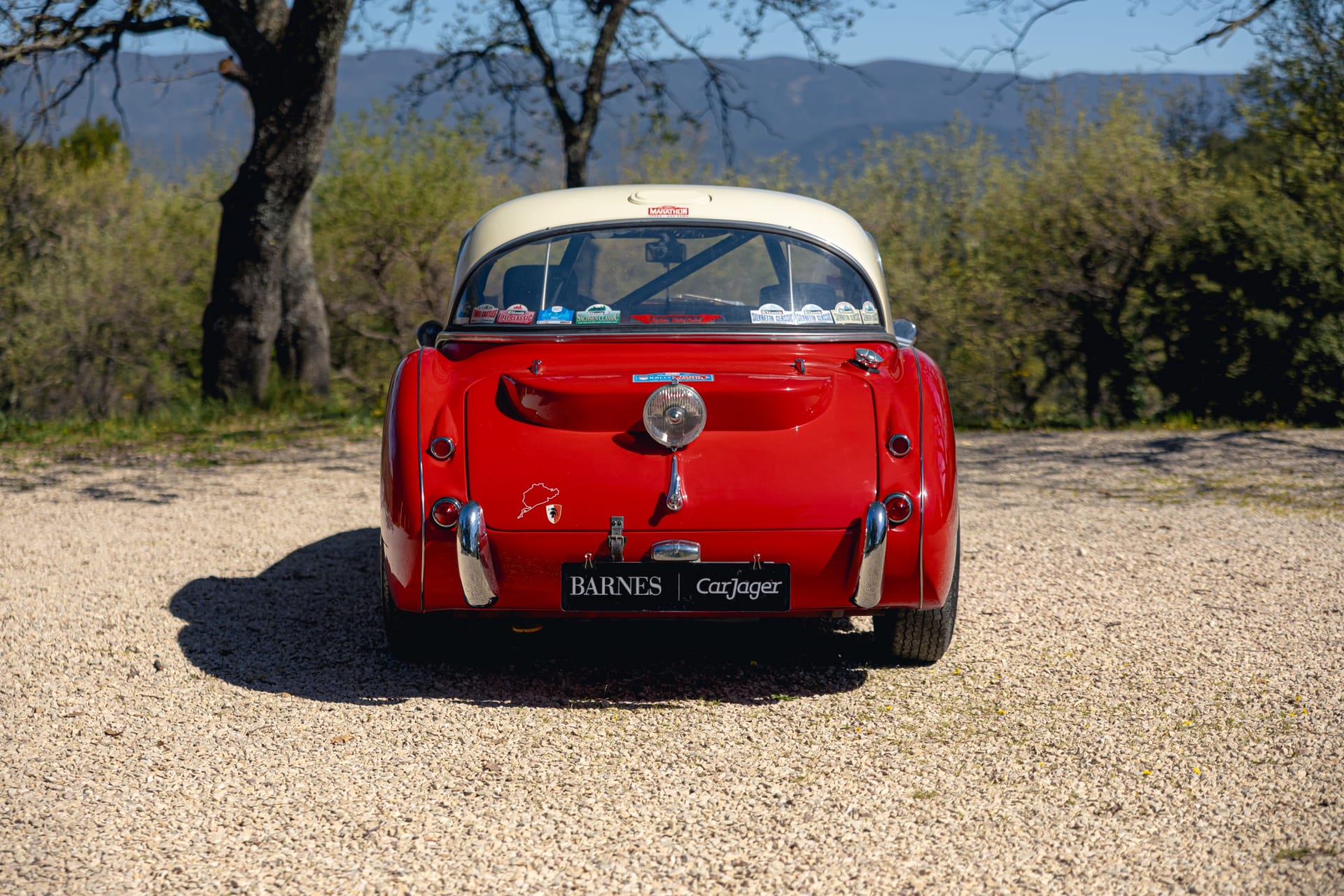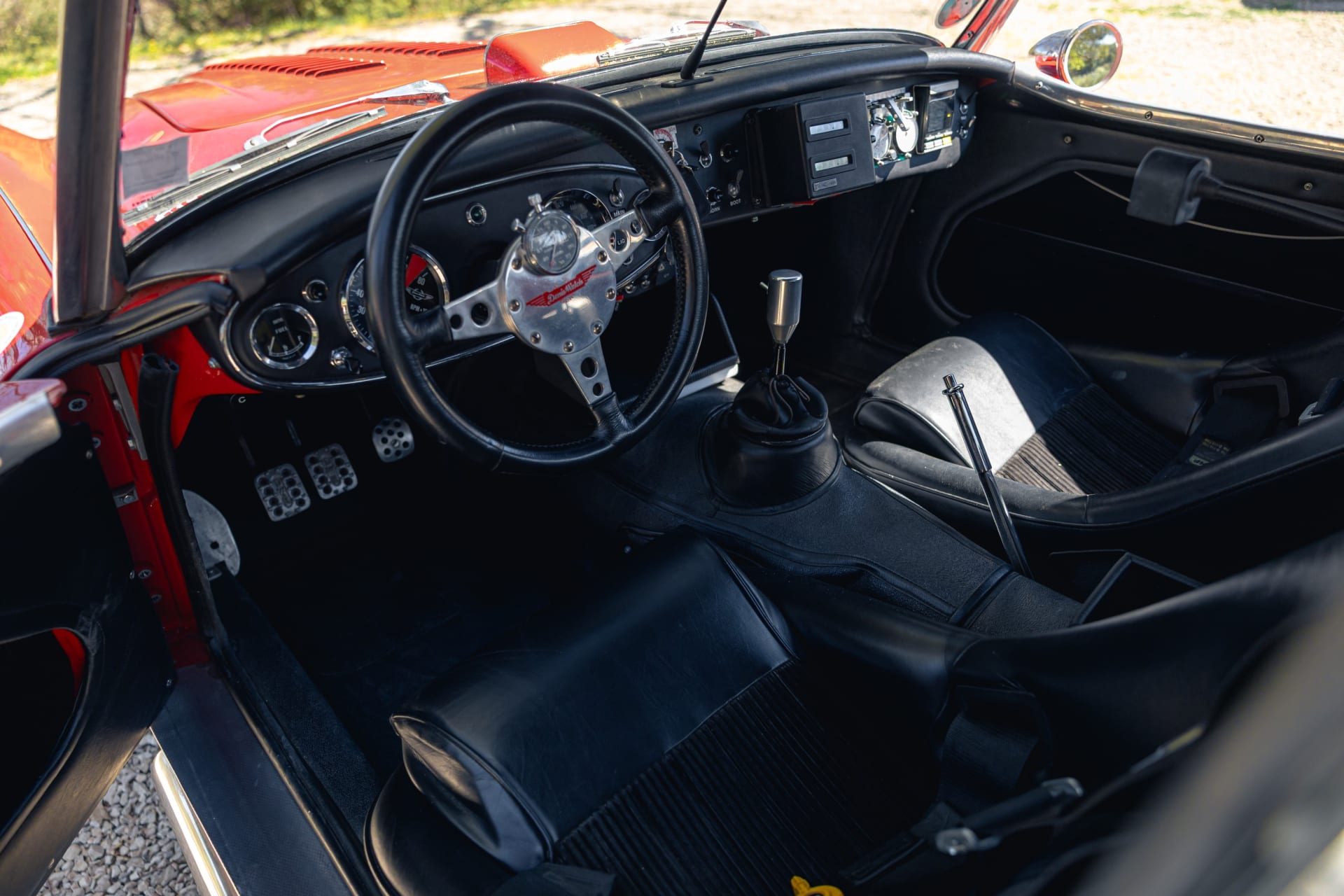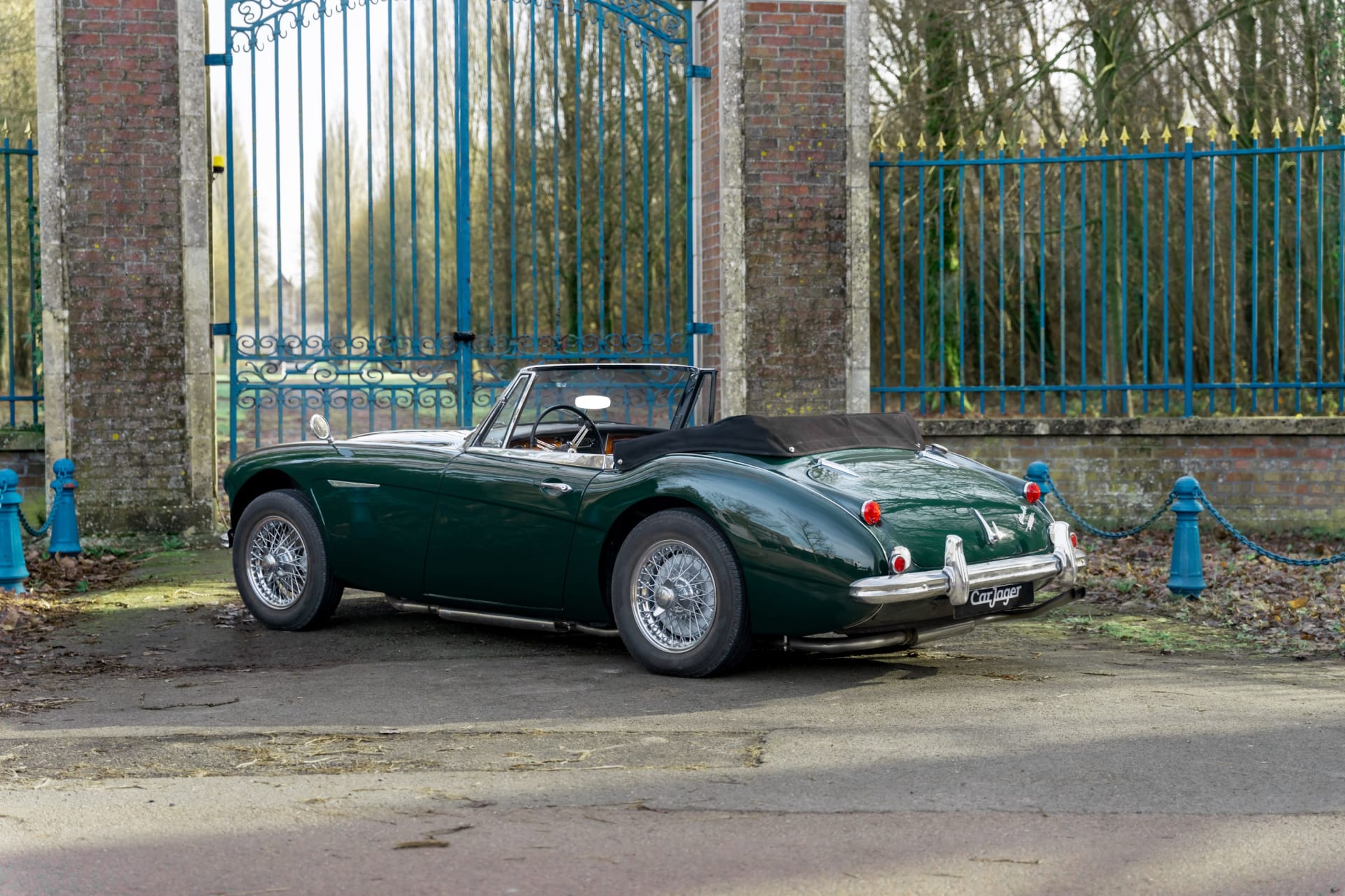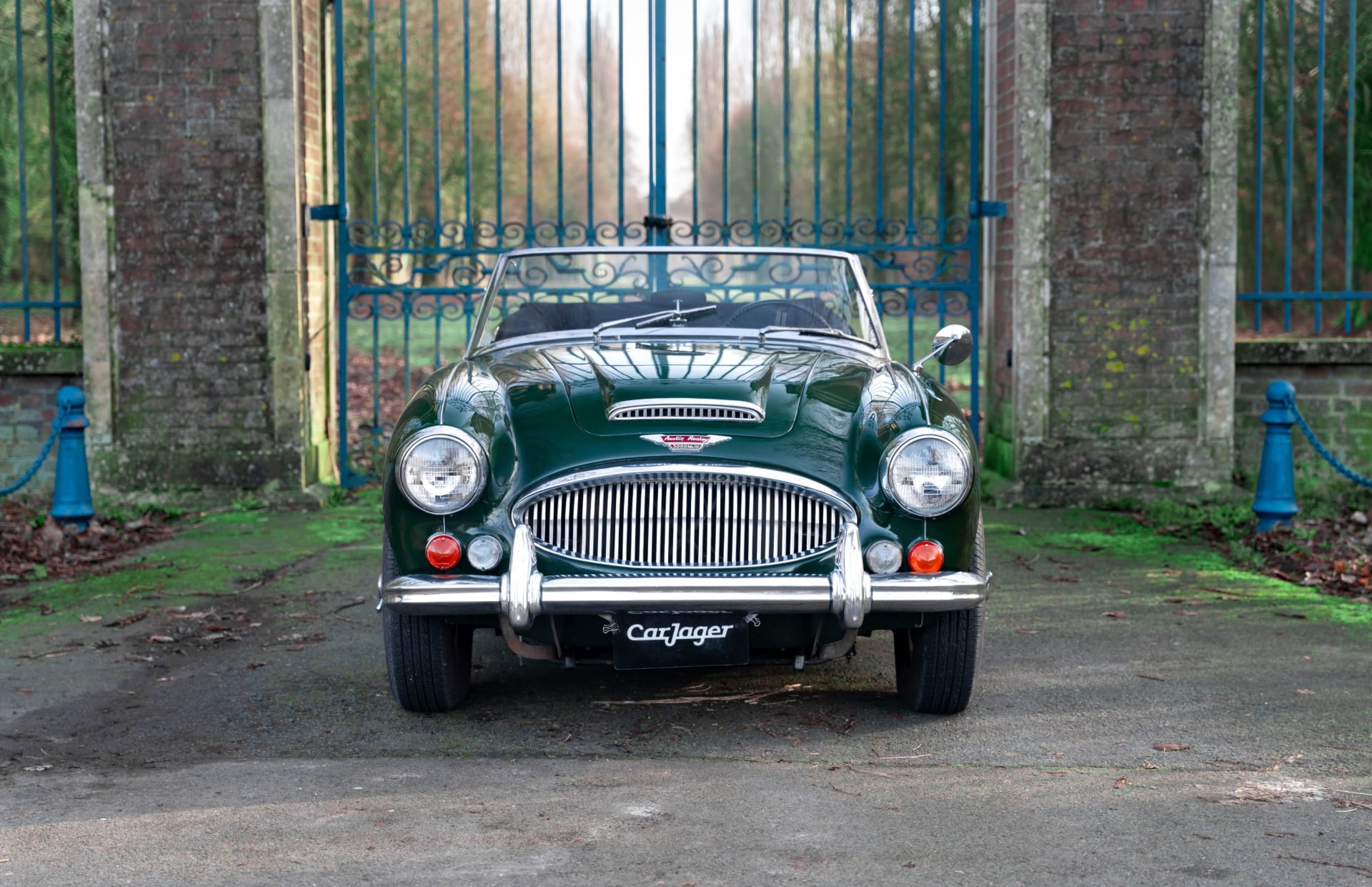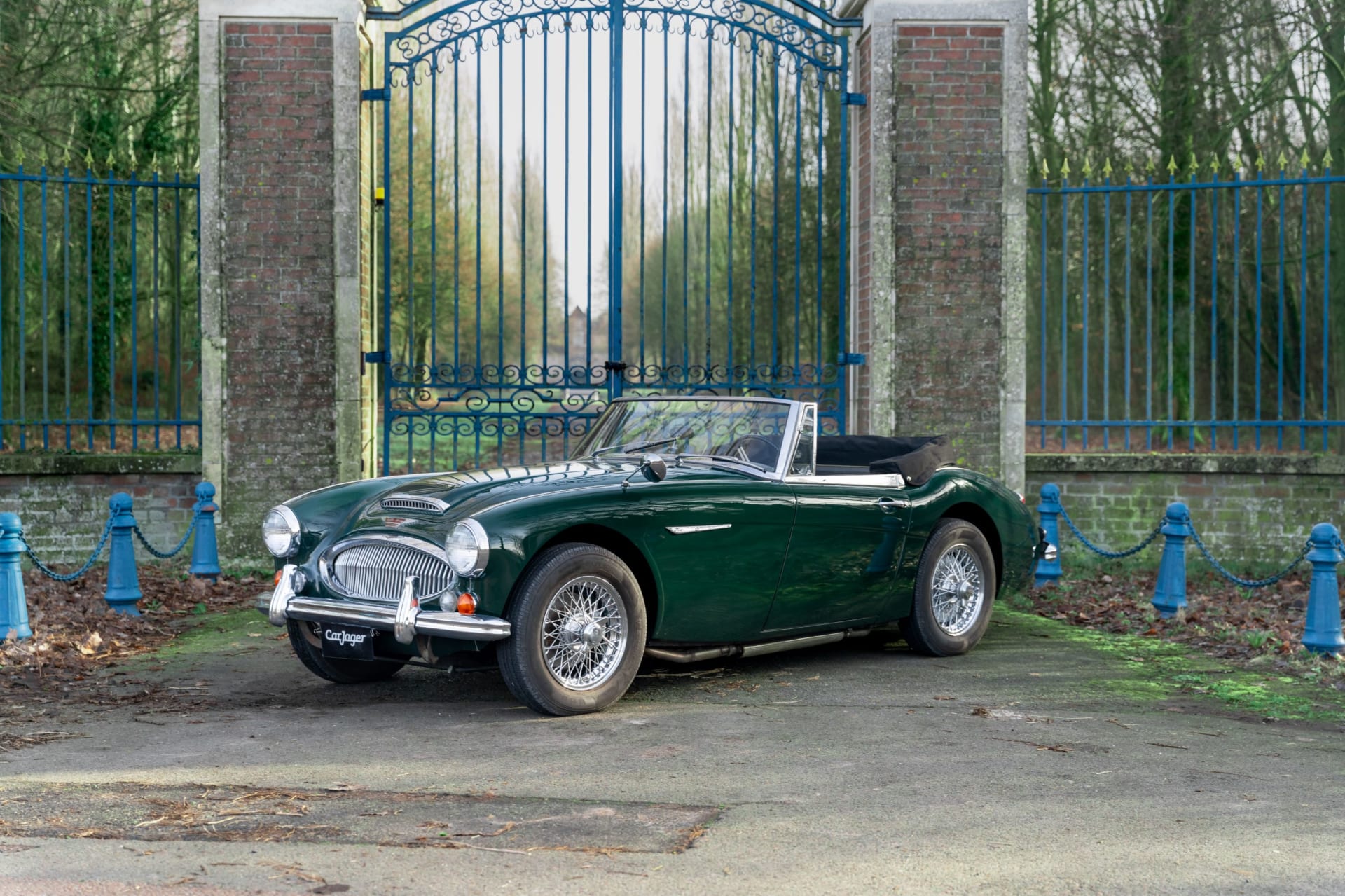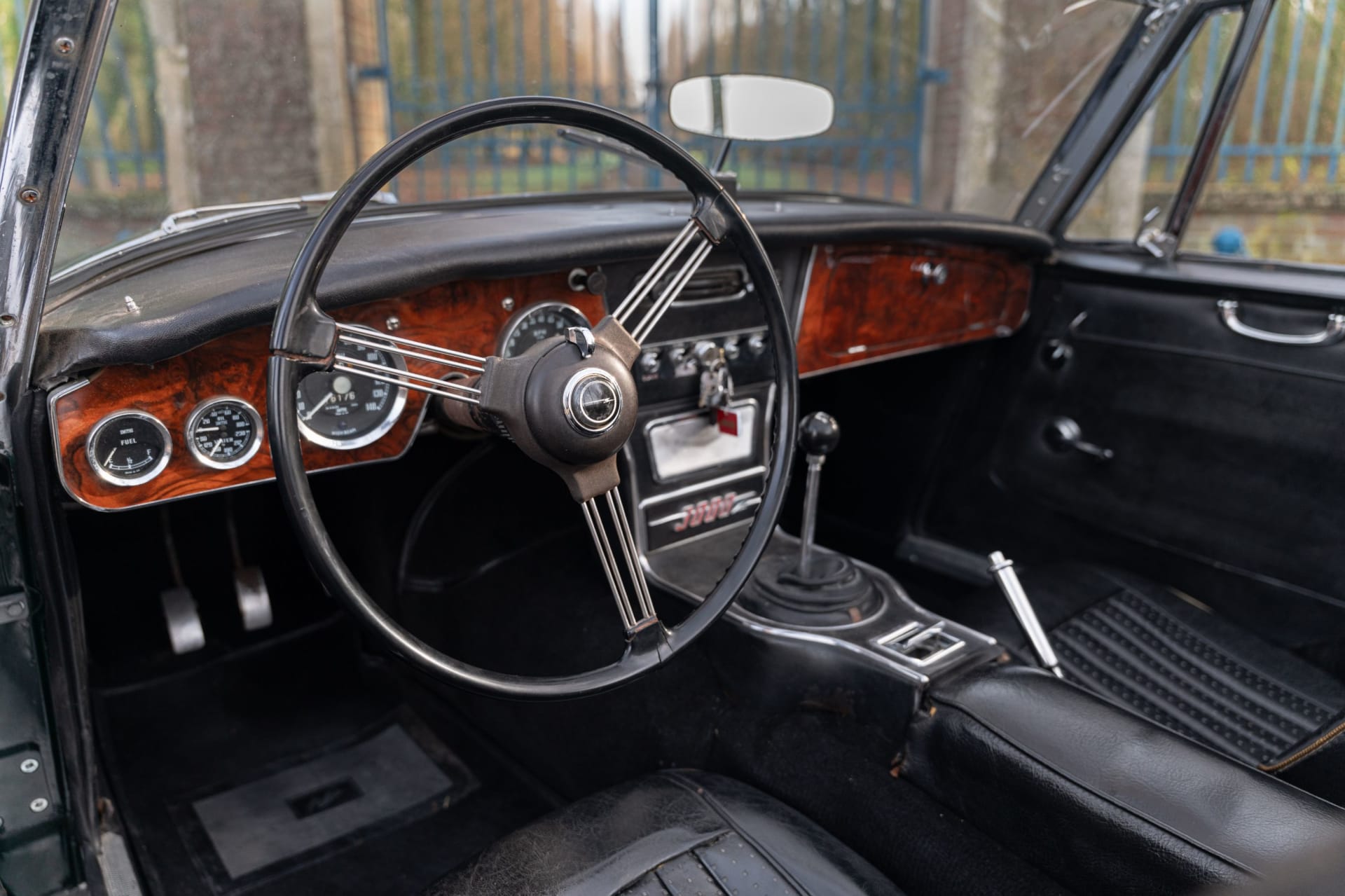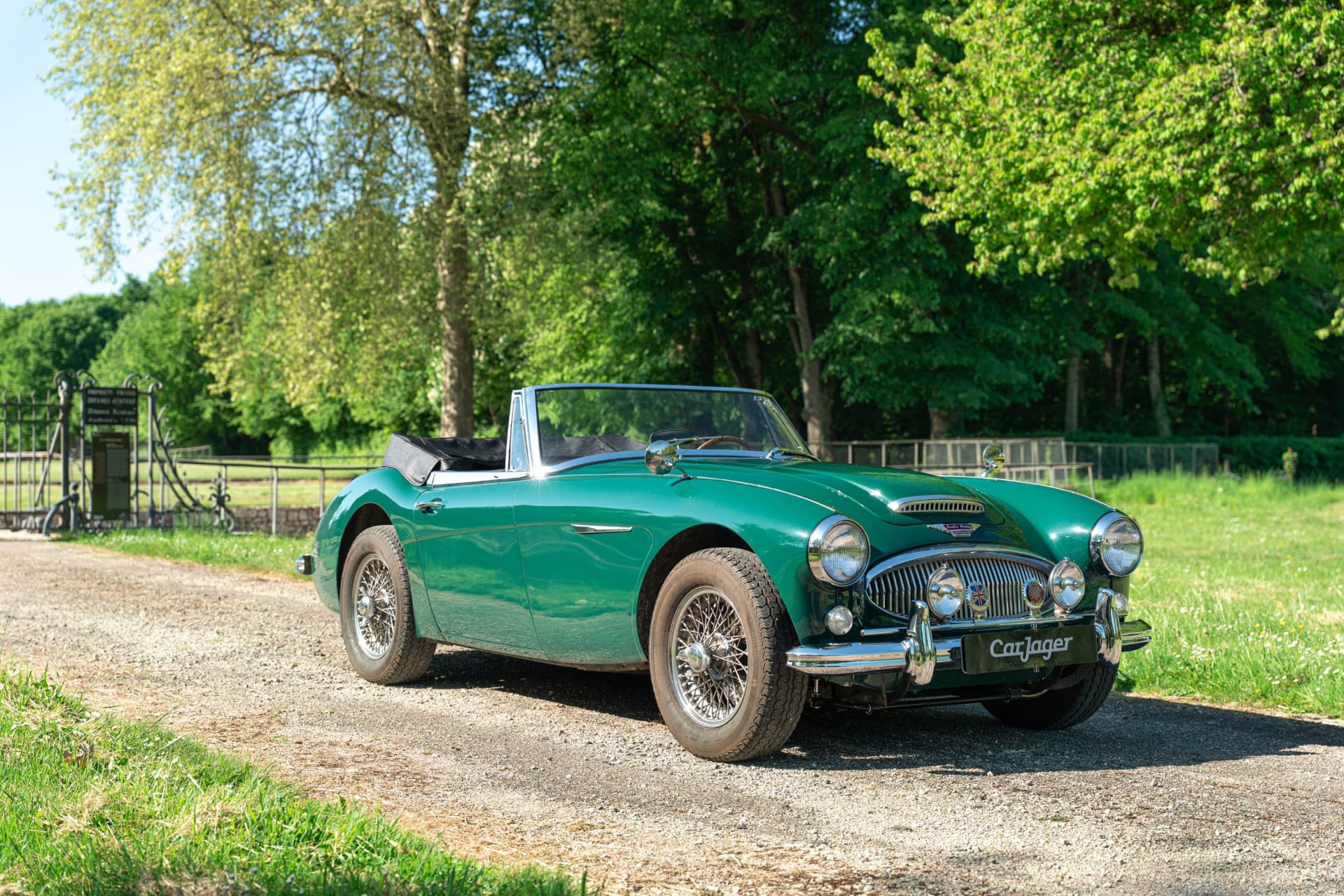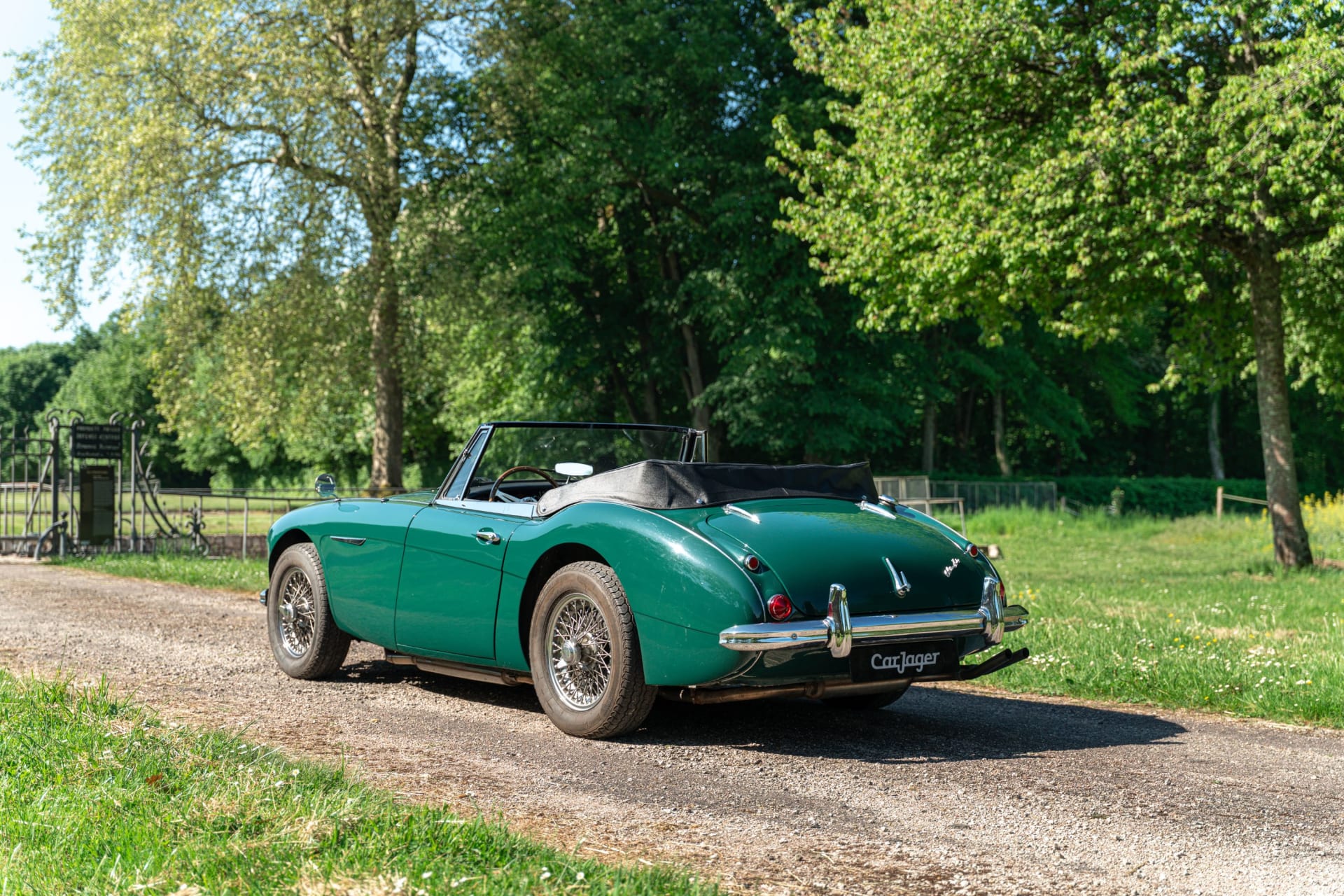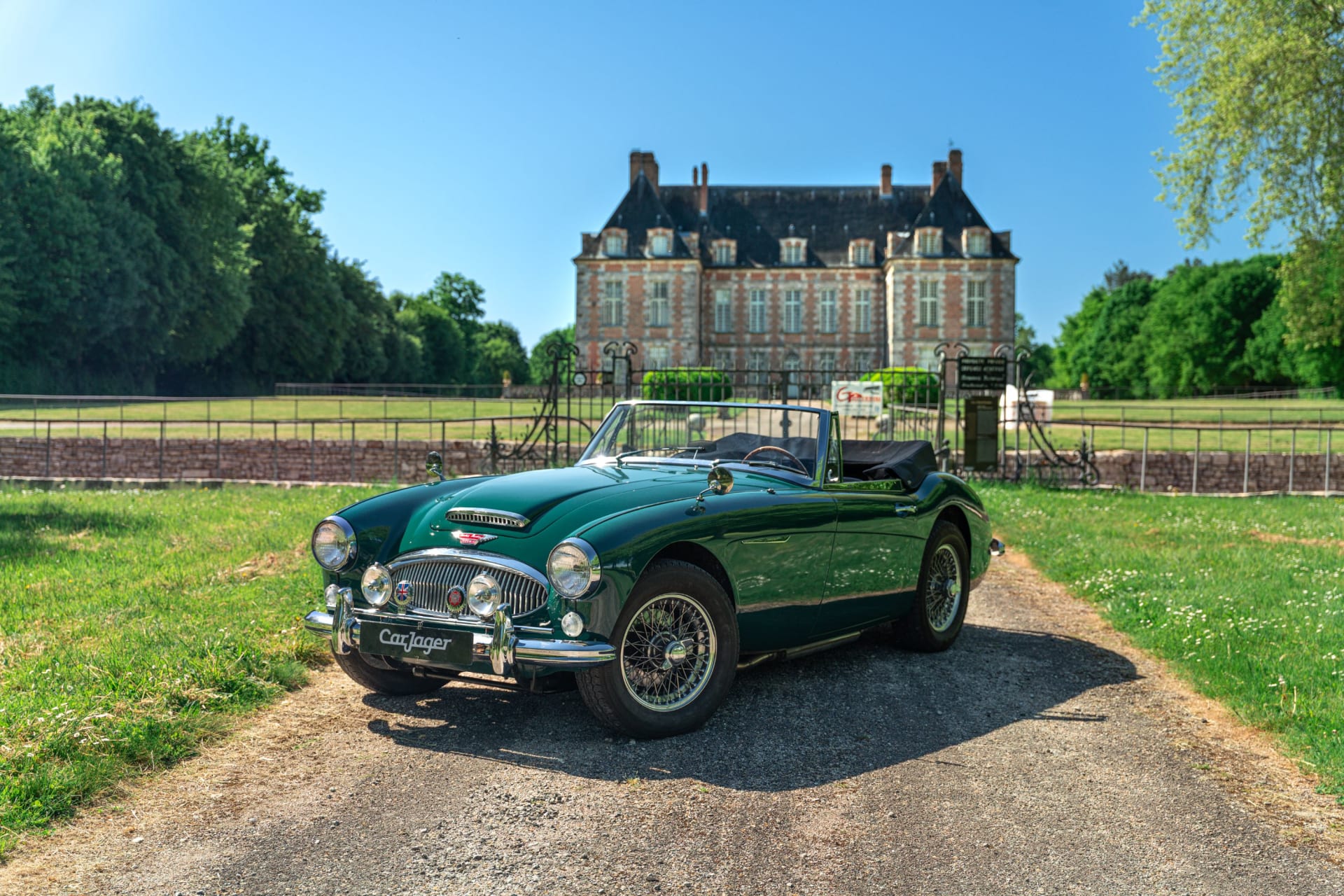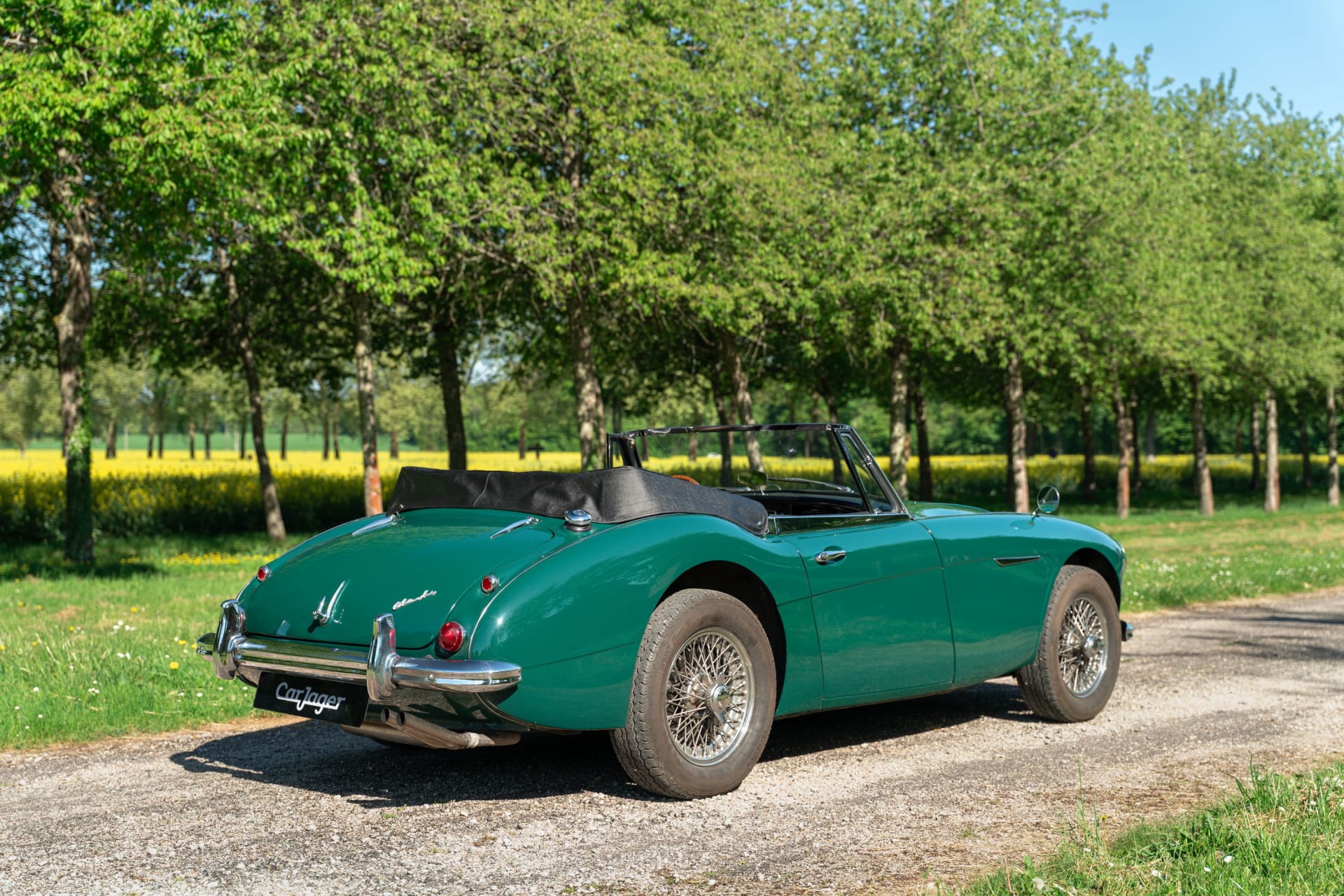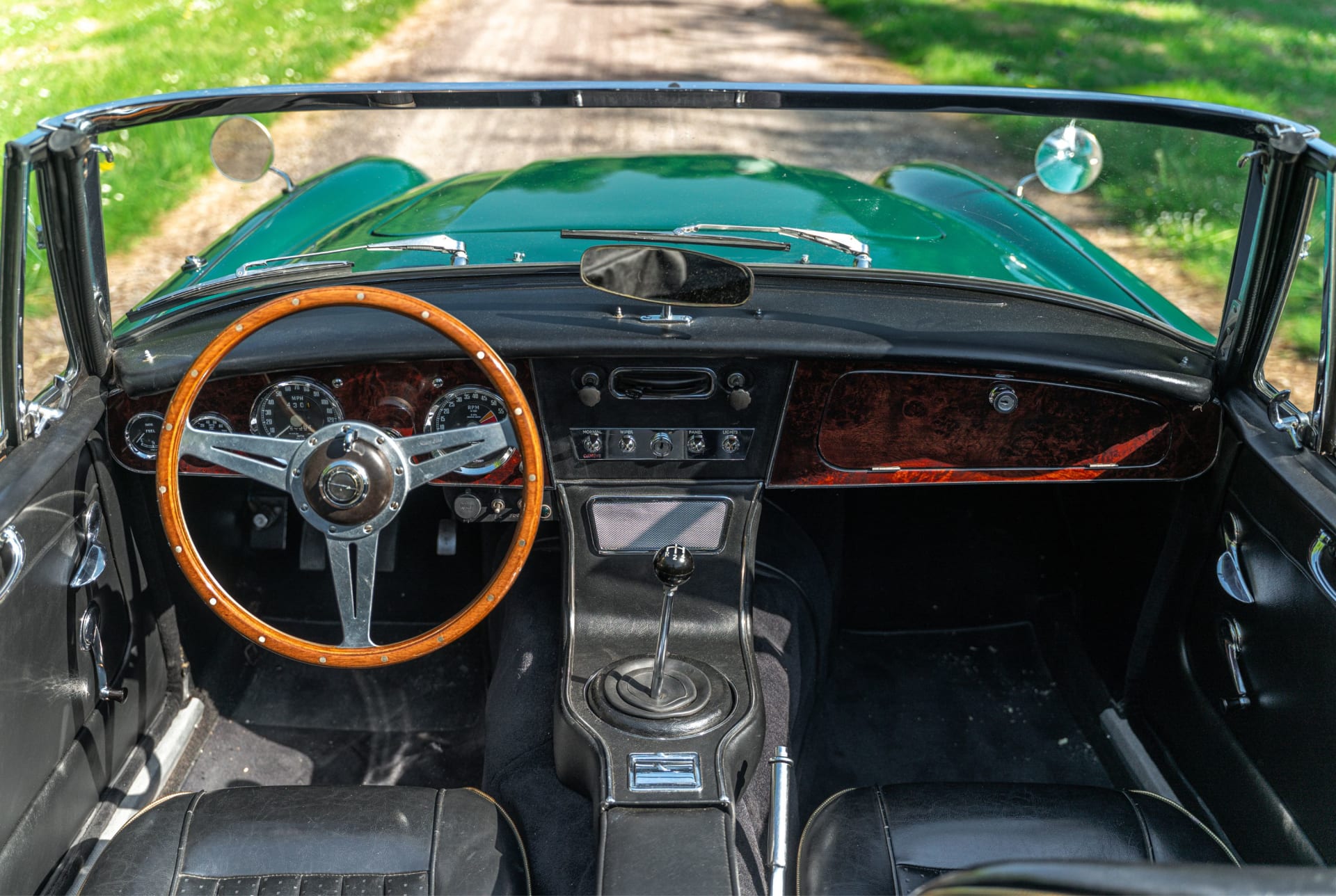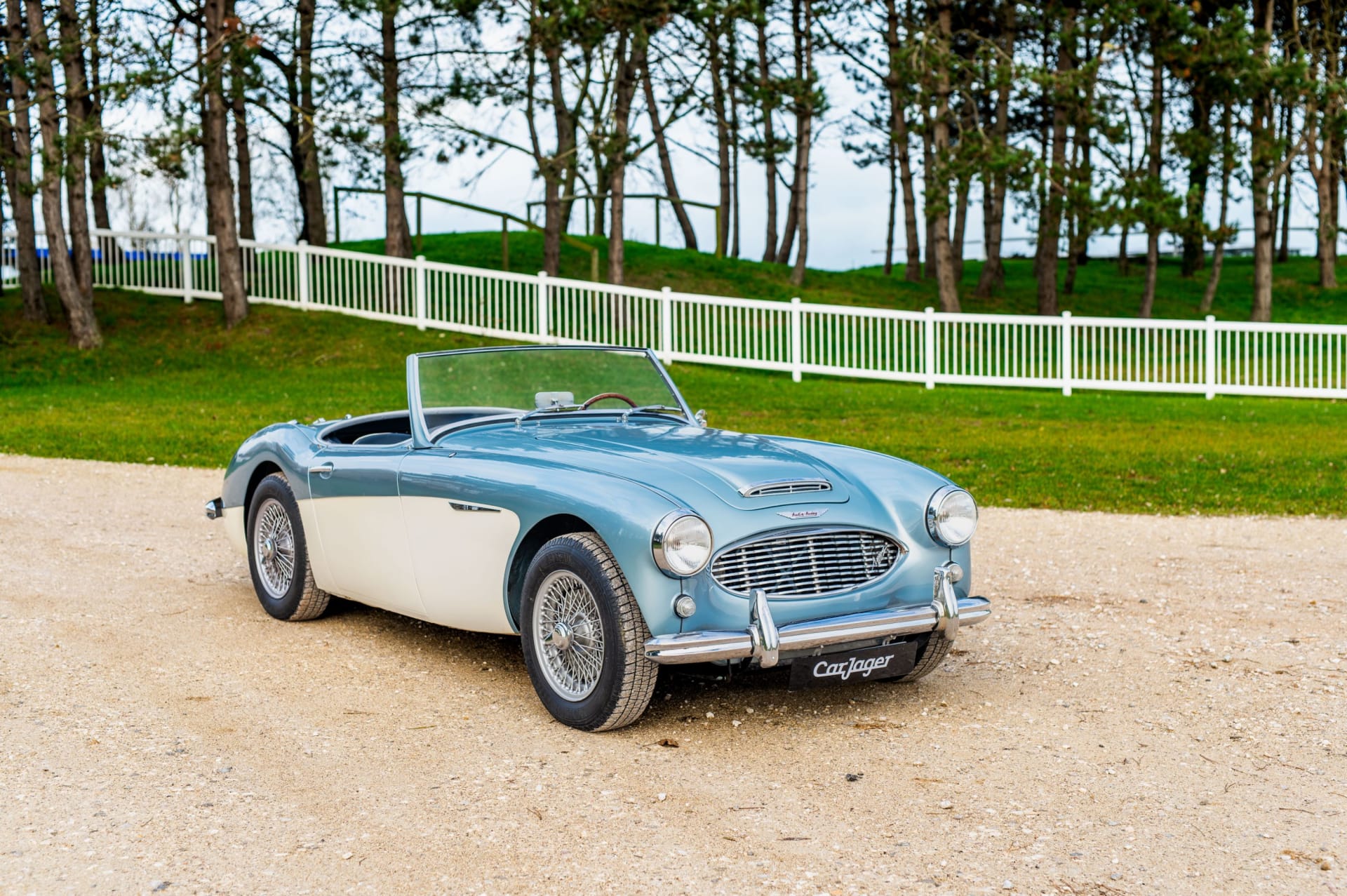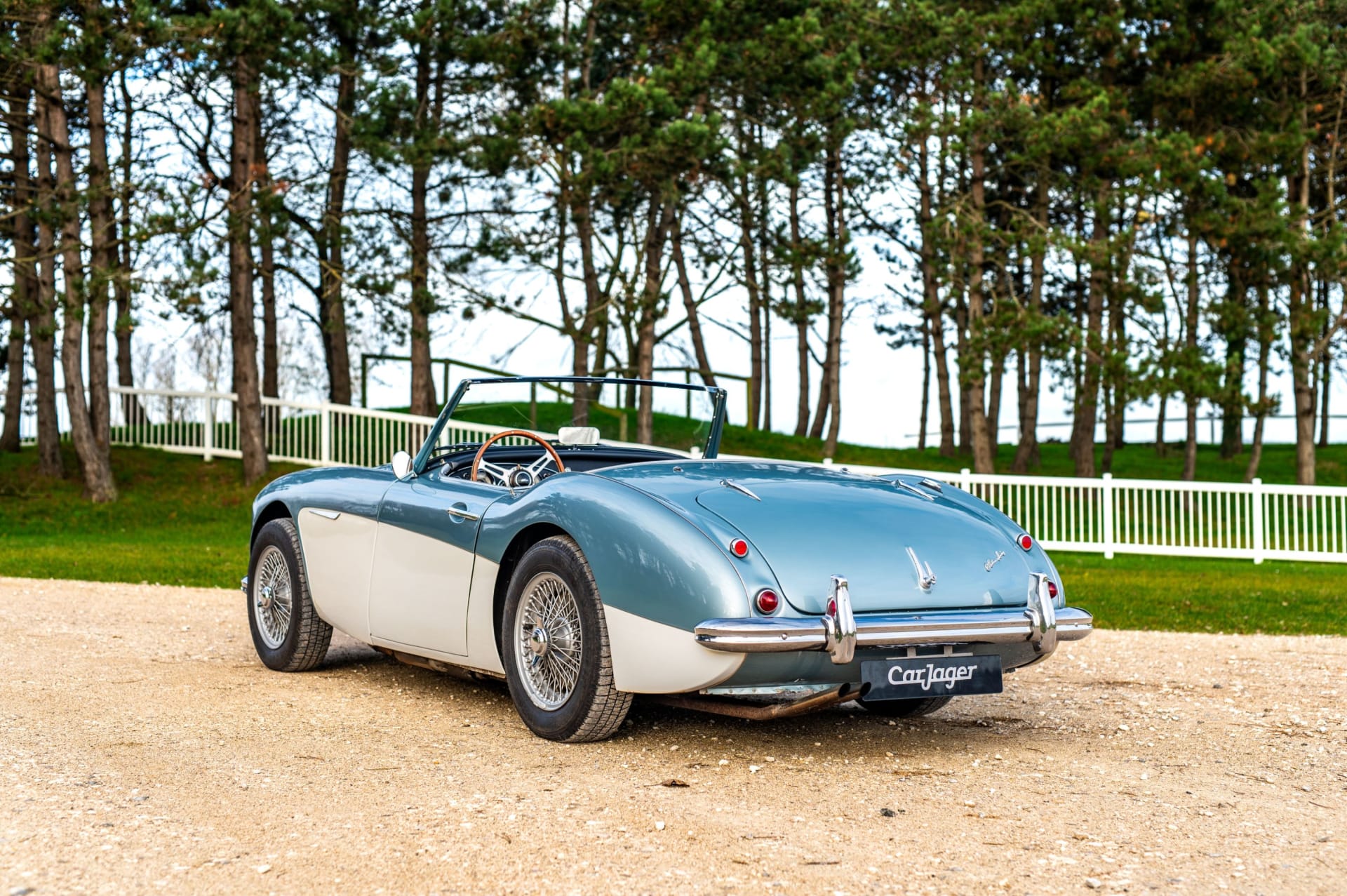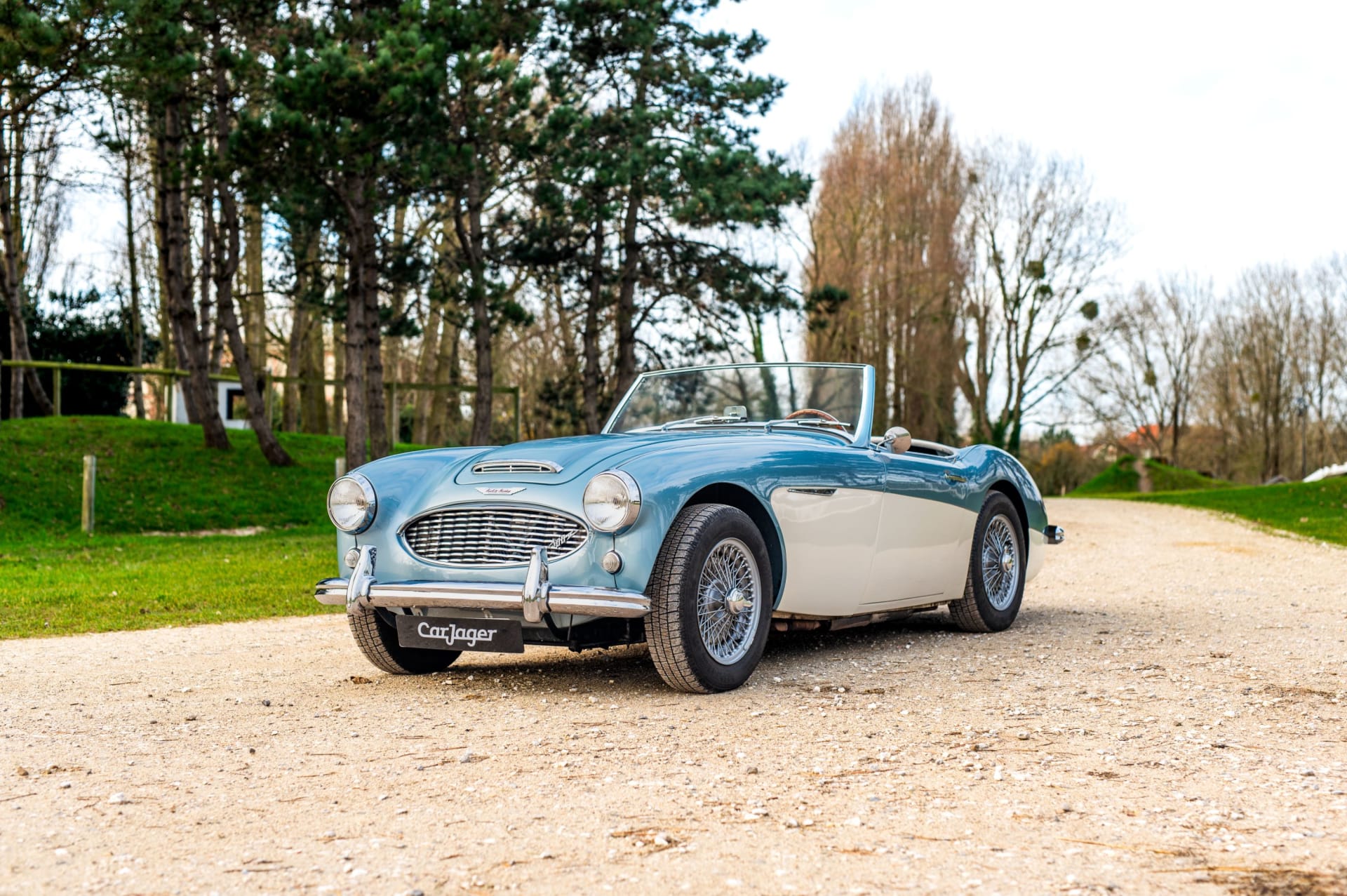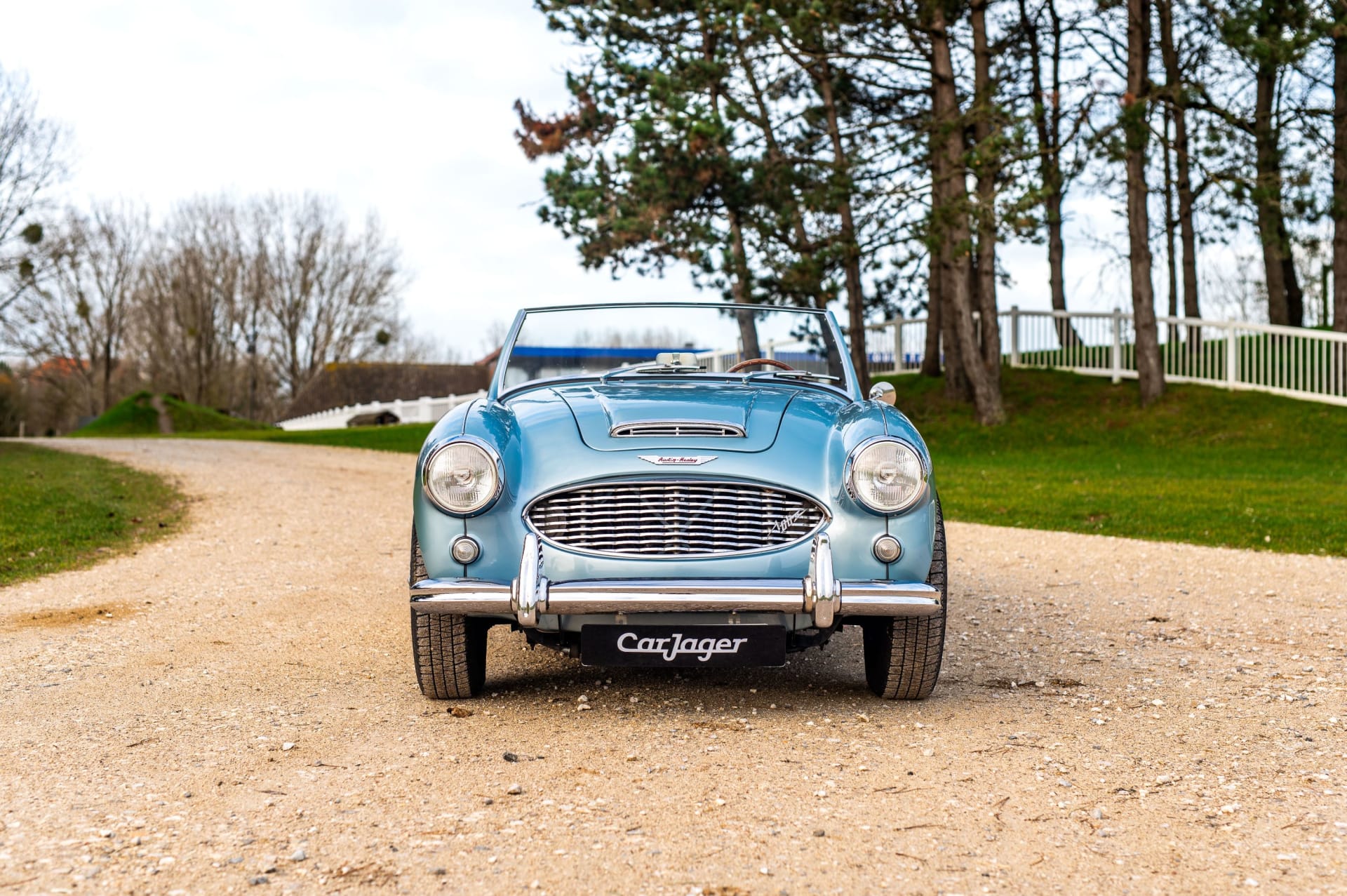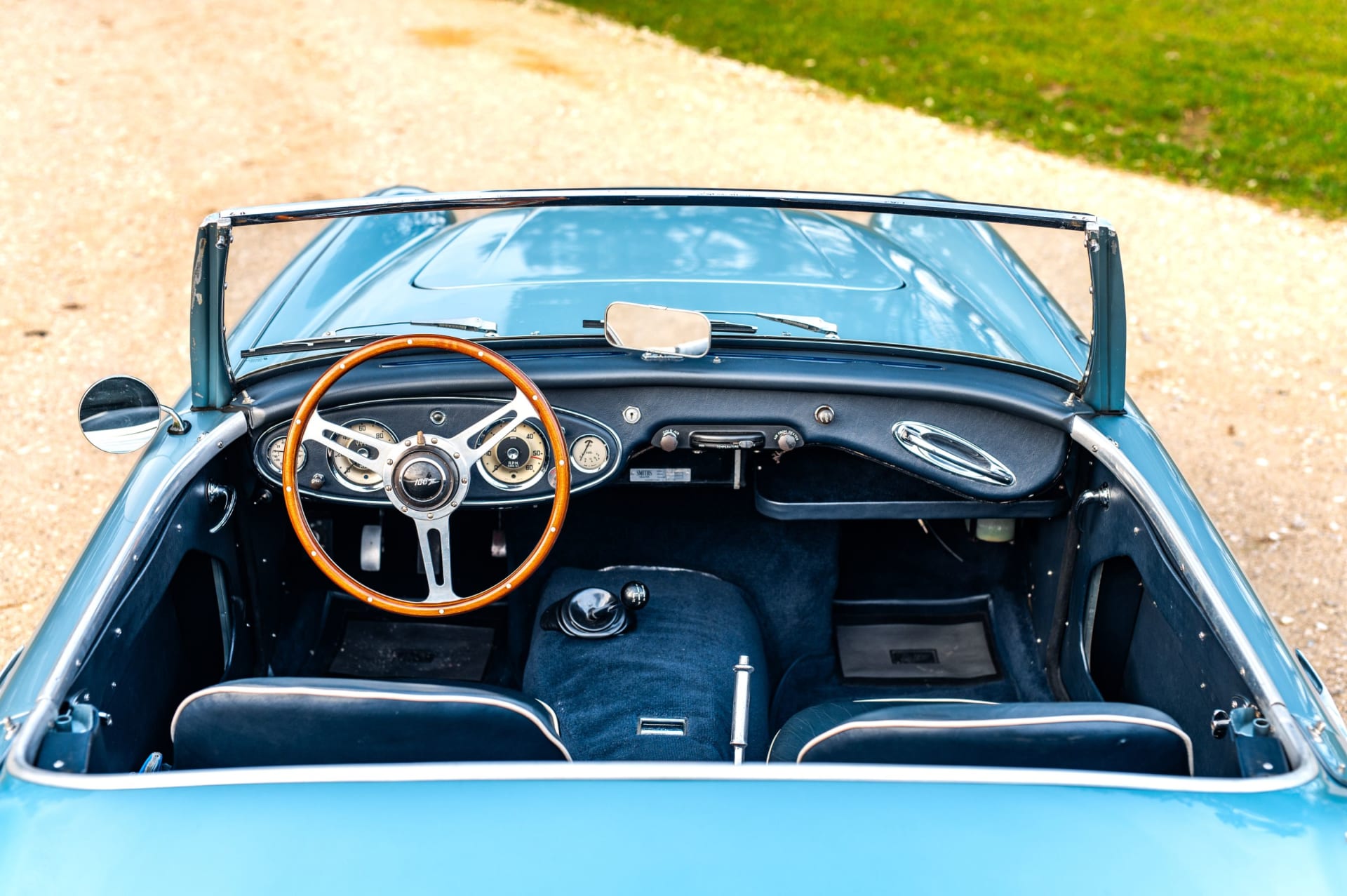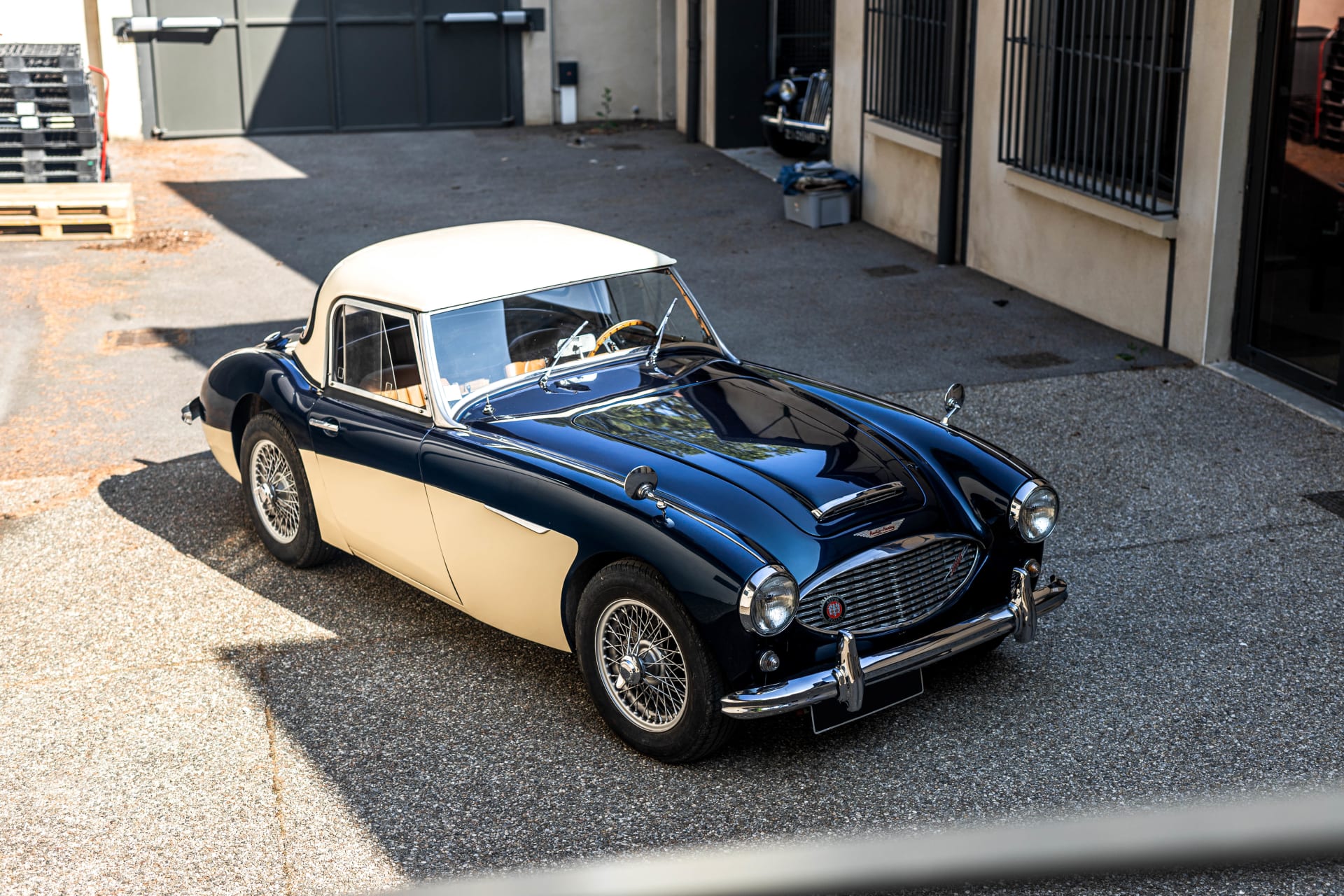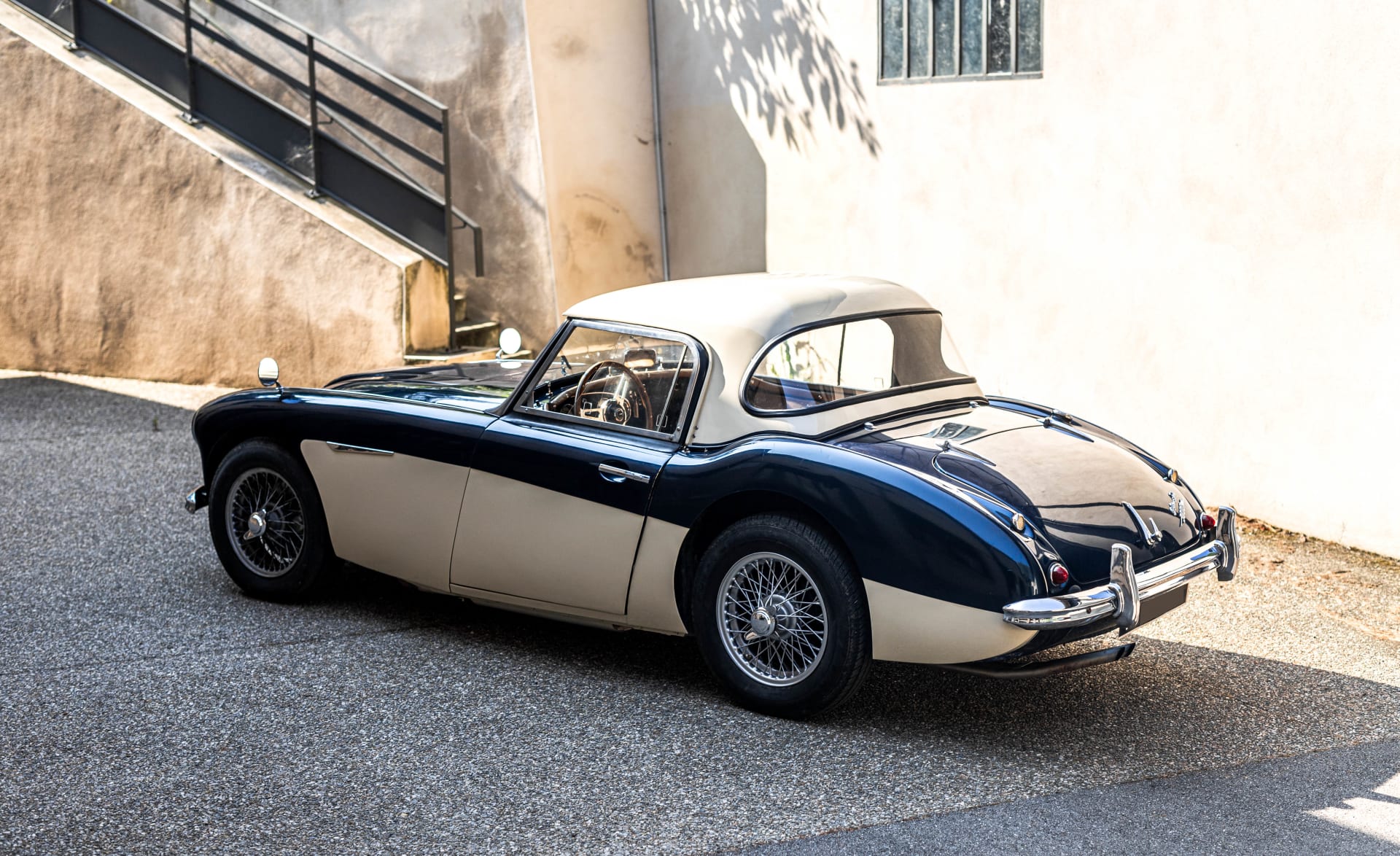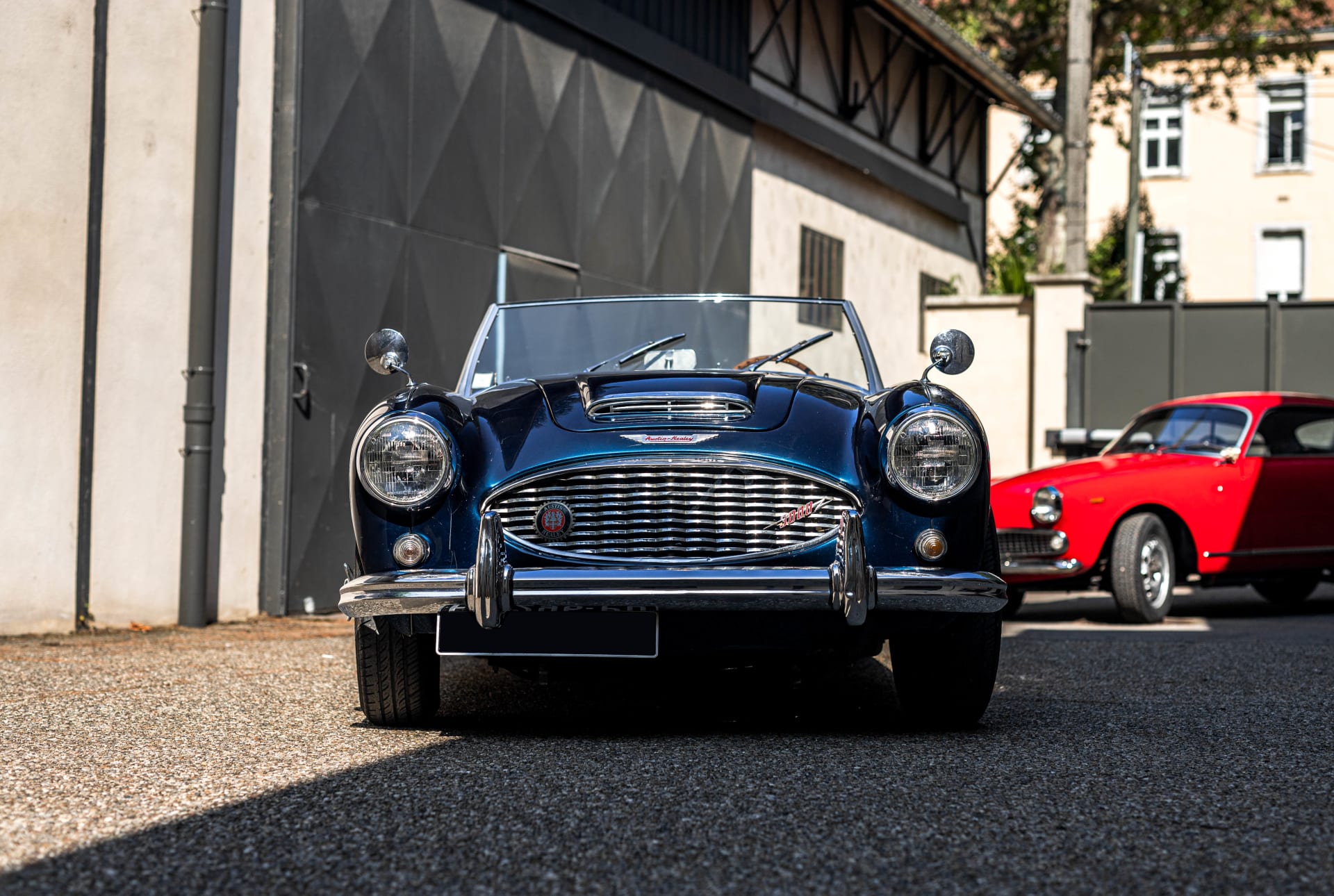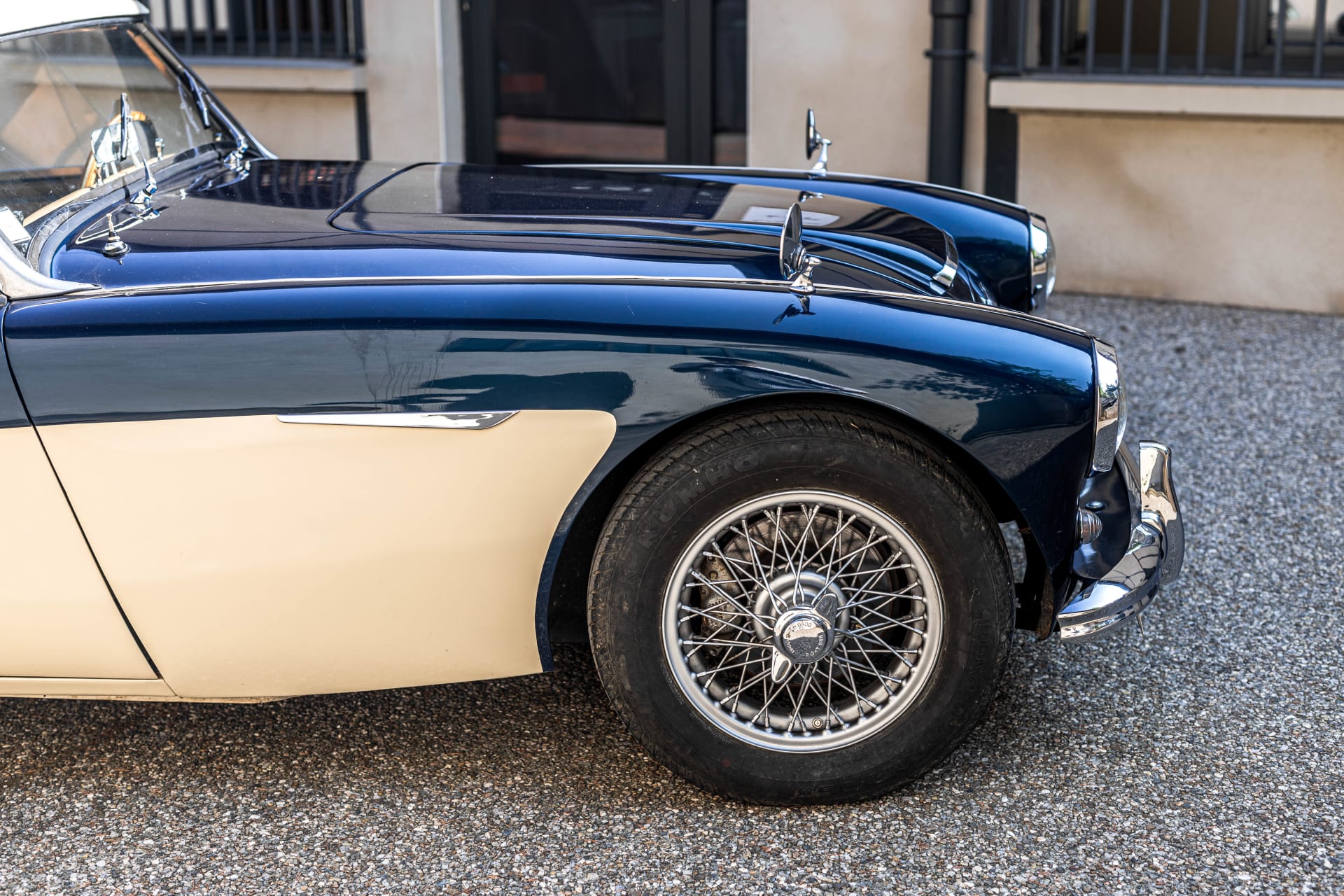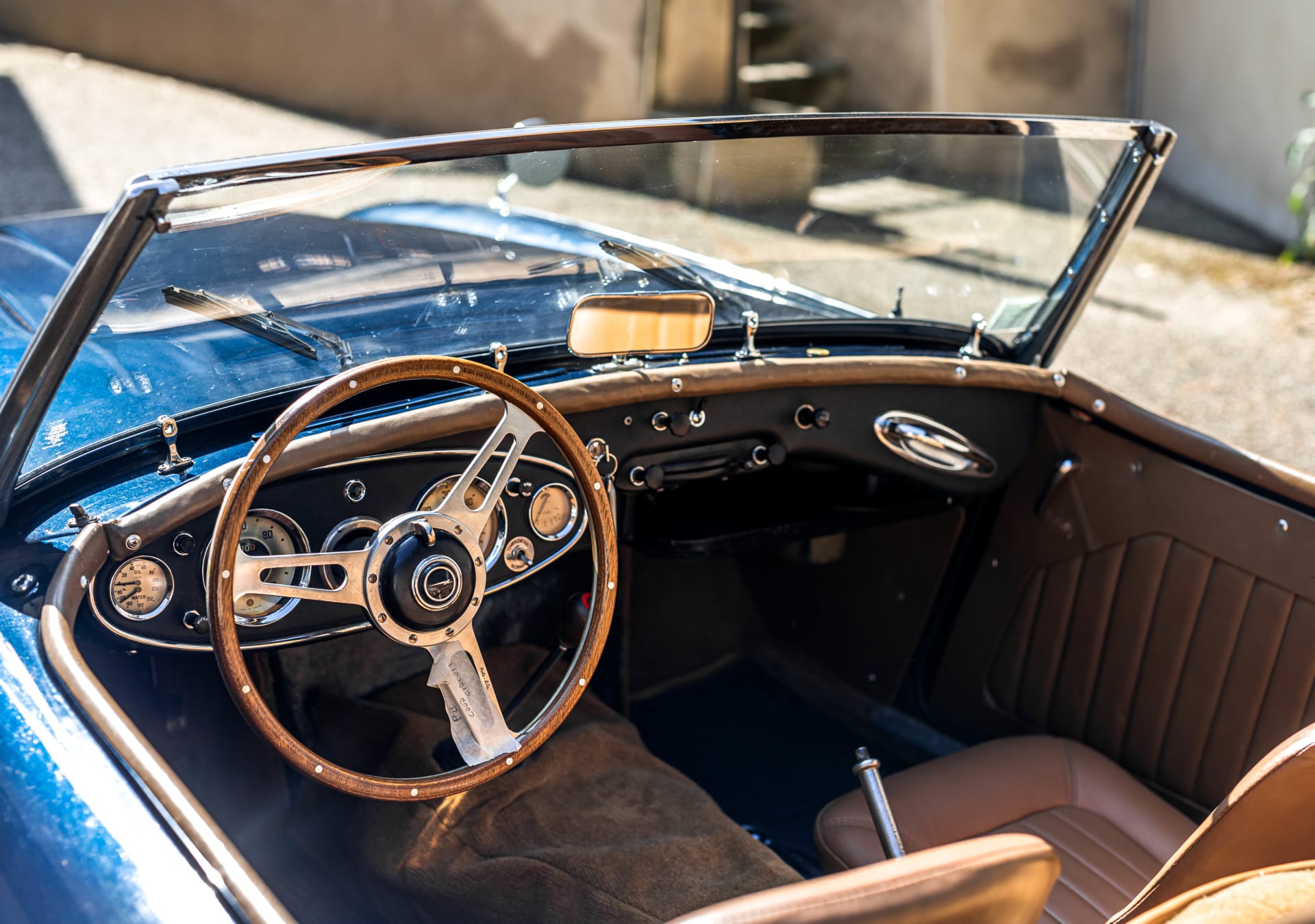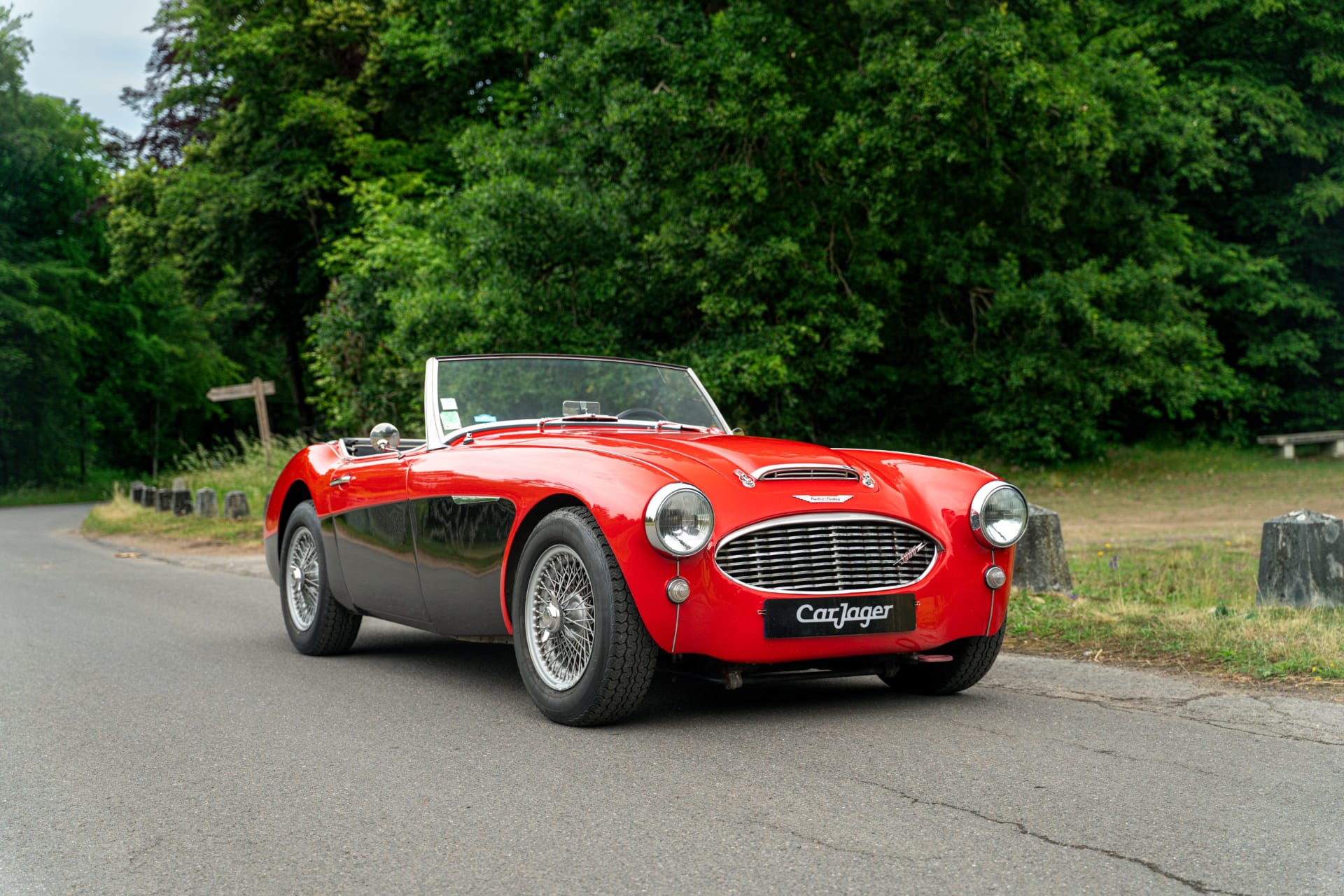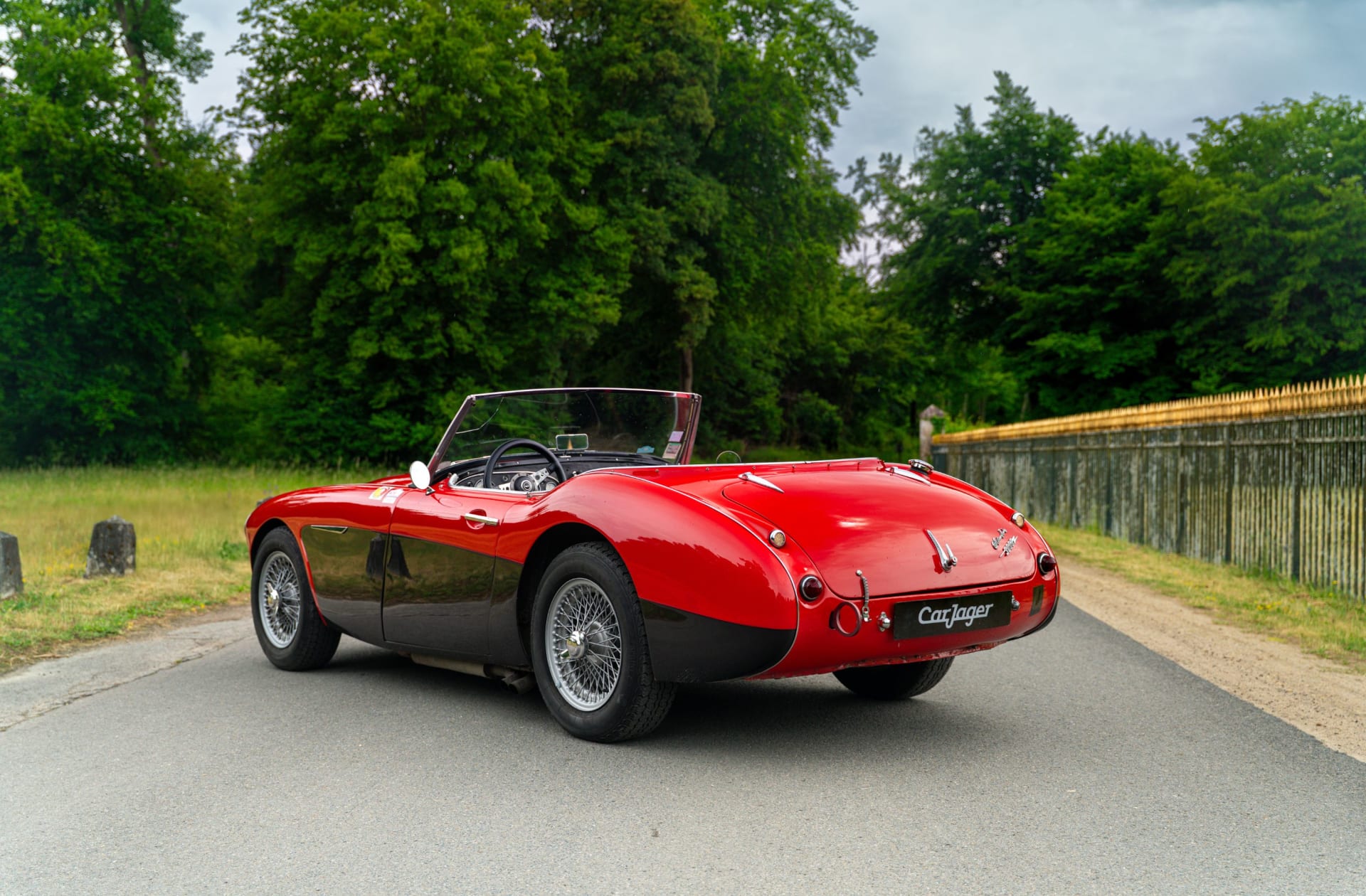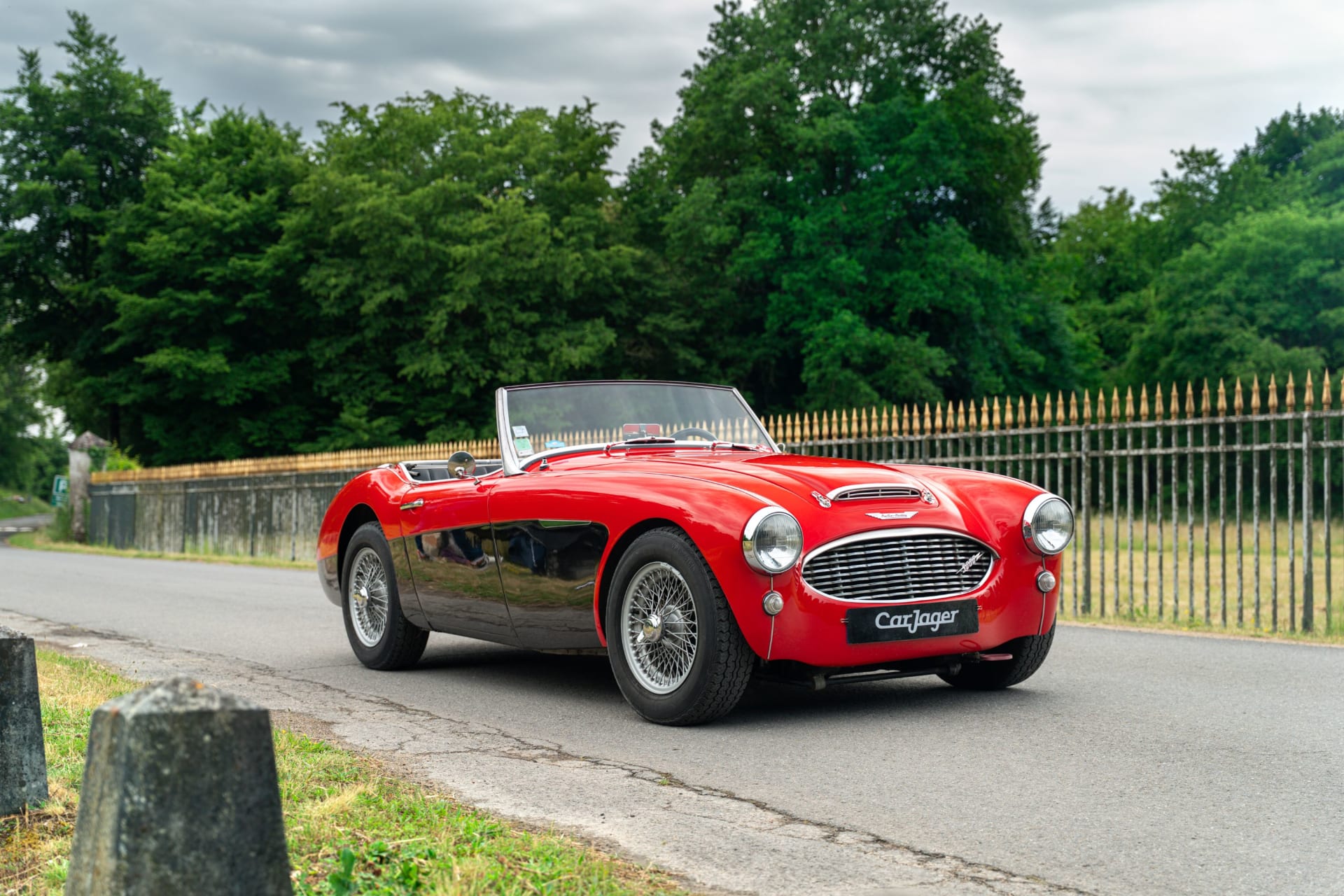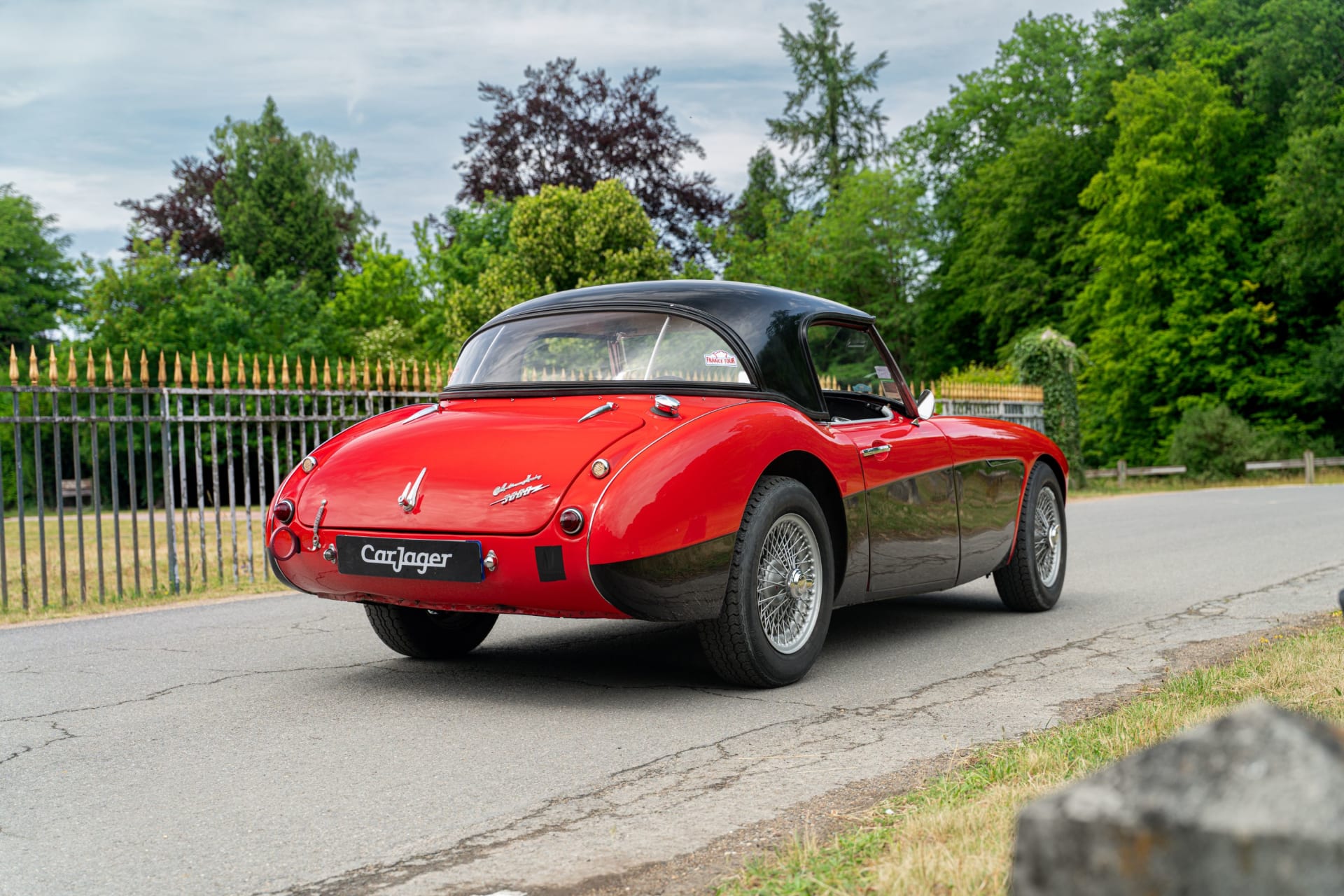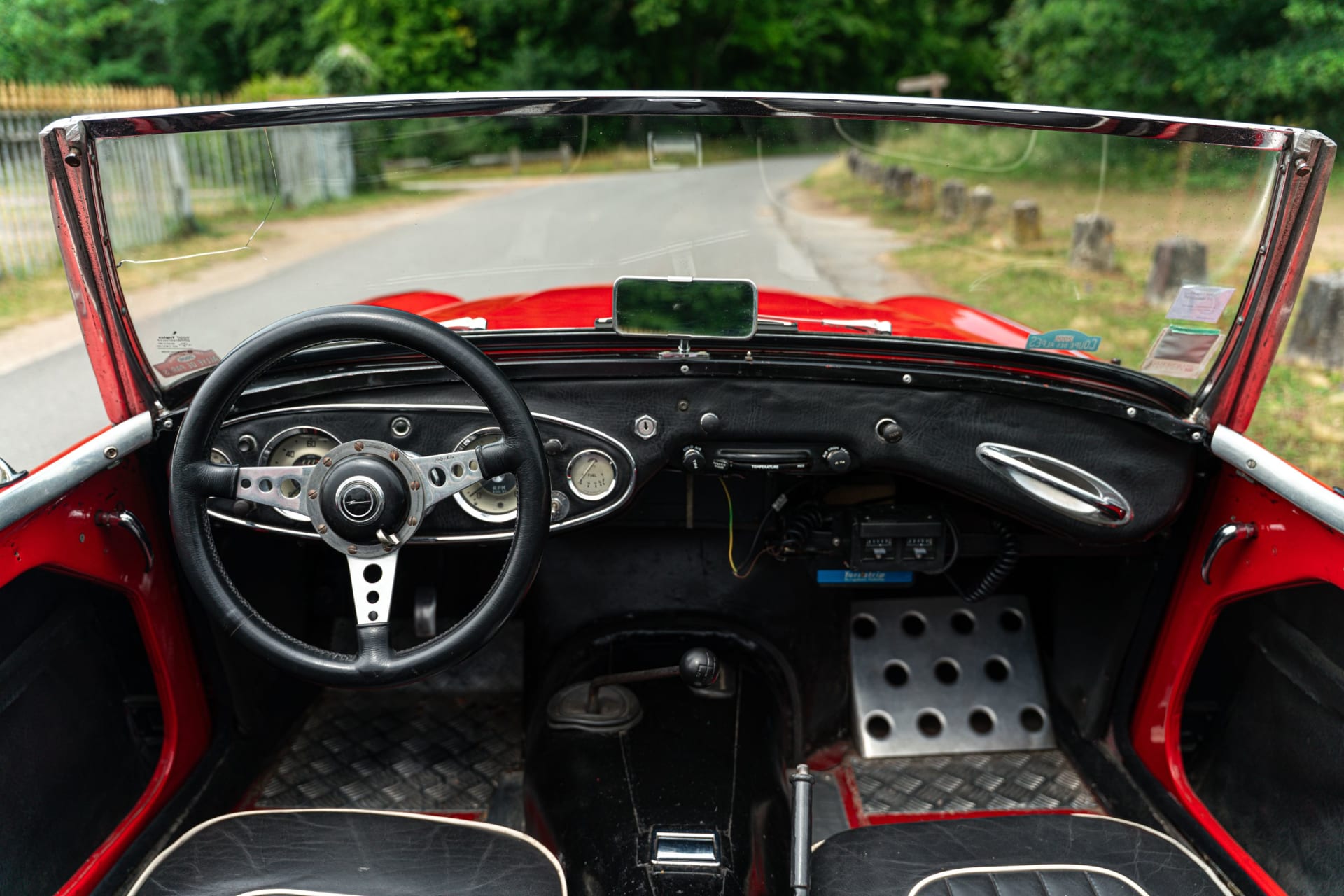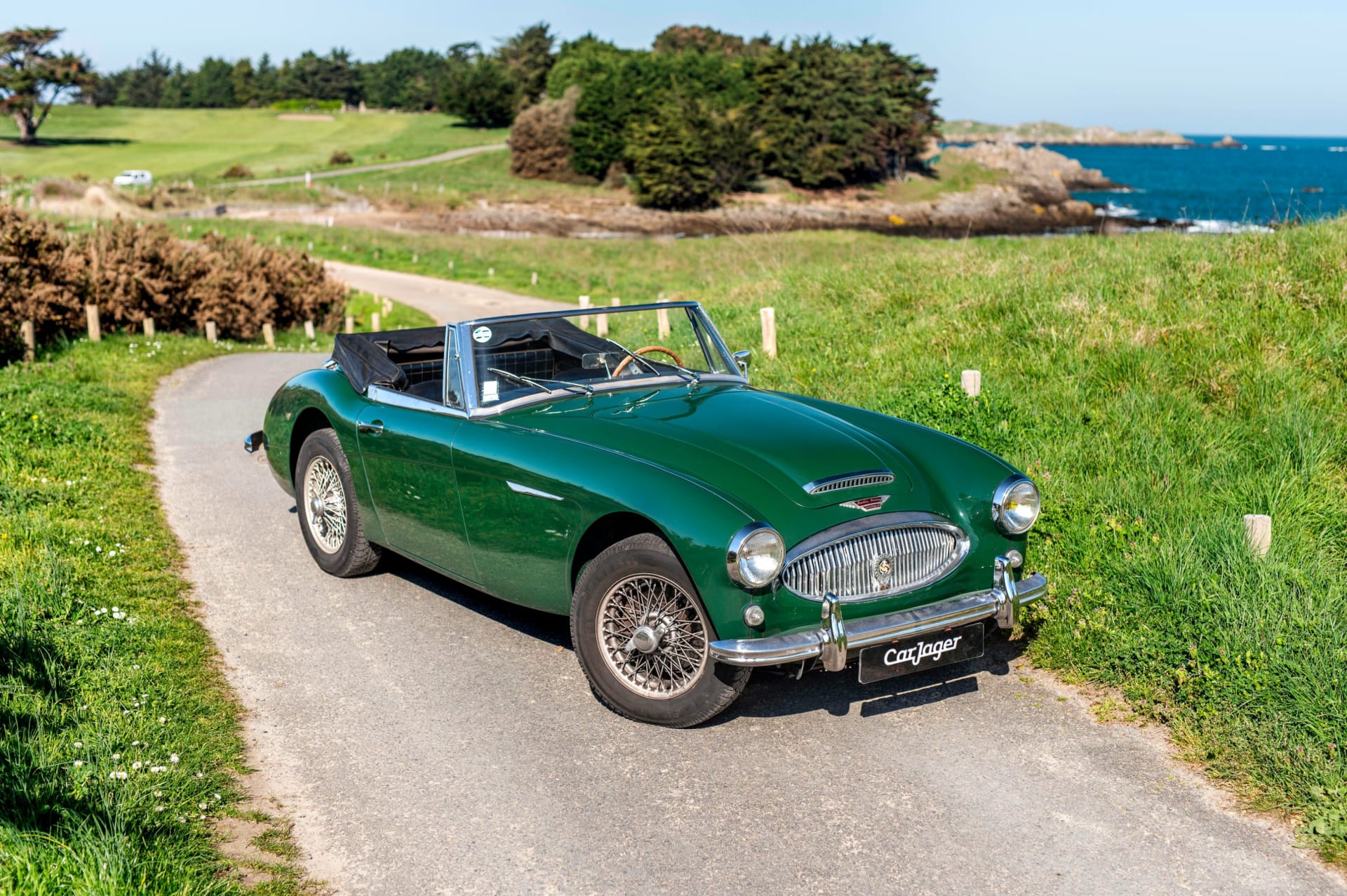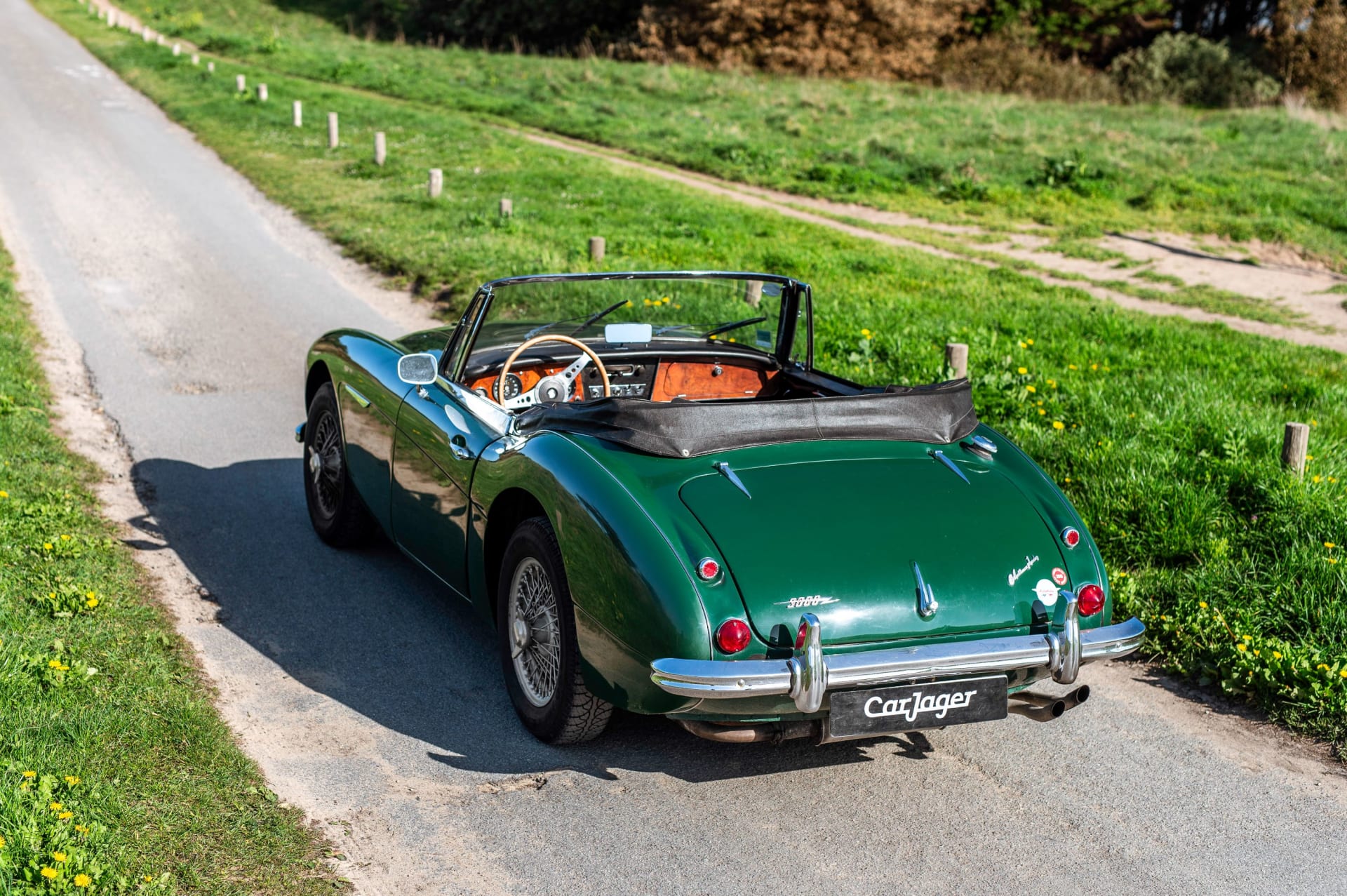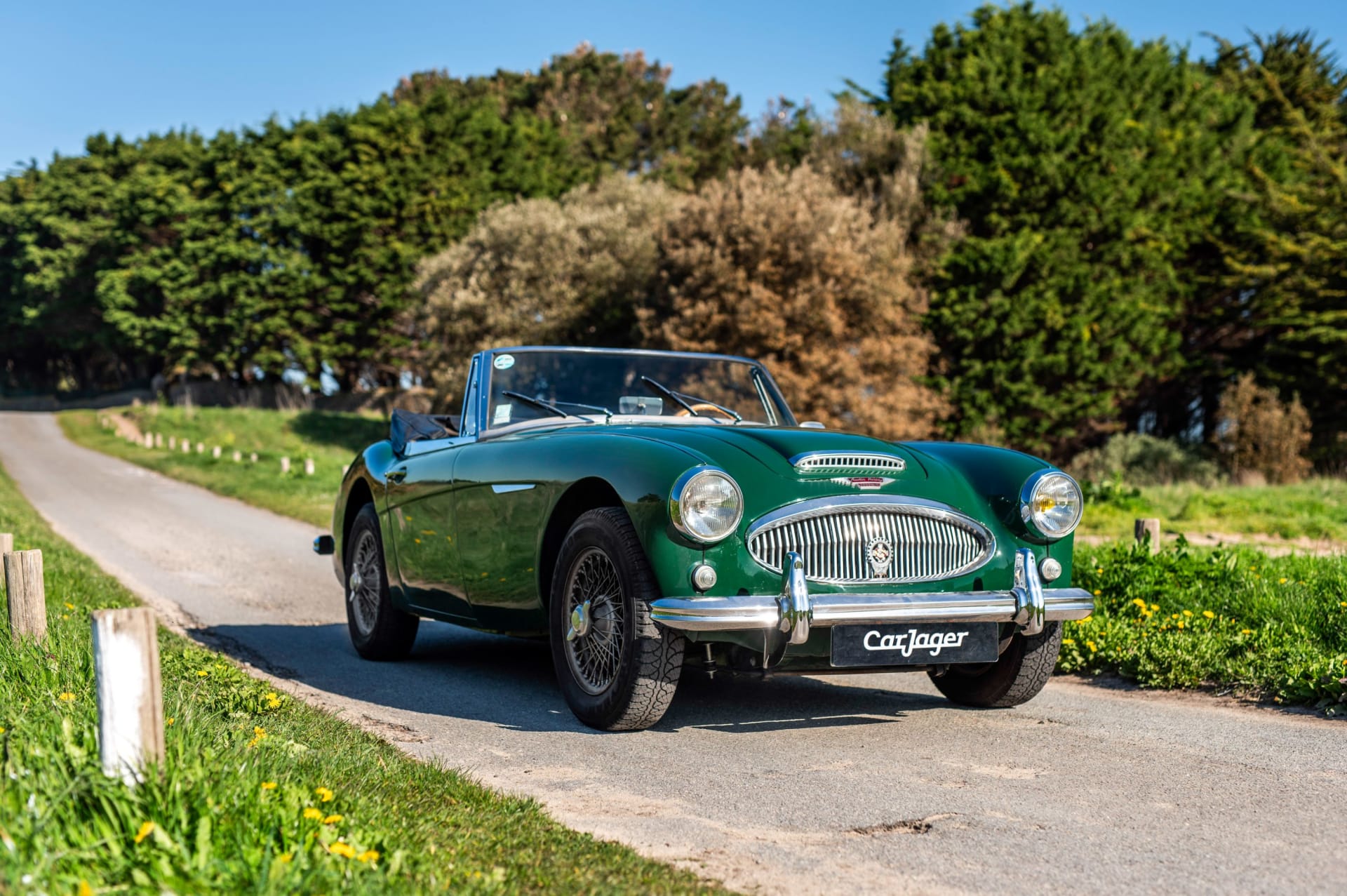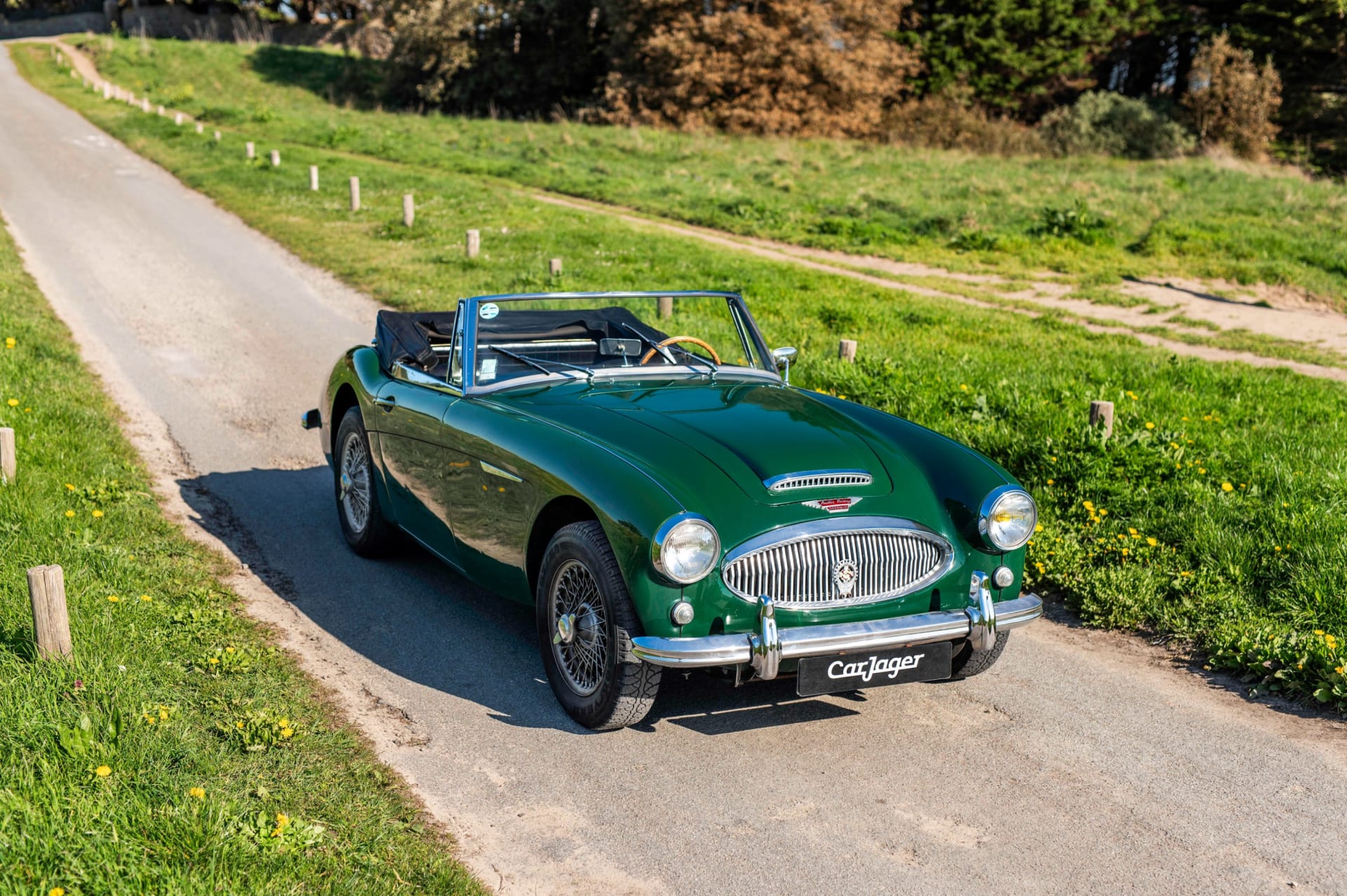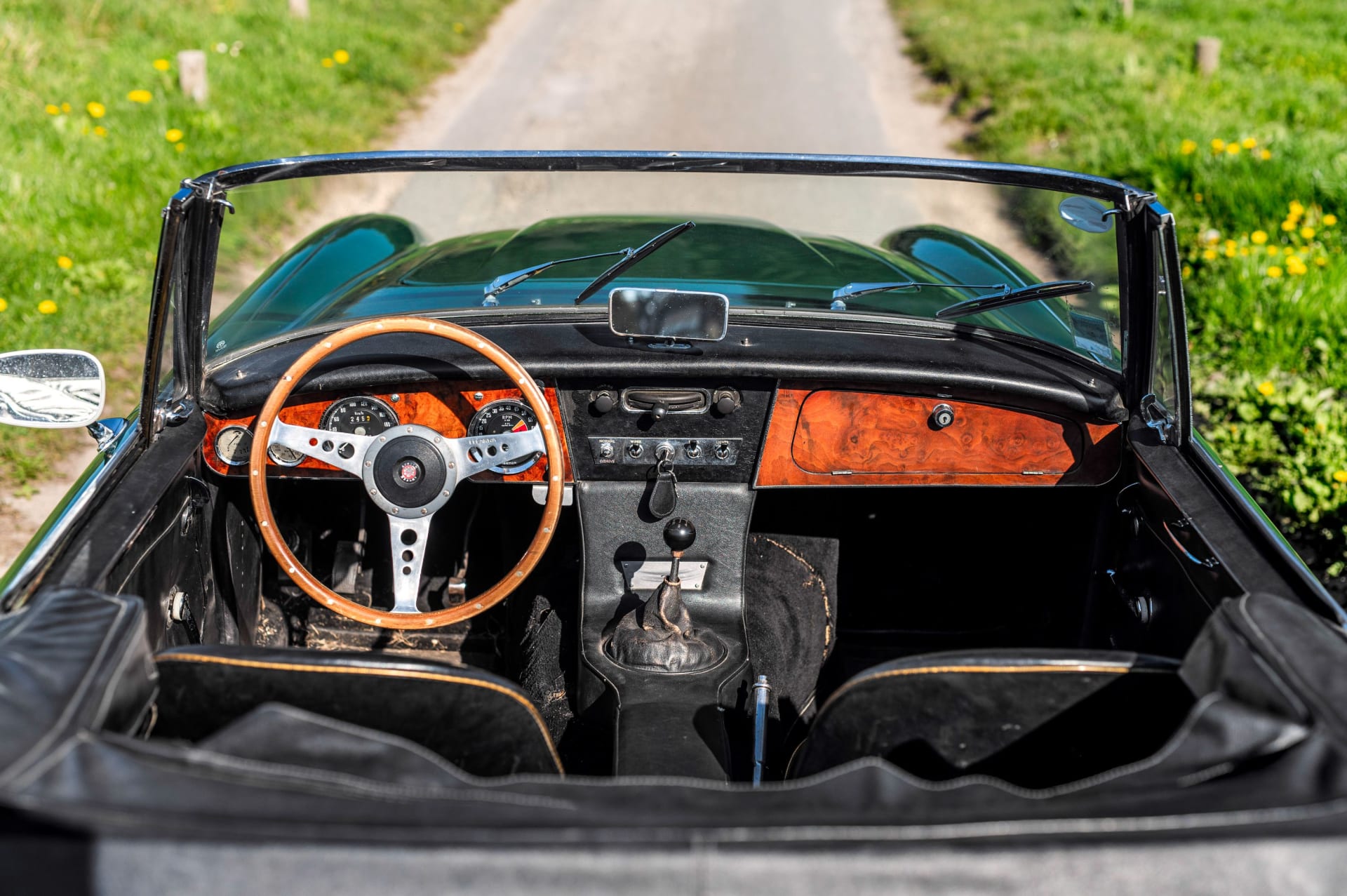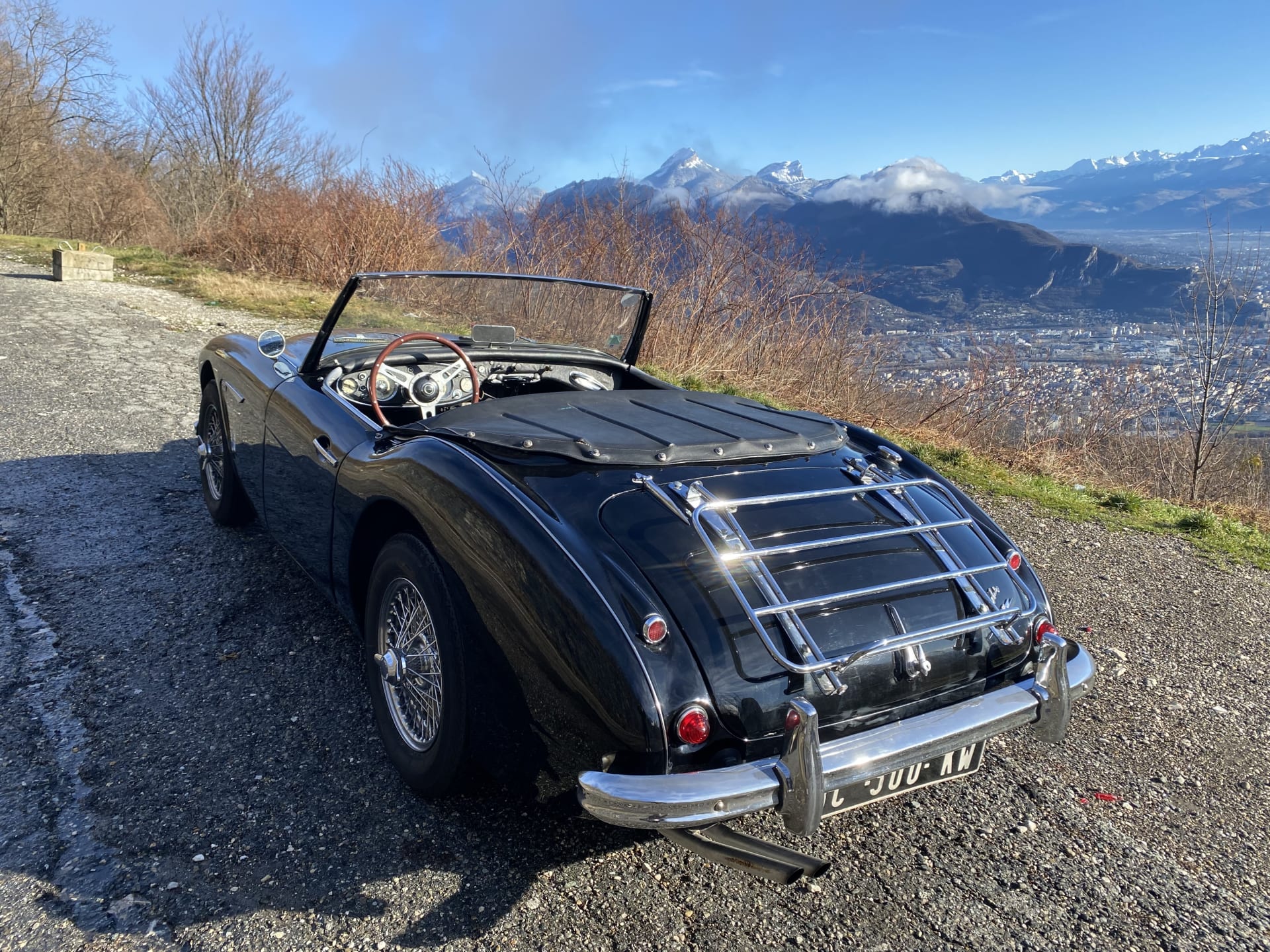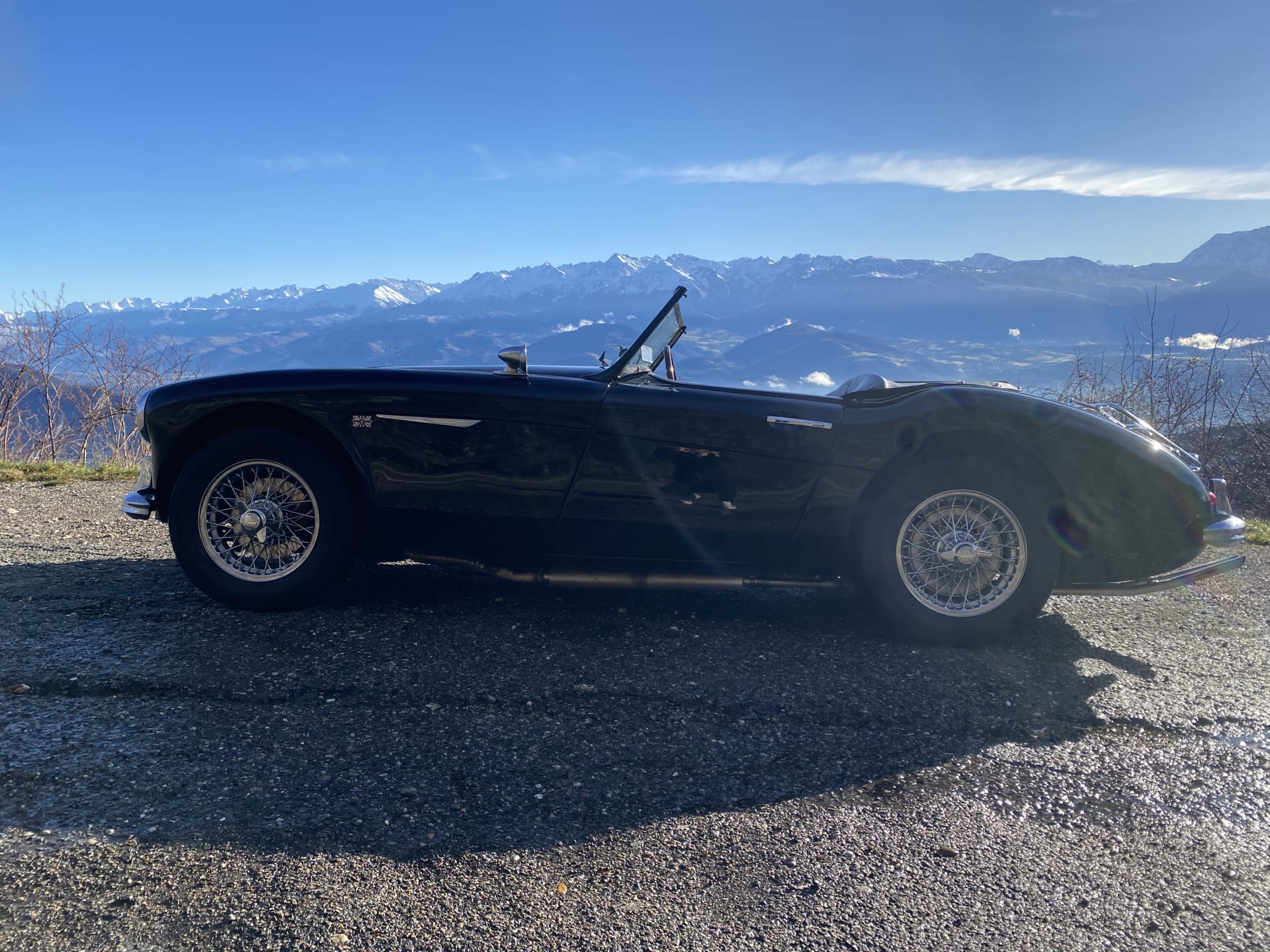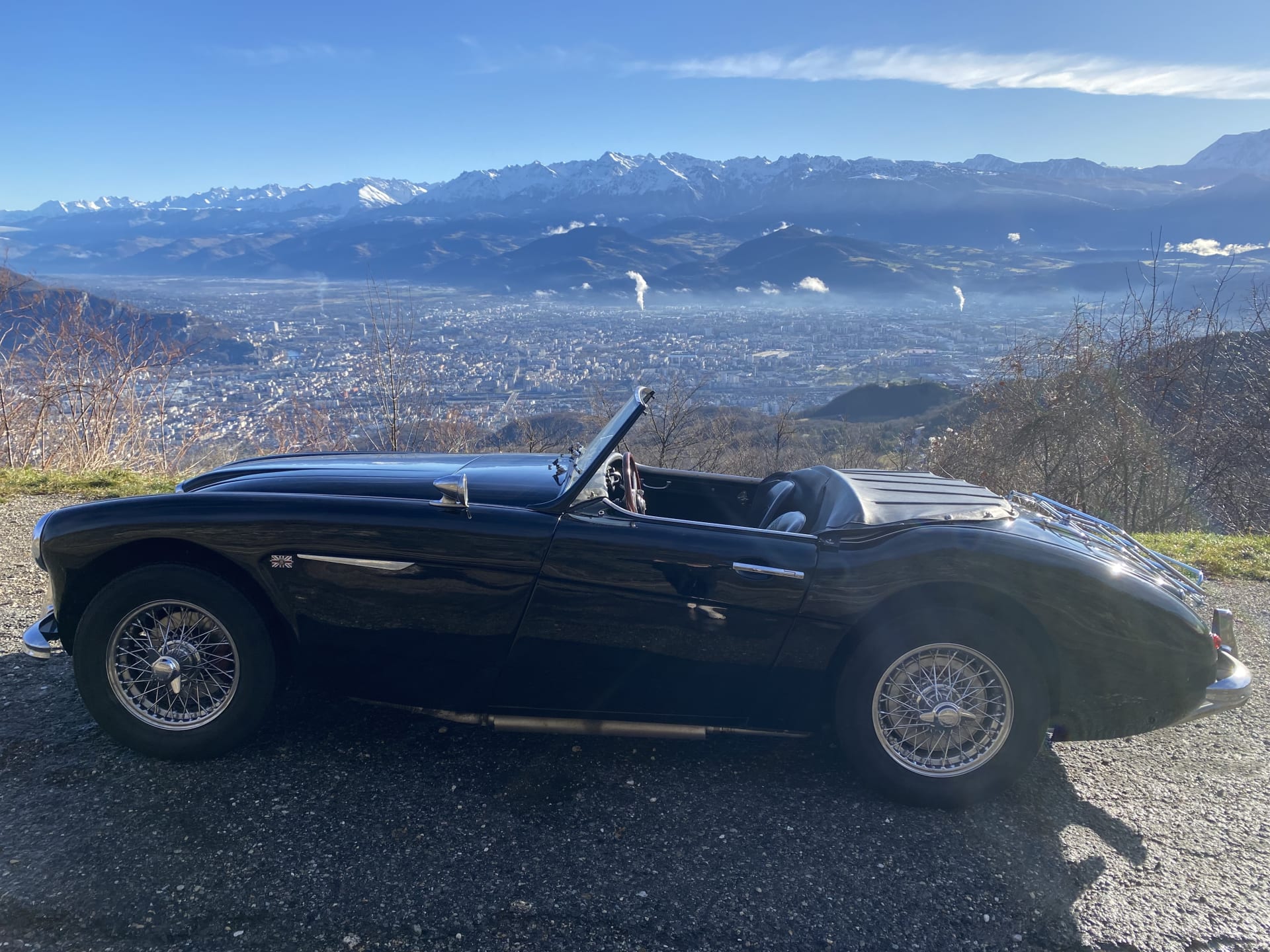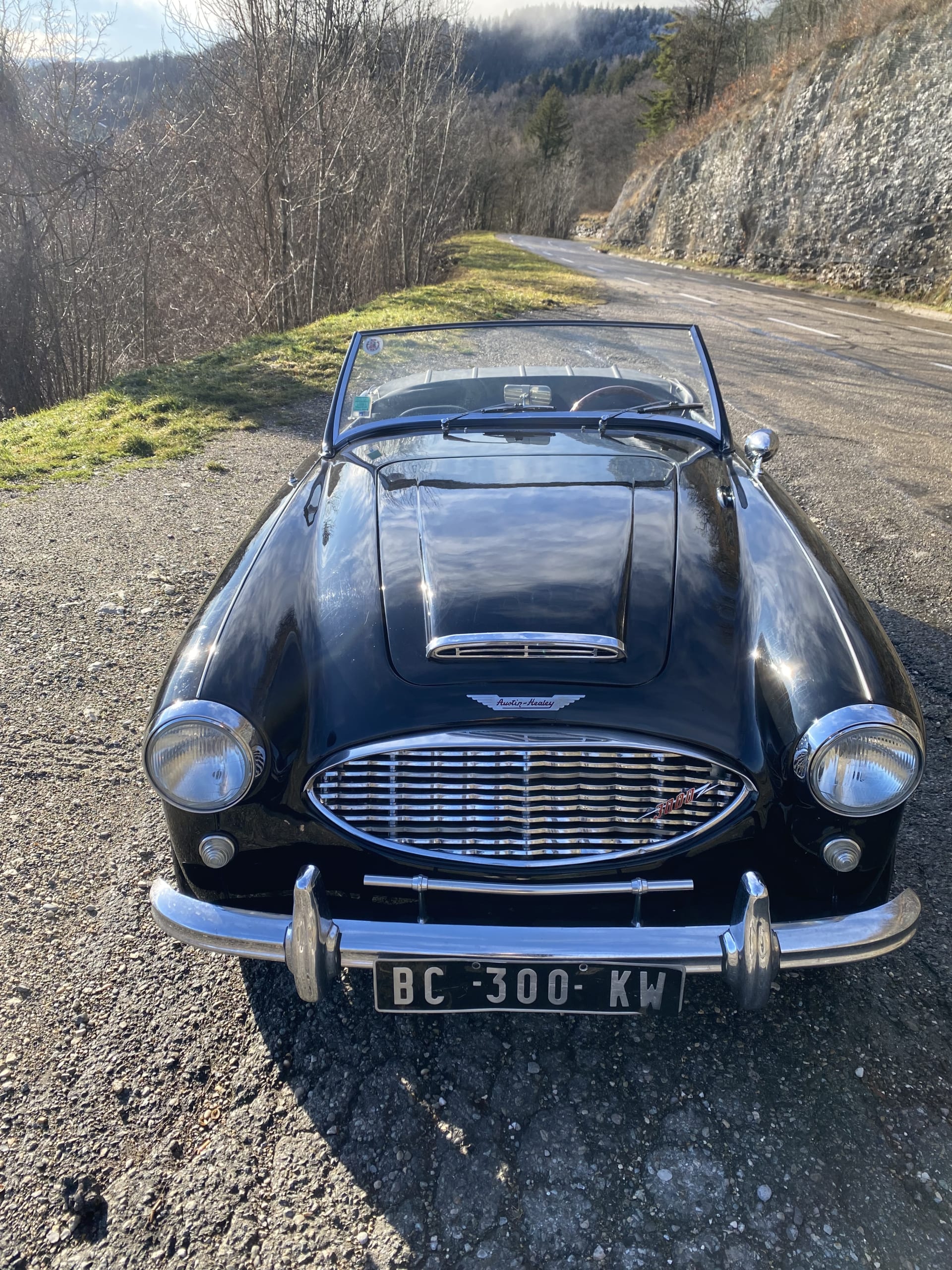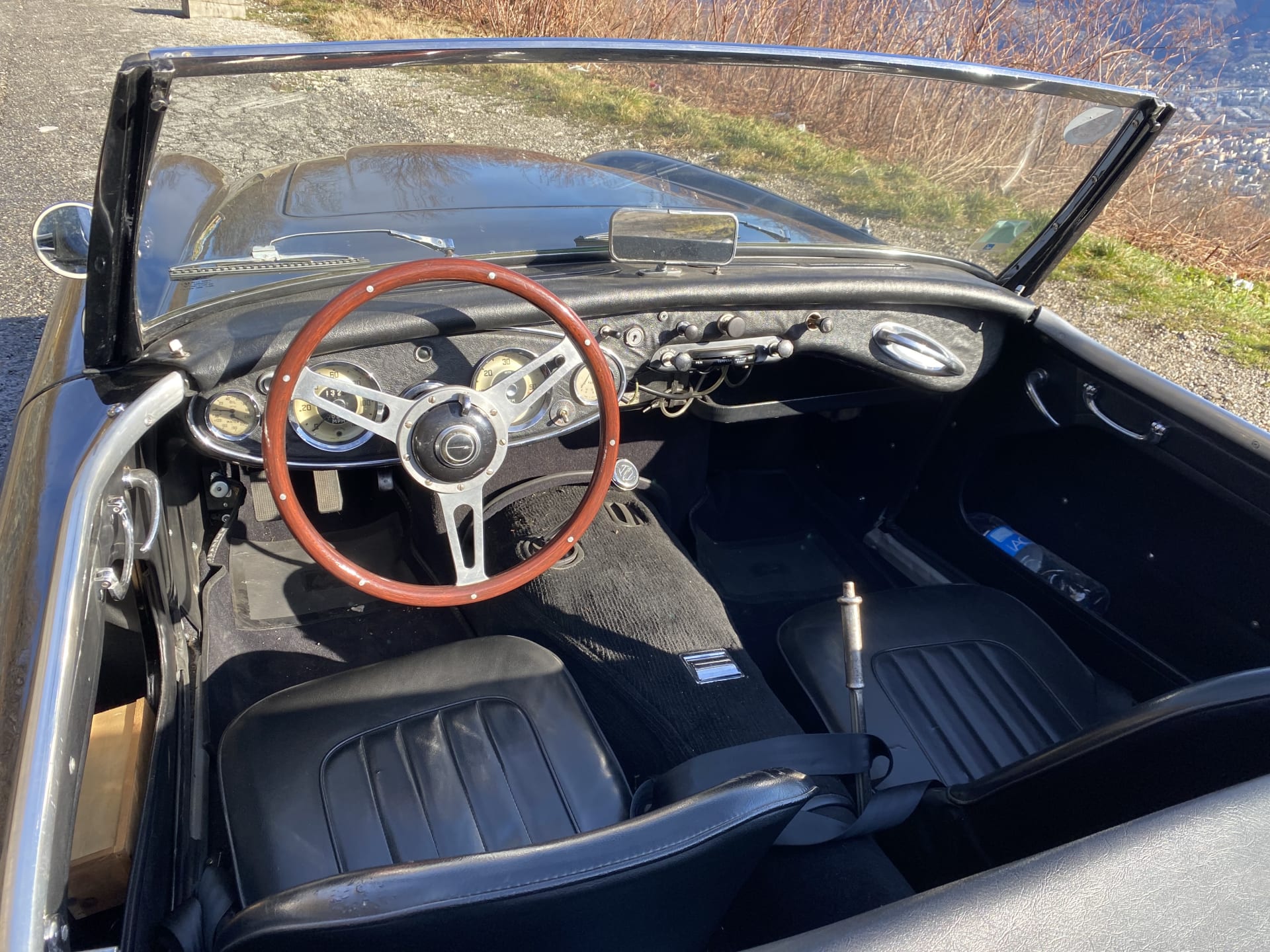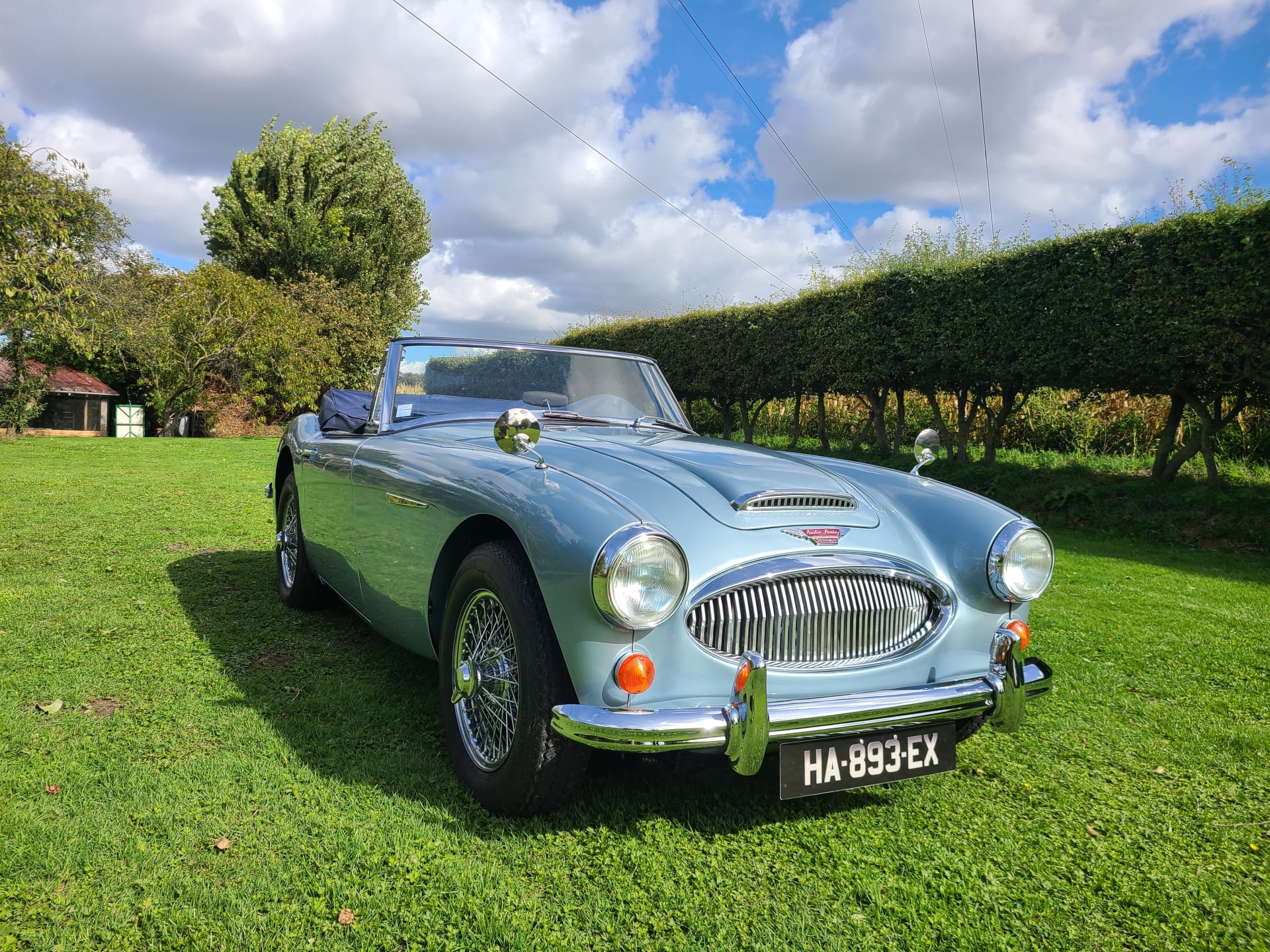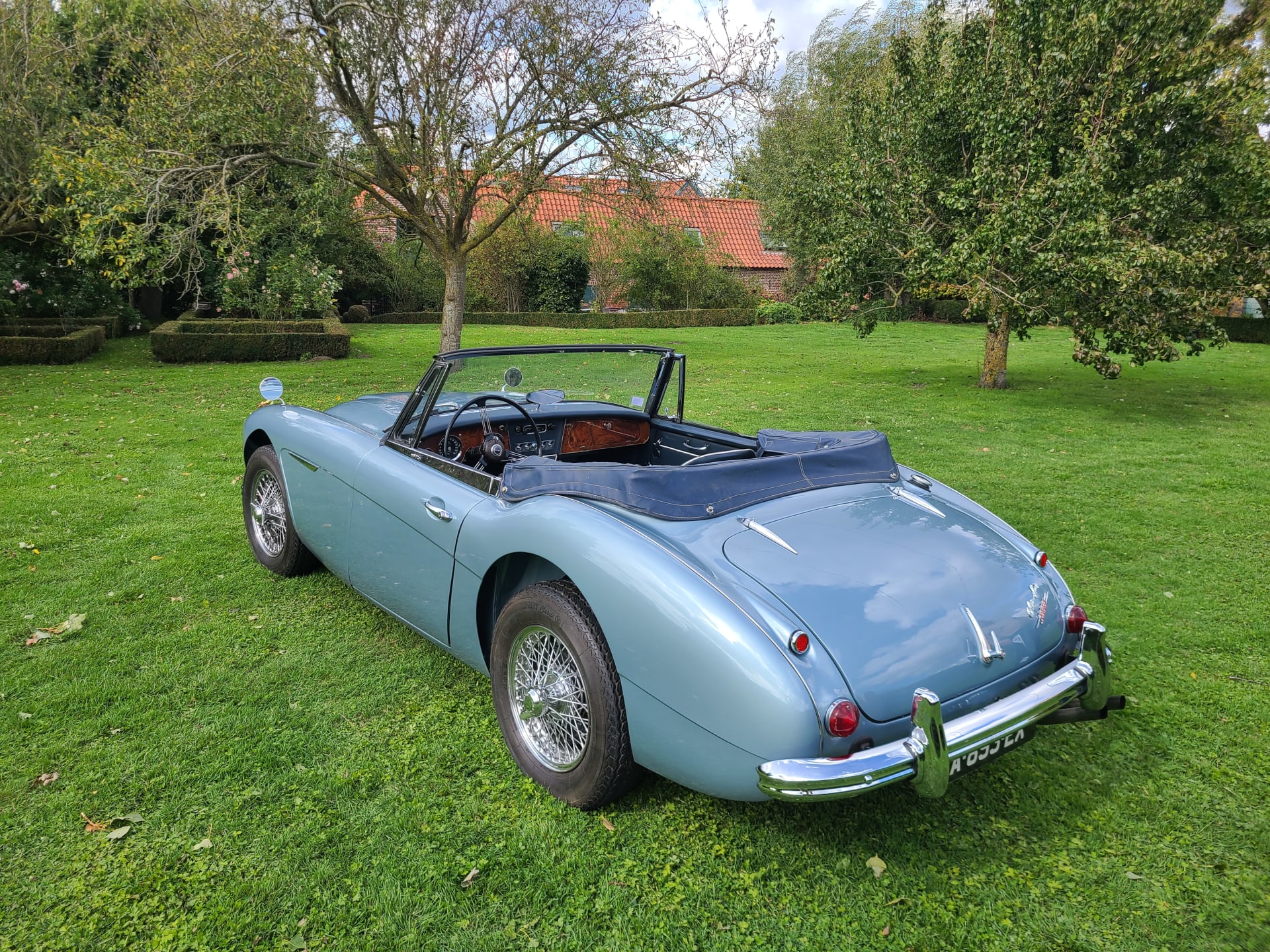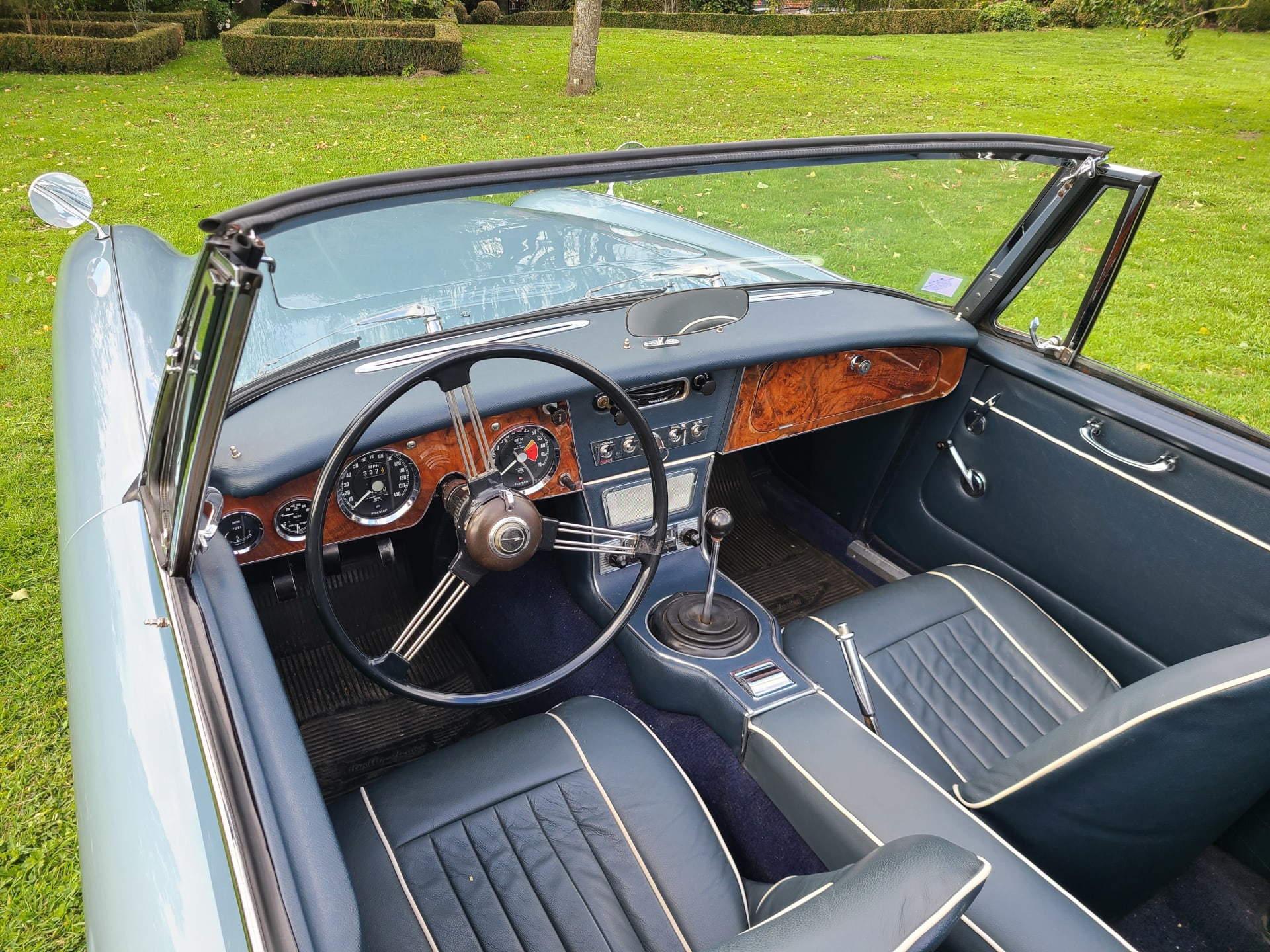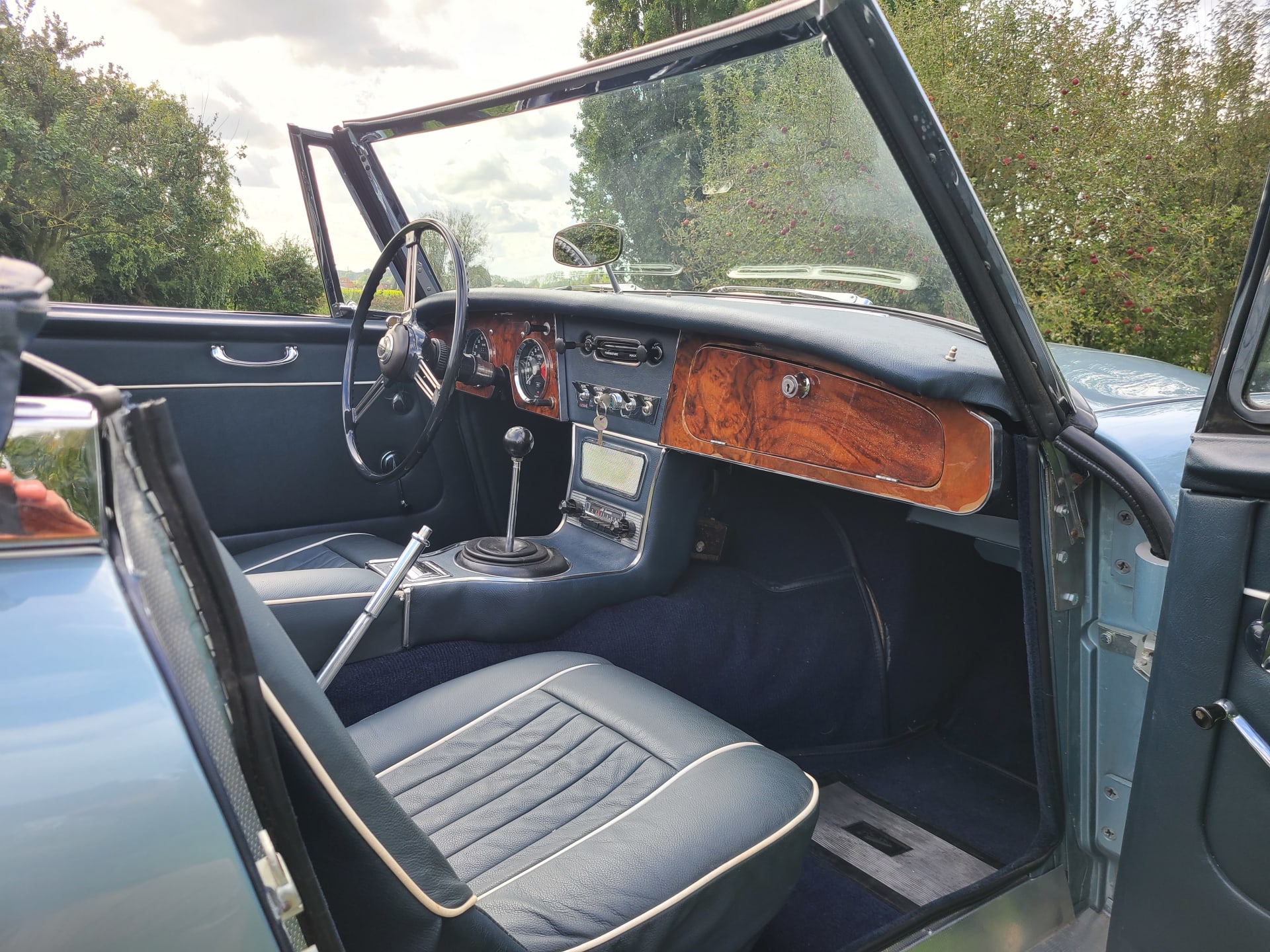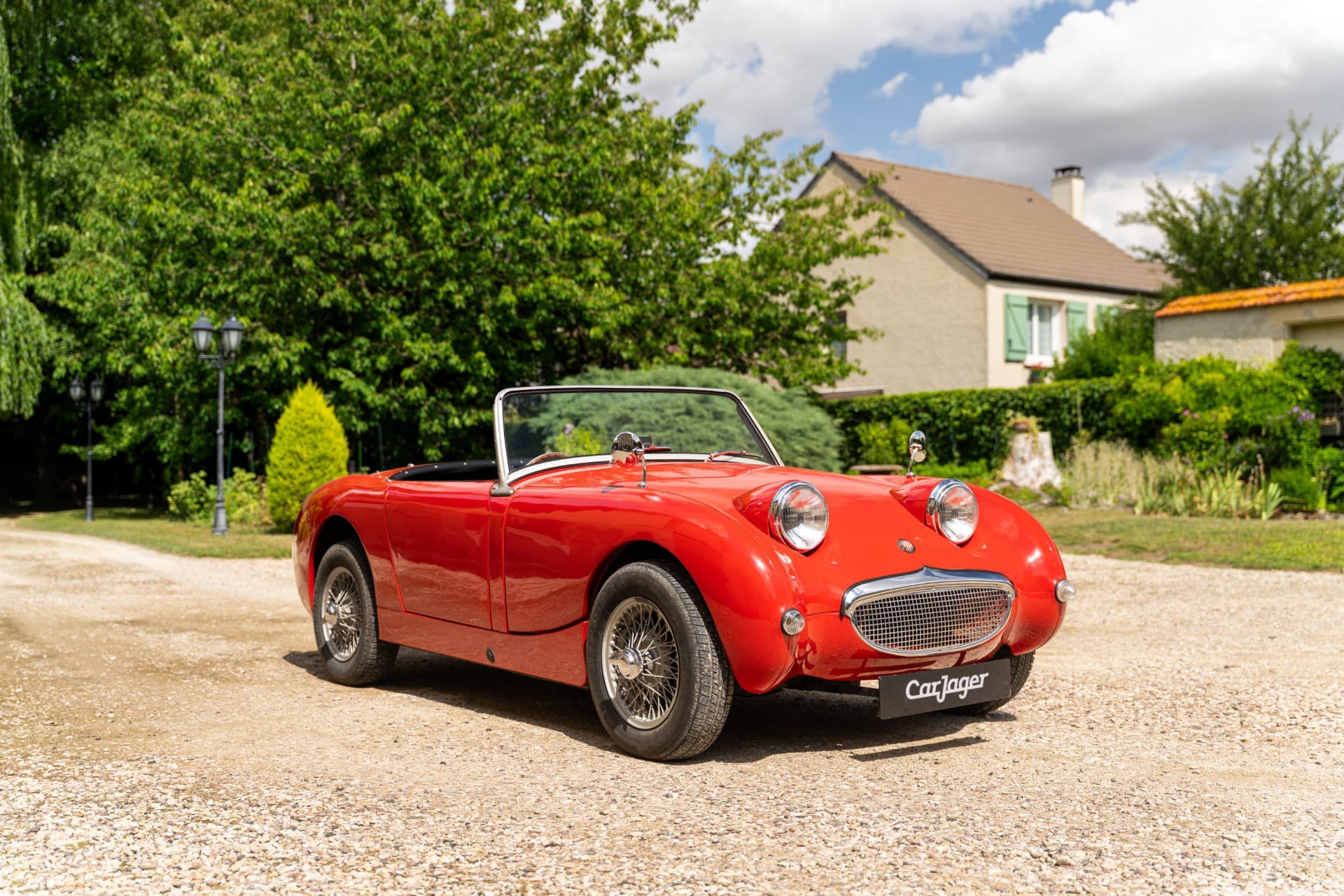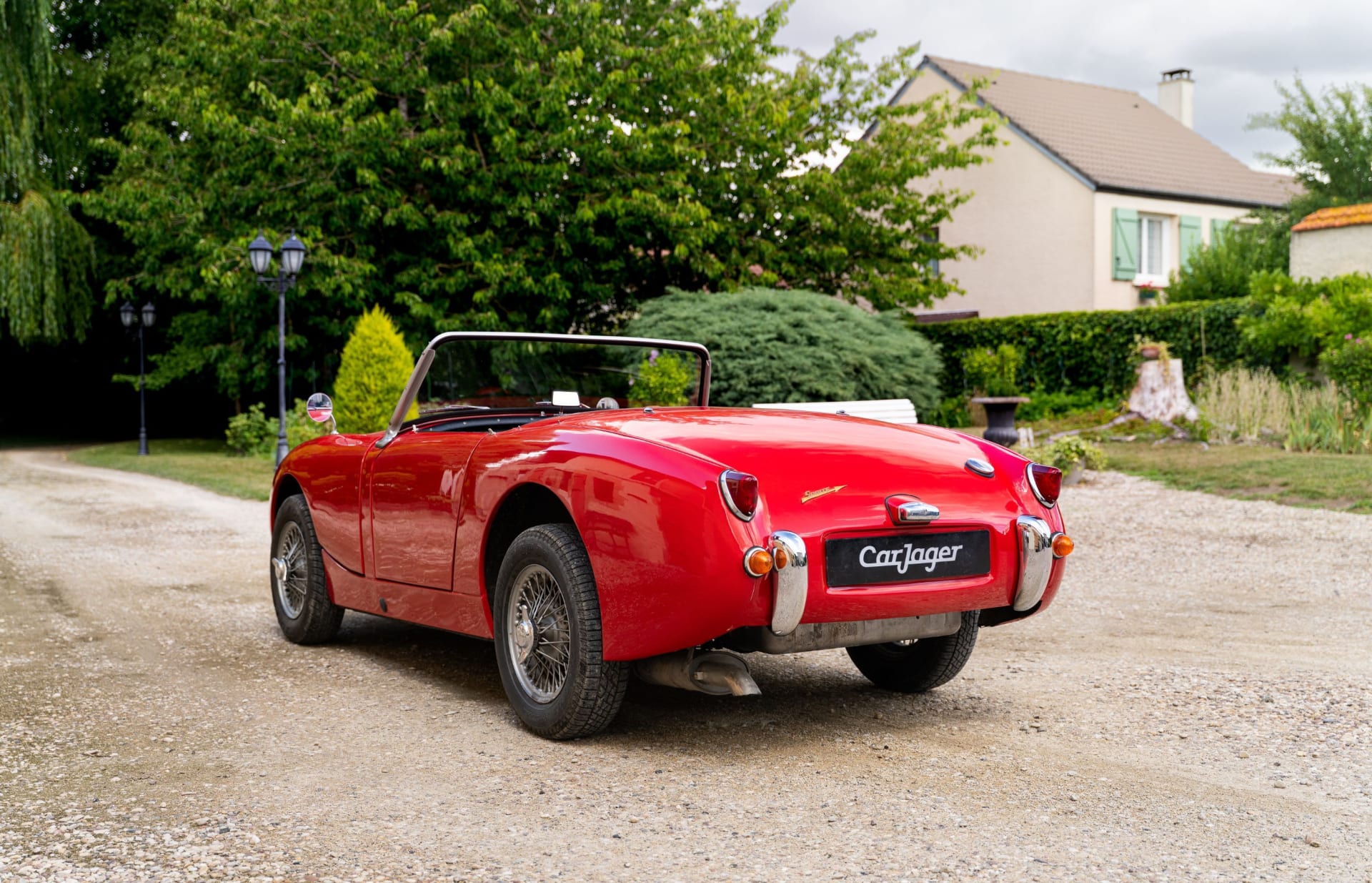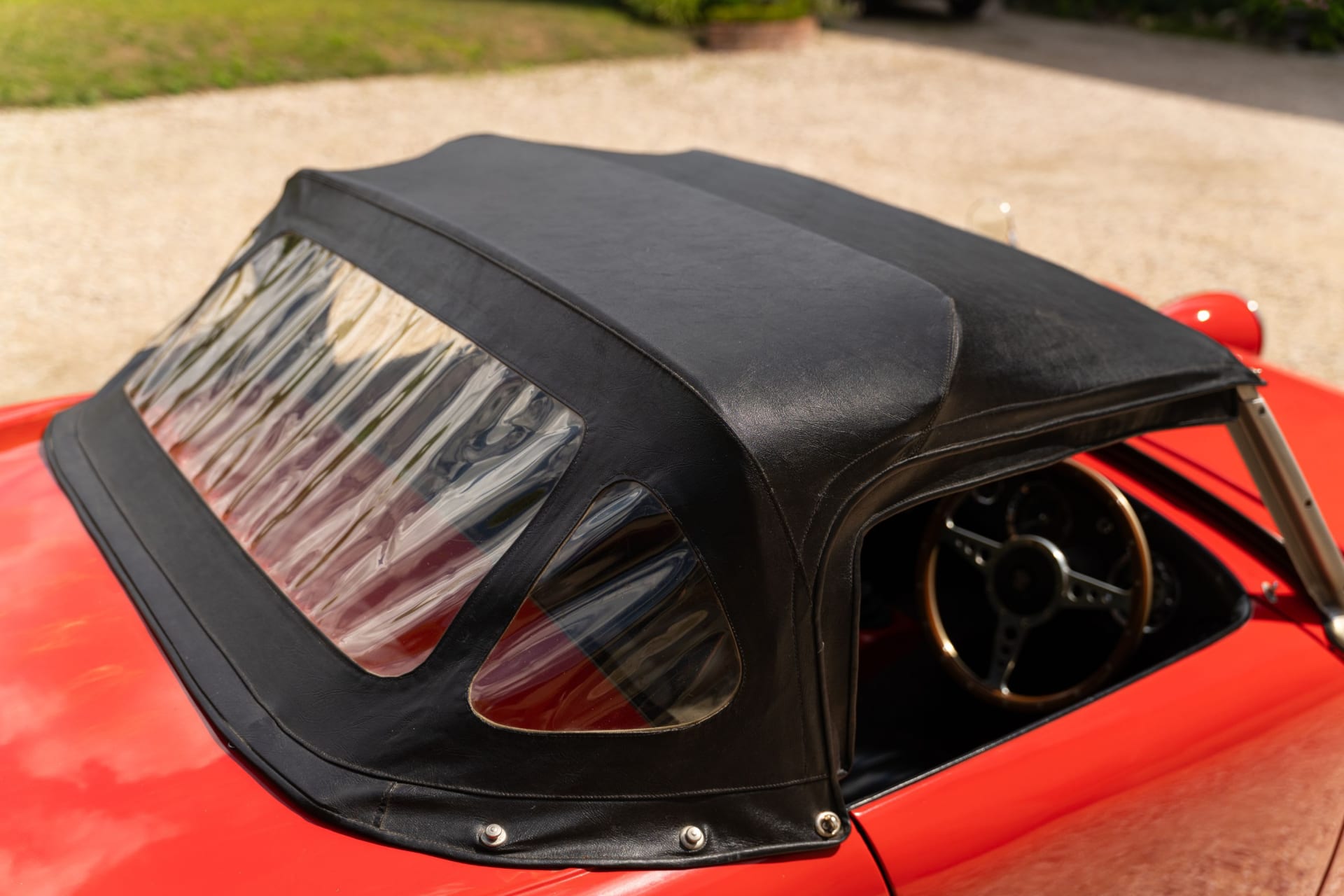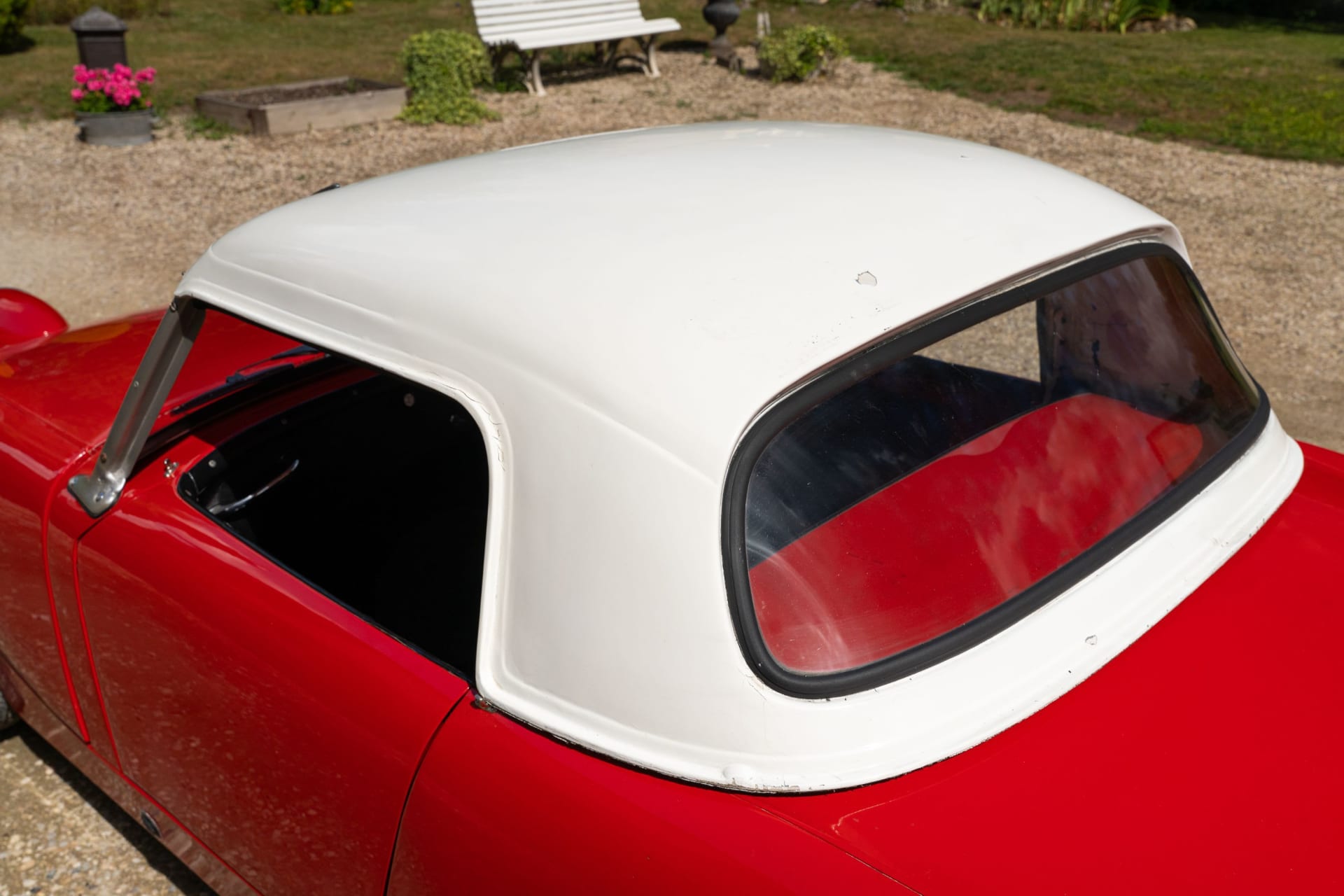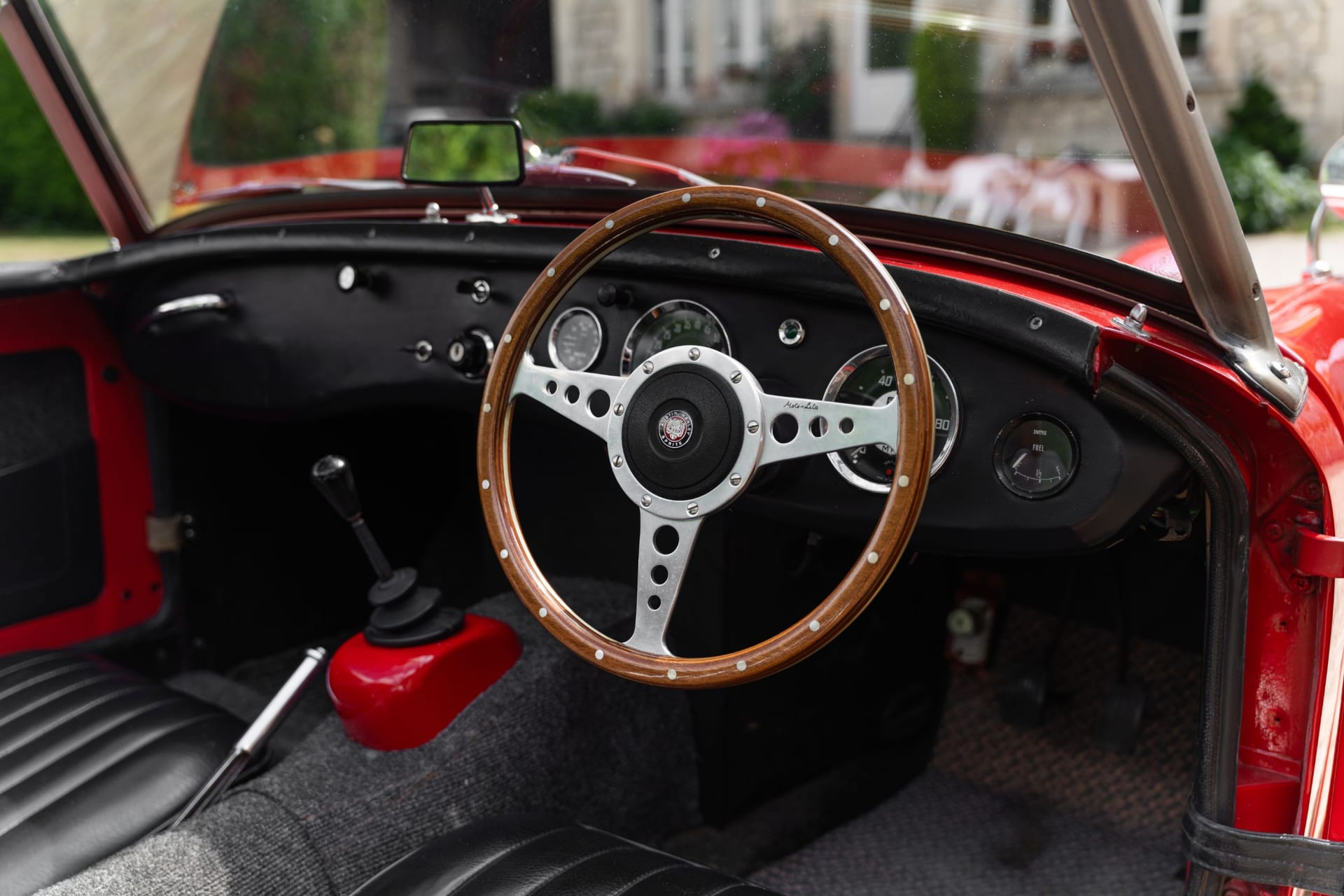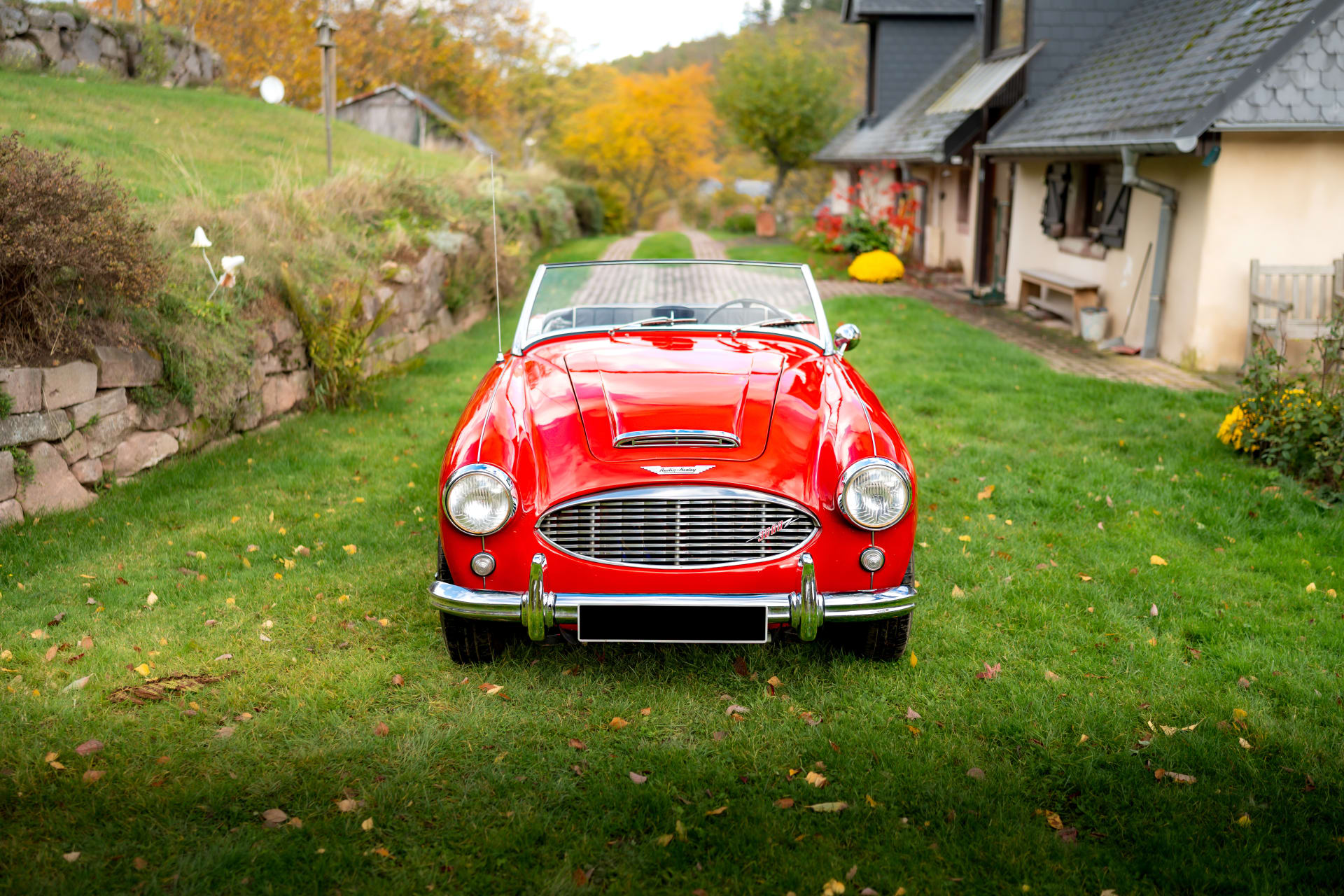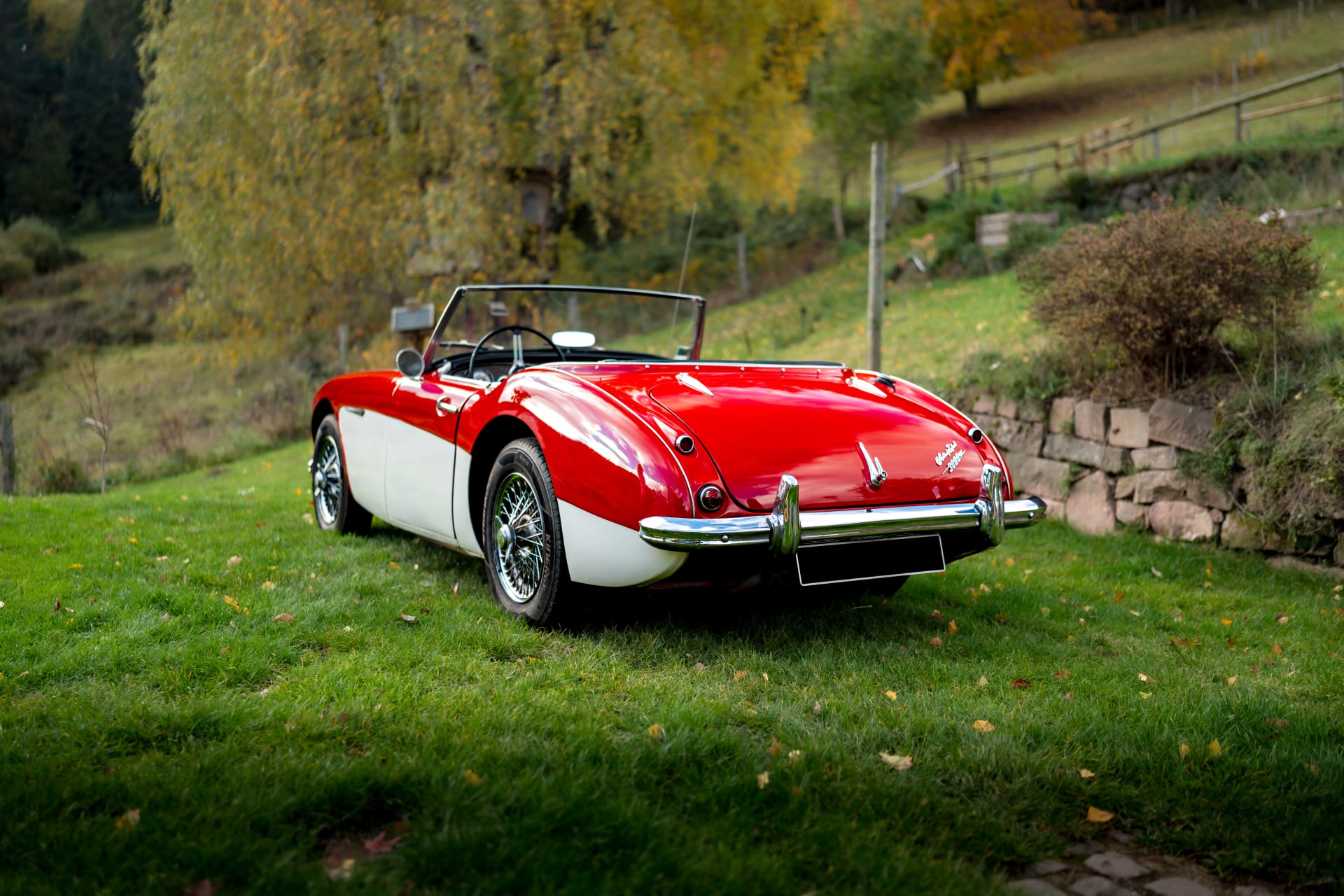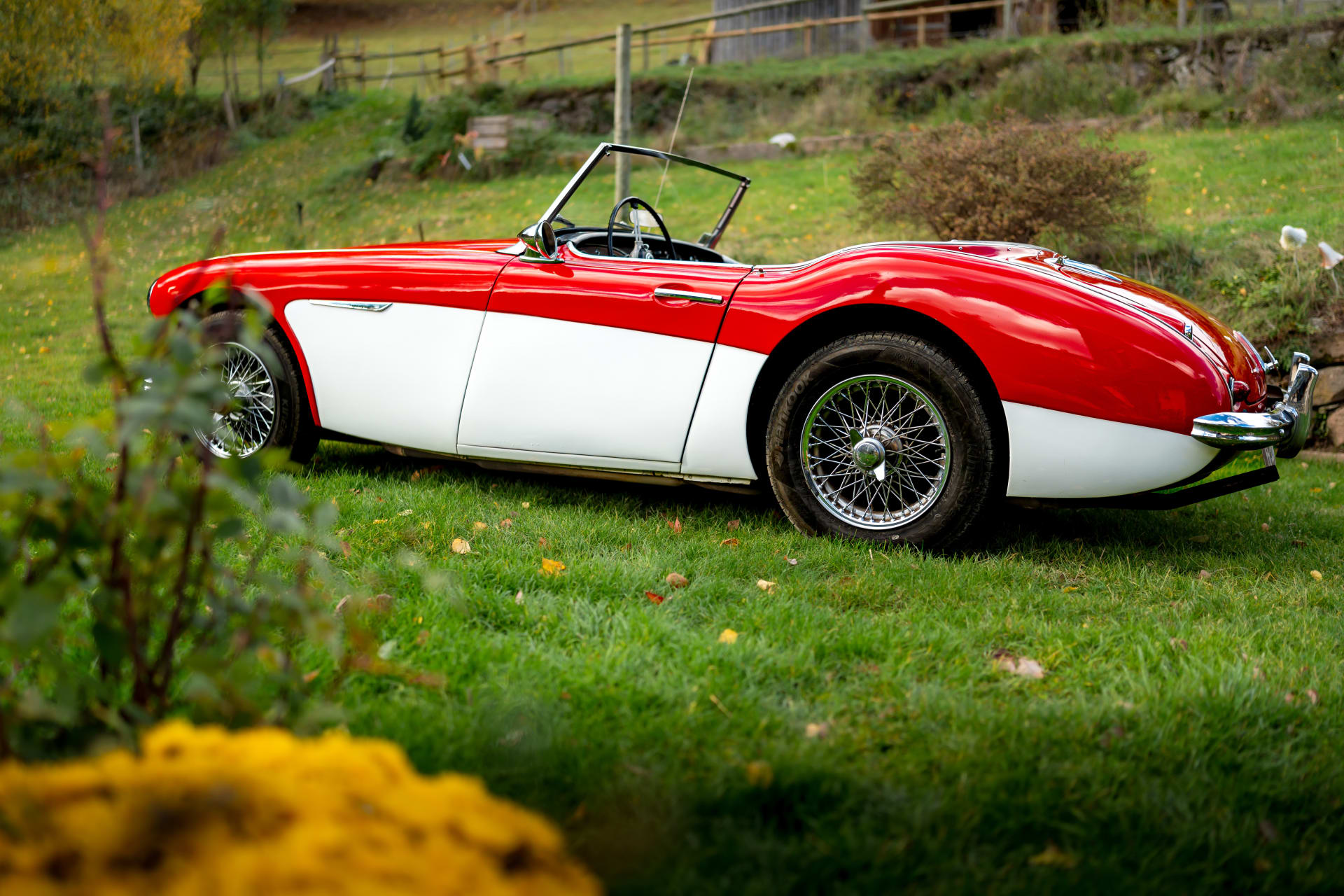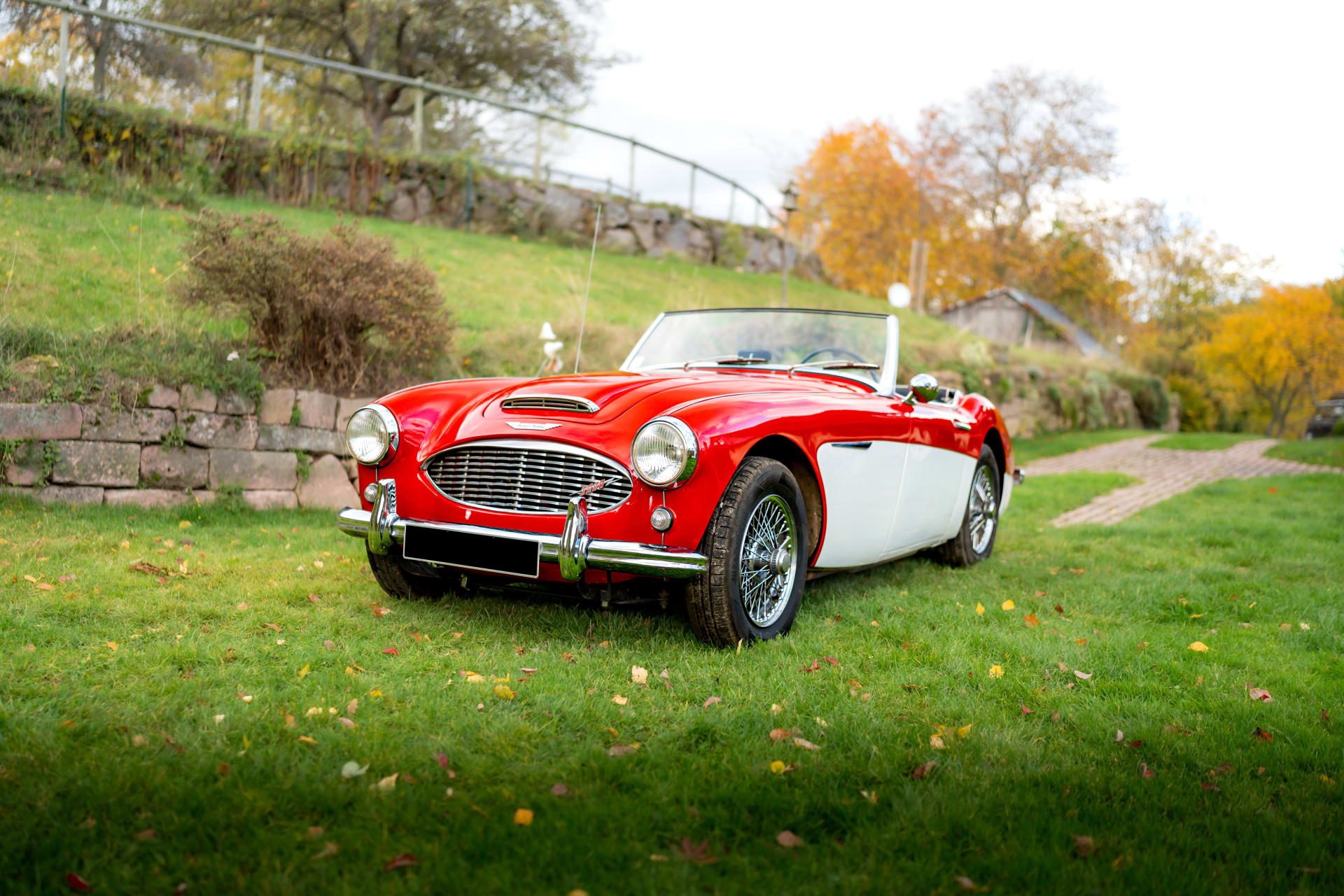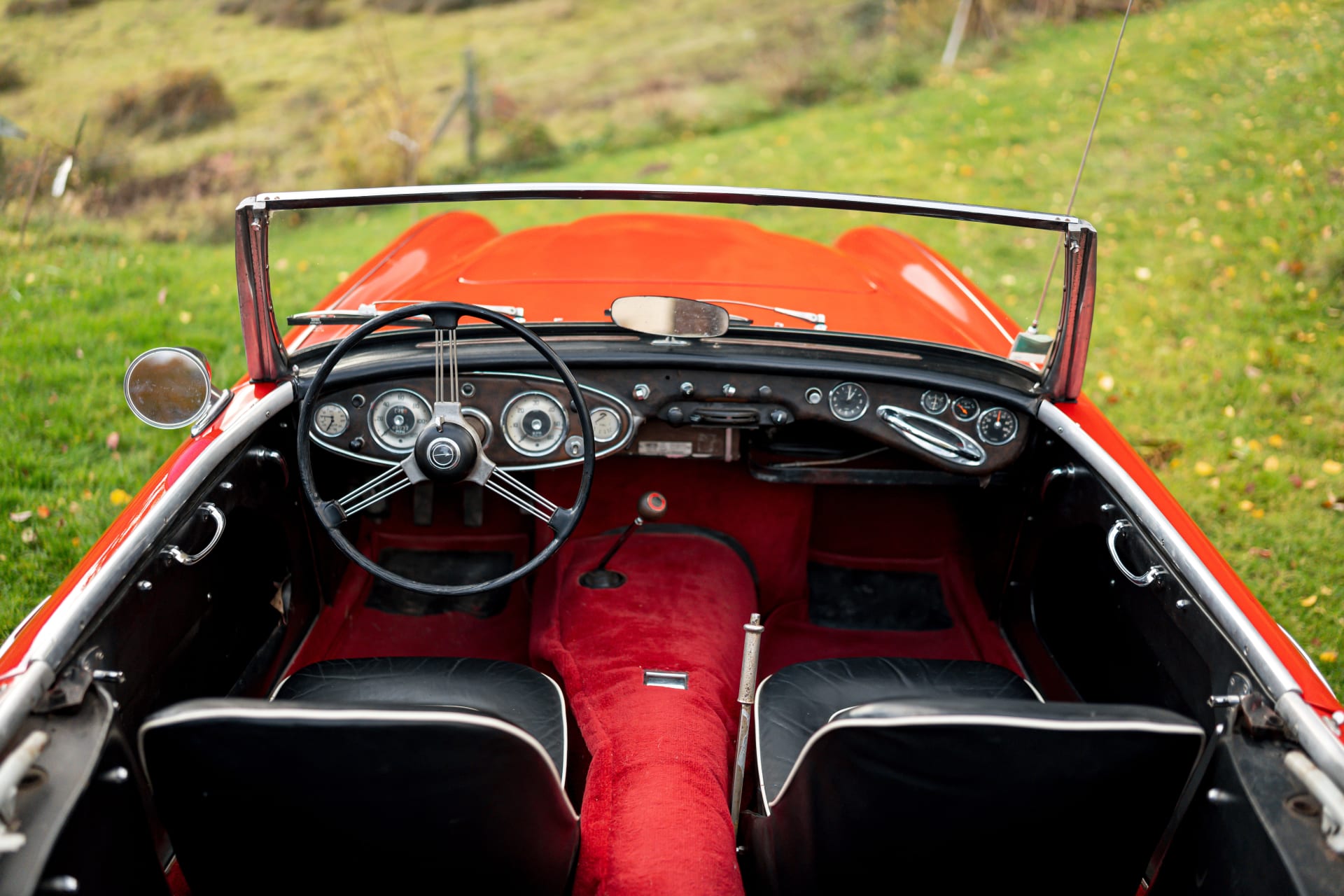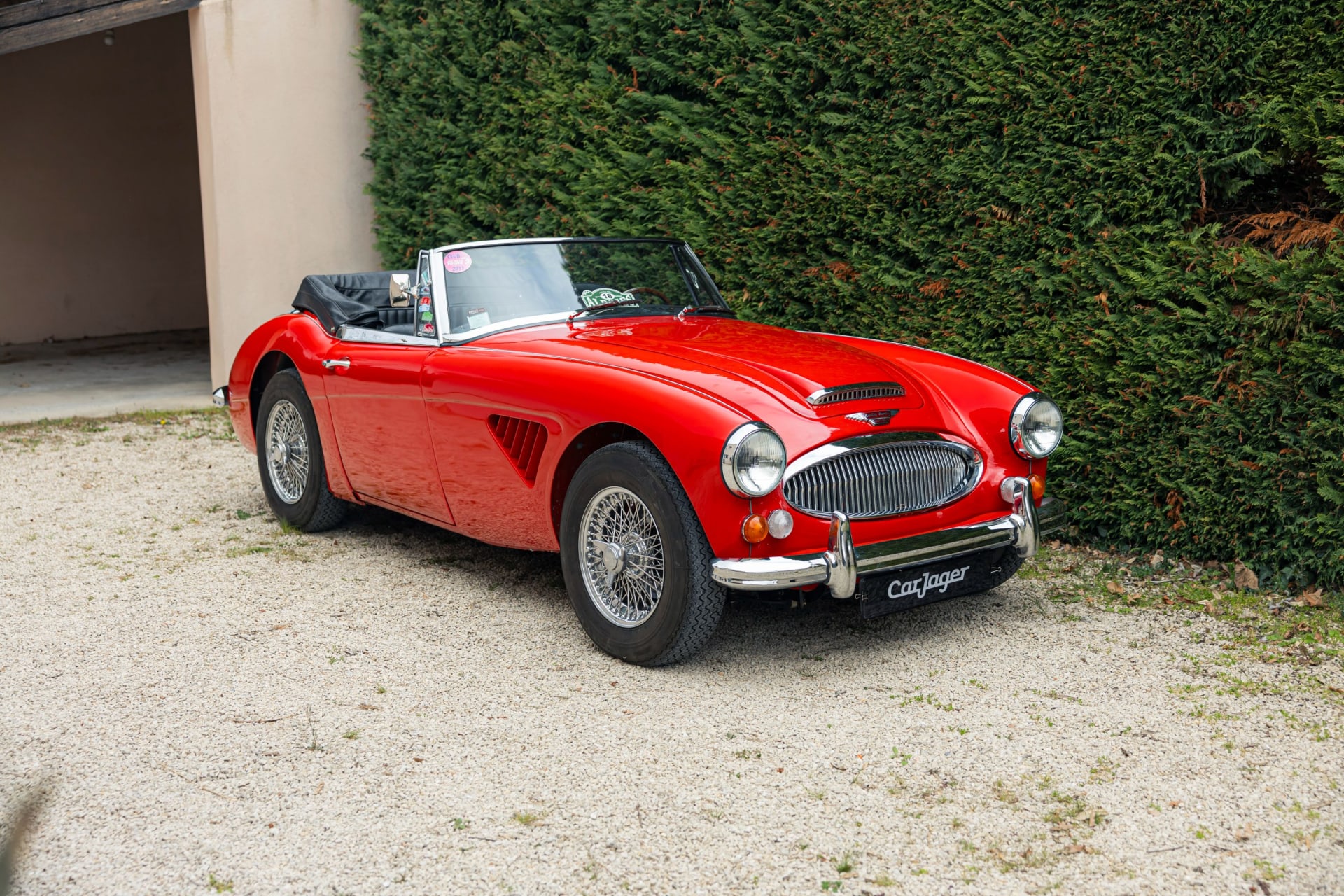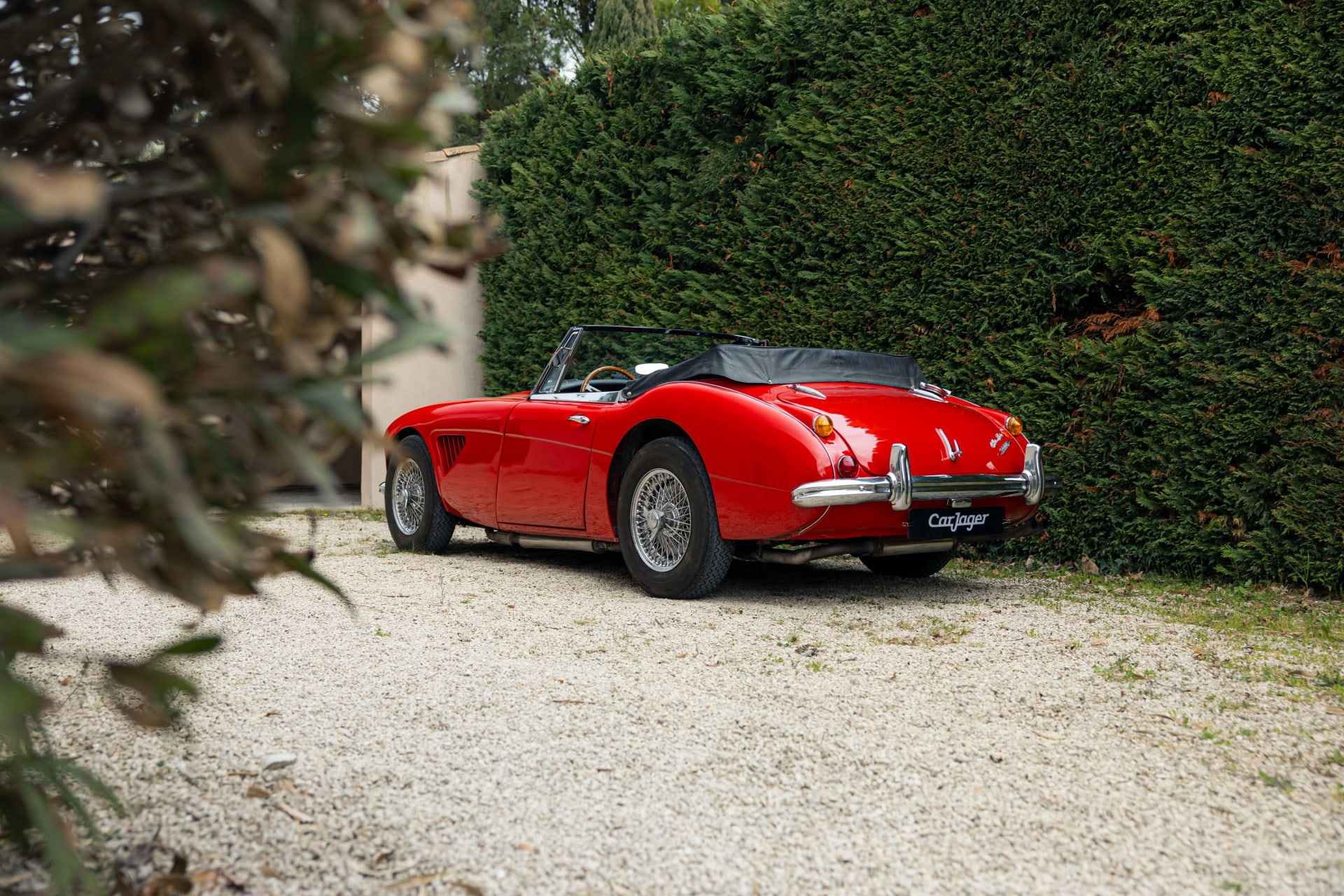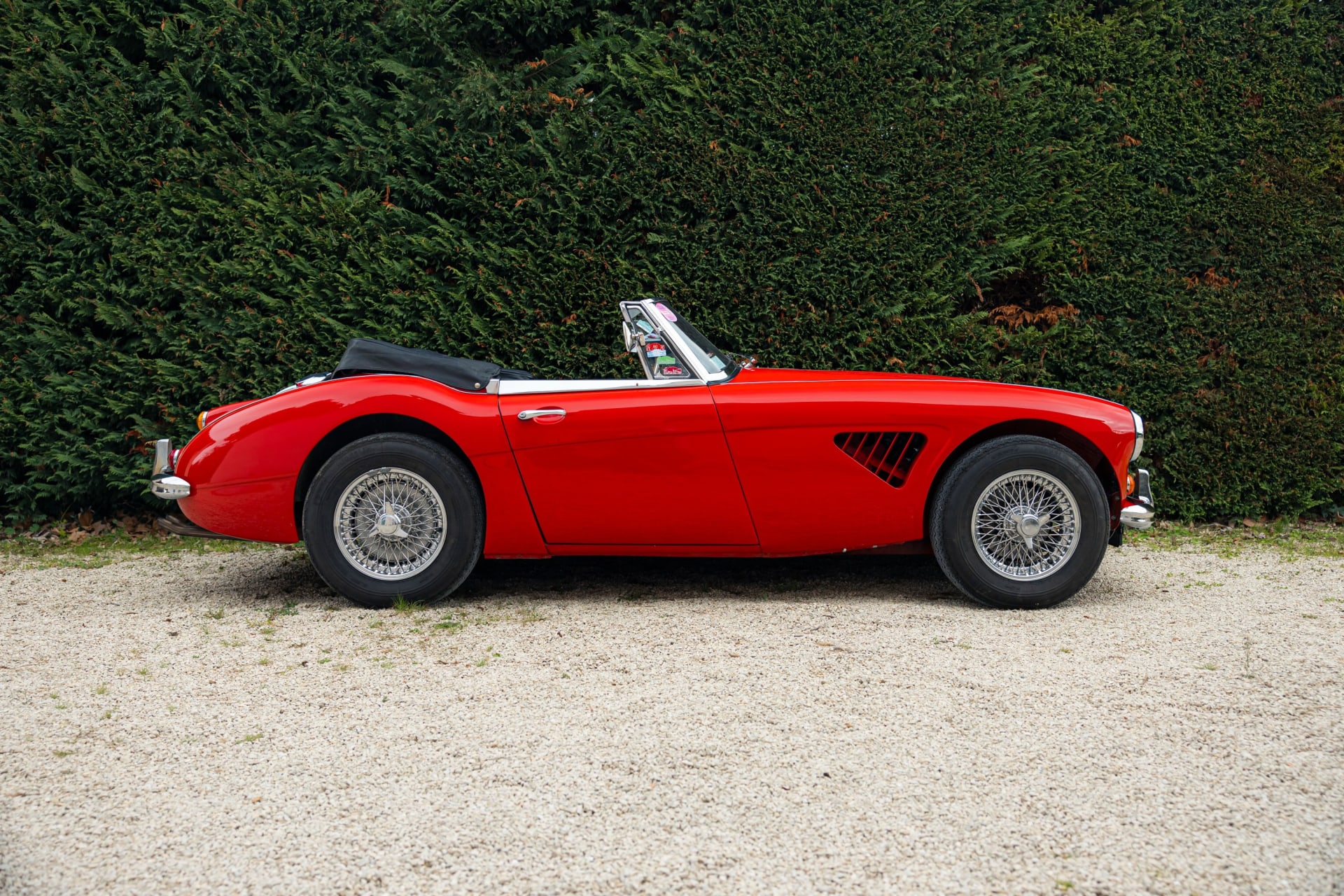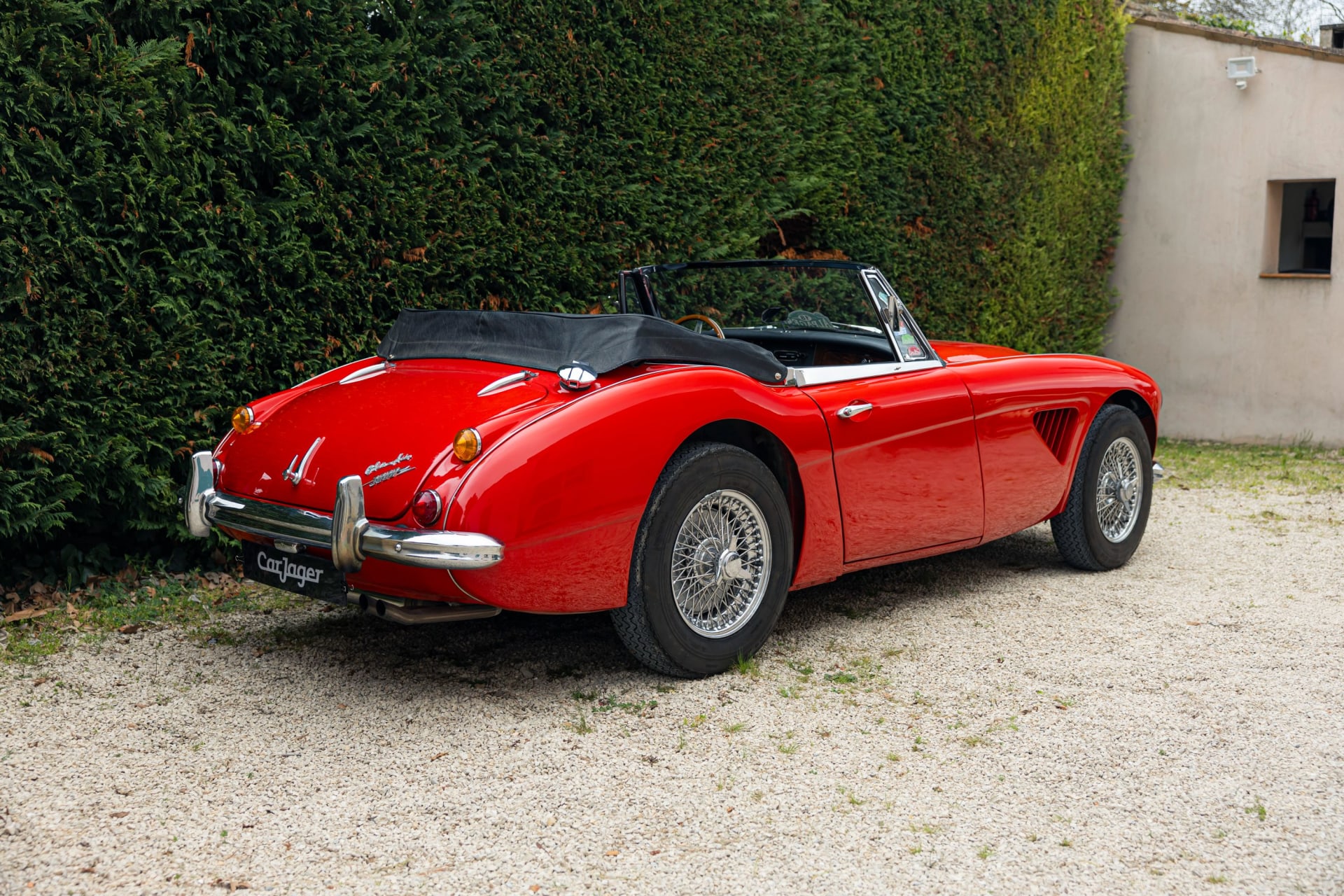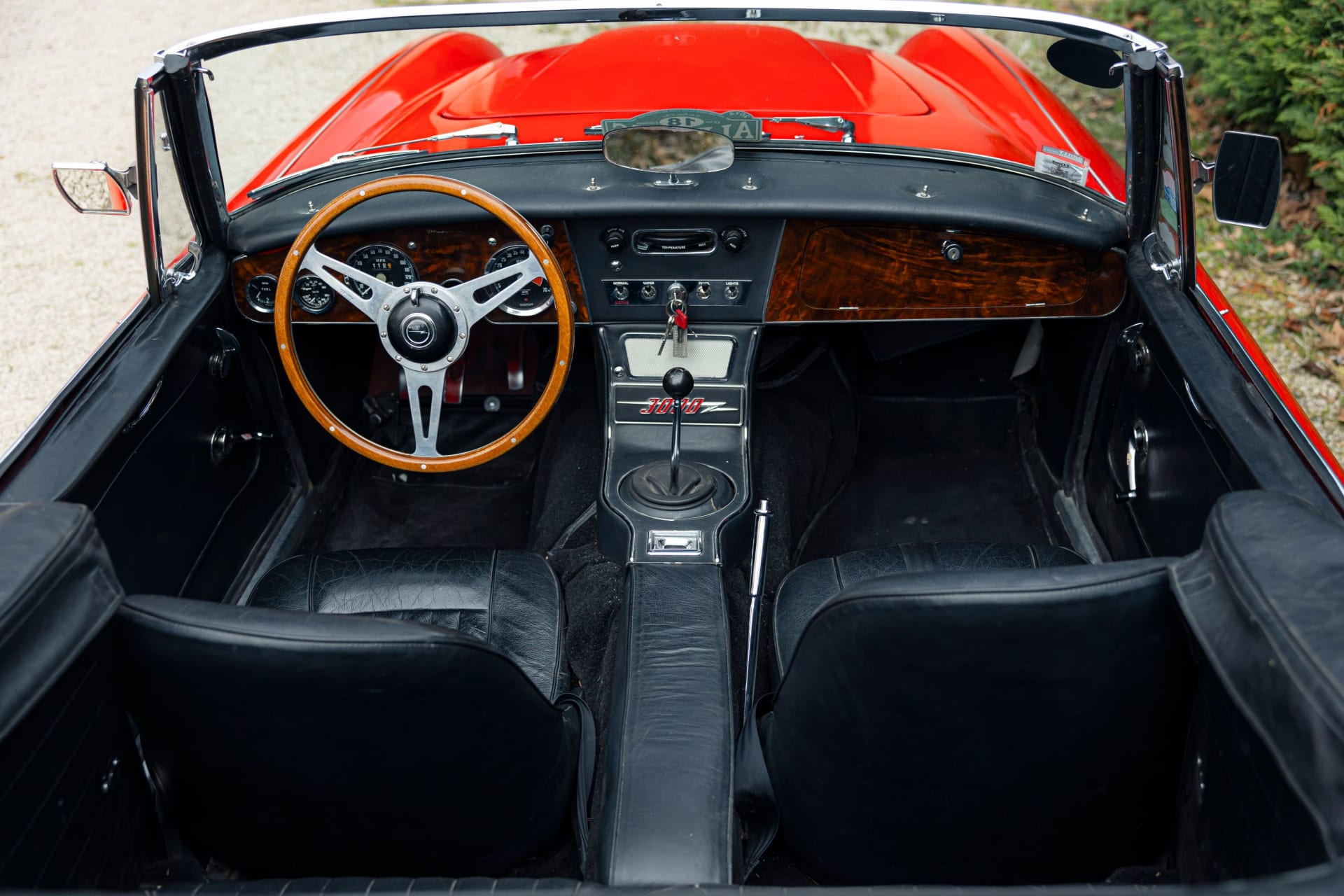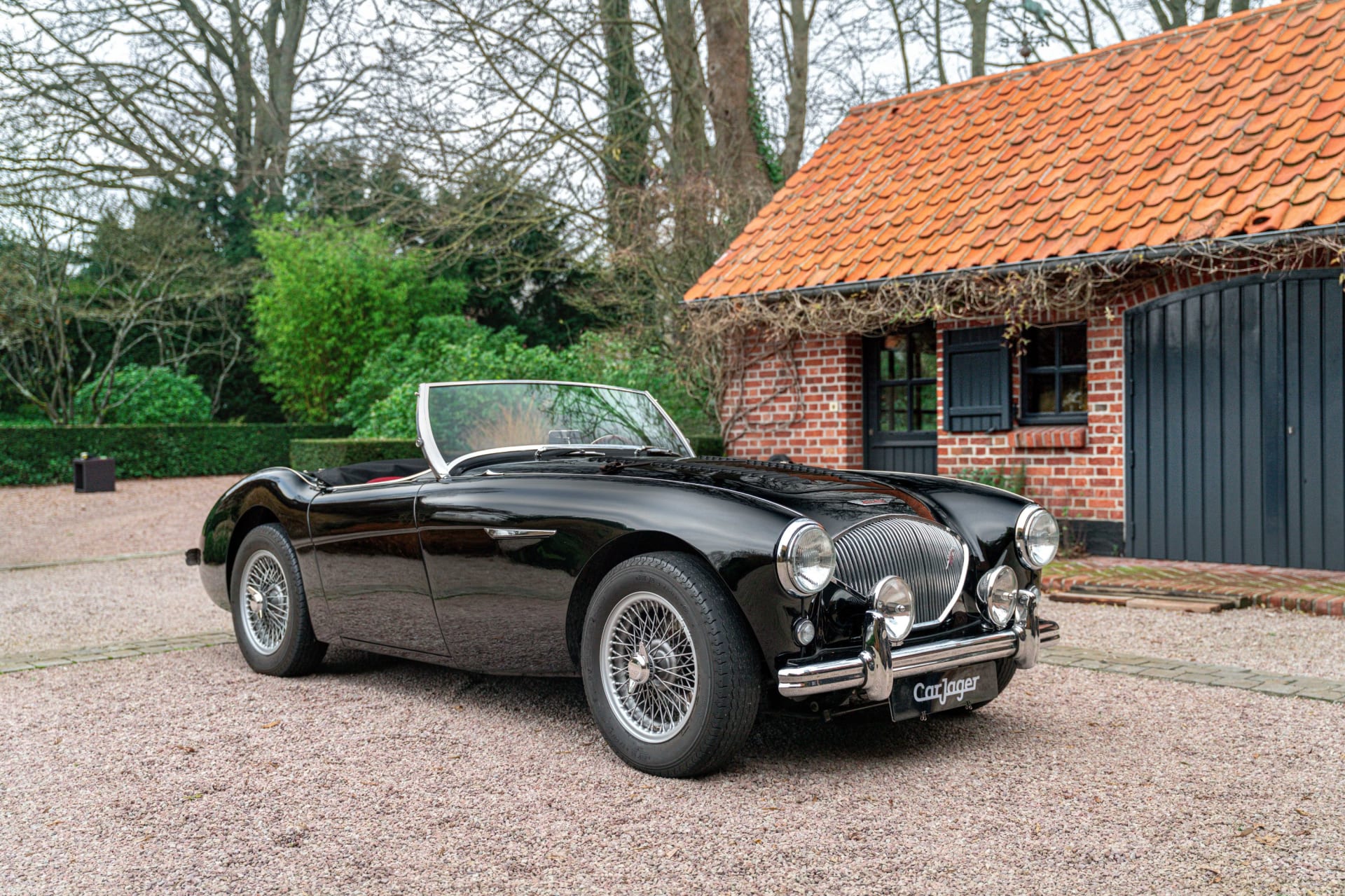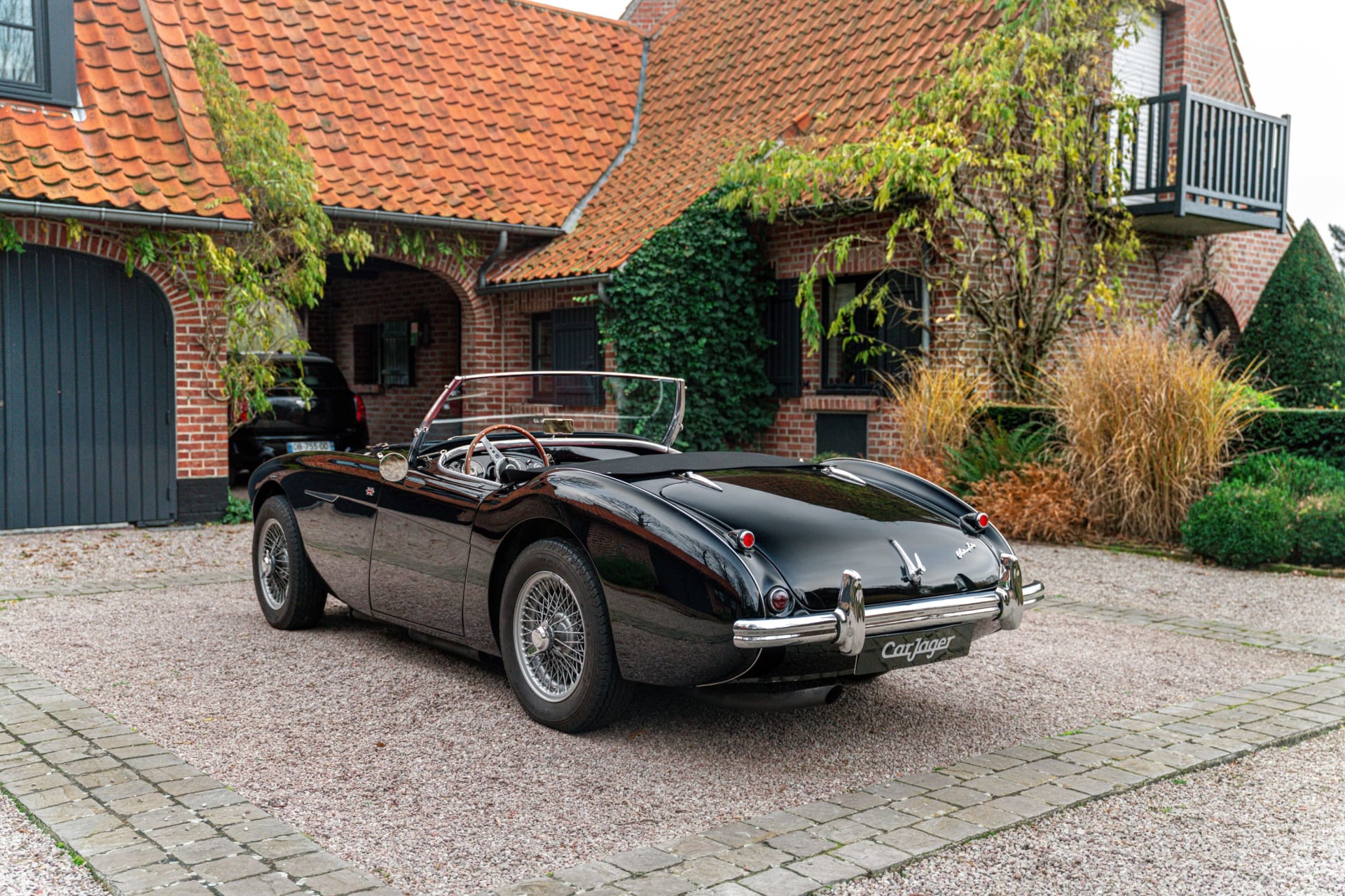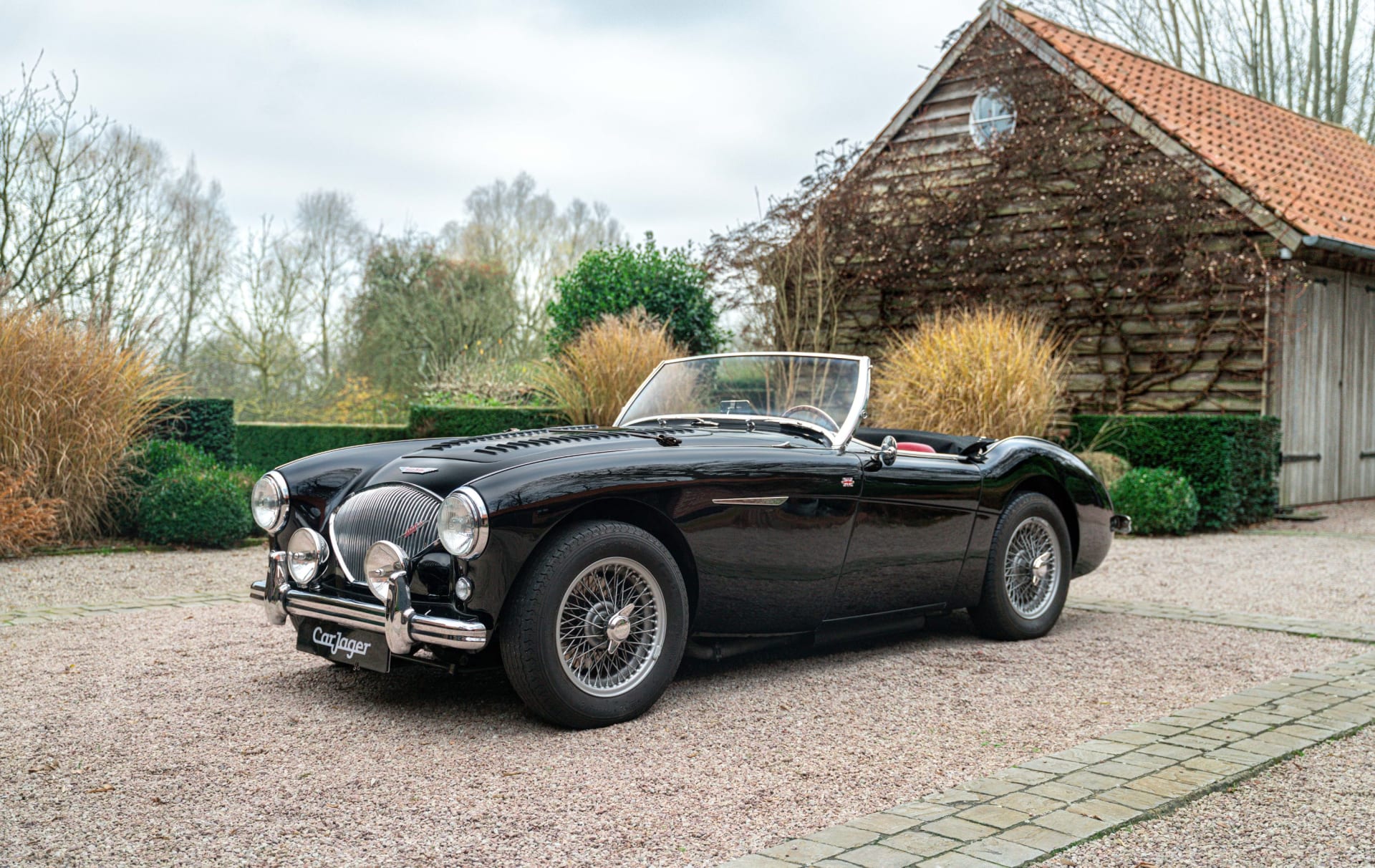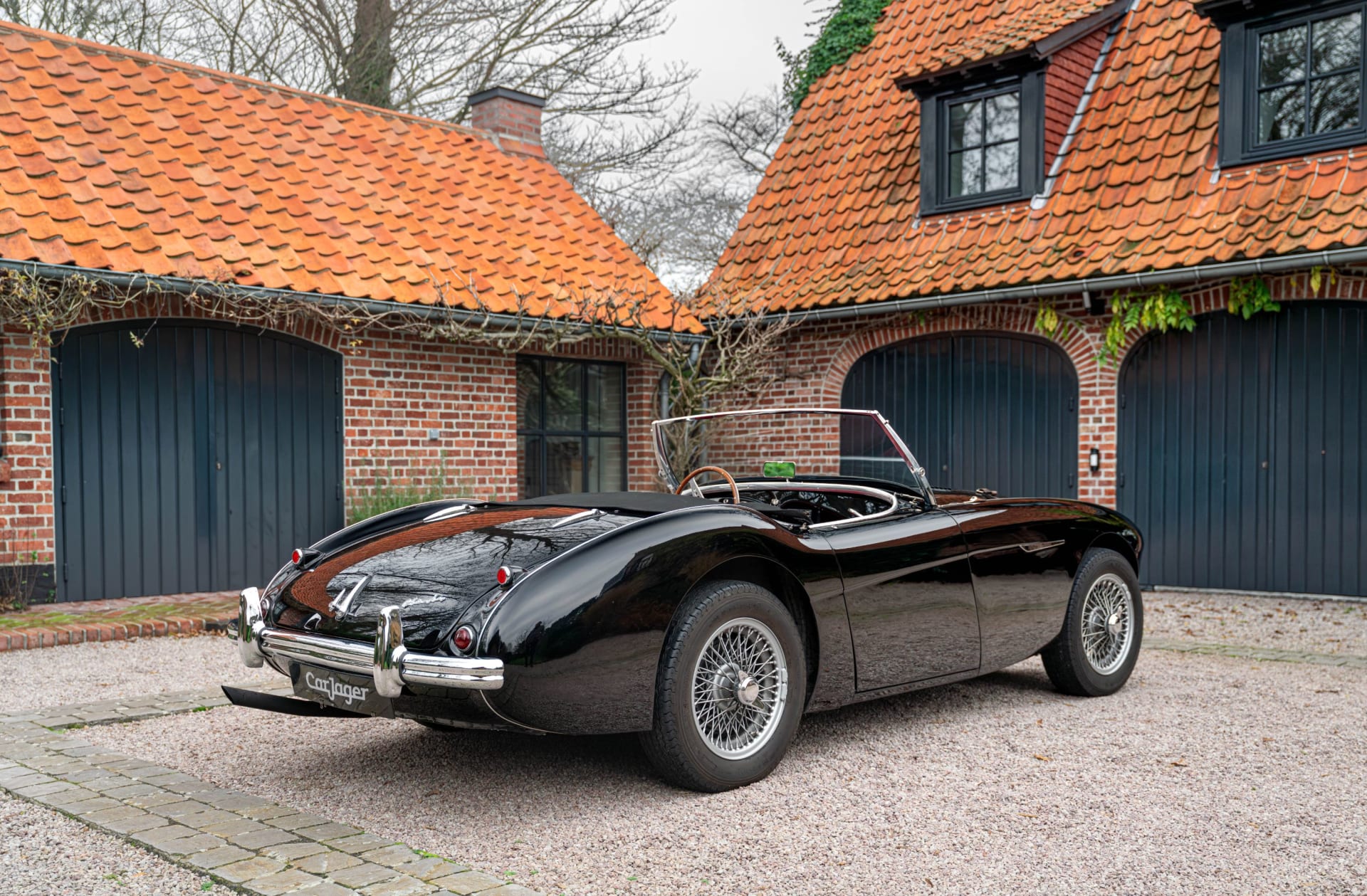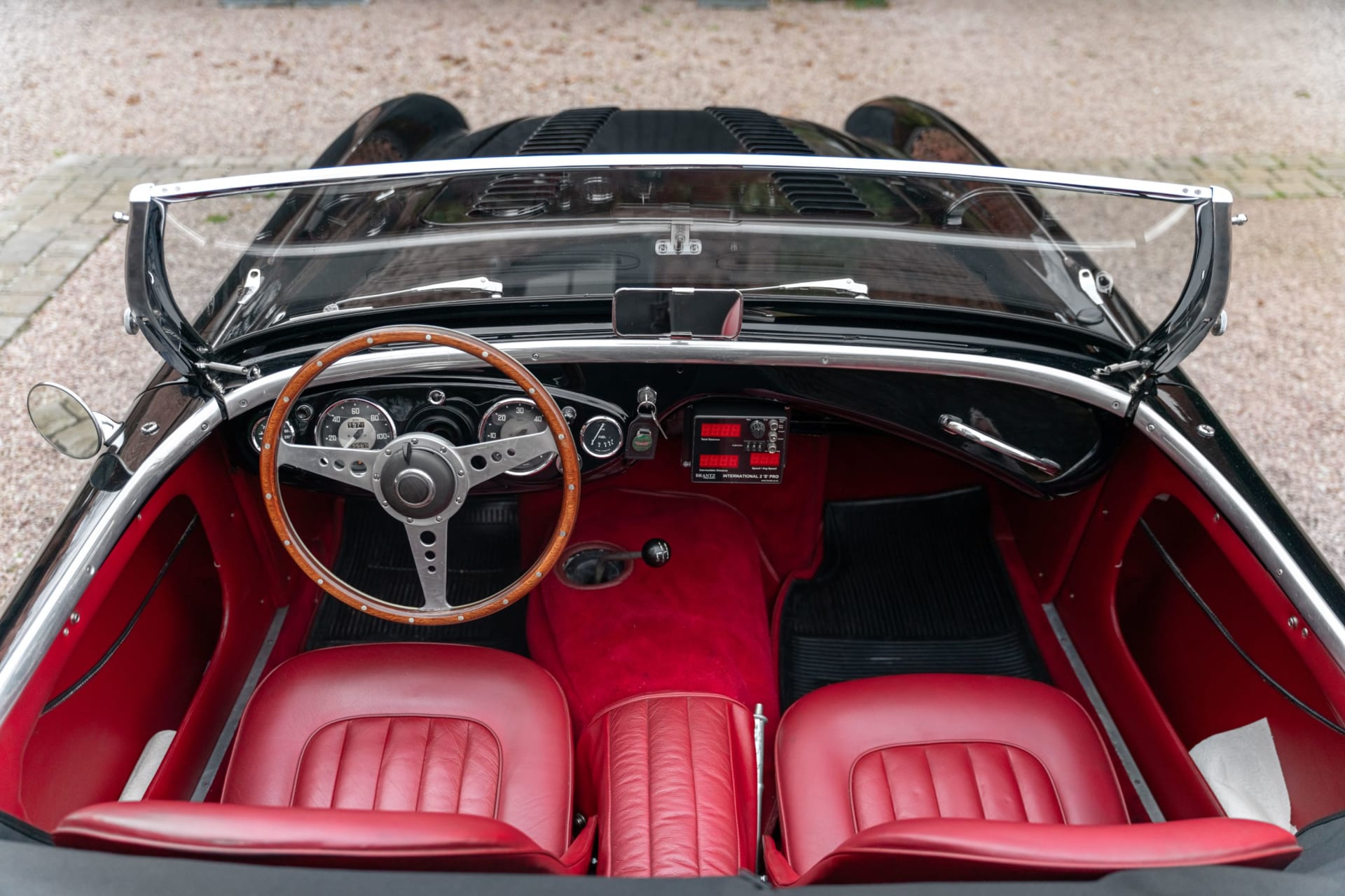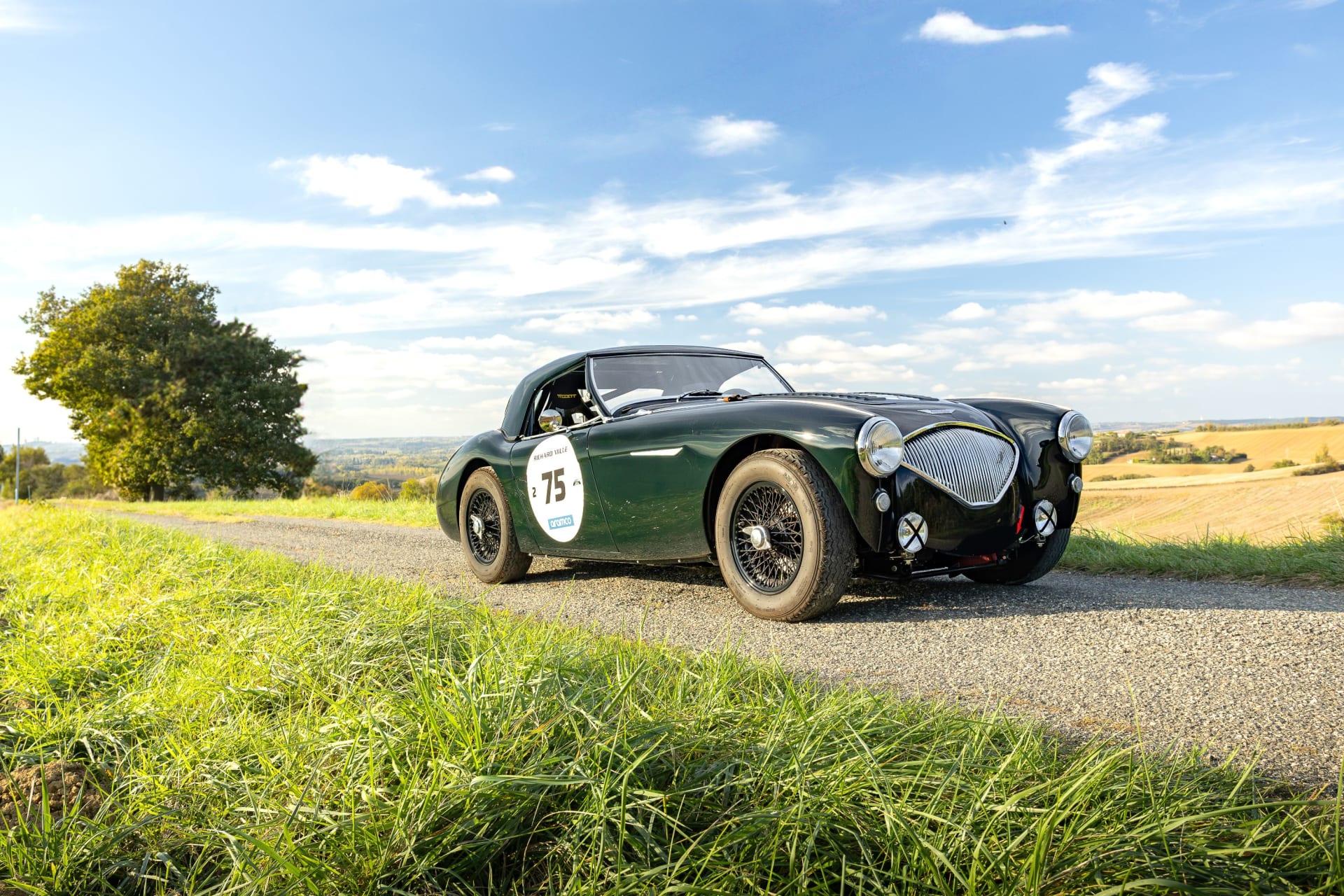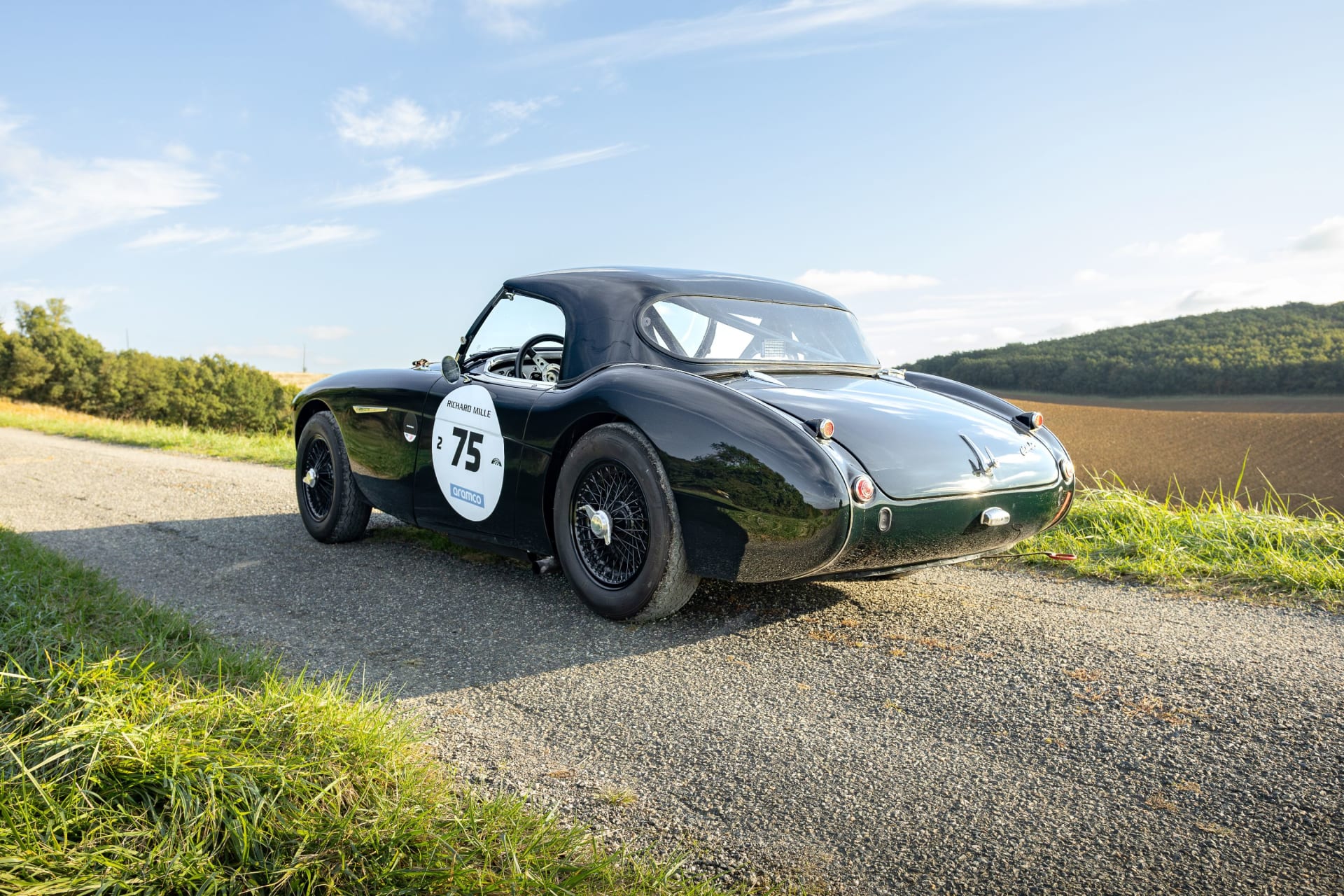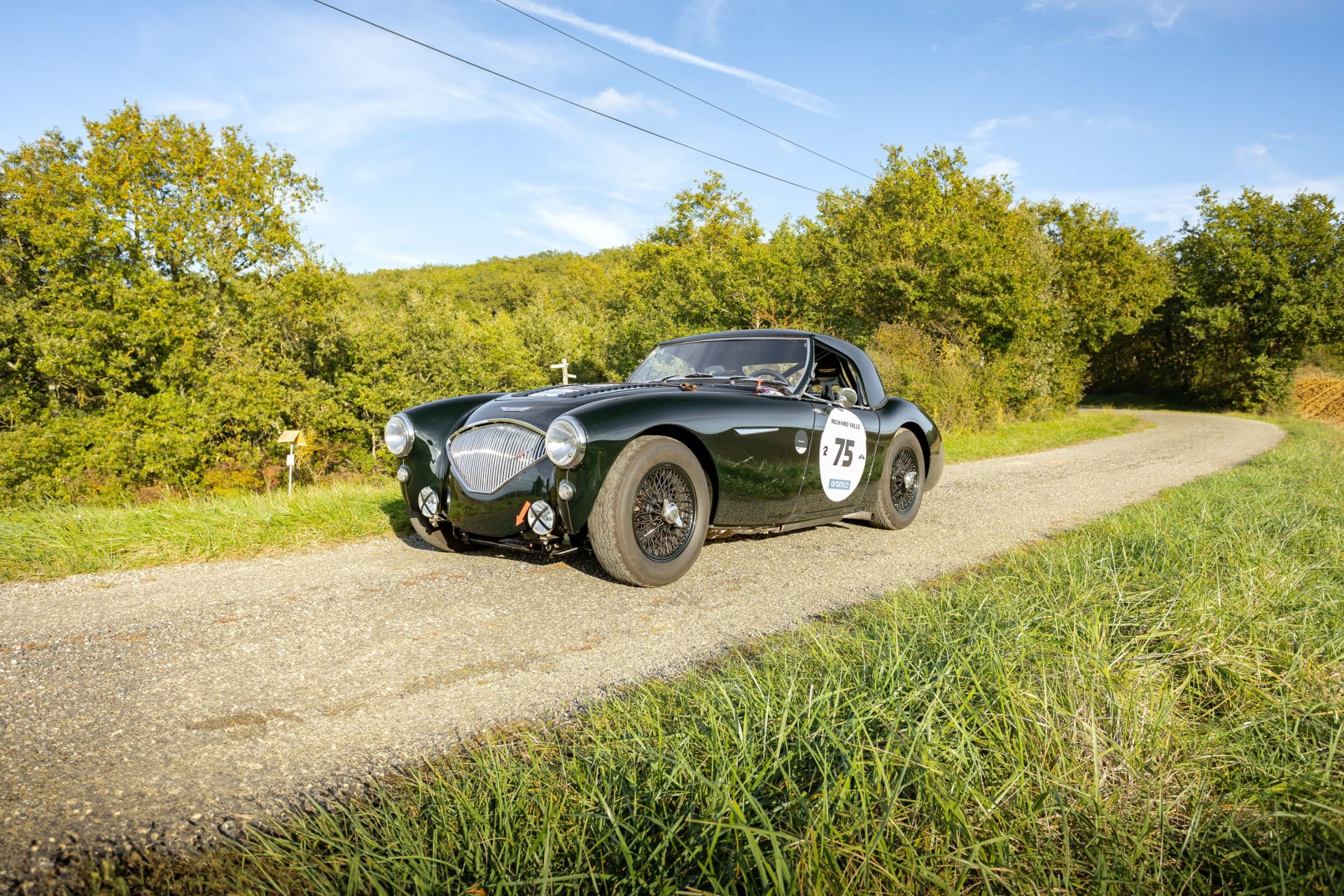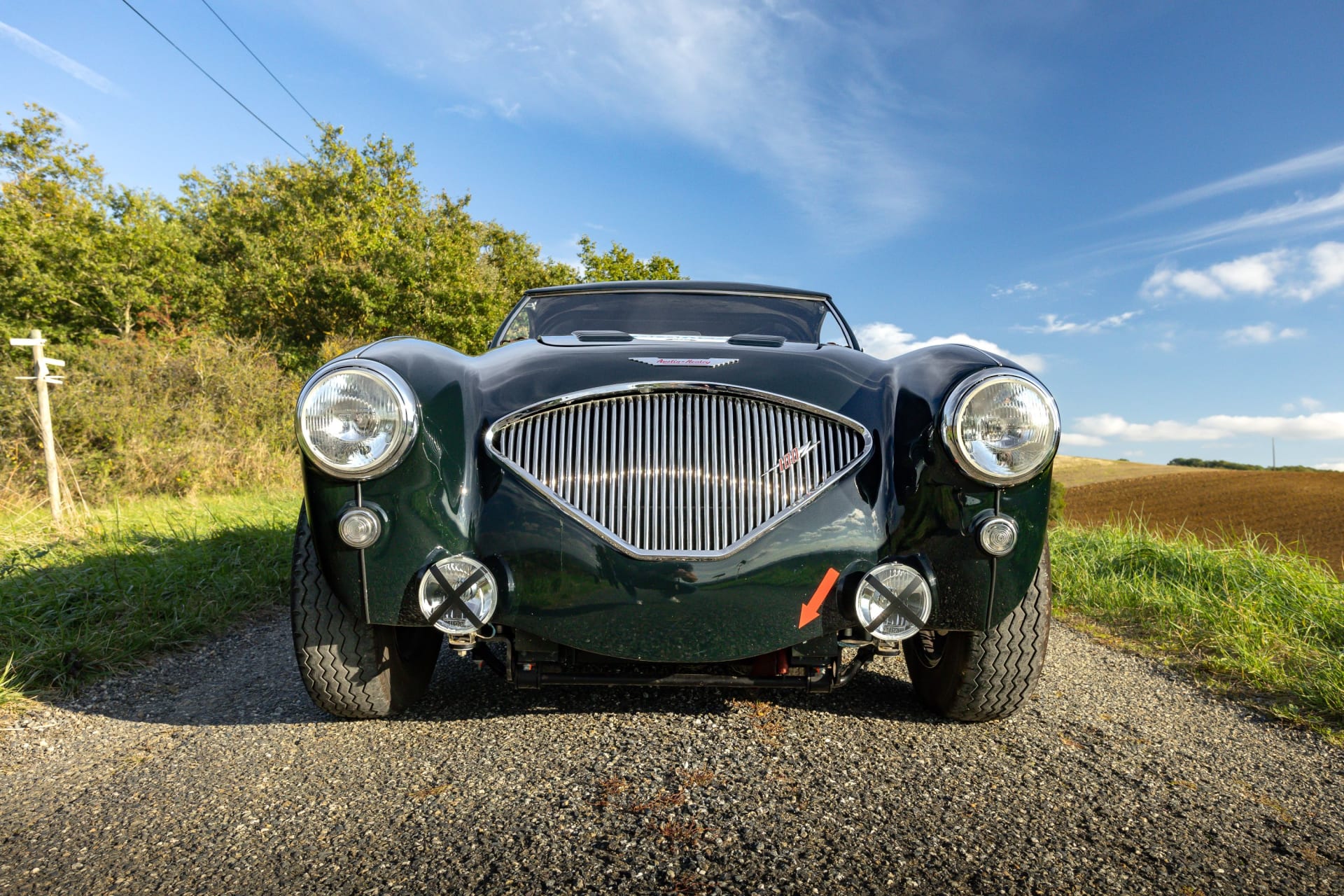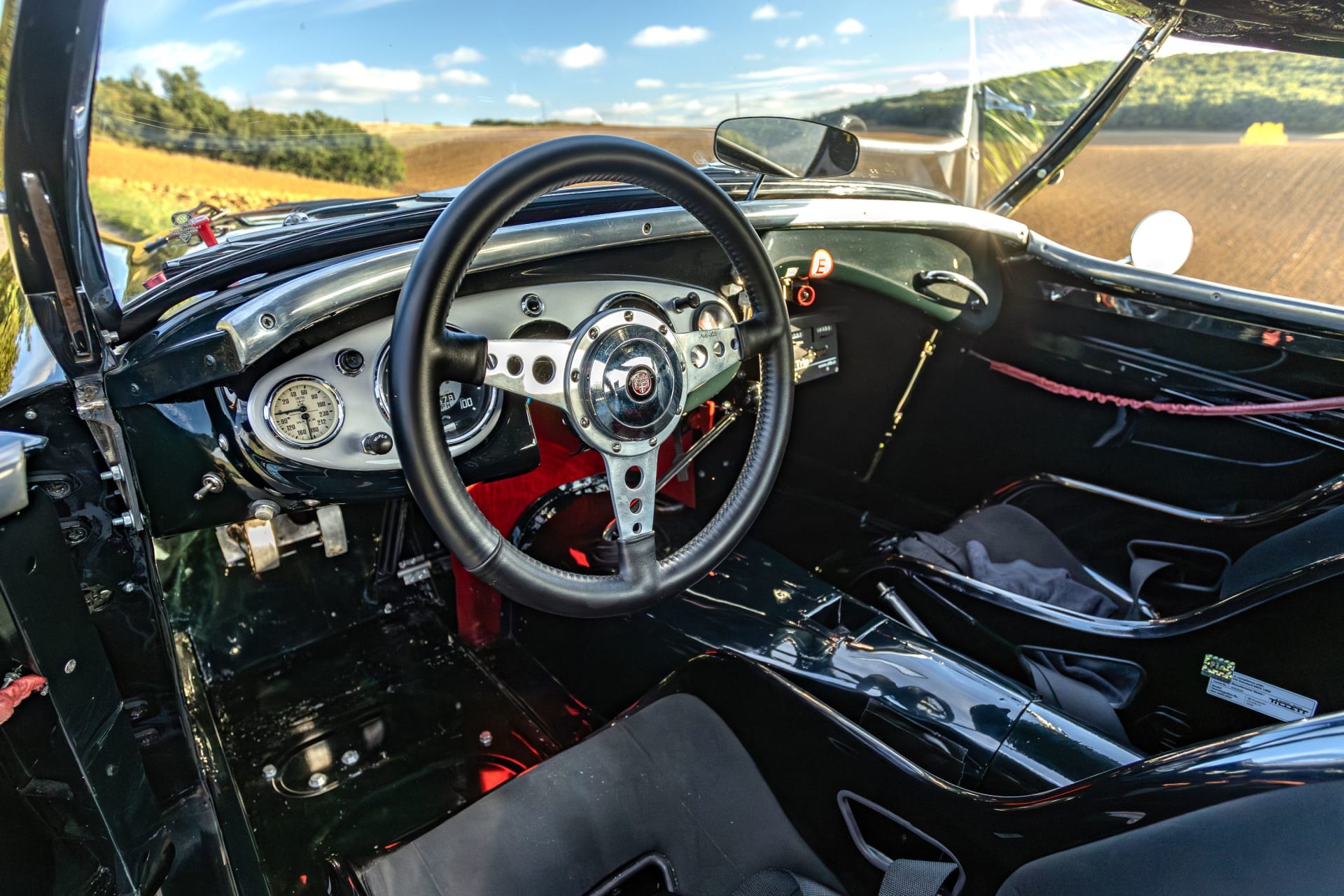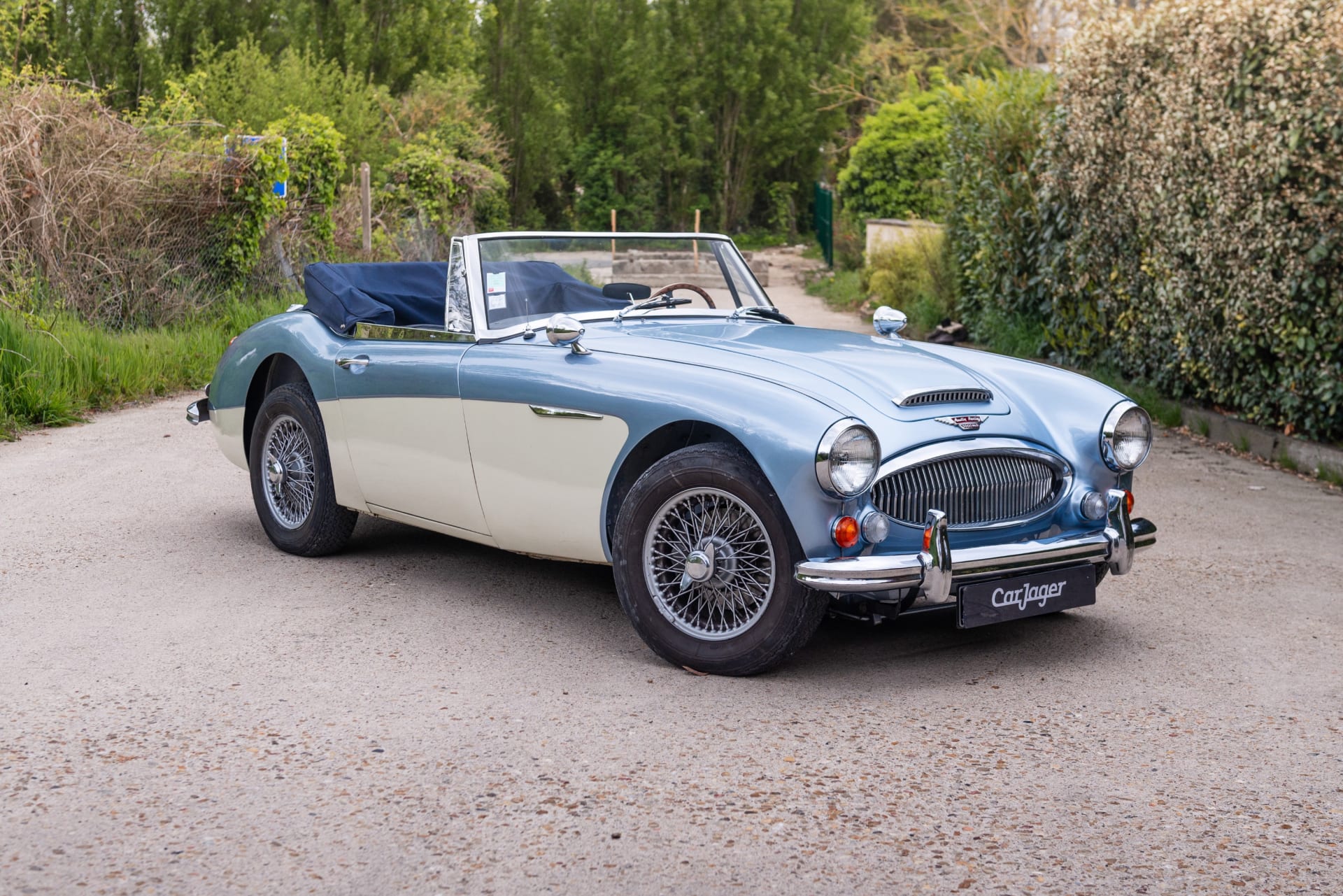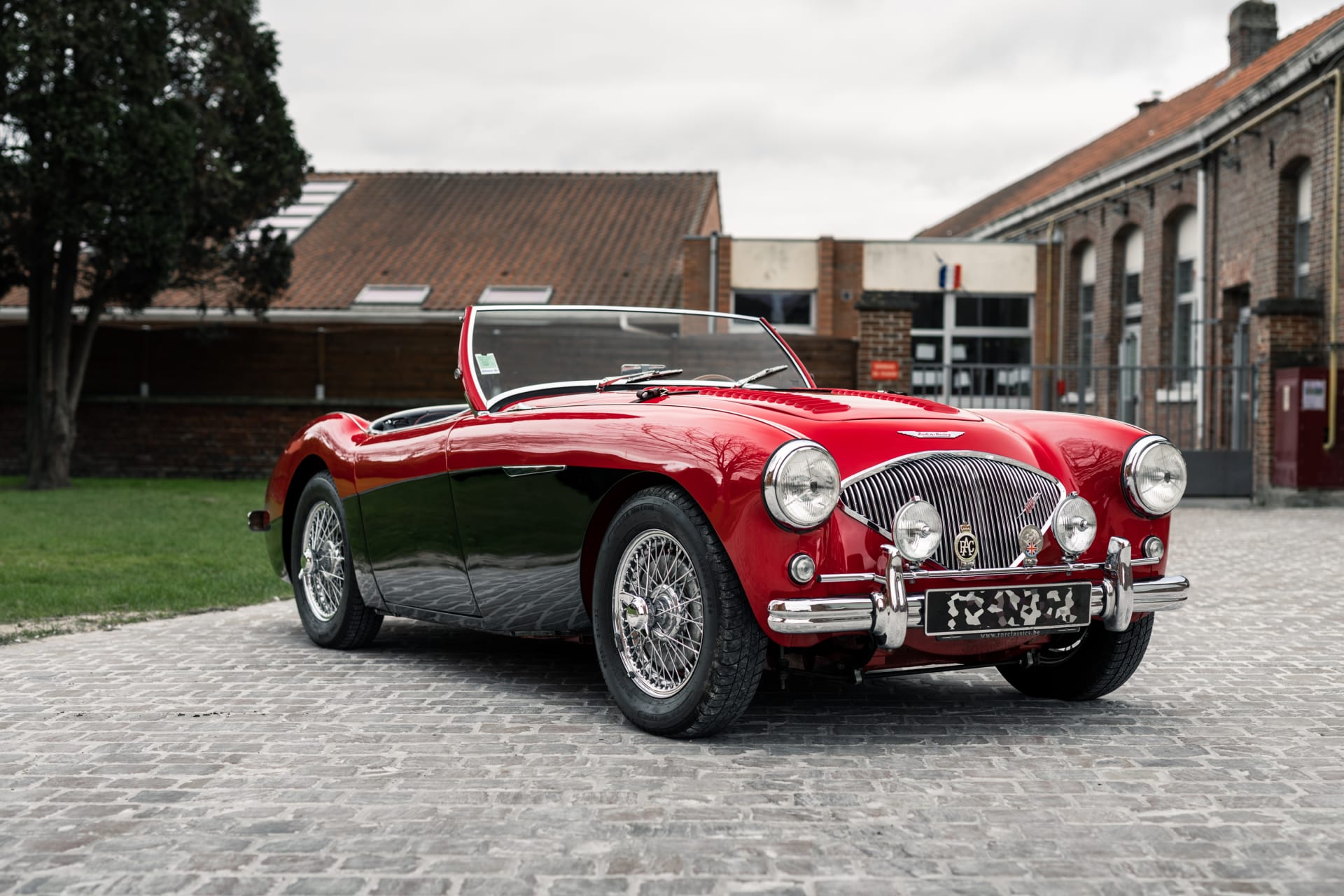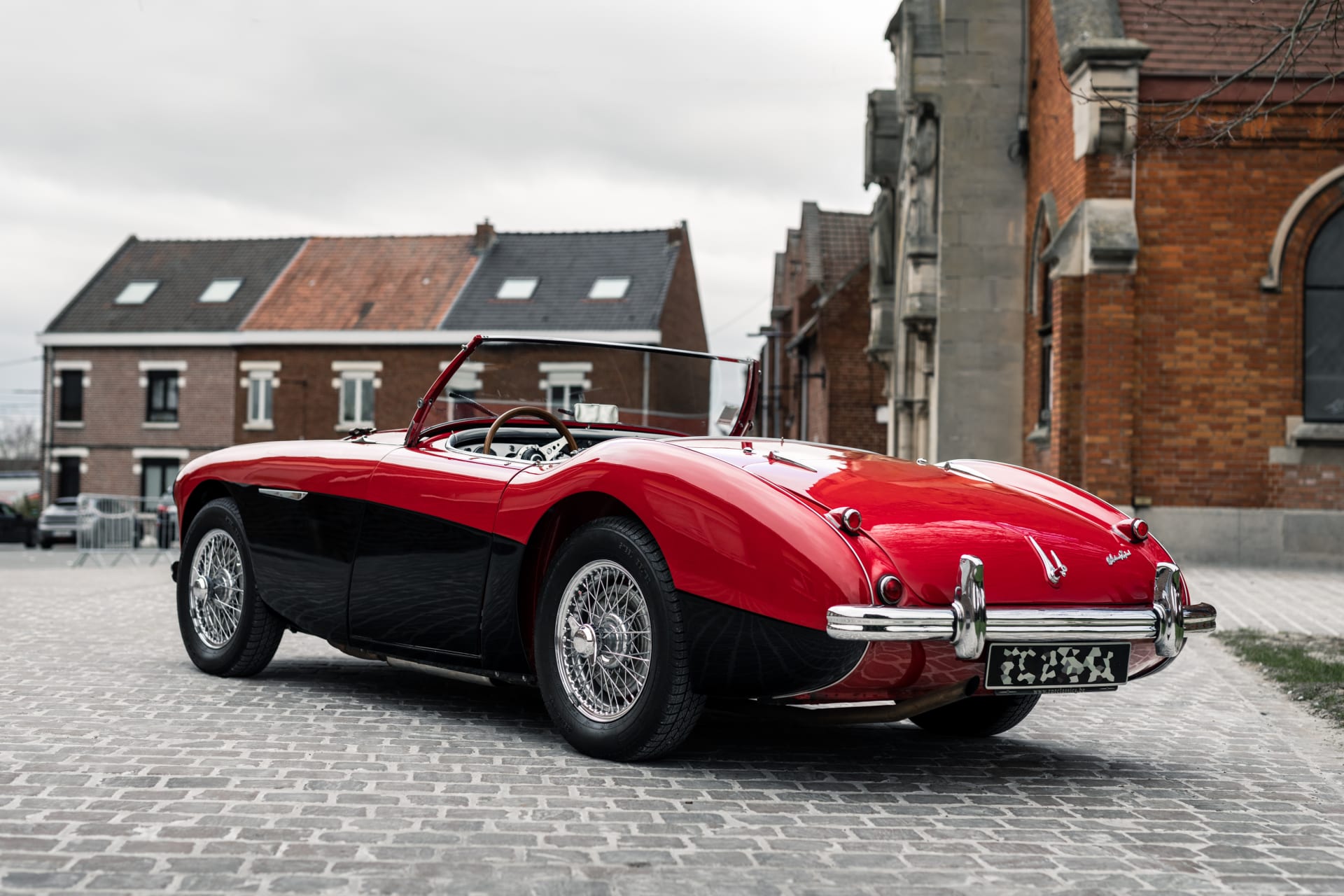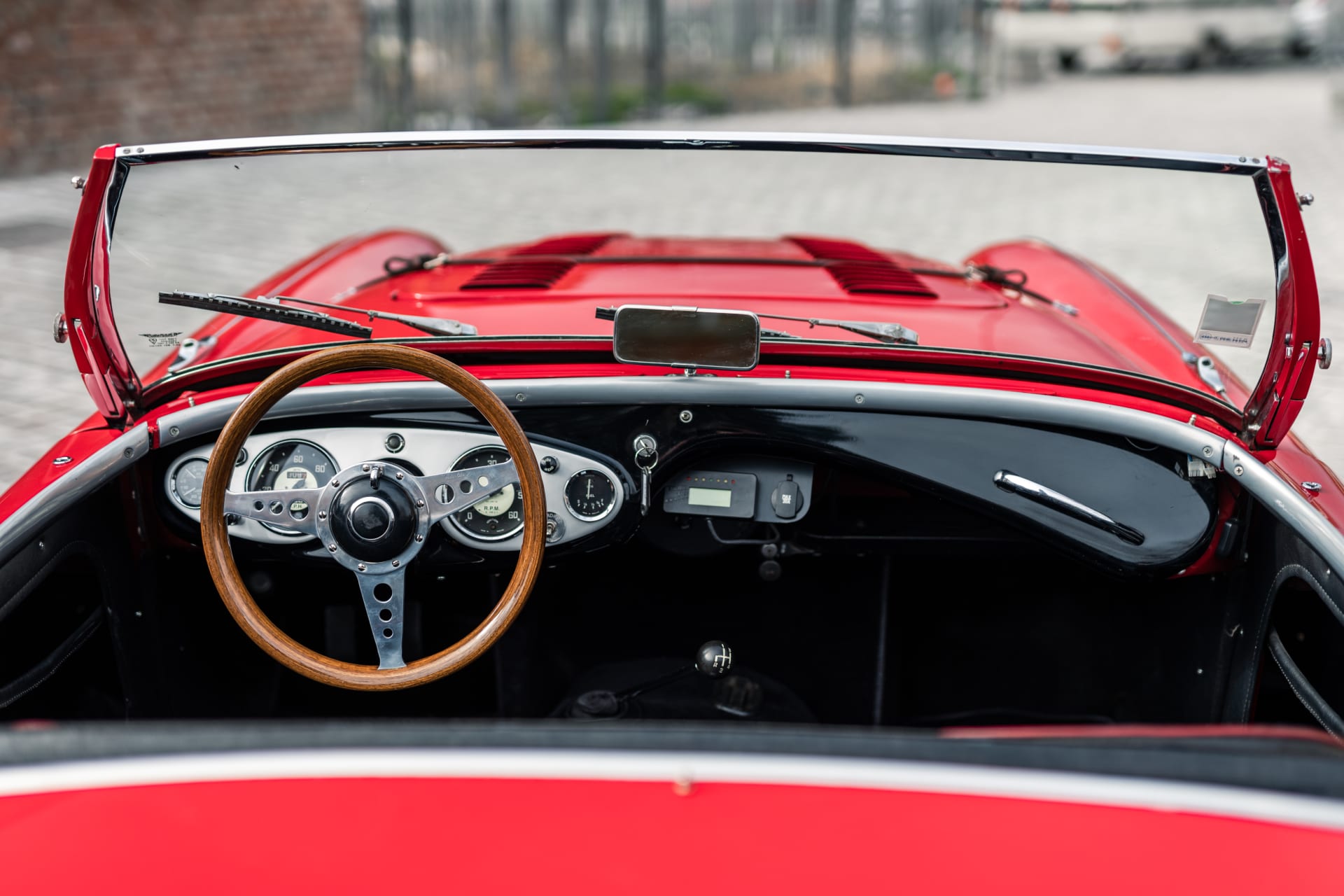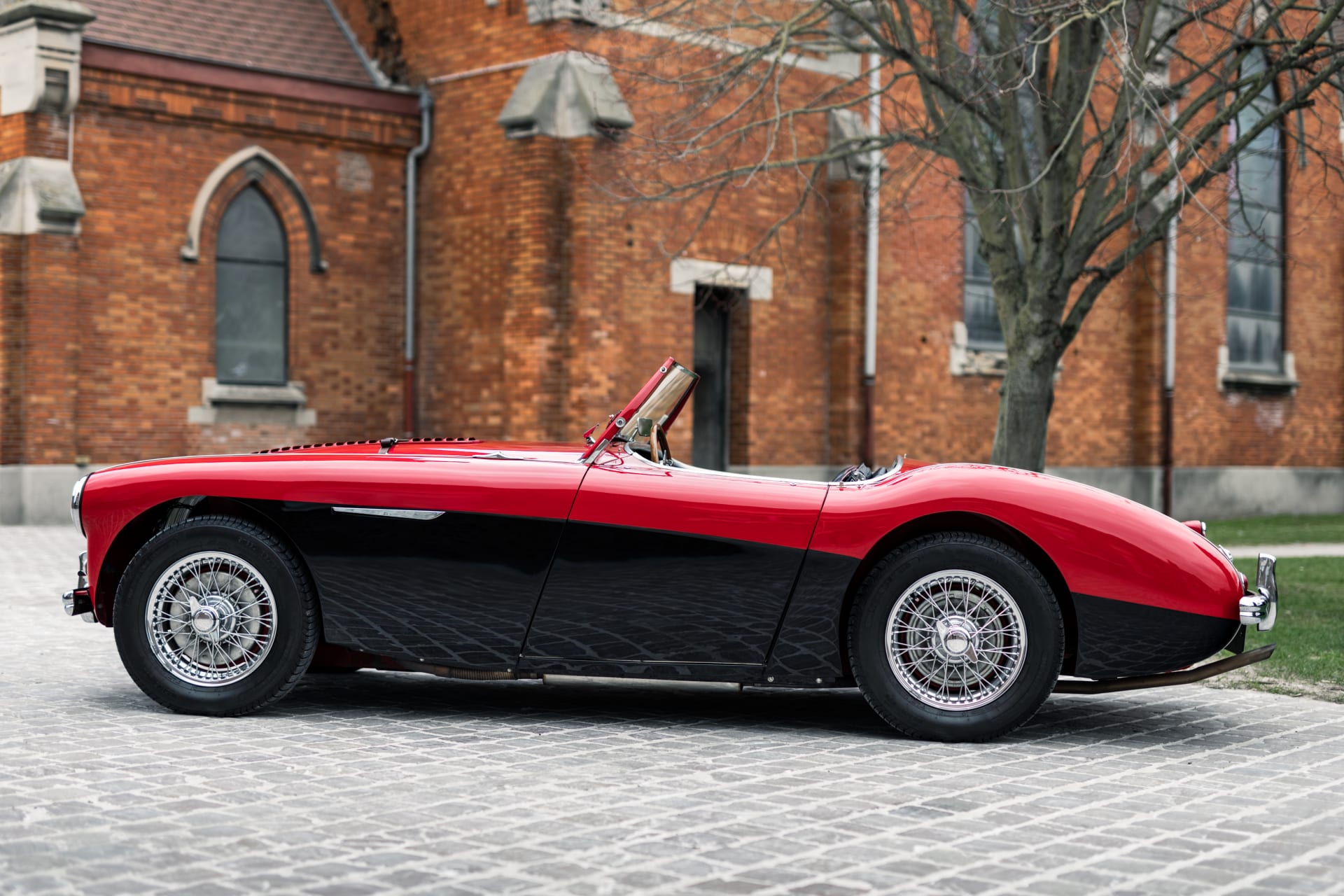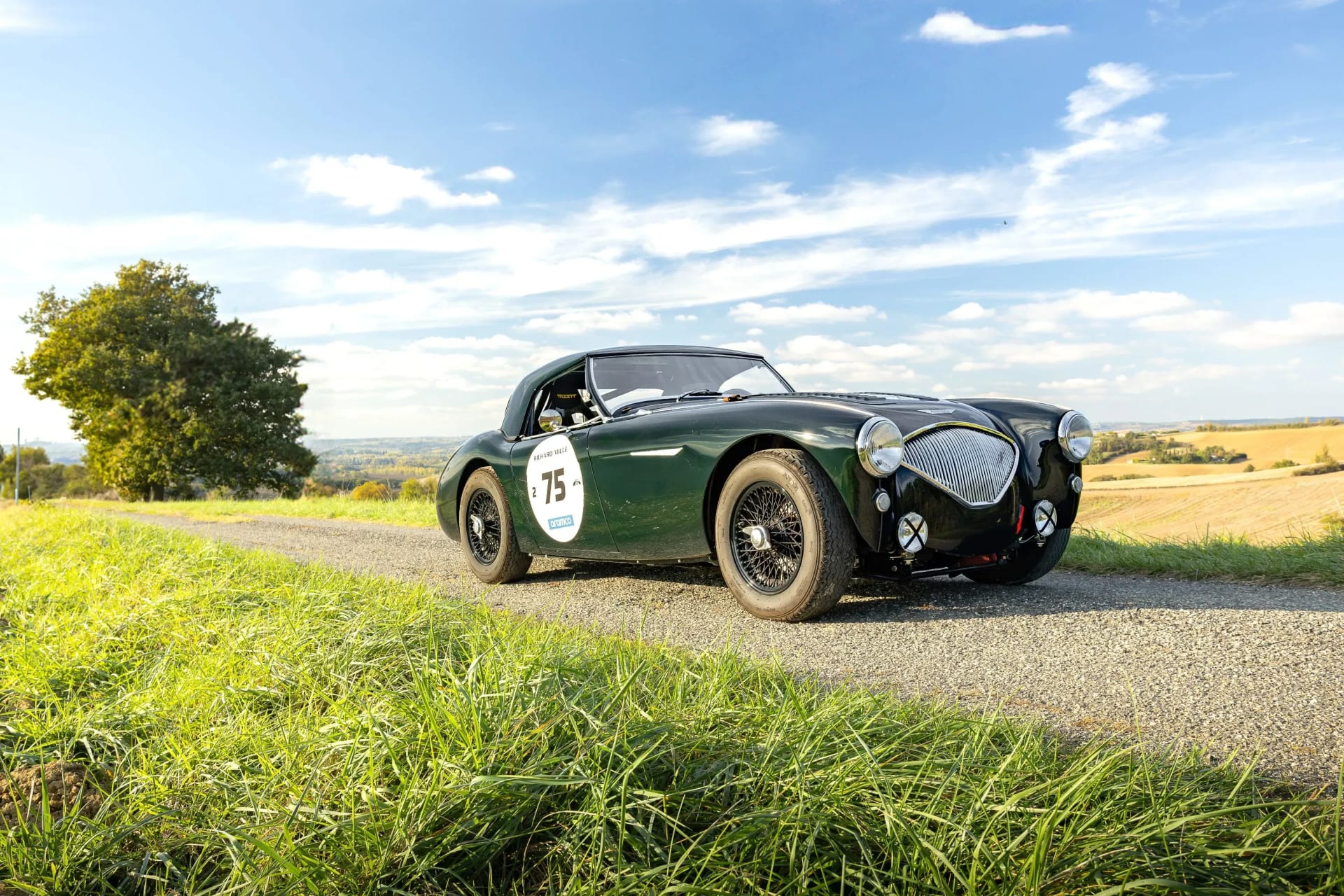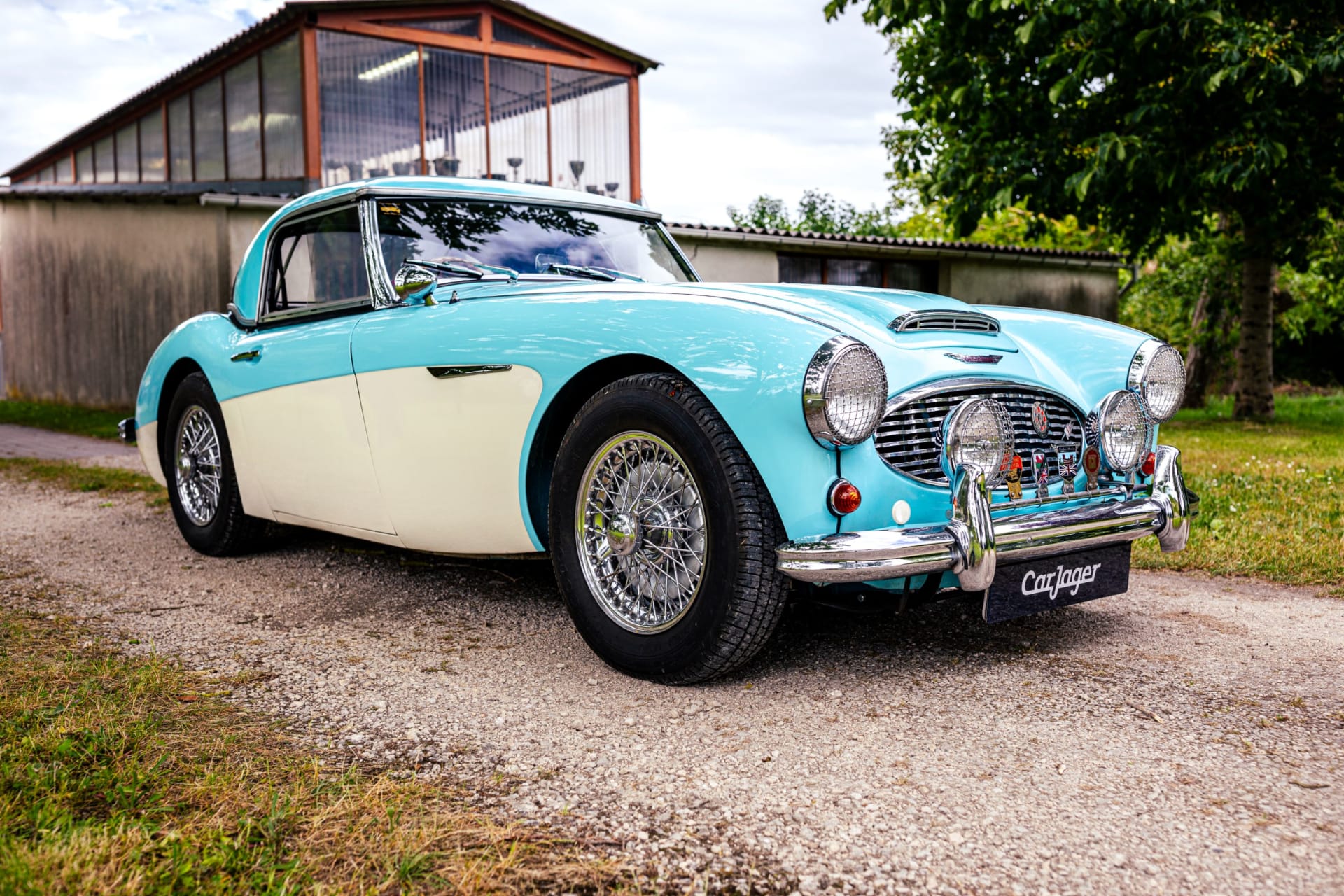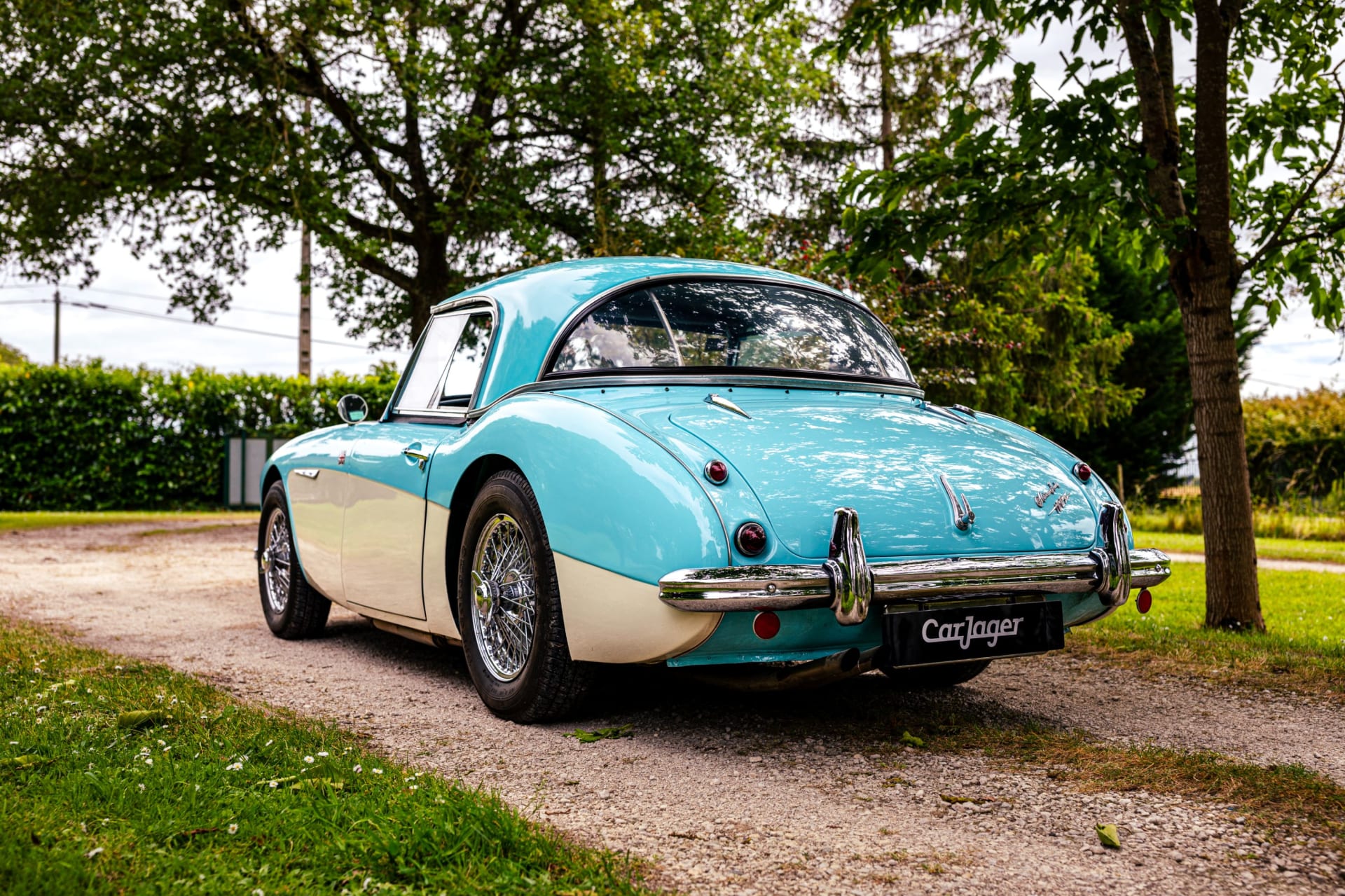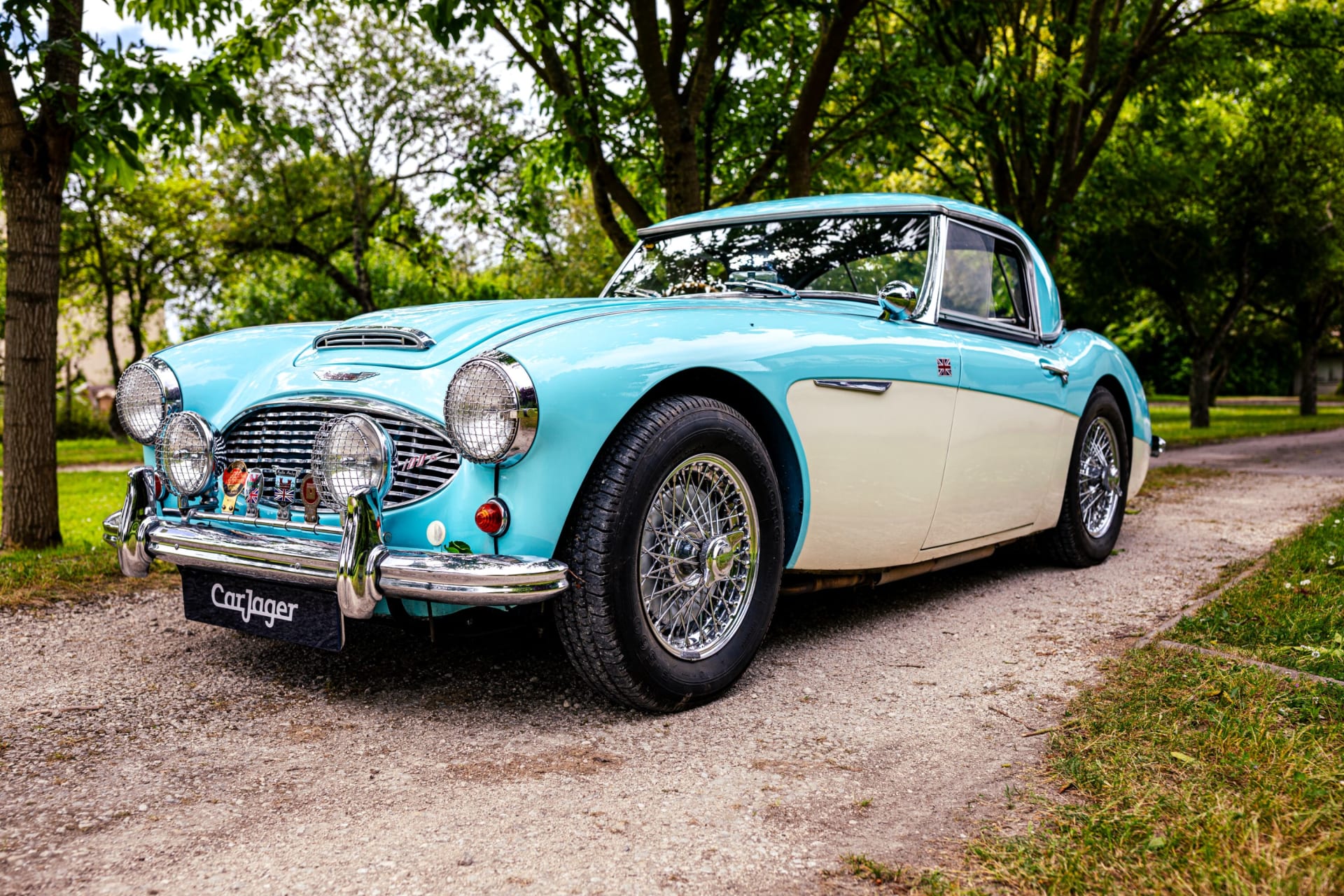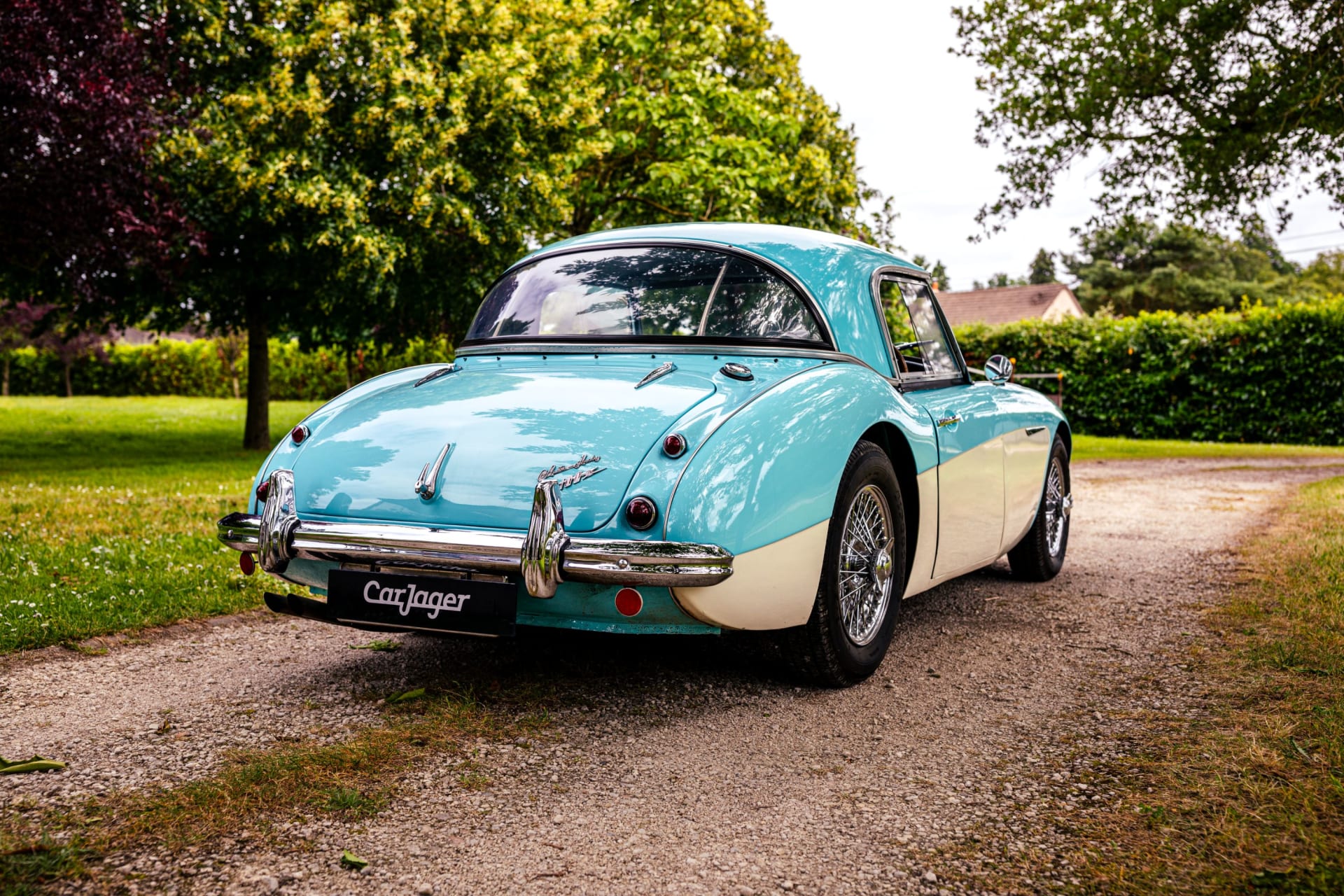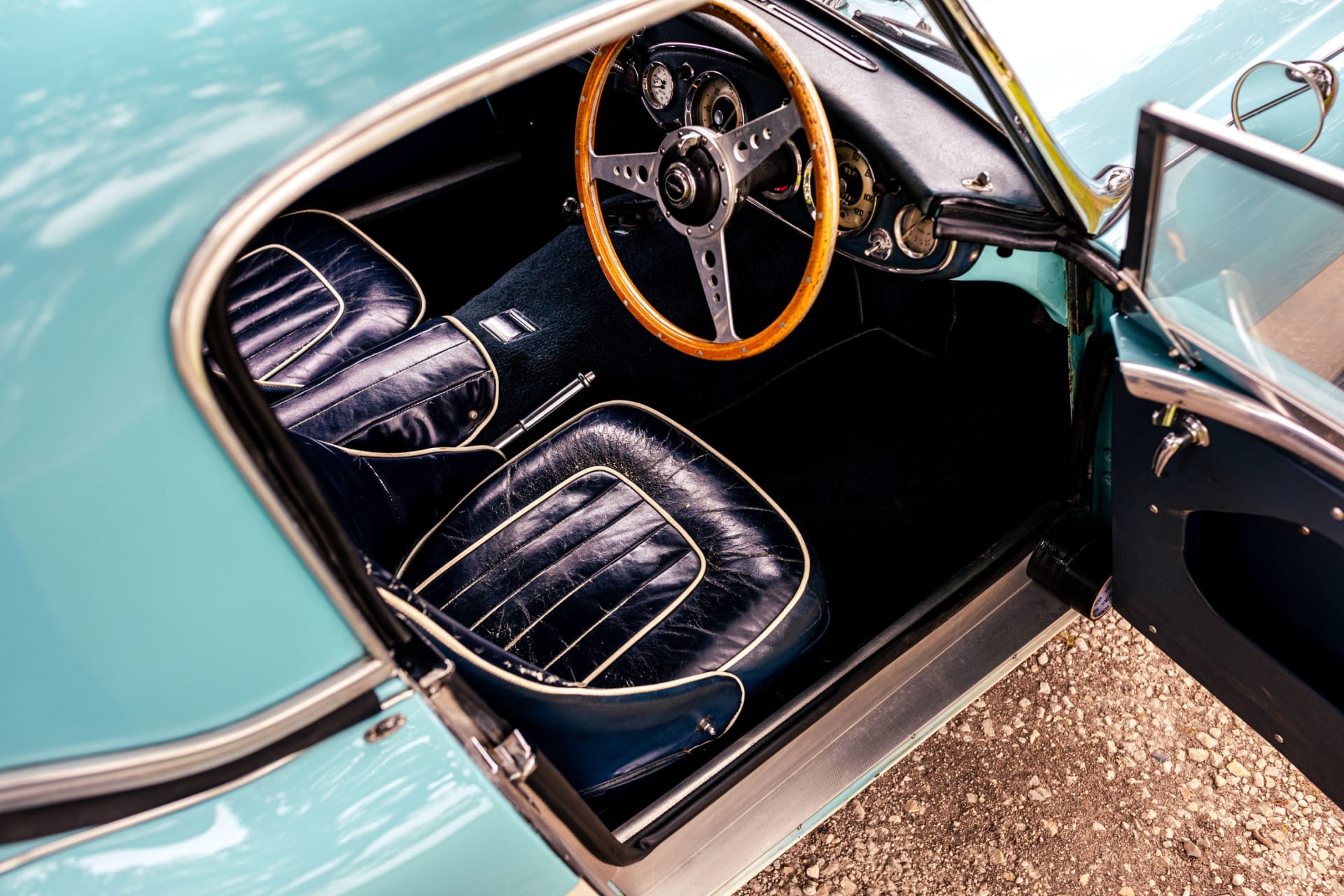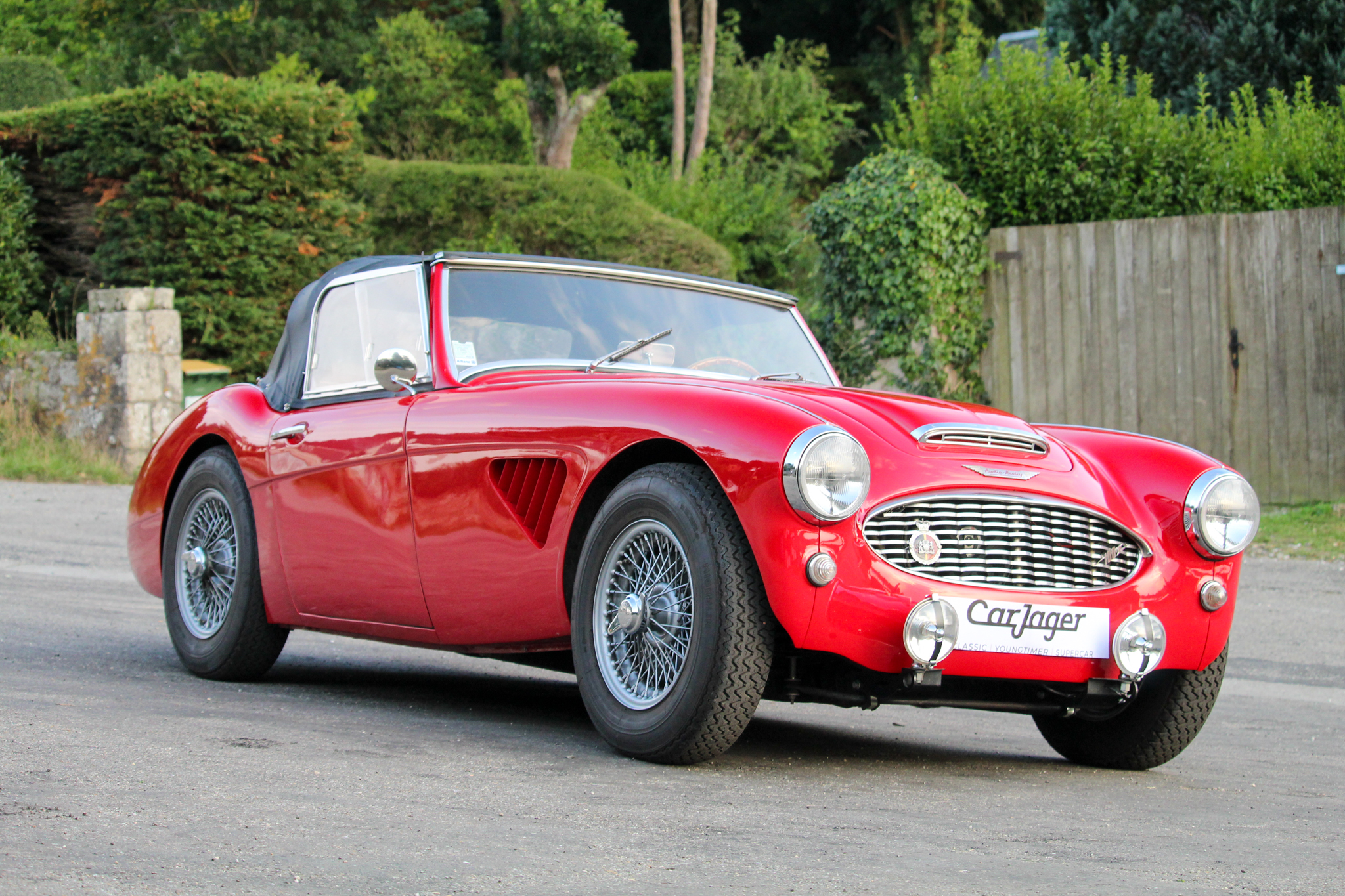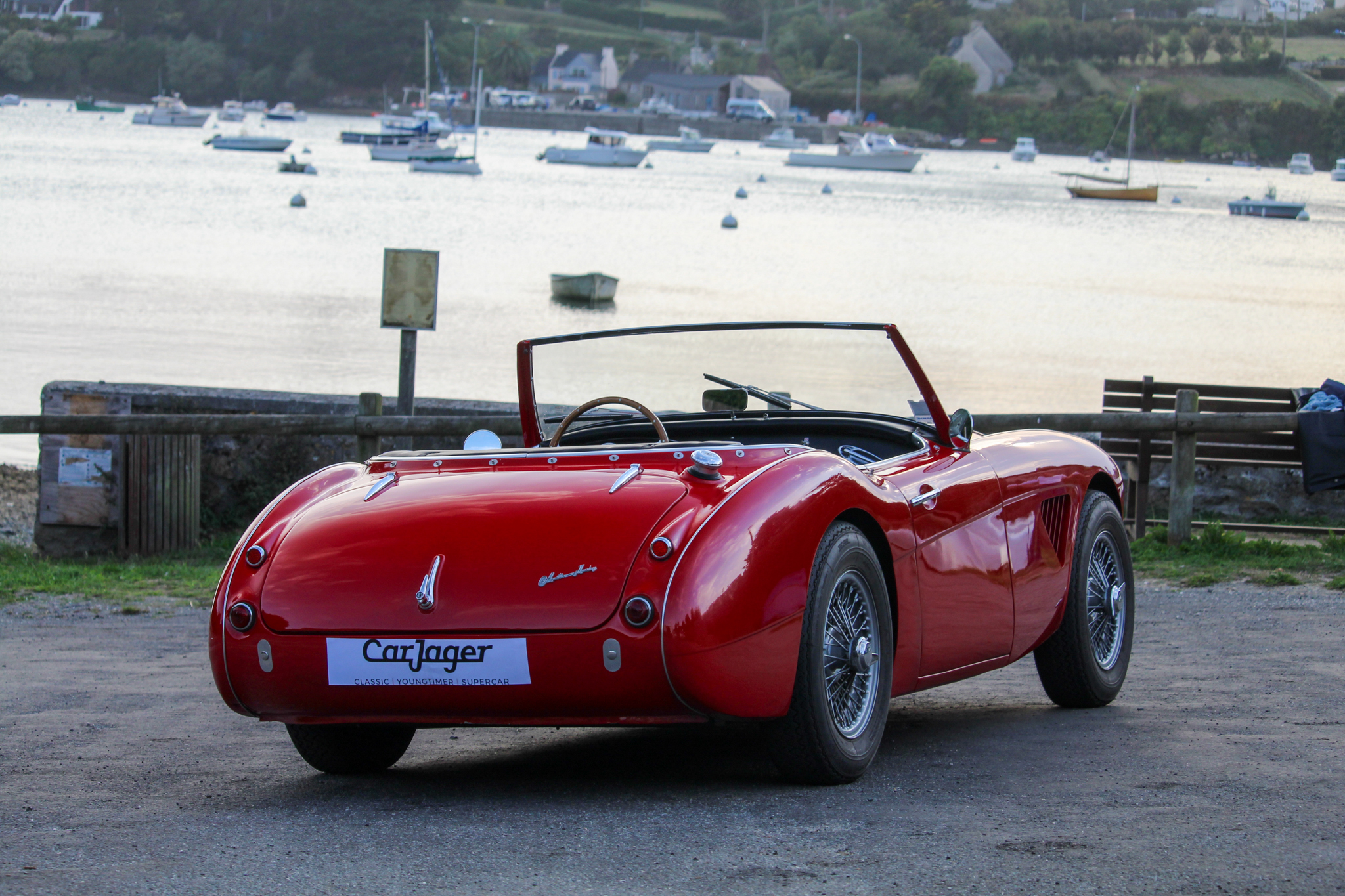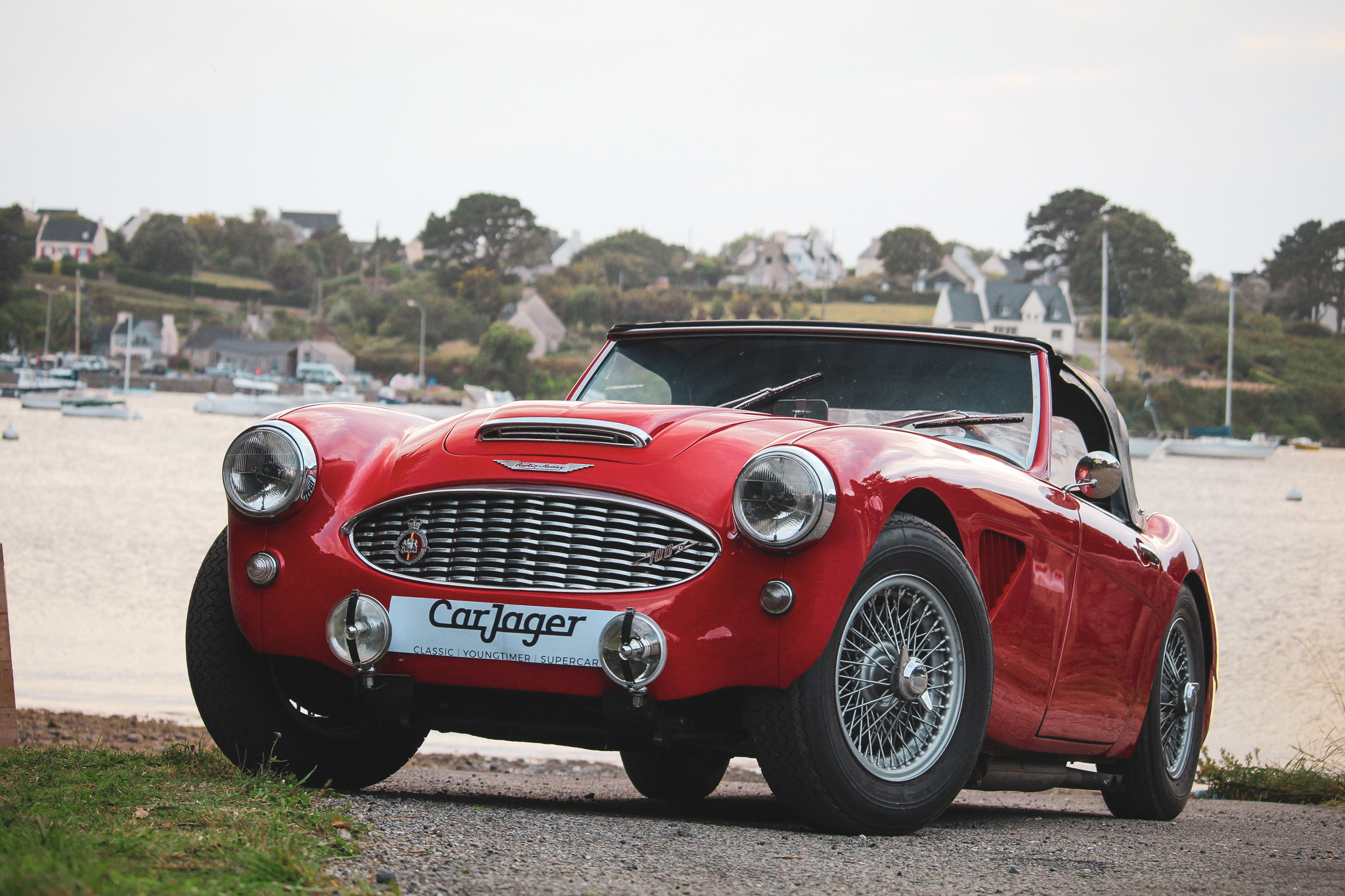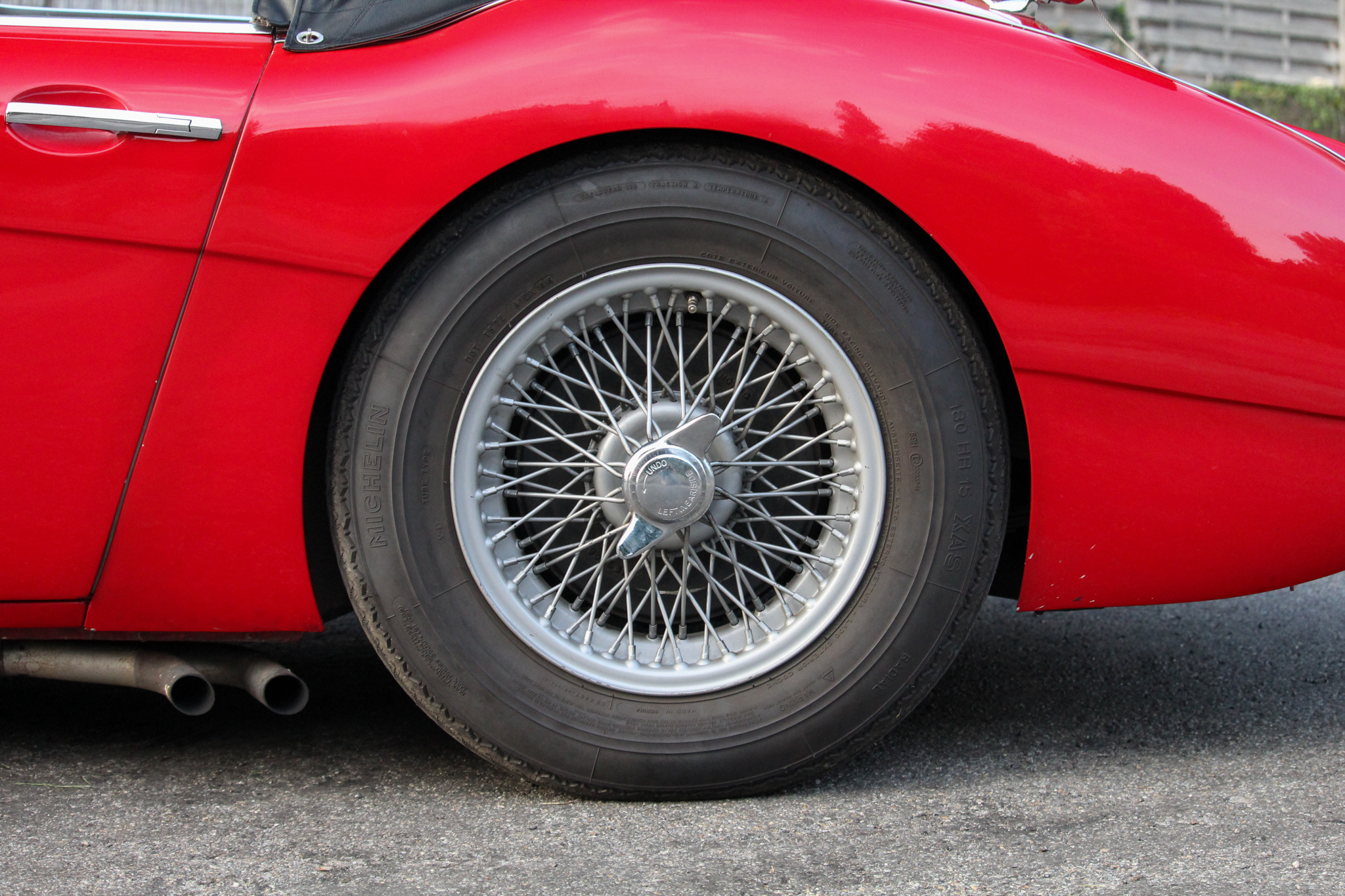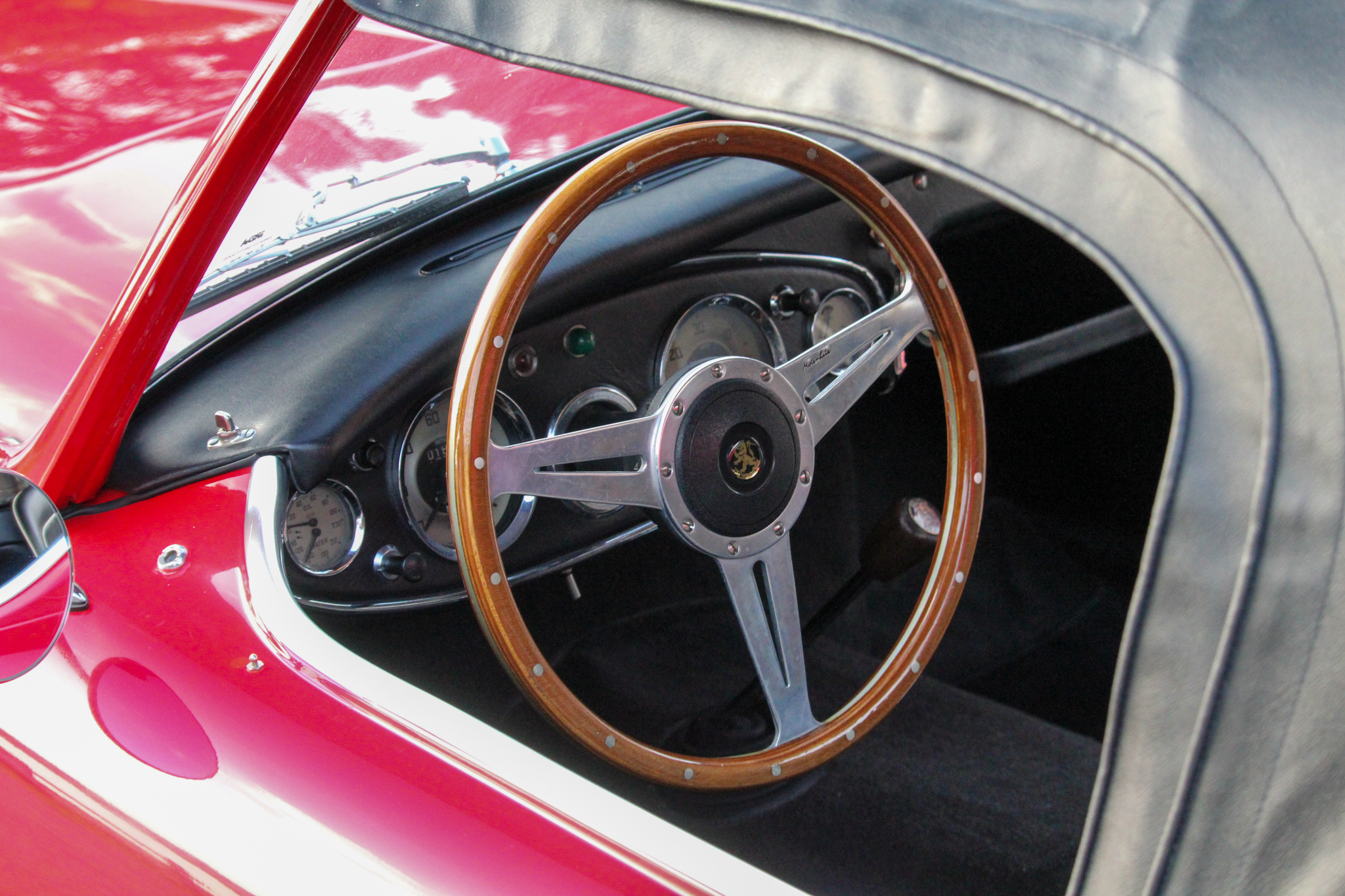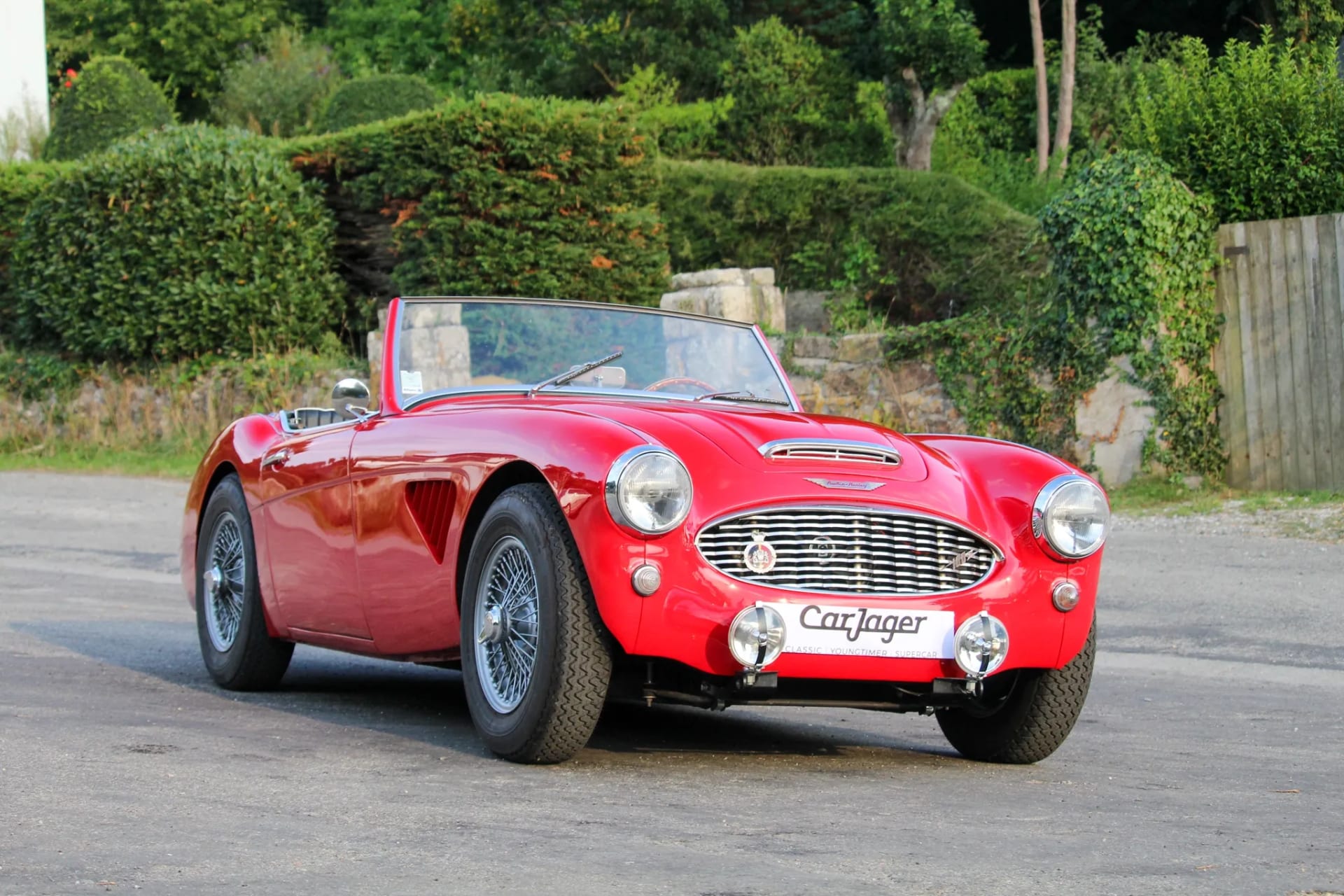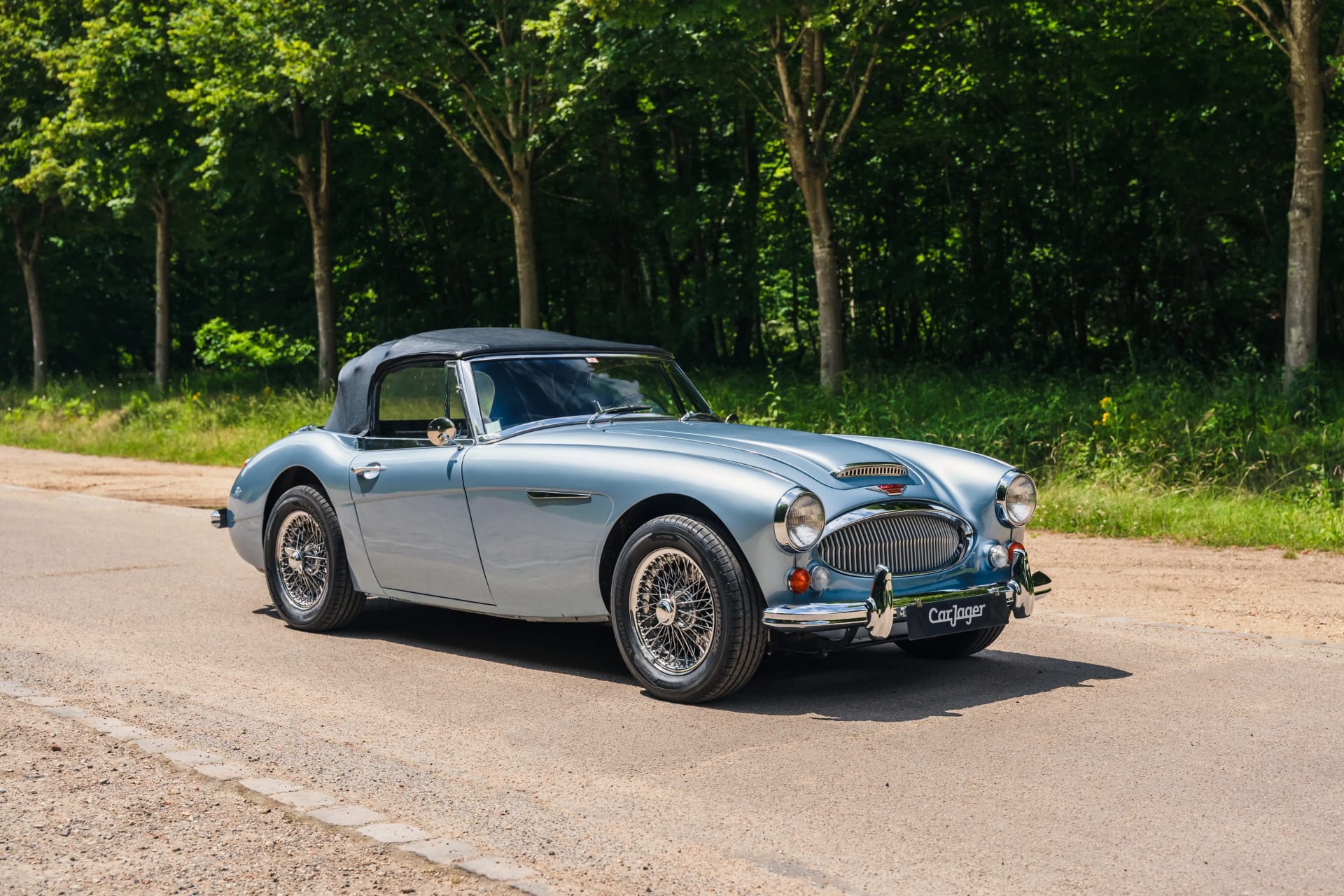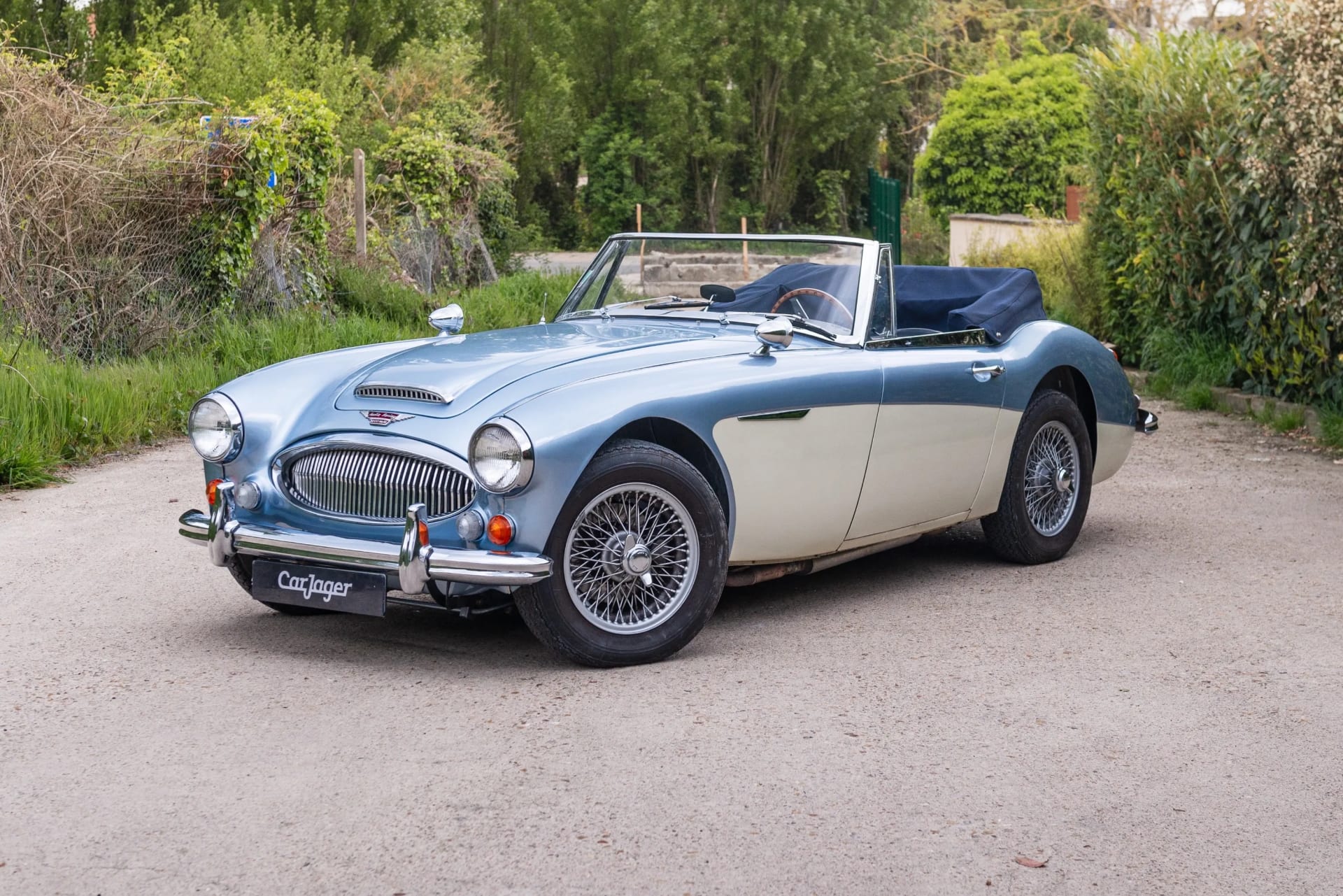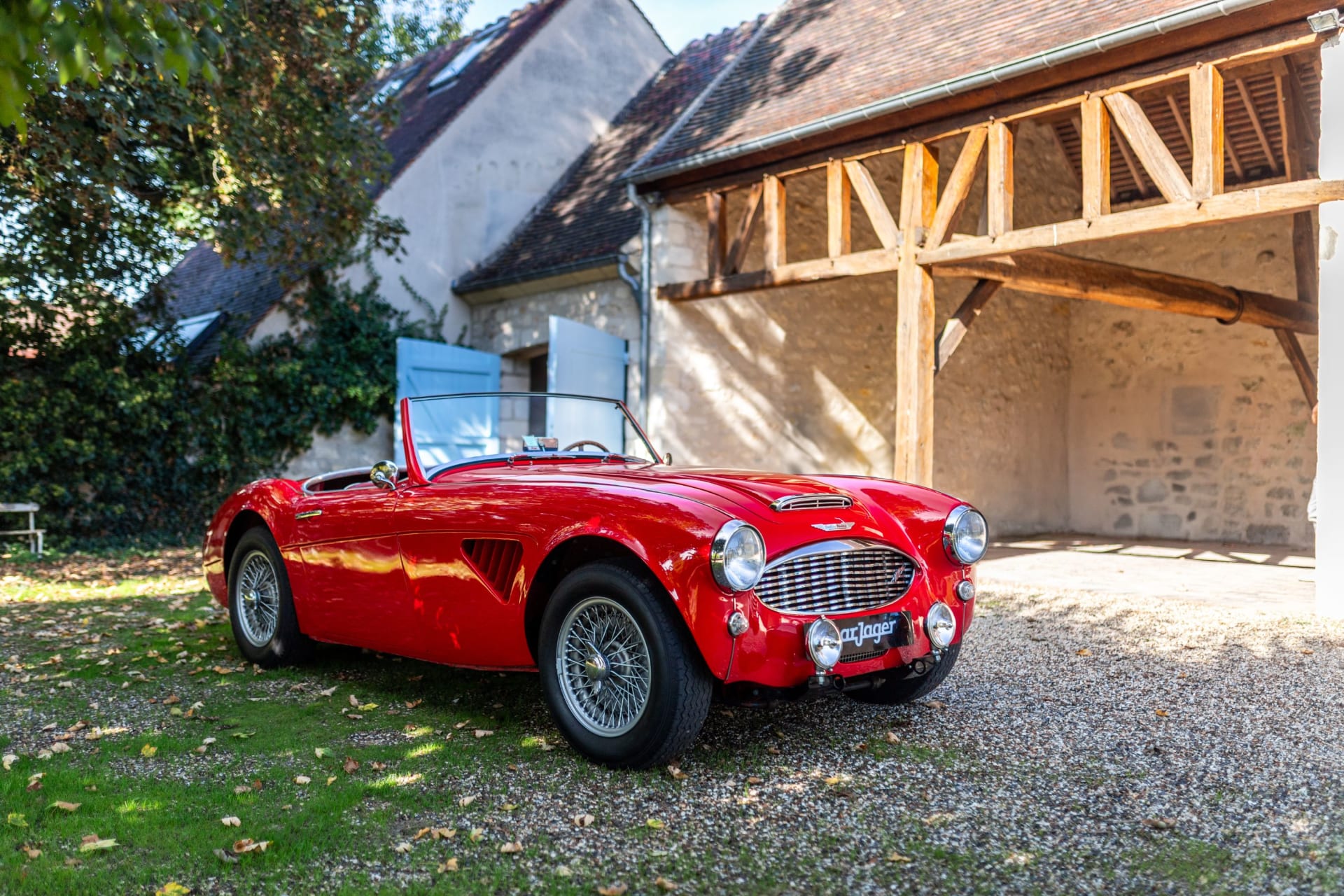
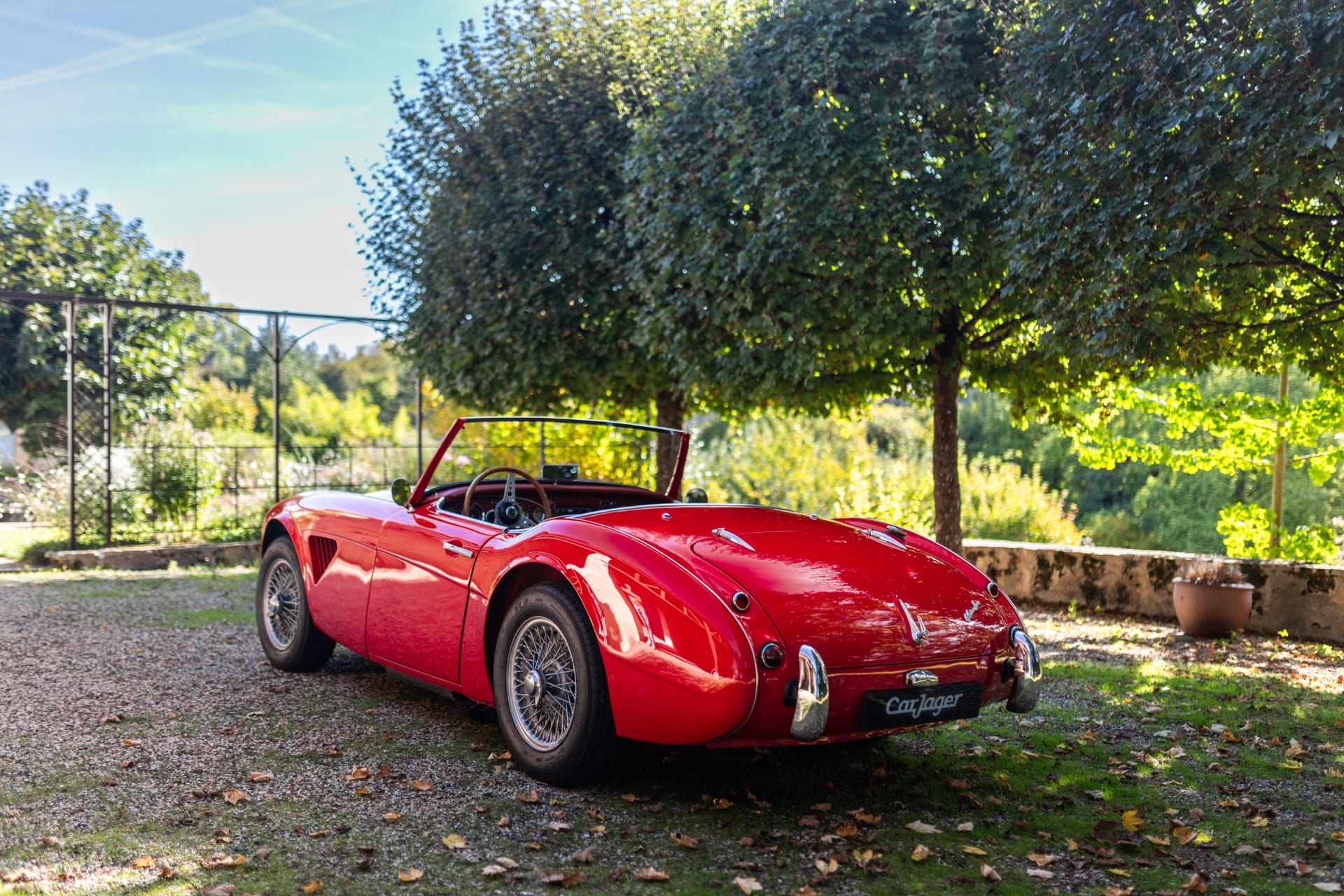
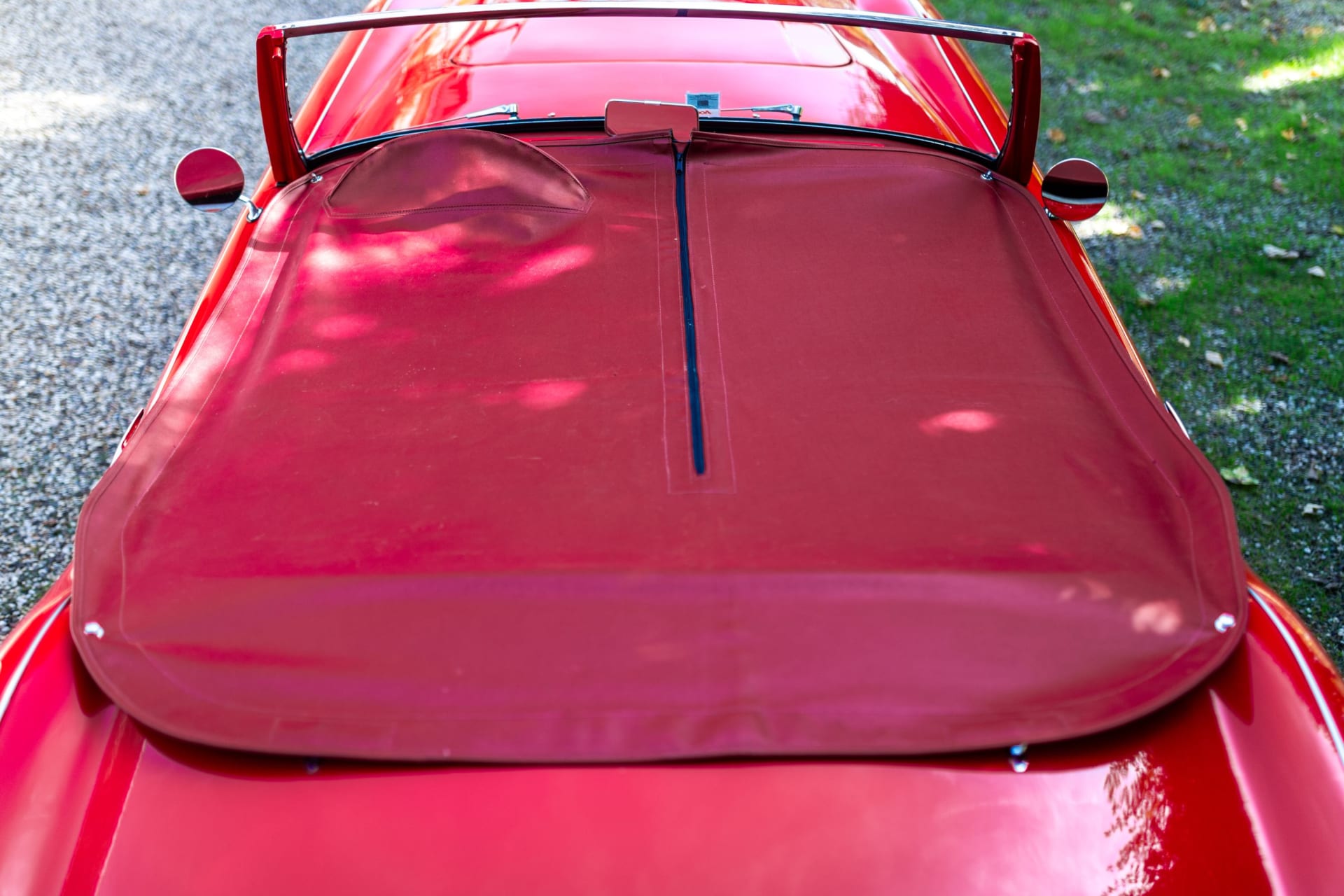
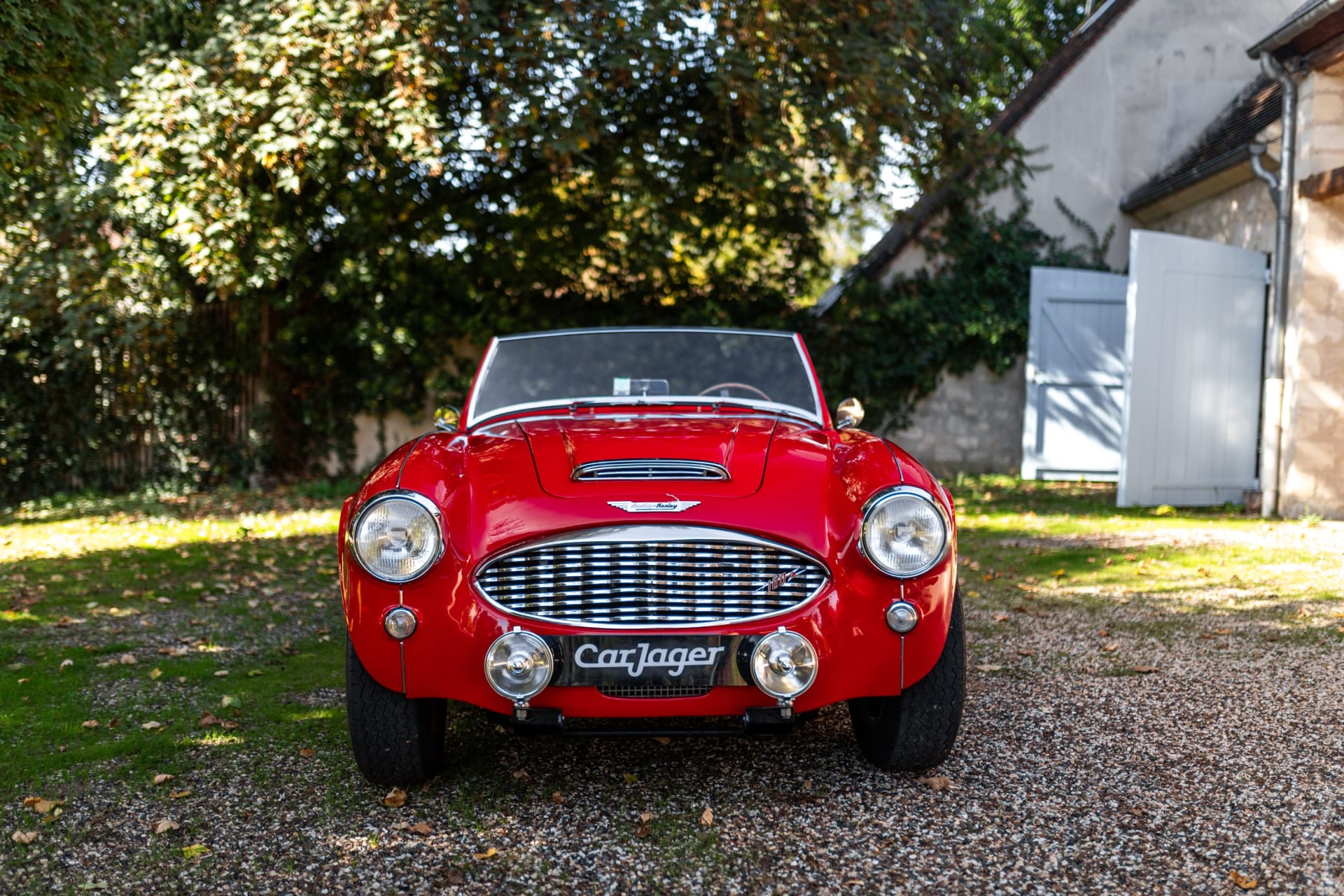
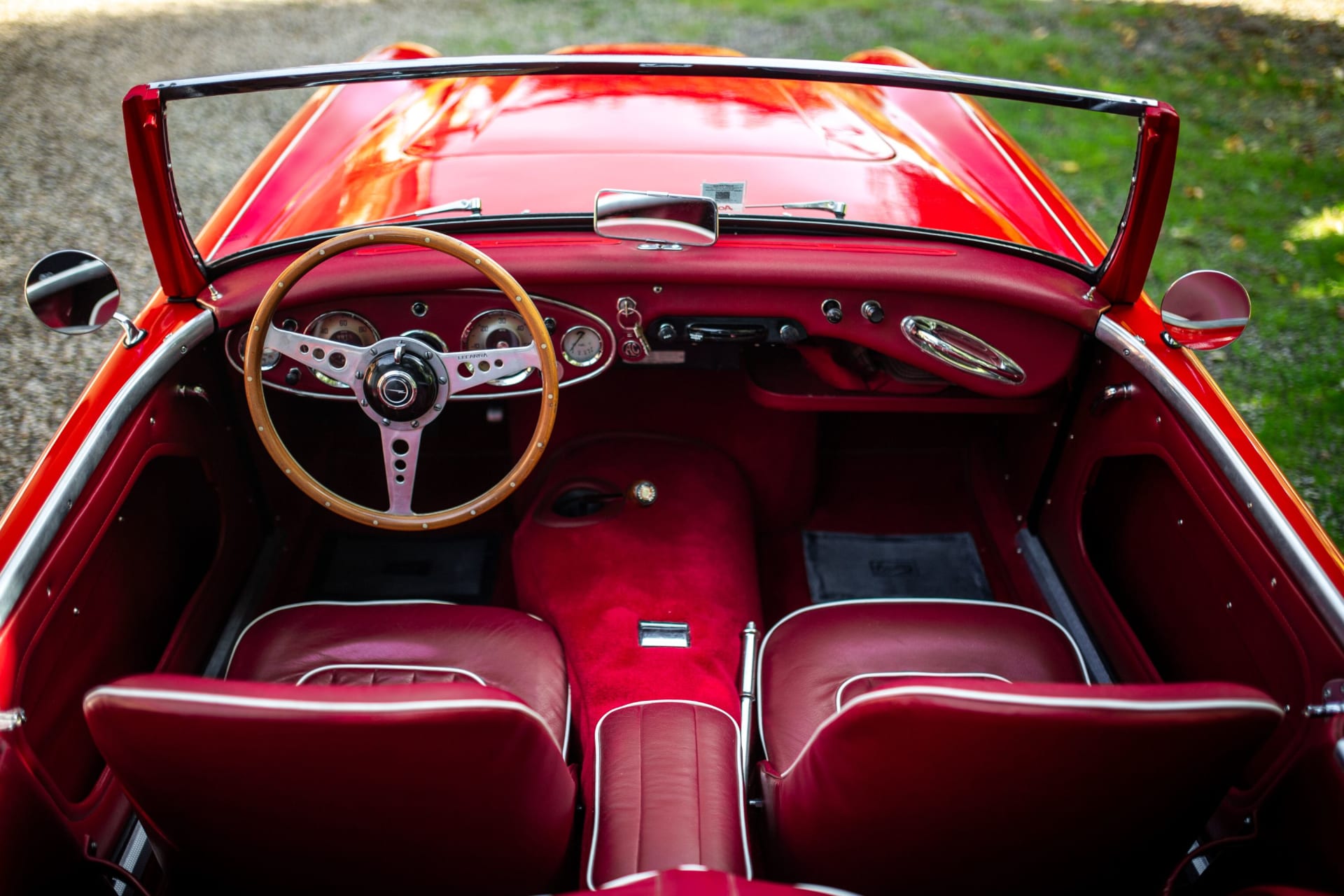
Ready to embark on a classic Austin-Healey adventure? From the legendary 100/4 to the iconic 3000, CarJager takes you there. Dive into the world of Austin-Healeys carefully selected by our Car Specialists.
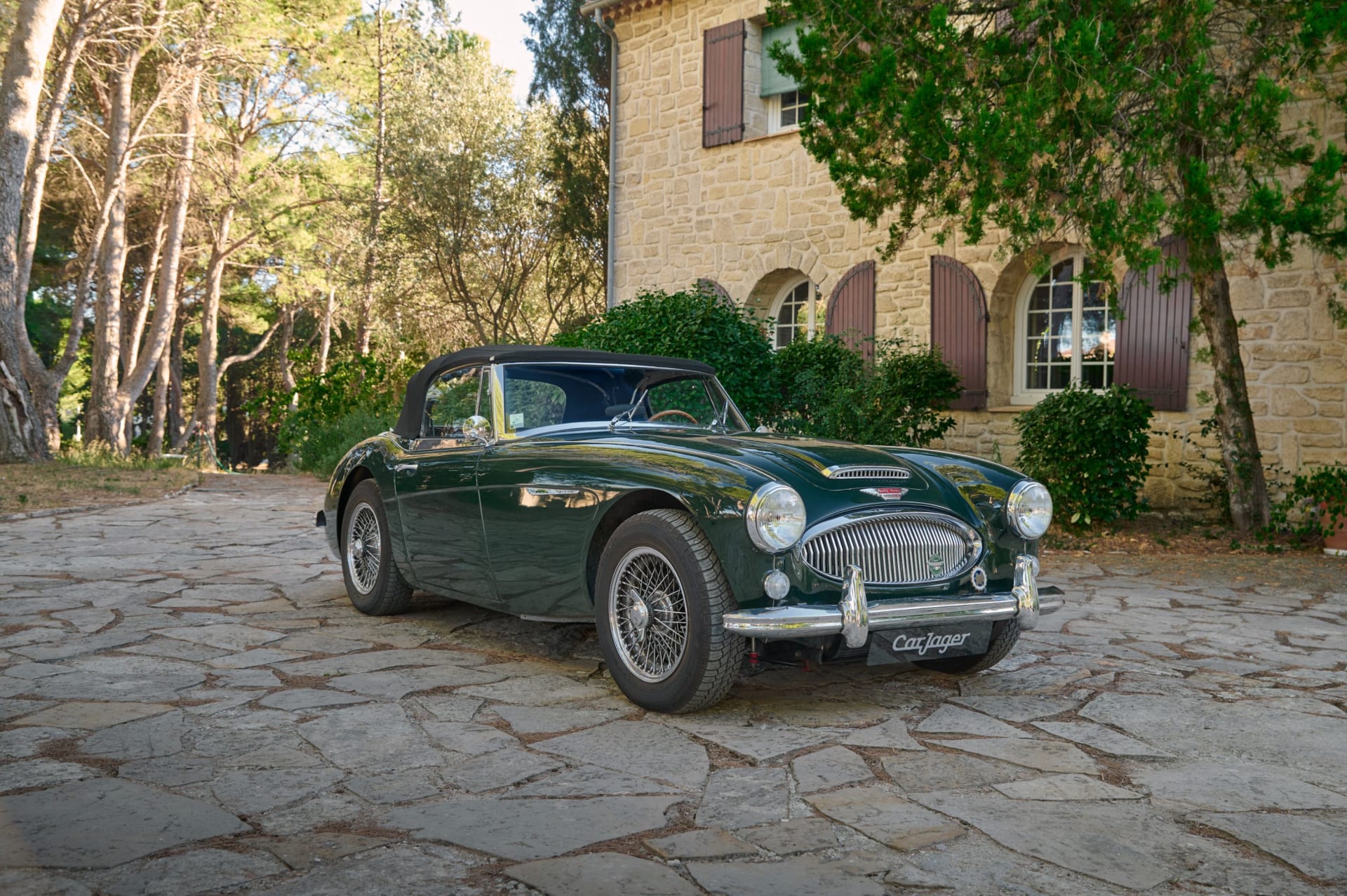
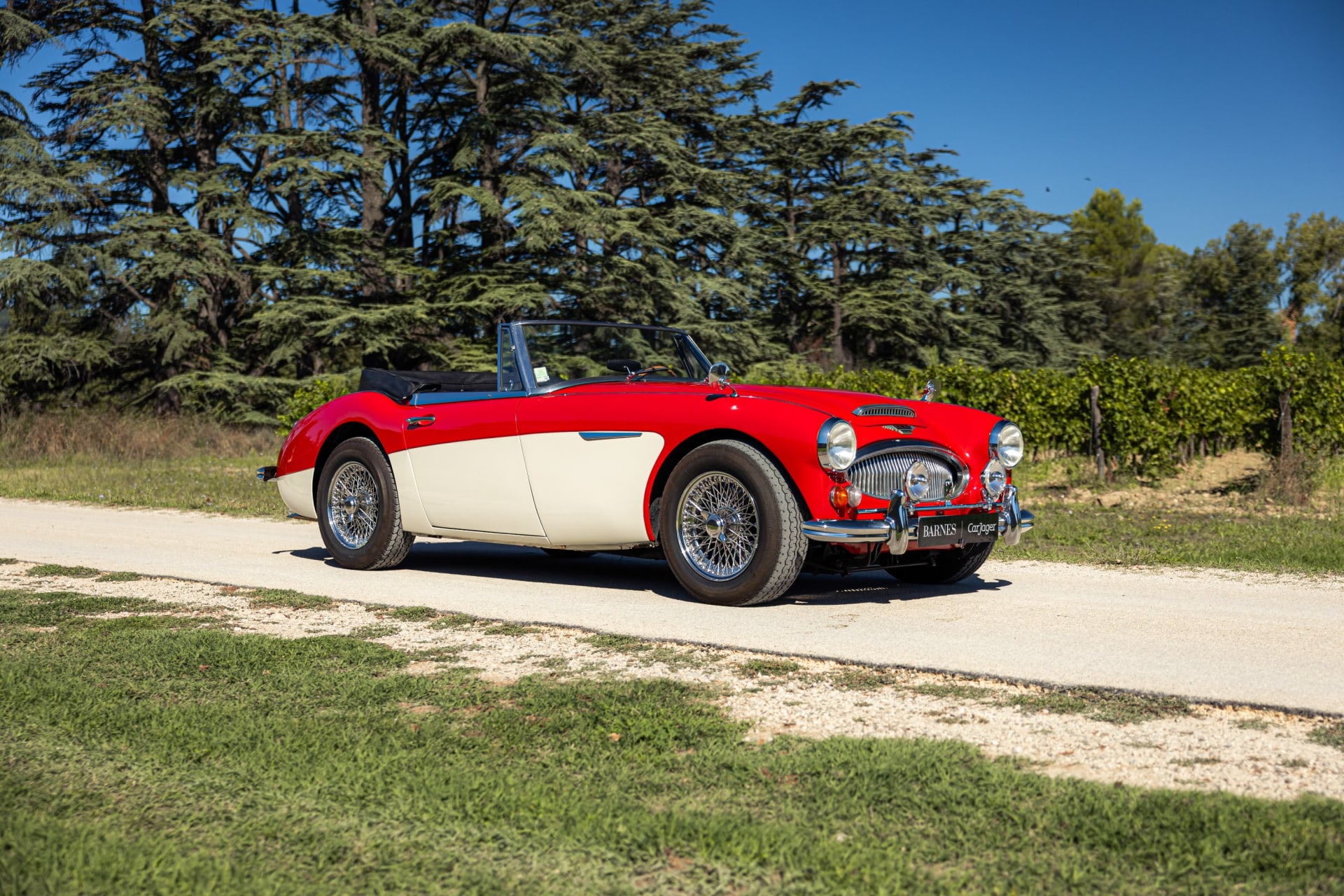
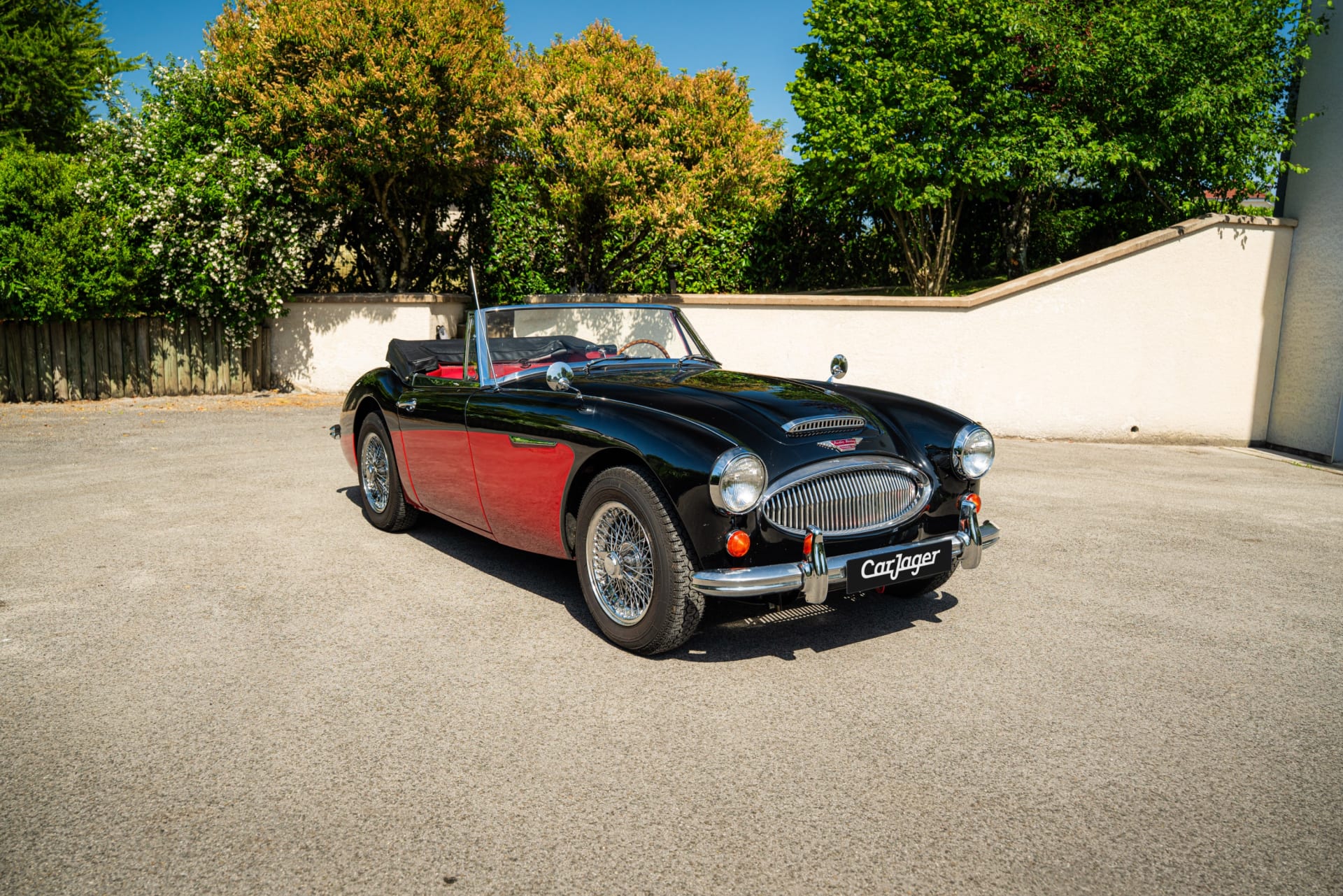
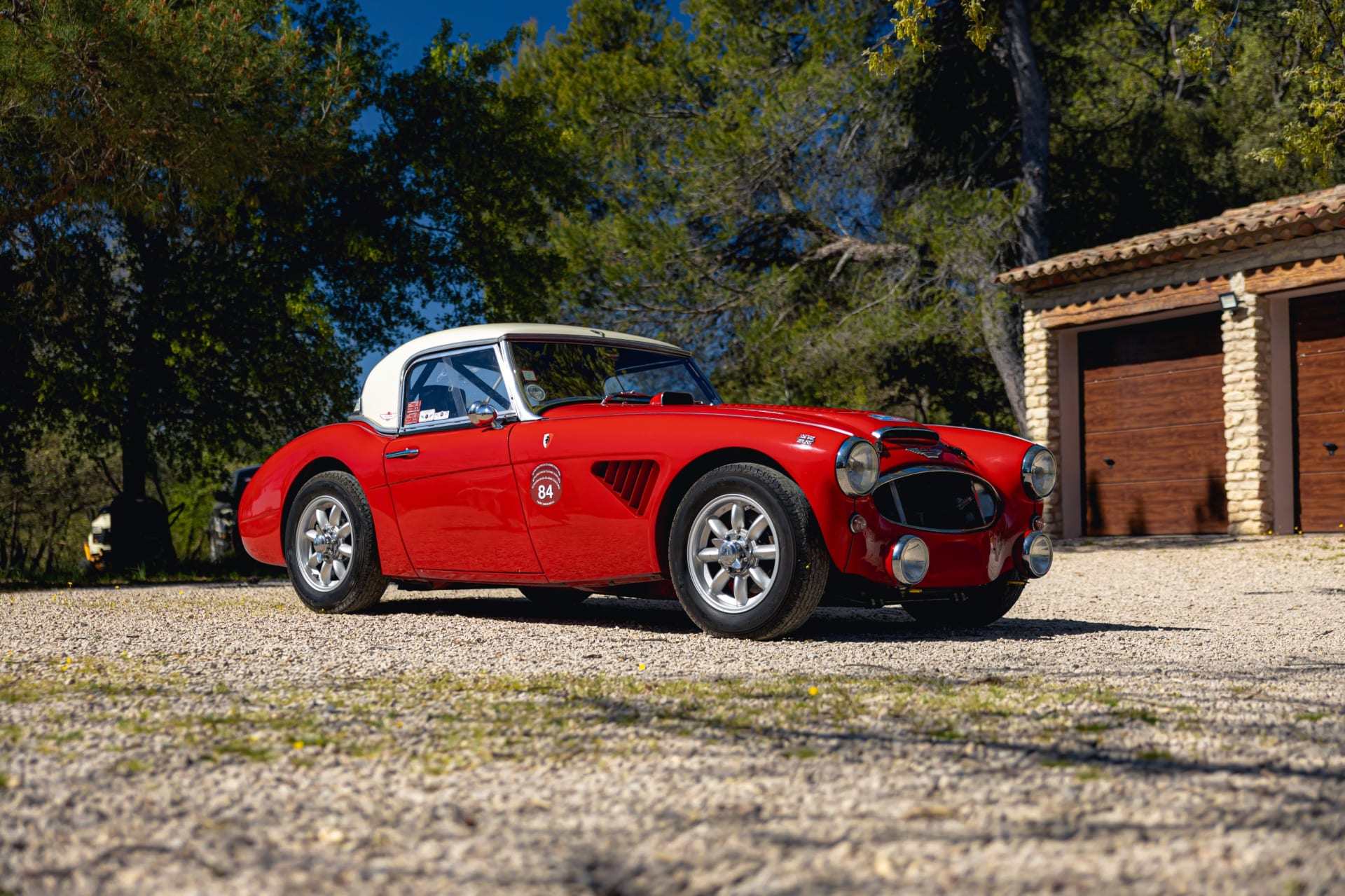
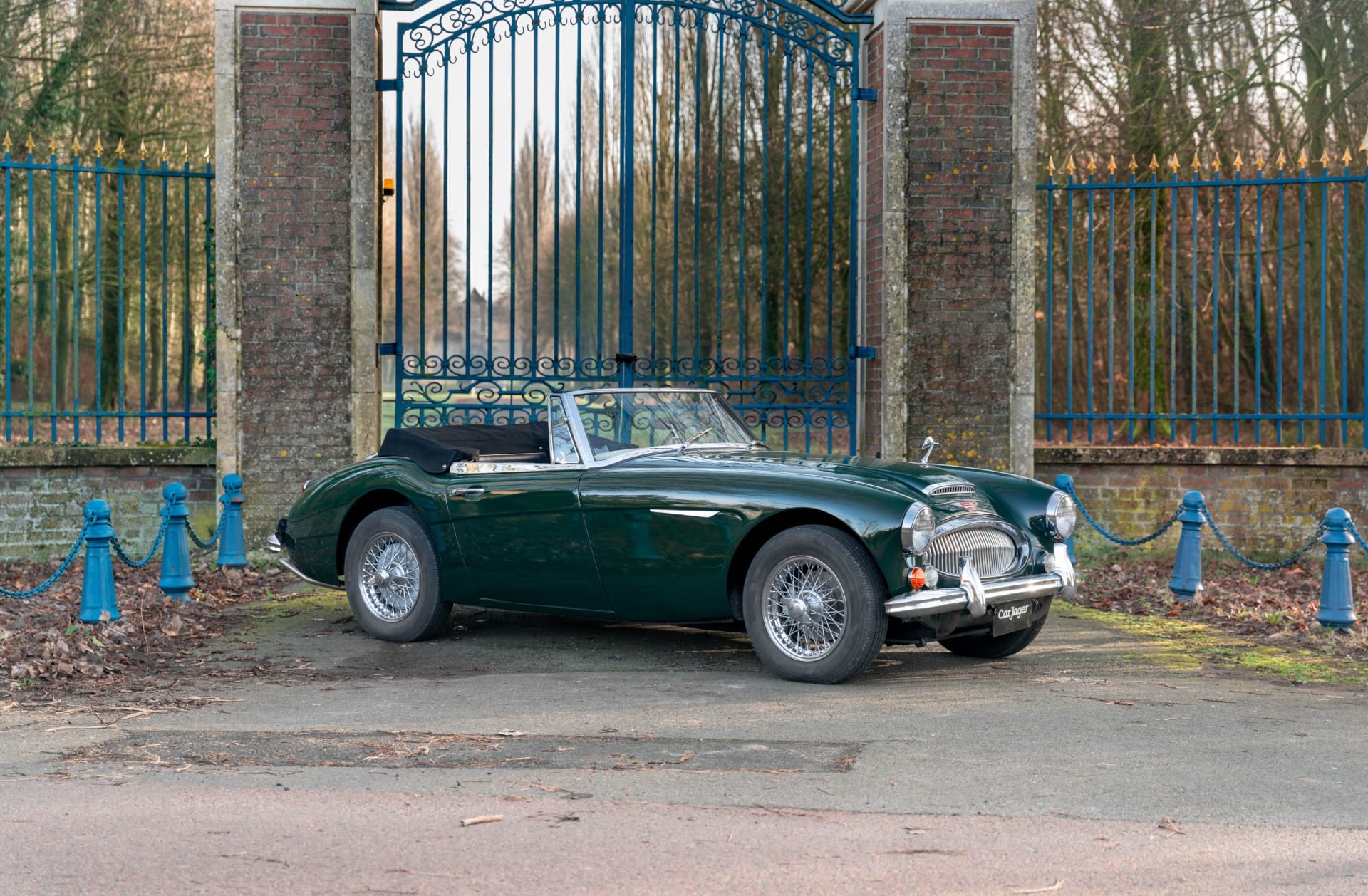
Discover our personalized search service and access our network of 32,000 enthusiasts. Start your search now, your next adventure begins here.
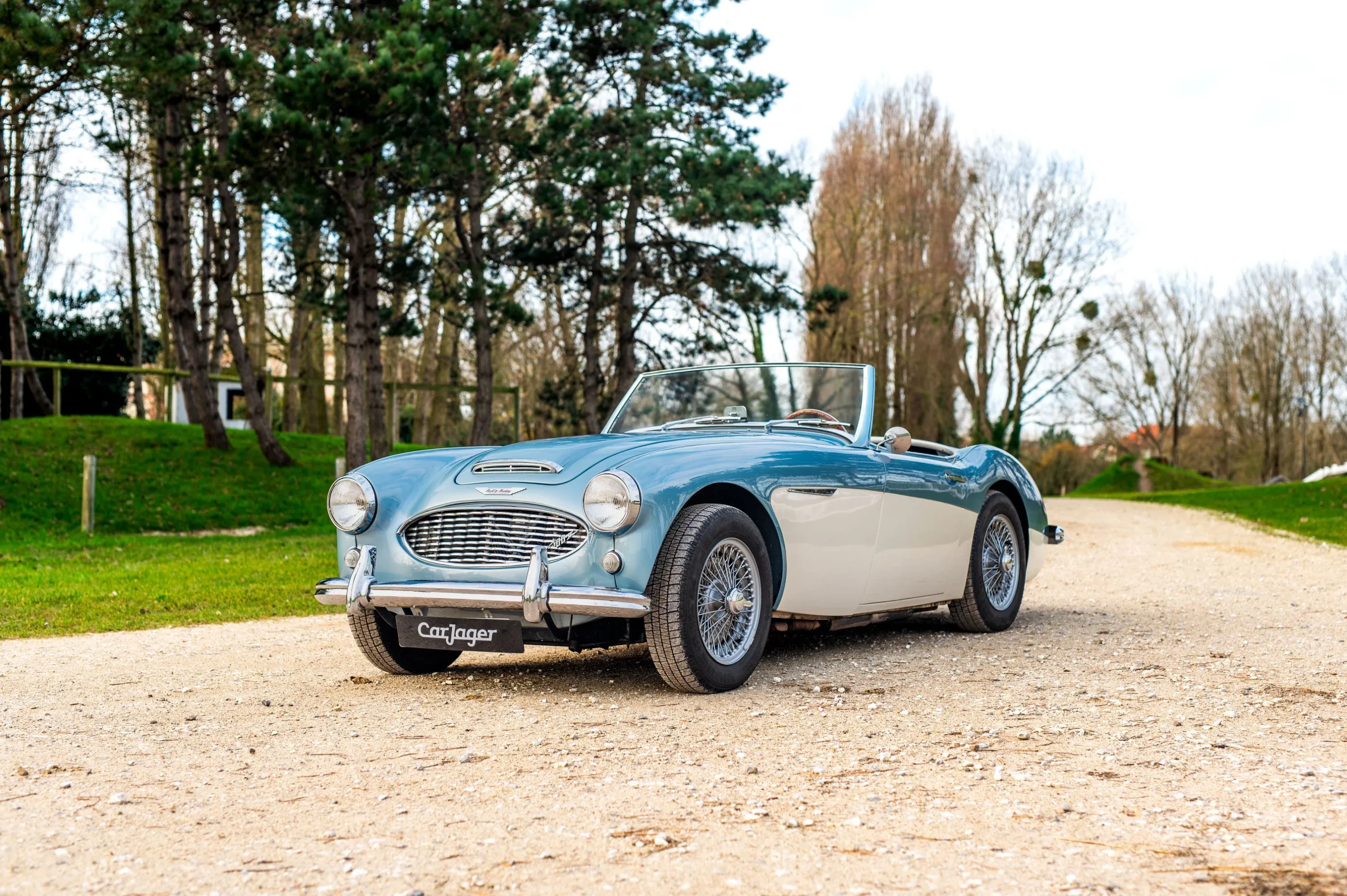
Unveiled in 1953, the Austin-Healey 100 roadster was initially equipped with the 2.6-liter four-cylinder engine from the Austin A90 Atlantic. In 1956, the model evolved into the 100-6, now fitted with a six-cylinder engine. With a wheelbase extended by five centimeters, the car was available in both two-seater and 2+2 versions.

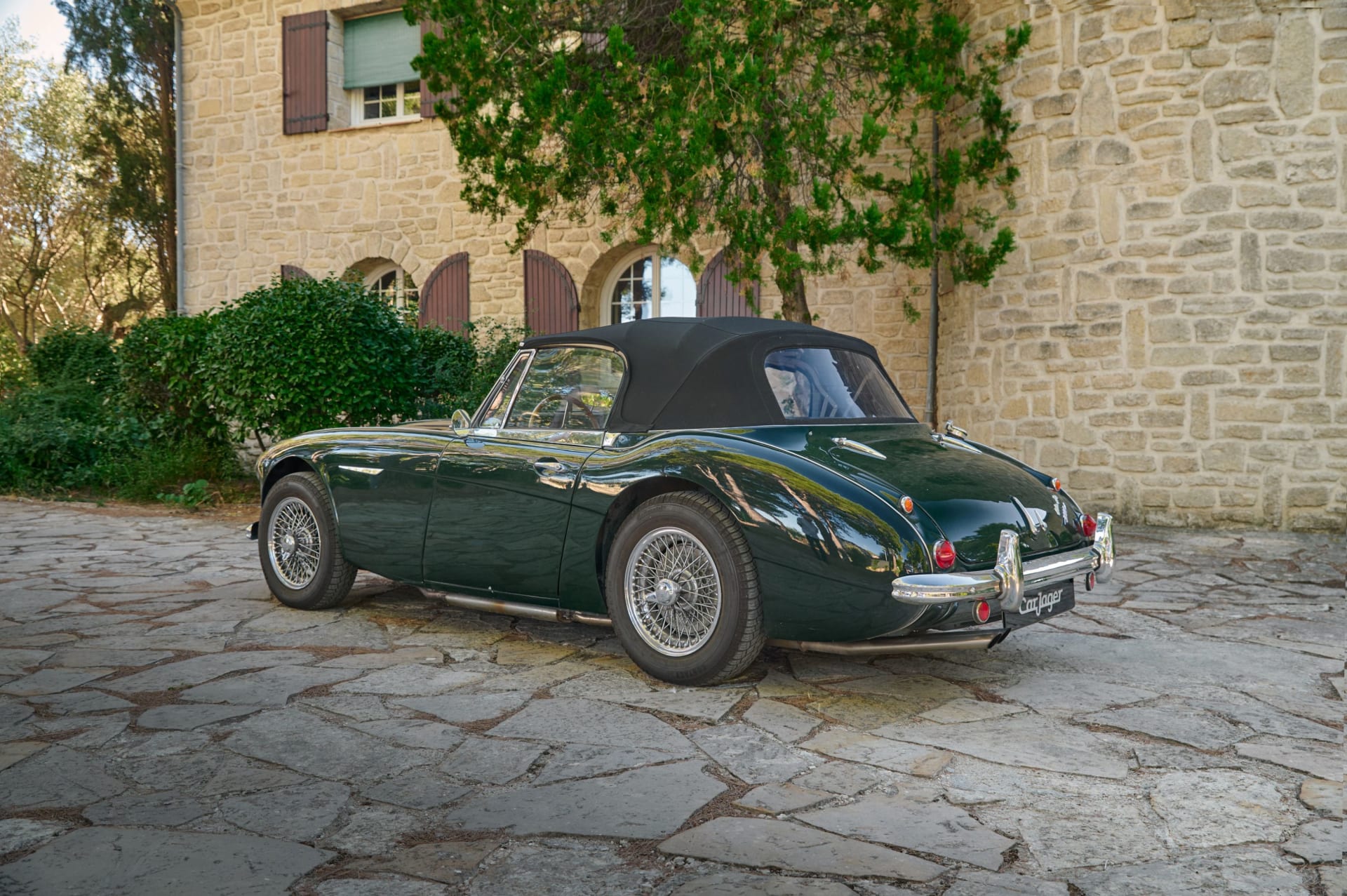
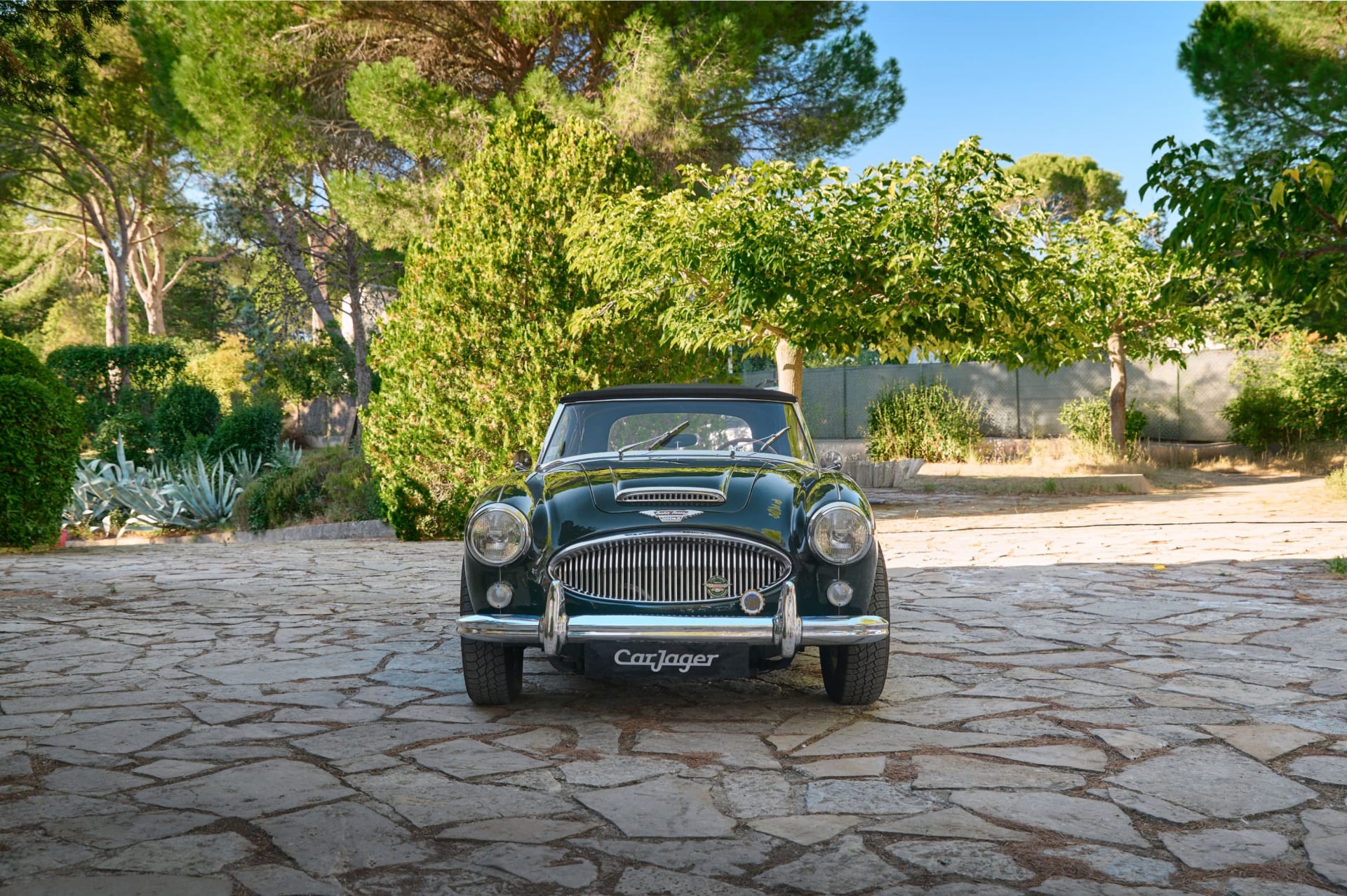
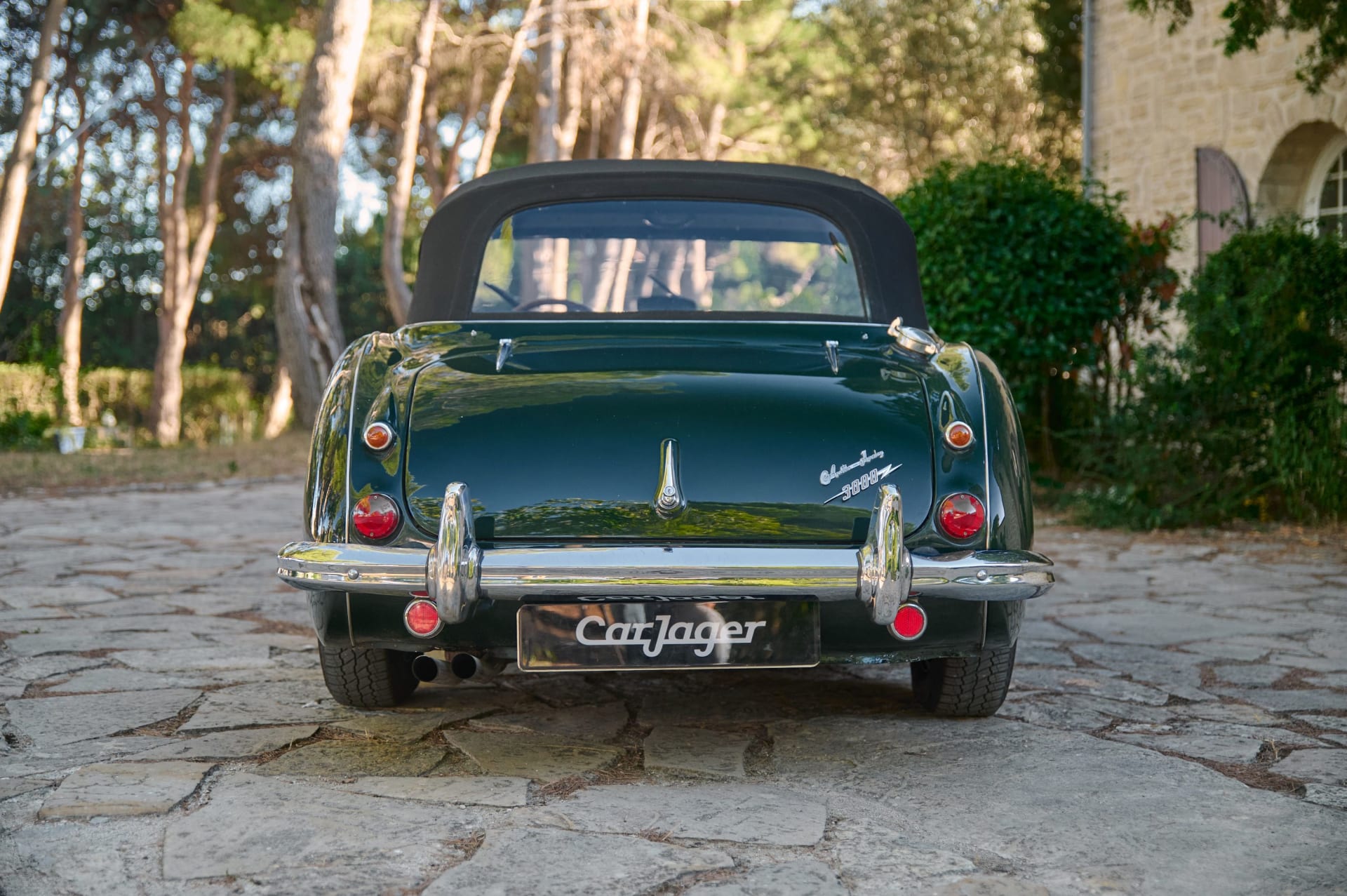
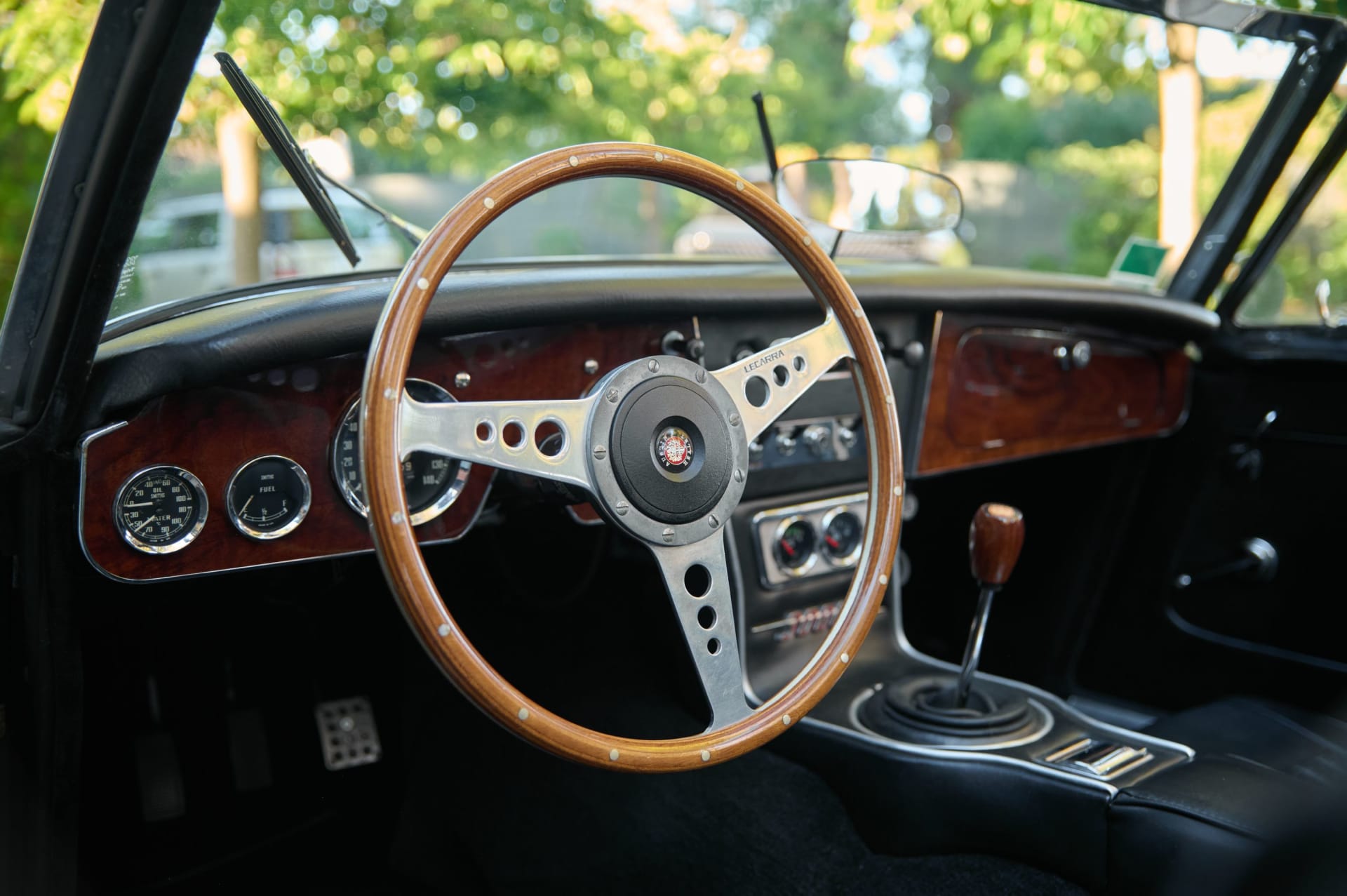
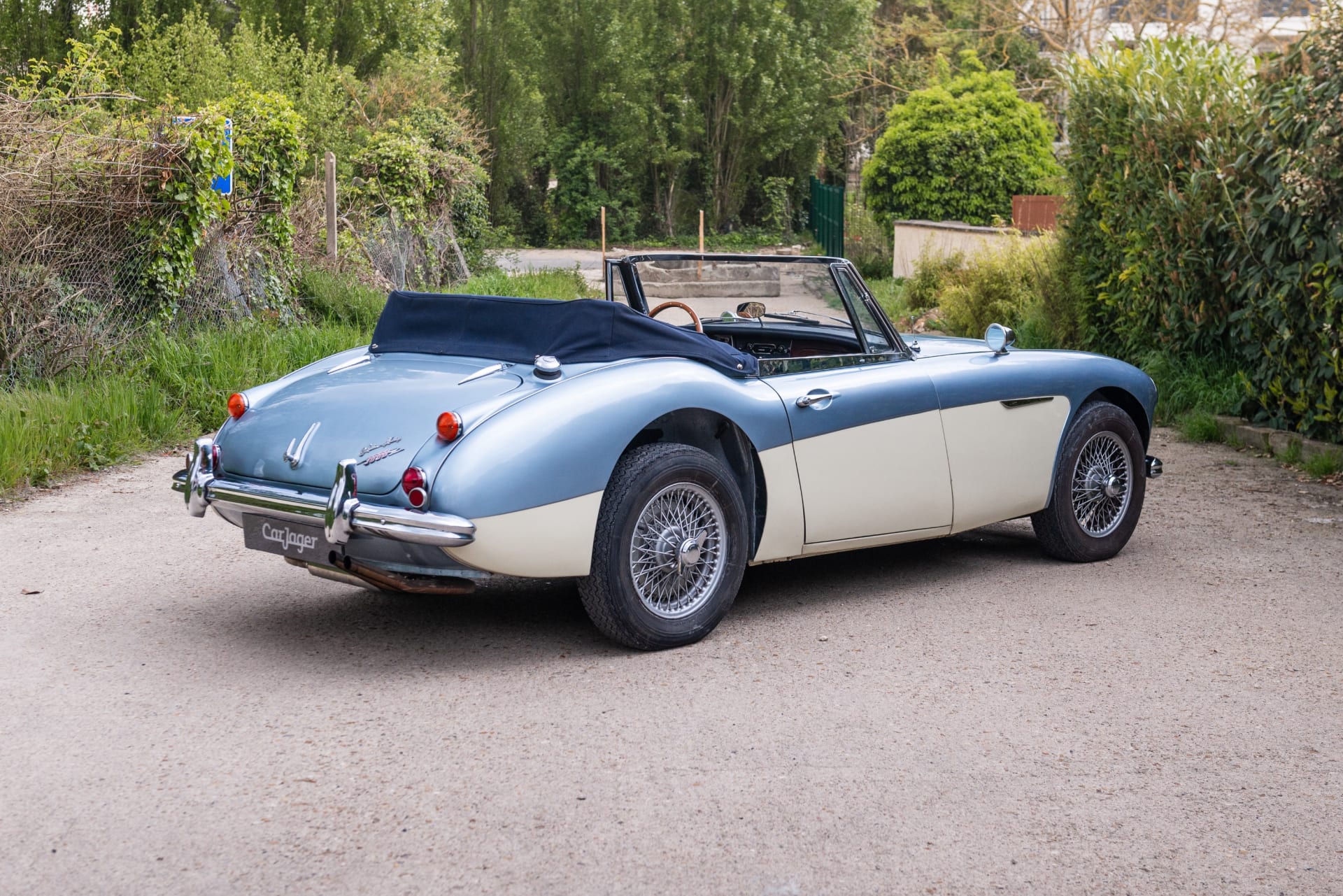
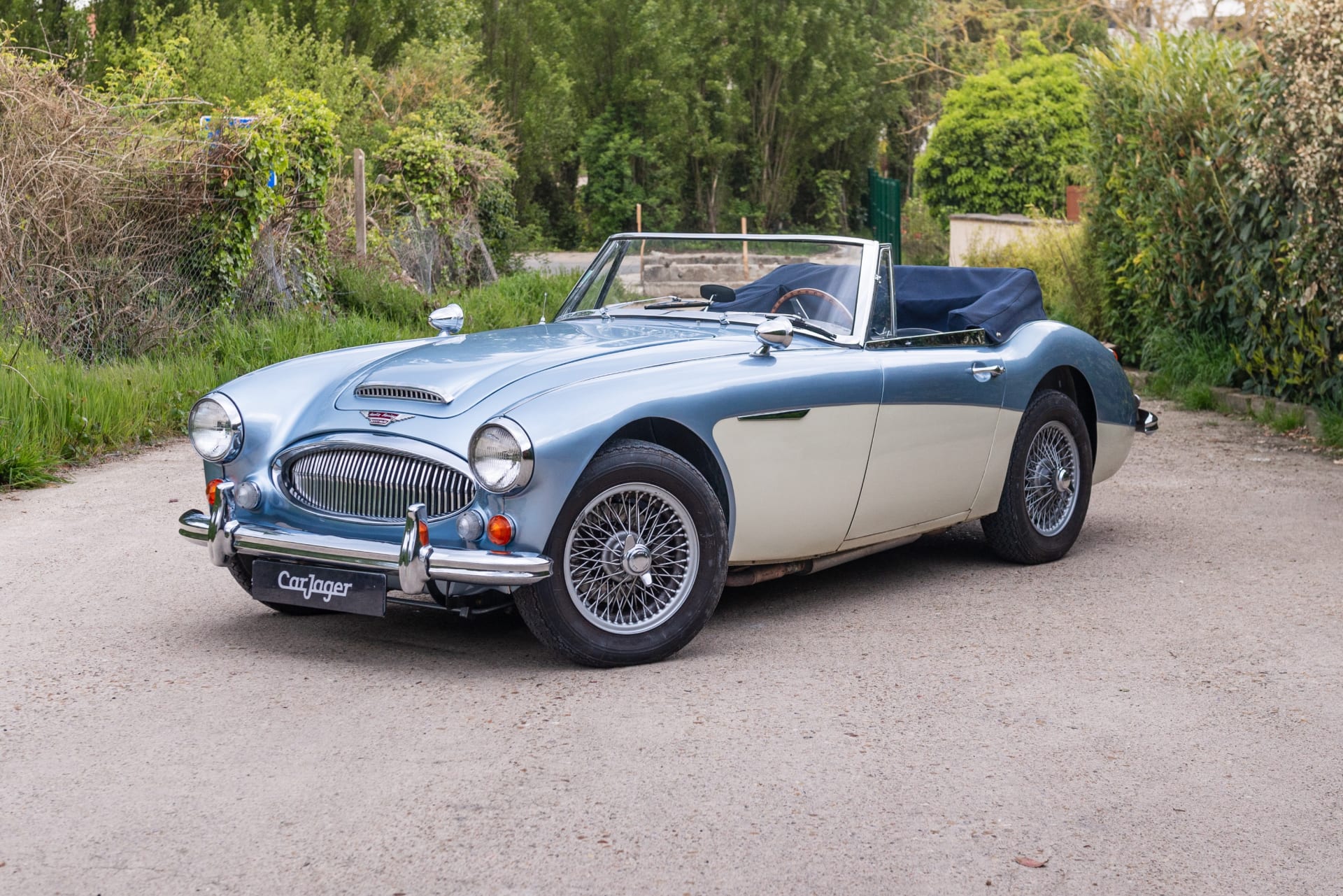
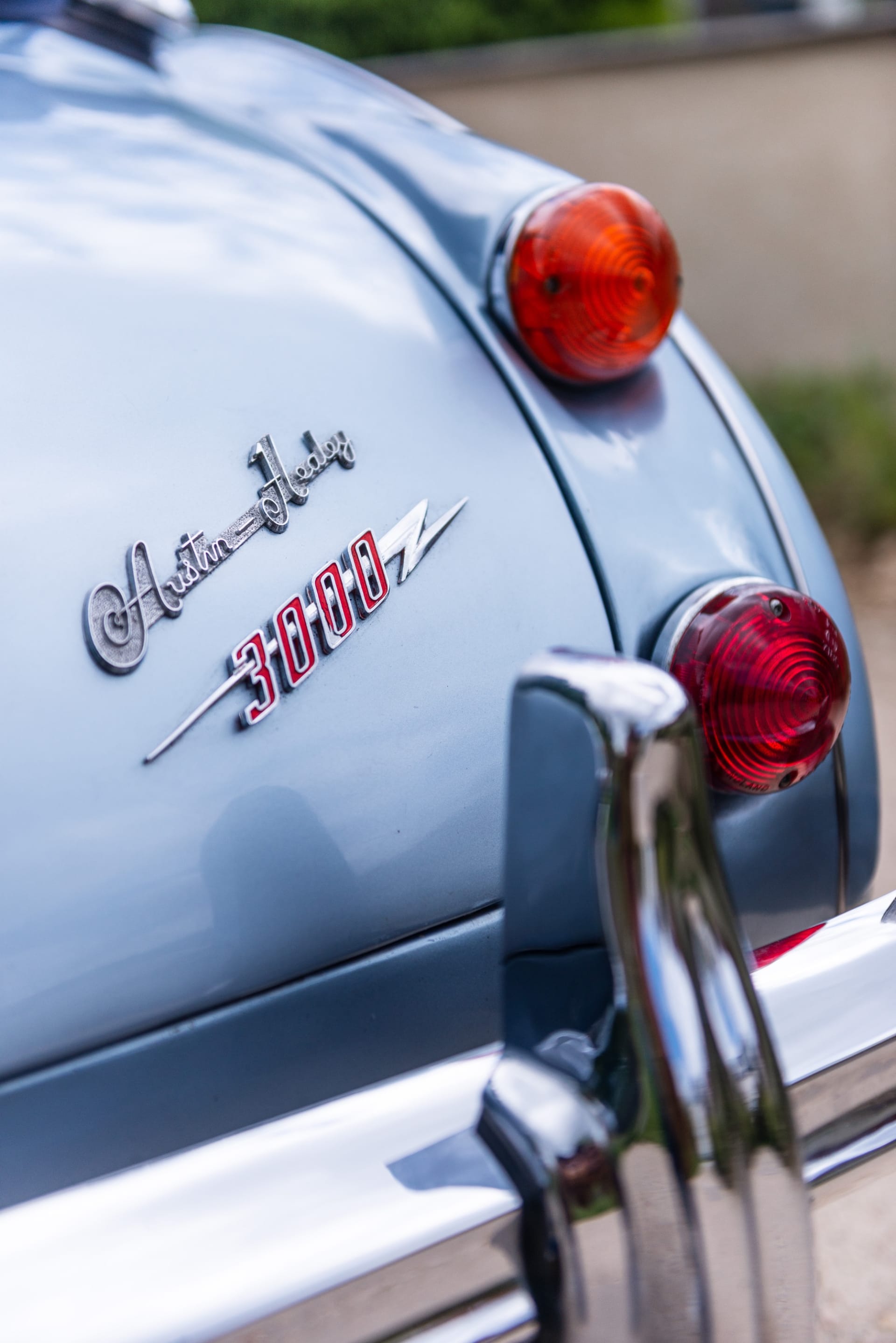
In 1959, the Austin-Healey 3000 replaced the 100-6. The car featured a more powerful engine and front disc brakes. Production of the 3000 continued until 1967.
Austin-Healey 100 M — modèle de la marque Austin-Healey.
Austin-Healey 100 Six — modèle de la marque Austin-Healey.
Austin-Healey 100-4 — modèle de la marque Austin-Healey.
Austin-Healey 3000 Mark Ii — modèle de la marque Austin-Healey.
Austin-Healey 3000 Mark Iii — modèle de la marque Austin-Healey.
Austin-Healey Sprite — modèle de la marque Austin-Healey.


It is not easy to sell a classic car, as buyers are always wary, which is understandable. They fear being ripped off, given the large sums of money sometimes involved. CarJager supports and advises you throughout the sale. All the administrative procedures are handled for you and payment is secure. Our team is available and responsive. It is true that all these services come at a significant cost. But that is probably the price of peace of mind and trust between buyers and sellers.
In 1952, engineer and race car driver Donald Healey reached an agreement with the management of the BMC Group, owner of Austin, leading to the creation of the Austin-Healey brand. The brand was tasked with developing sports cars using original Austin mechanical components.
The Austin-Healey lineup was built around two core models: the 100, introduced in 1953 and renamed the 3000 in 1959; and the Sprite, a small, economical roadster that debuted in 1958. As for the “Big” Healeys, the most refined version, the 3000 Mk III, is the most desirable, though not necessarily the most highly valued. On the other hand, it is the early Sprites, nicknamed “Frogeye” (meaning “frog eyes”), that are the most sought-after today.
The partnership agreement between BMC and Healey was set to last for twenty years. The end of production of the last Austin-Healeys (renamed simply Austin starting in 1971) coincided with the brand’s demise in 1972.
Within the "Big" Healey family, the early 100 models with four-cylinder engines have seen their values rise sharply in recent years. You can expect to pay at least €70,000 for a 100 BN1, and up to €450,000 for a 100 S. Prices are significantly more affordable for the smaller Sprites, ranging from €8,000 to €20,000.
The two main families of Austin-Healey models (the "Big" and the Sprite) share certain essential checks, particularly regarding corrosion. However, each series has its own specific points to watch out for.
By following all these precautions, you can protect yourself against potential disappointments that might arise from a hasty purchase decision.
To learn more about the different models and choose the one that best suits your needs, feel free to request a custom search.
After 1972, Donald Healey joined the Jensen company, for which he designed the Jensen-Healey convertible, powered by a Lotus engine. Unfortunately, it was a failure, and production of the car ceased in 1976. Much later, at the beginning of the 21st century, BMW—which had acquired the Austin name after taking control of the Rover Group—launched the “Warwick” project to revive a modernized version of the “Big” Healey, but the car never saw the light of day.